
The Health, Science, and Technology (HST) Building at Lehigh University signifies a pivotal blend of academic innovation and community engagement. Representing a significant investment in research, the building fosters interdisciplinary collaboration and features spacious and open areas easily reconfigured to accommodate future research needs. Positioned as the gateway to the university, this structure seamlessly integrates with the campus and South Bethlehem, symbolizing Lehigh’s vision of openness and accessibility.
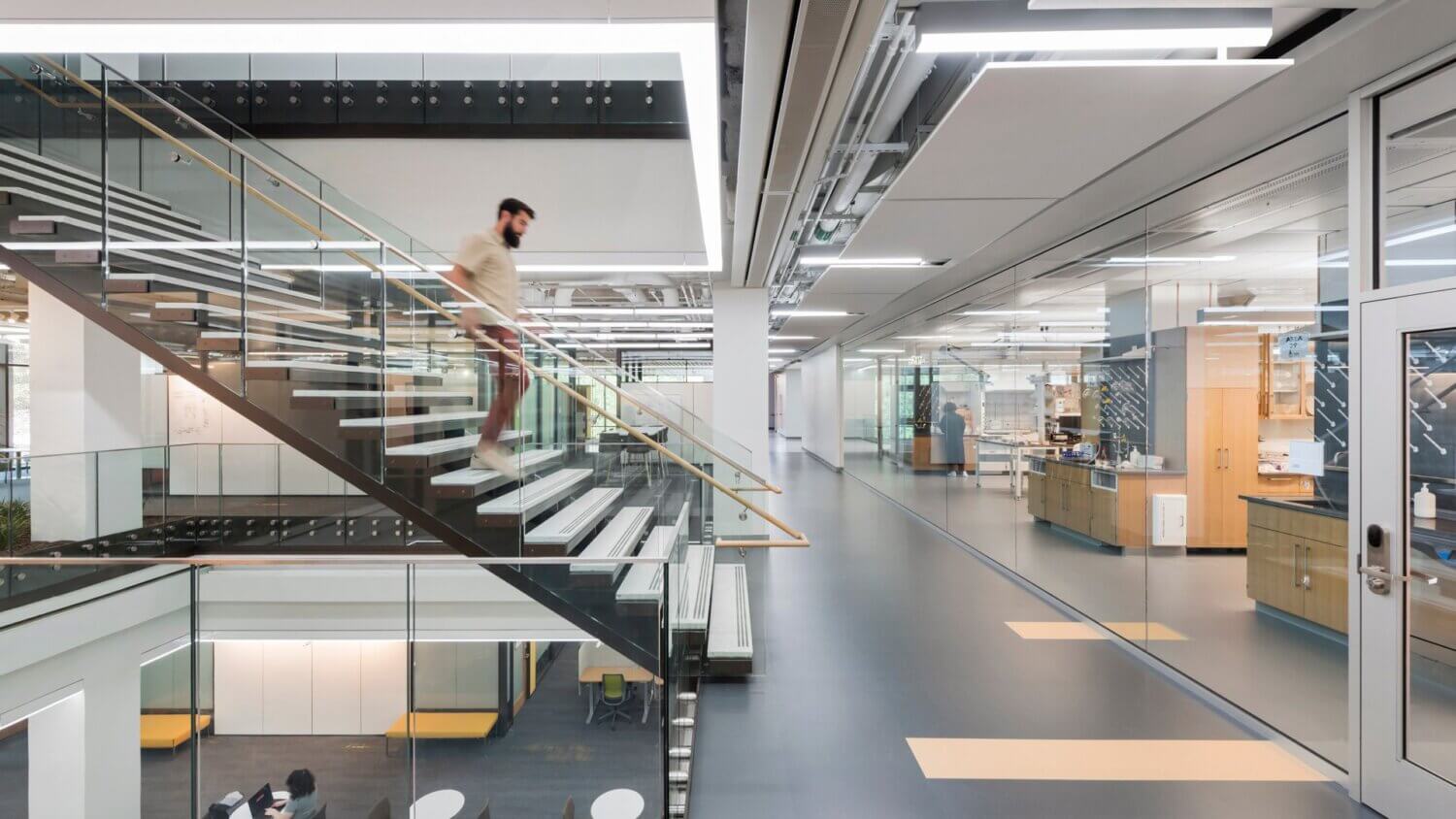
The interdisciplinary research that takes place within HST contributes to the advancement of discoveries to improve human health. The sustainably designed high-performance facility provides a modern environment for research into public health issues, supported by chemistry research, materials research, and biological systems research. The HST building is also the administrative home of Lehigh’s College of Health.
HST’s design emphasizes transparency, inviting in the public’s gaze through expansive glass windows. The interior promotes collaboration, featuring open lab spaces, shared meeting areas, and flexible workspaces. Staircases connecting various levels foster physical movement and create visual connections, promoting cross-disciplinary interaction.
In a departure from conventional research facilities, HST’s office spaces are clustered in interior pods, optimizing natural light and maintaining an open floor plan. This adaptability aligns with Lehigh’s forward-thinking approach, allowing research groups to expand or contract as needs evolve.

The 189,990 GSF building serves as a beacon of synergy between research and teaching, encouraging a sense of curiosity and promoting casual encounters. It embodies Lehigh’s commitment to interdisciplinary integration and represents a significant investment to expand and inspire research, increase research funding, and continue to advance as a top research institution.
Promoting Research and Discovery within a Transparent Ecosystem
The award-winning building design fosters interdisciplinary collaboration through thematic neighborhoods that encourages impactful partnerships between undergraduates, graduate students, and faculty researchers. The building offers an environment designed with flexible, open laboratories that accommodate immediate expansion and contraction of research groups with minimal disruption. These open laboratory zones are all directly adjacent to—and grafted alongside—the computational research labs situated within the building’s office spaces.

The building features spacious and open areas that can easily be reconfigured to accommodate future research needs, including movable tables with overhead gas lines that can support nearly any arrangement in the laboratories. Faculty offices within the open office plan are grouped in clusters, loosely defining boundaries between the shared desking zones.
Contextual Meets Modern
One design goal of HST was to further the embrace of science for the community. Responding to that ethos, the prominent large glass windows intentionally illuminate the science inside and encourage outdoor pedestrians to look in.
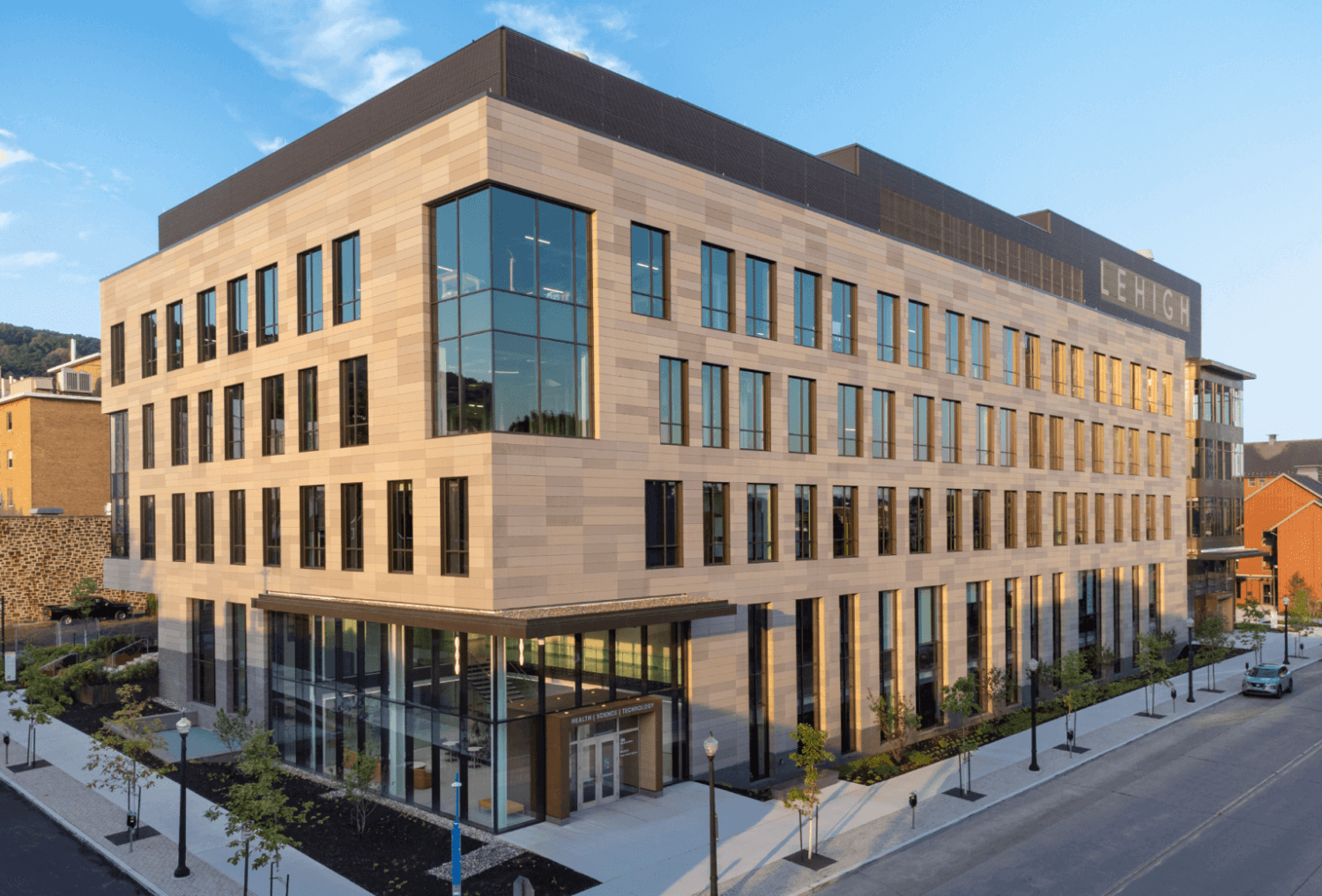
The building’s terracotta patterning was inspired by existing ashlar stonework around the campus. Viewed as a modern interpretation of stone that referenced the existing architecture on campus, the team developed an ashlar patterning using two distinct colors of terracotta with three different textures of panel. In a parallel gesture, the entranceway doors are made of wood, nodding back to Lehigh’s oldest buildings which also feature heavy wood doors.
The architectural design envisioned an open and column-free entry at the south-east corner of the building, resulting in an atypically large 31 feet by 26 feet cantilevered corner. To make this double-cantilever work, the structure above the second floor was framed as two-bay-wide, four-story-tall Vierendeel truss along the south and east face of the building. This approach enabled multiple levels of the truss to contribute stiffness against vertical deflections, engaging the mass from all floors above and resulting in low vibration response at the cantilever corner on every level.
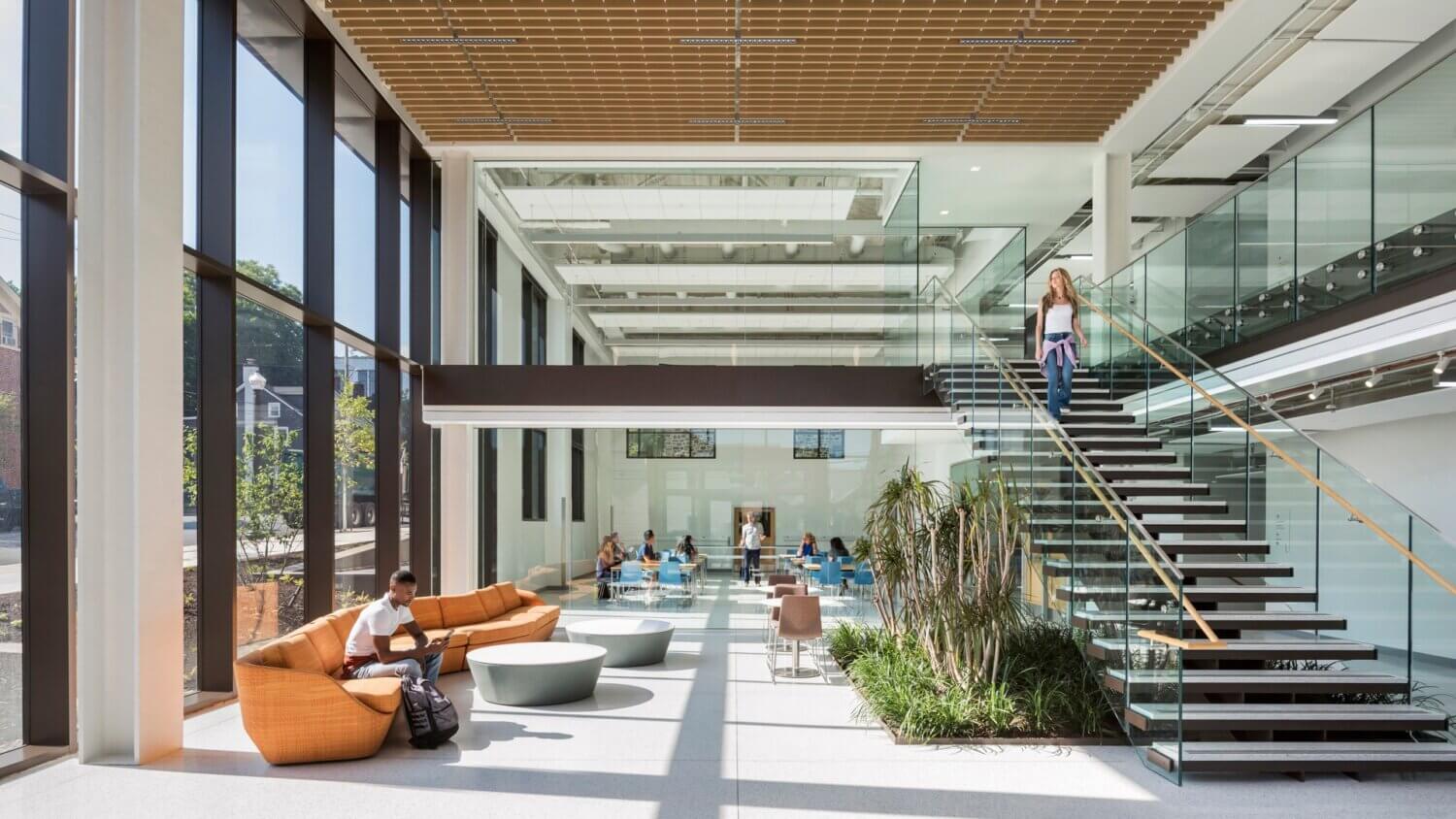
This building incorporates active design with prominent stairwells at the center of the floorplate. Locating stairwells in visible areas and increasing stair aesthetics encourages occupants to use the stairs when traveling between floors, contributing to increased daily physical activity rates and energy savings.

The placement of floor openings, with associated communicating stairs and interior gardens, further establishes an identity and distinct sense of place on each level. This dynamic layout provides visual and physical connections between building users within the large open floor plates and neighboring floors. Replacing traditional classrooms, the building features integrated workspaces, shared meeting spaces, open-concept lab spaces, and a forum area—all designed to encourage collaboration across disciplines and within the community.
Integration with Campus and Neighborhood
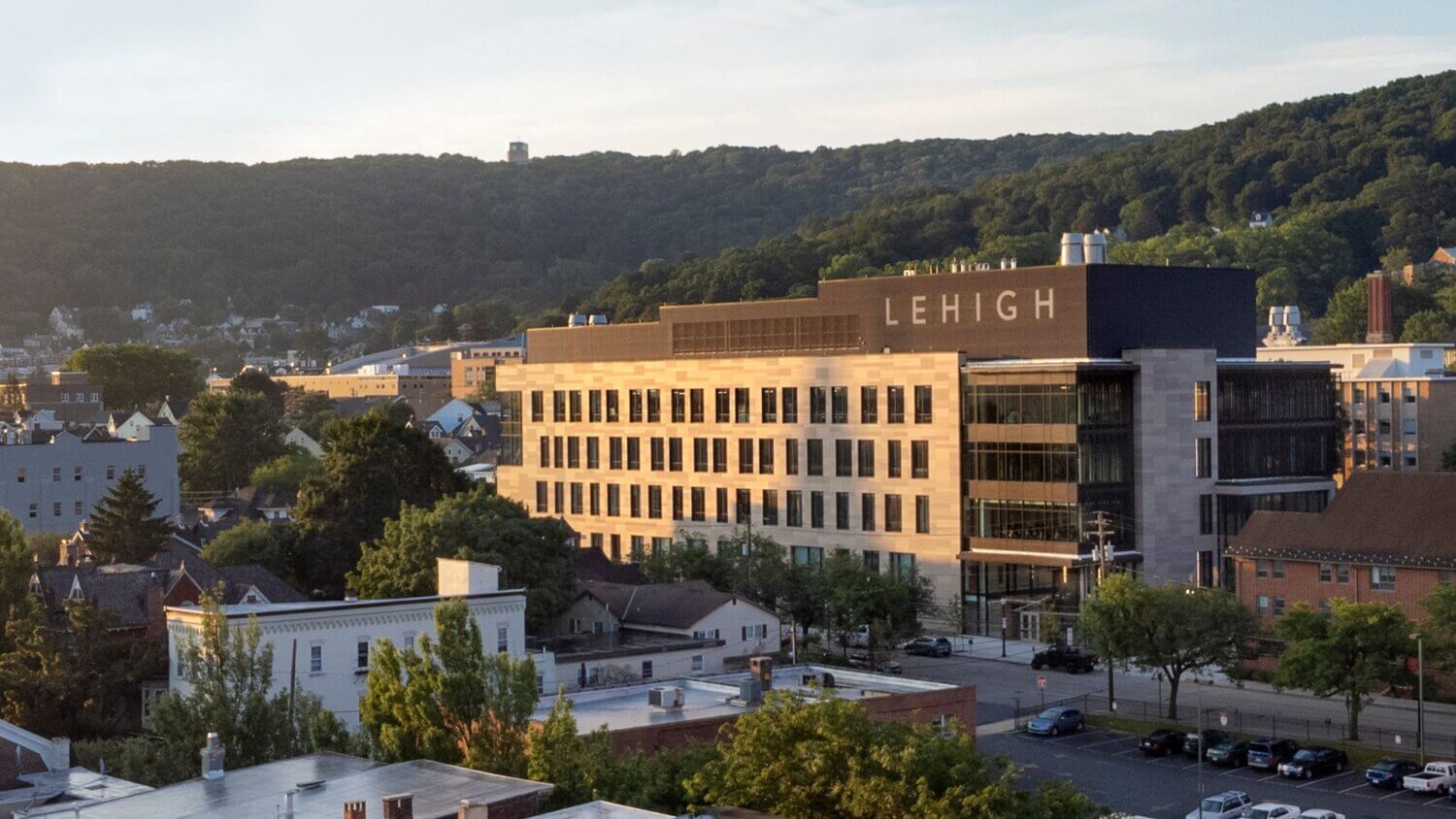
HST is a transformative gateway building connecting off-campus students and encouraging visitors from Bethlehem to engage with the campus experience.
A large contingent of off-campus students live downhill from HST, and this is the first building students and visitors encounter headed to campus. Students coming from South Bethlehem enter on the Lower Level and transition up two floors within the building to reach a pedestrian bridge on Level 2, linking them to the campus and Packer Drive to the south.
Continuing Lehigh’s efforts to blend its borders with the surrounding neighborhood, the HST landscape reimagines Asa Drive on its south edge as a Woonerf (a Dutch “living street”) with curbless, multimodal zones designed to calm traffic and restrict vehicles and bicycles to a walking pace.
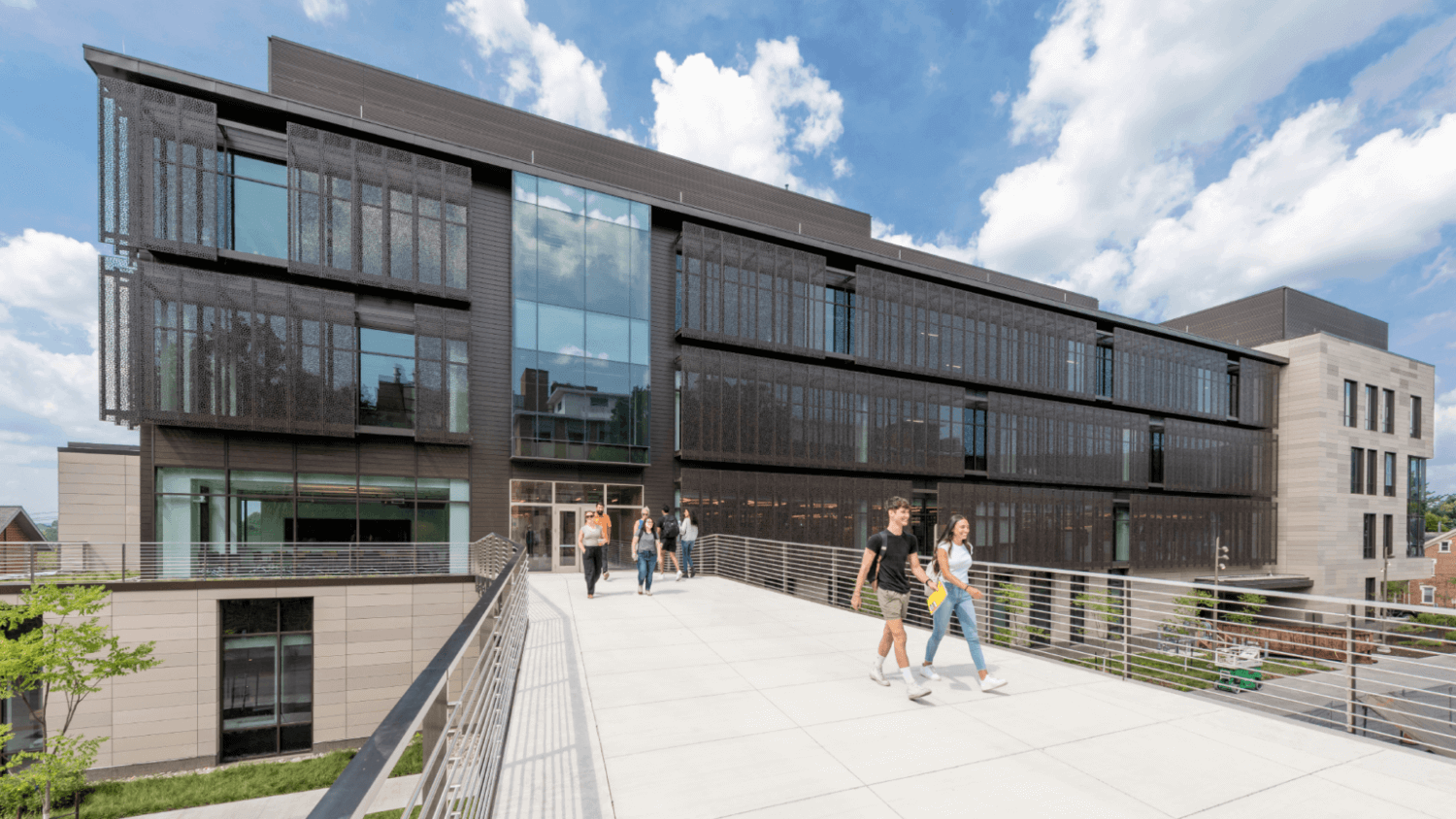
Above the Woonerf, the open-air pedestrian bridge connects Level 2 of HST to the existing labs higher on the hill. The sleek profile of the 91-footlong bridge dictated by architectural design, ADA slopes, adjacent building floor elevations, and vehicular clearance requirements limited the total structural depth to 20 inches over its widest span of 42 feet.
About the Authors

Jeff Puleo works closely with clients to plan, program, and design sophisticated interdisciplinary research environments. He has a proven track-record working with corporate and institutional clients to develop highly functional and adaptable spaces that meet evolving research needs.

Samir Srouji is passionate in his belief that crafting spaces that engage all our senses result in richer, more impactful and poetic environments. He is an advocate for creating sustainable, captivating environments. Samir’s designs are fueled through the exploration of the arts and sciences at the intersection of traditional disciplines.