
Biophilic design connects people with nature and supports human health through the integration of natural light, vegetation, views, materials, and other ecological systems. This approach is emerging as a vital strategy in healthcare environments, driving measurable gains in patient outcomes, staff wellbeing, and operational performance. As healthcare systems face mounting pressures related to workforce burnout and climate-related health risks, design decisions increasingly carry clinical and organizational consequences.
Drawing on HGA’s collaborative research with students from Northwestern University’s Master of Science in Energy and Sustainability program, the findings show that biophilic design strategies can accelerate recovery, reduce physiological stress, and mitigate environmental risk.
Beyond clinical outcomes, biophilic environments enhance cognitive function, ease burnout, and support more resilient care teams. Viewed through an operational lens, these benefits translate into tangible economic returns, positioning biophilic design as a critical component of healthcare infrastructure.
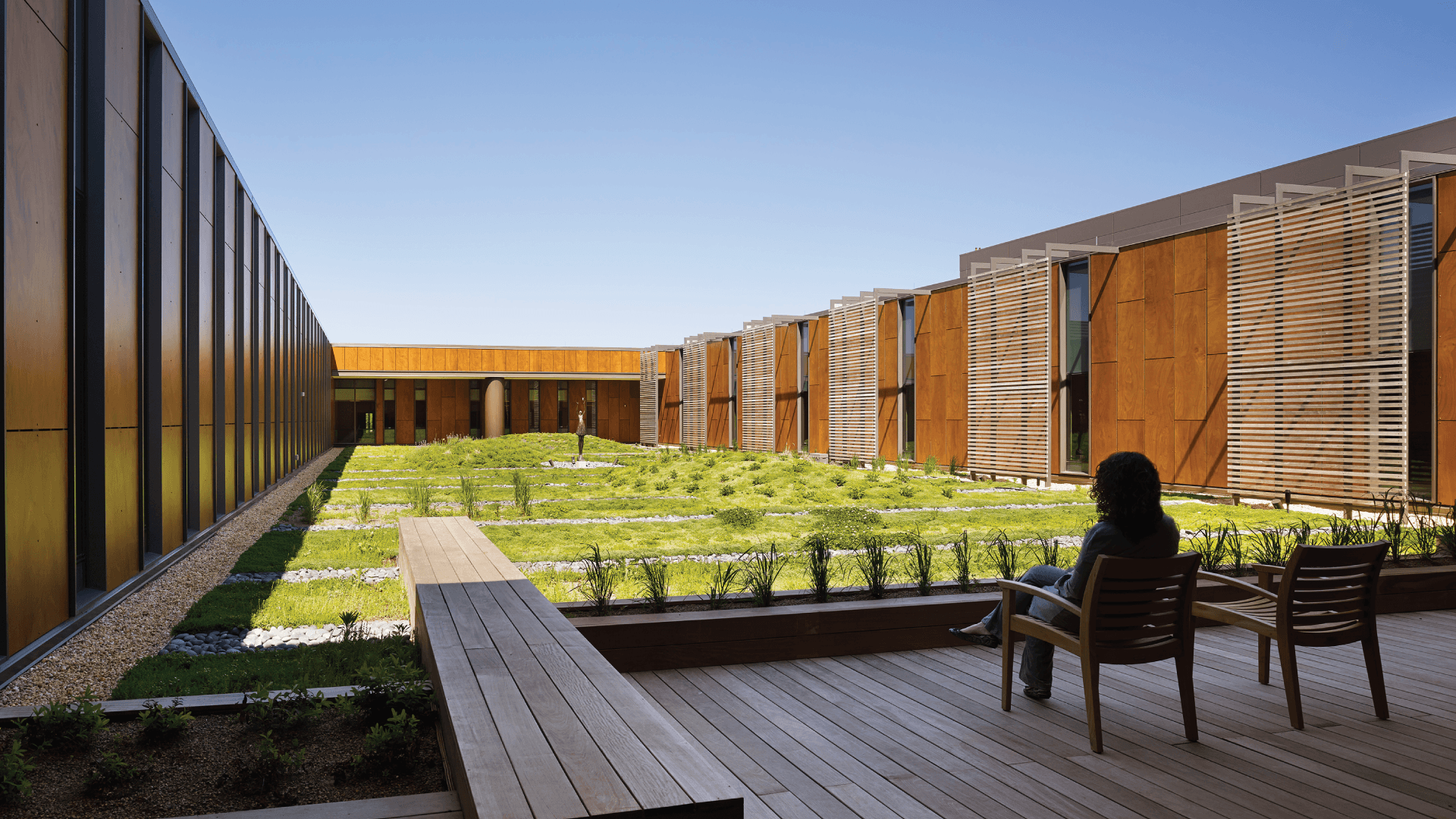
Clinical + Physiological Impacts: Designing for Recovery and Resilience
Peer-reviewed research indicates that biophilic design strategies deliver measurable health benefits across individual, hospital, and community scales. Among the most foundational strategies, access to natural daylight has been shown to reduce average length of stay by 3.67 days in bipolar depression units, with patients in east-facing rooms experiencing reductions of up to 6.8 days.[1] In surgical environments, a separate study found that patients in brighter rooms required 22% less pain medication and incurred 21% lower treatment costs, reinforcing daylighting as a reliable, low-risk method for accelerating recovery while reducing clinical resource use.[2] Even in the absence of natural light, indirect references to nature – such as materials, patterns, and colors – have been associated with lower blood pressure, while natural imagery provides broader benefits for blood pressure, heart rate, muscle tension, pain, and brain activity.[3]
These benefits extend beyond visual experience. Green roofs and vertical gardens support physiological health by reducing the annual equivalent continuous average (LAeq) environmental noise exposure by 2 – 10 dB in certain contexts.[4] Even modest noise reductions carry meaningful health implications: one research study linked a 5 dB decrease to a 1.8% reduction in coronary heart disease prevalence, while a 10 dB reduction corresponds to a 7 – 17% decrease in cardiovascular disease risk.[5]
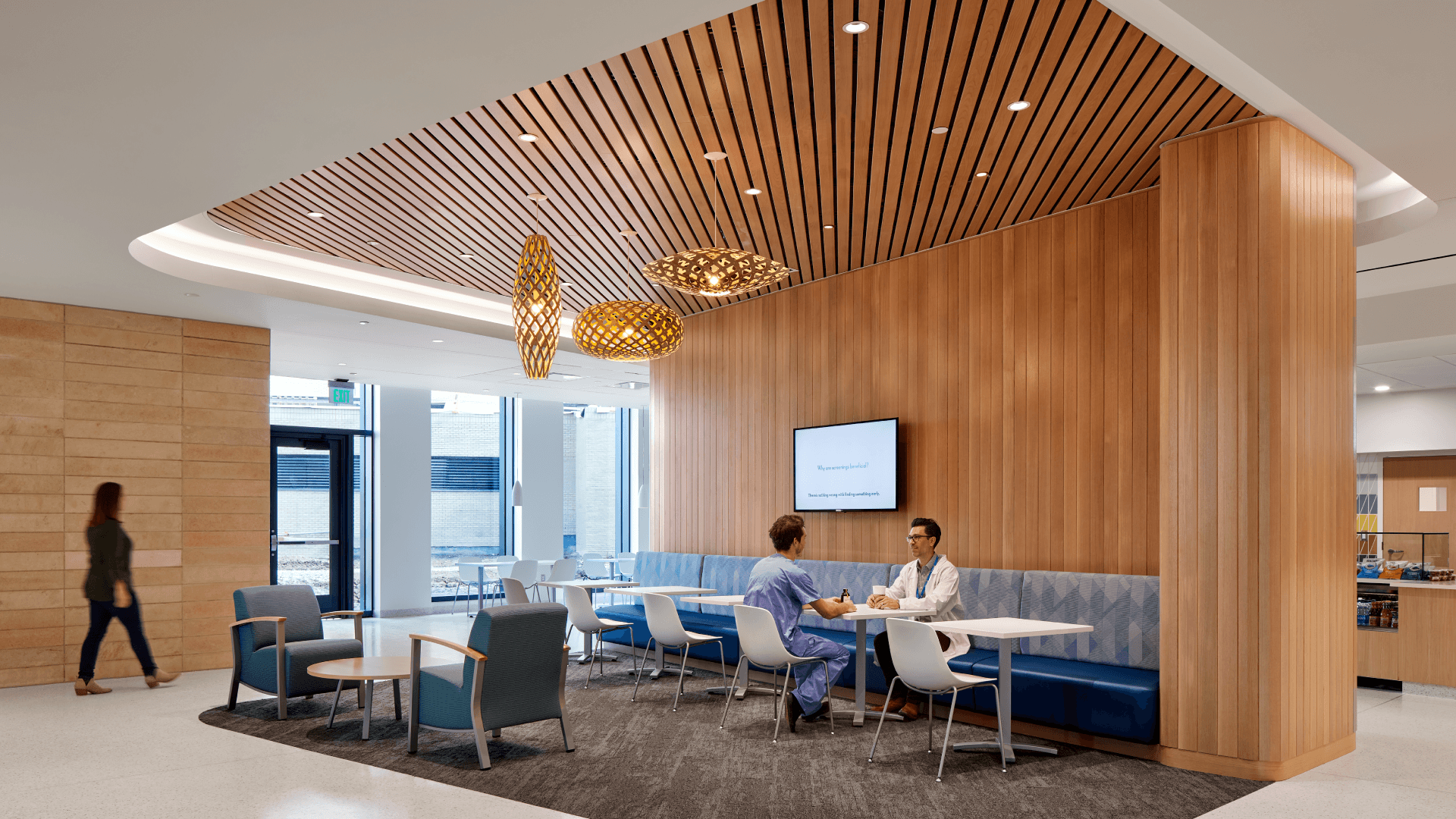
At a broader environmental scale, biophilic systems also improve air quality and community health outcomes. Each hectare (about two football fields) of green roof can remove up to 85 kg of airborne pollutants annually, reducing childhood asthma cases and increasing life expectancy – estimated at a 0.35-year gain for every 10 µg/m³ reduction in PM₁₀. [6][7][8] Collectively, these strategies demonstrate how health-centered biophilic design lowers disease risk and mortality while expanding clinical benefits to the broader community.
Cognitive + Psychological Benefits: Supporting Mental Performance and Care Quality
Beyond physical recovery, biophilic environments play a significant role in shaping cognitive performance, emotional regulation, and overall care quality. Patients with access to natural environments experience improved mental wellbeing, which can support recovery and limit stress-related complications.[9] In one comparative study, occupants in a building designed with biophilic principles (primarily views to nature, daylighting, and interior spatial dimension) demonstrated increased visual system engagement and improved attentional control compared to those in a conventional facility. Measured via brainwaves, these cognitive improvements are more generally understood as enhanced perceptual clarity, decreased distractibility, and an overall reduced mental strain.[10] While general stress has long been linked to adverse health consequences, emerging research suggests a correlation between unmanaged, in-hospital stress and poor health outcomes – including effects that extend post-hospitalization. However, additional studies are needed to verify the severity of impact.[11]
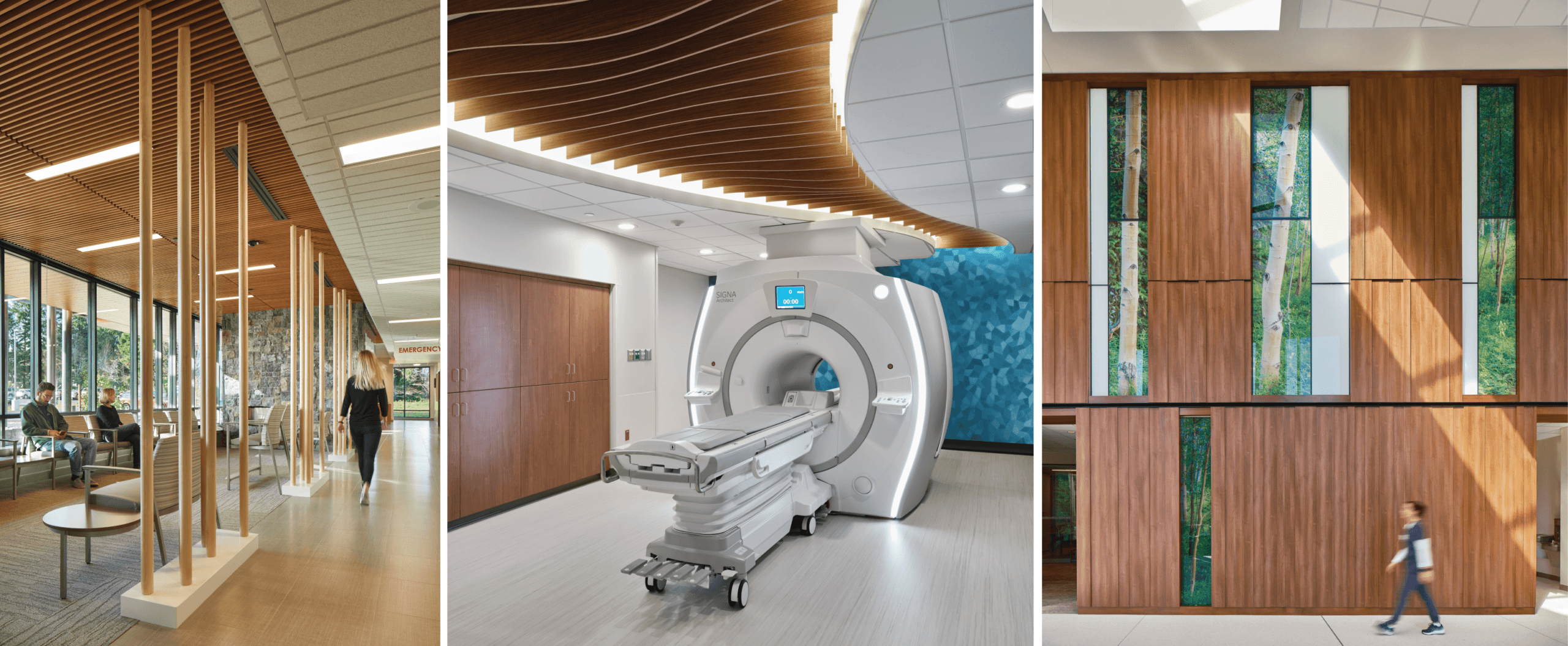
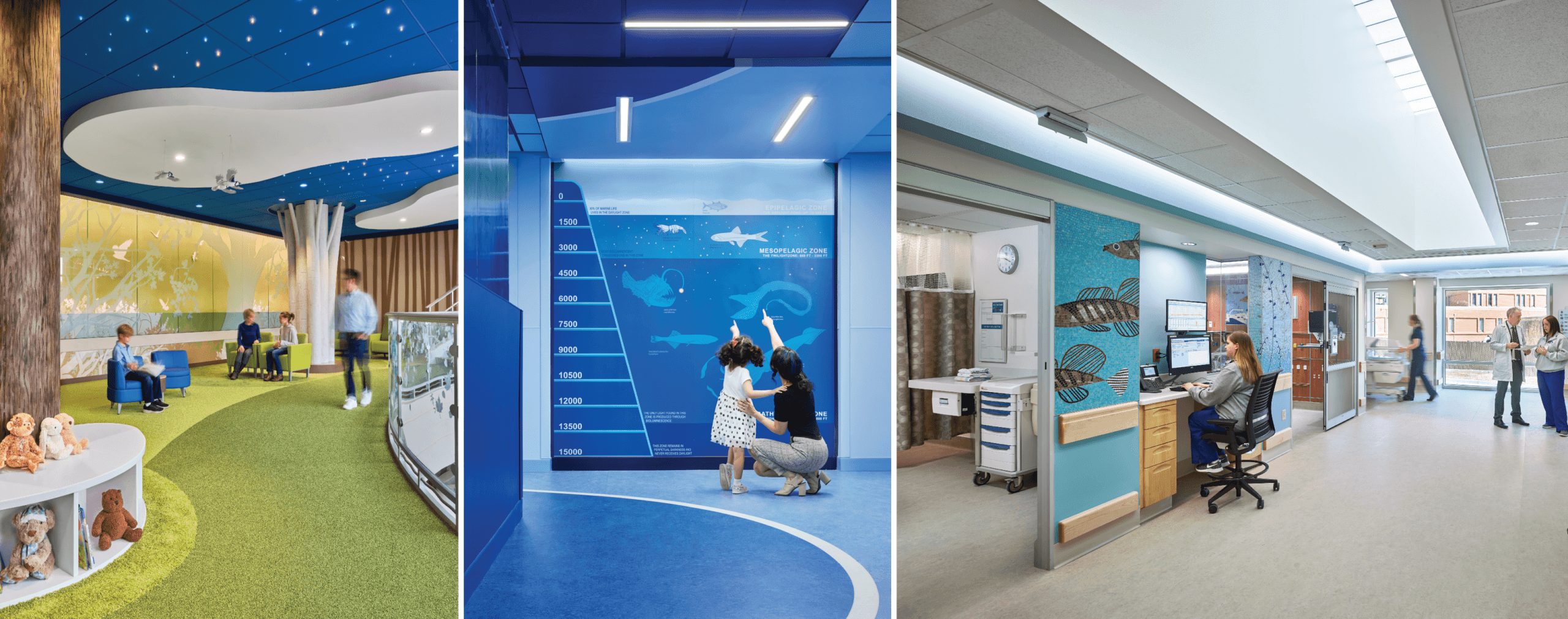
Healthcare workers experience similar benefits of biophilic design. Access to natural views and daylighting has been linked to higher productivity, sustained focus, and reduced cognitive distractions. Defined as “mindfulness,” these factors are linked to reductions in workforce burnout and improved team dynamics.[12][13] Exposure to nature has also been shown to lower stress responses, improve mood, and enable clearer decision-making within stressful circumstances – such as those often experienced within healthcare facilities.[9] Indoor air quality further reinforces these outcomes: cognitive scores have been shown to increase by up to 61% on days with lower volatile organic compound (VOC) exposure.[14] Together, these cognitive and psychological benefits influence not only individual wellbeing, but also the consistency and quality of care delivery. Through the use of bio-based materials and other biophilic strategies, healthcare facilities can reduce VOC concentrations and reliance on active mechanical mitigation, fostering calmer, more focused clinical environments.
These research findings reinforce longstanding insights from healthcare professionals: the physical environment fundamentally shapes health outcomes, wellbeing, and quality of care. Senior HGA Design Researcher Terri Zborowsky has written extensively about how Florence Nightingale – founder of modern nursing – championed principles that are now central to optimal healing environments (OHEs). Nightengale was an early advocate for integrating natural light, fresh air, and noise reduction in healthcare settings, establishing the foundation for today’s evidence-based design strategies.[15][16]
Economic + Operational Returns: Why Biophilia Makes Financial Sense
From an operational standpoint, an investment in biophilic design may directly support the long-term economic advancement of healthcare systems. Labor accounts for approximately 41% of total hospital expenditures, compared to just 4% for capital investments, making workforce retention and productivity central financial concerns.[17] Many health systems – particularly in non-metro areas – already face staffing shortages, with the Health Resources and Services Administration projecting continued workforce deficits through 2038.[18] At the same time, 61% of nurses report concerns about burnout, and one in five expects to leave the profession by 2027.[19][20]
Even modest improvements in retention can yield significant savings. A 1% reduction in nurse turnover can save approximately $289,000 annually (or $61,110 per registered nurse), while studies suggest that integrating biophilic design elements may increase healthcare workforce retention by up to 6%.[21][22]
Operationally, environments that support cognition and alleviate stress contribute to higher productivity, fewer errors, and less rework.[23] Designing healthier indoor environments with low-VOC materials also bolsters infection control and patient care quality: one case study reported a 70% reduction in bloodstream infections and a 49% decrease in medication administration record (MAR) corrections following renovations using low-VOC materials.[24] Together, these outcomes reinforce biophilic design’s role in improving care quality while reducing operational risk.
Biophilia as Integrated Healthcare Infrastructure
Biophilic design is not merely an aesthetic enhancement – it functions as integrated healthcare infrastructure that delivers lasting value. Evidence demonstrates consistent outcomes across three critical dimensions: improved clinical recovery and physiological health, stronger cognitive performance and psychological wellbeing, and measurable economic and operational returns. As healthcare systems confront growing pressures related to climate risk, workforce shortages, and rising costs, biophilic strategies offer a proven, human-centered response.
Looking ahead, the role of biophilic design will only become more consequential as healthcare organizations seek environments that support resilience, adaptability, and long-term performance. Recognizing the need to balance infection control, patient safety, and operational reliability, HGA works with clients to translate research into practical, scalable biophilic interventions – helping healthcare systems prepare not just for today’s challenges, but for the evolving demands of care delivery in the years to come.
About the Authors

Shawn Sullivan
Shawn brings a passion for research-based design and sustainable system integration to HGA’s healthcare practice. Through close collaboration with client end users, Shawn adapts design solutions to the unique spatial and operational needs inherent to every project.
HGA Contributors: Terri Zborowsky, Amy Douma, and Ariane Laxo.
Northwestern University Master of Science in Energy and Sustainability program students: Colin Anderson, Olivia Pazerunas, Jennine Darwish, Asha Suvarna, Sarah Settlecowski
References
[1] ScienceDirect
[2] LWW Journals
[3] DOI –Journal of People Plants Environment
[4] DOI – Building & Environment
[5] DOI – American Journal of Preventive Medicine
[6] ResearchGate – Green Roof Study
[7] JAMA
[8] Journal of Thoracic Disease
[9] ResearchGate – Health Benefits of Gardens
[10] Nature – Scientific Reports
[11] PLOS One
[12] ScienceDirect – Energy & Buildings
[13] Nature – Scientific Reports
[14] Harvard Repository
[15] Sage Journals
[16] Oxford Academics
[17] PubMed Central
[18] HRSA Workforce Data
[19] ShiftMed – Nursing Retention
[20] NCSBN Workforce Report
[21] NSI Retention Report
[22] ScienceDirect – Indoor Environmental Quality
[23] ScienceDirect – 2024 Study
[24] ScienceDirect – Alternate Access