
An organization’s most valuable investment is in its people, and ensuring that employees are satisfied and productive in their workplace is crucial. By understanding and addressing the key elements of a functional workspace that meet employees’ needs, organizations can directly influence job satisfaction and engagement, which is essential for attracting and retaining talent.


Occupant evaluations are a critical tool to evaluate and inform workplace design, providing insight into employee experience, behaviors, and feedback to assess the functionality of a workplace. Our occupant evaluation process, led by HGA’s Design Insight Group (DIG), is tailored to meet the needs of various organizations and design projects while maintaining standardization across our tools to allow opportunities for benchmarking and comparison between buildings and design strategies.
At HGA, occupant evaluation embraces several key components:

Sacramento Area Council of Governments Occupant Evaluations
The Sacramento Area Council of Governments (SACOG) is an organization focused on facilitating collaboration among area governments, and in their office, local government leaders in the Sacramento region come together to advance their strategic commitment to equity, economy, and environment.
HGA partnered with SACOG to complete a comprehensive workplace study and office renovation. The occupant evaluation conducted during pre-design in 2018, also known as a pre-occupancy evaluation, included a questionnaire, interviews, focus groups, and site observations. Based on those insights, HGA developed a workplace design to improve access to natural light, increase storage, and support collaboration. The renovated office included workspaces, support areas, and a flexible technology-driven boardroom.

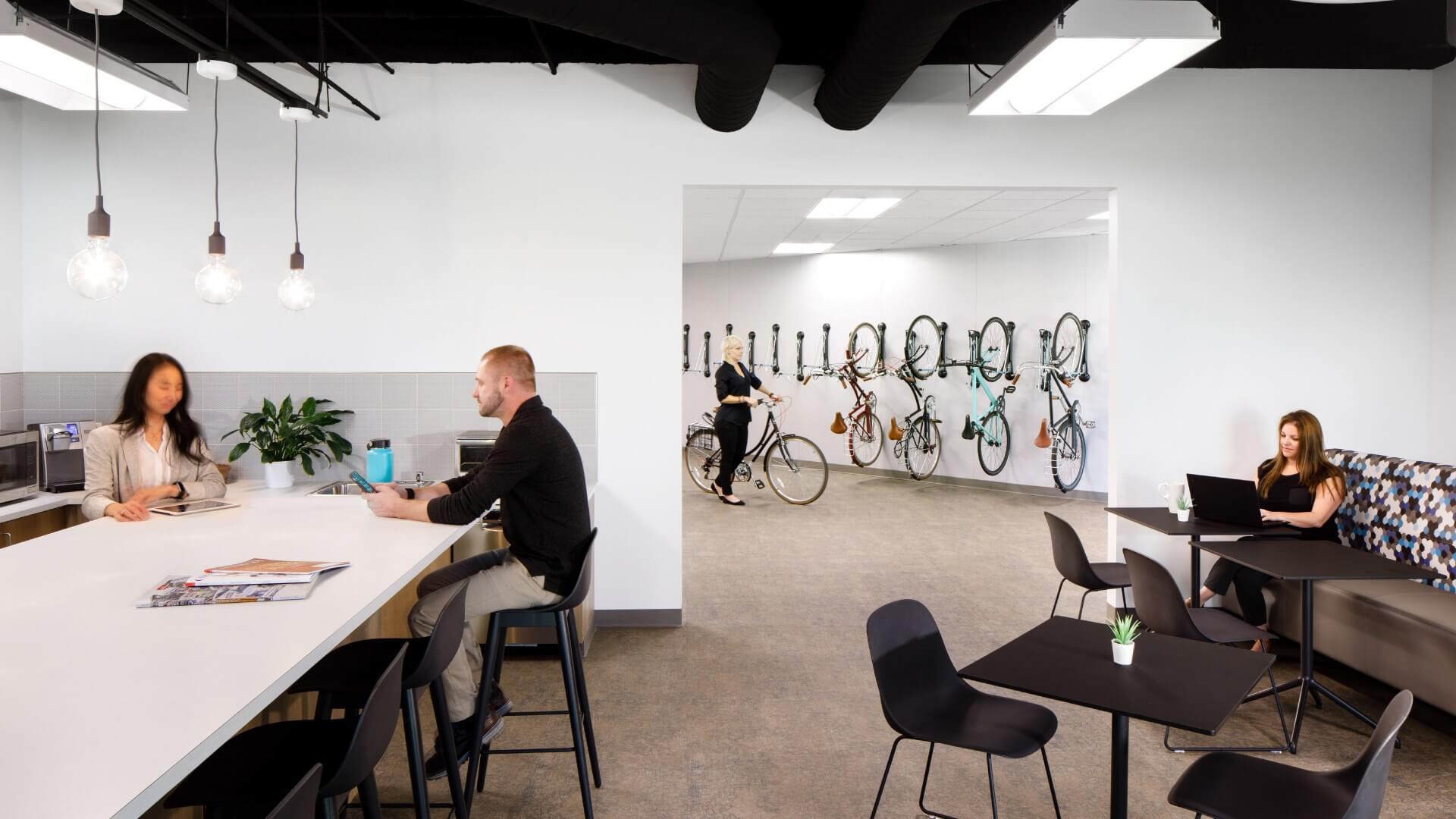
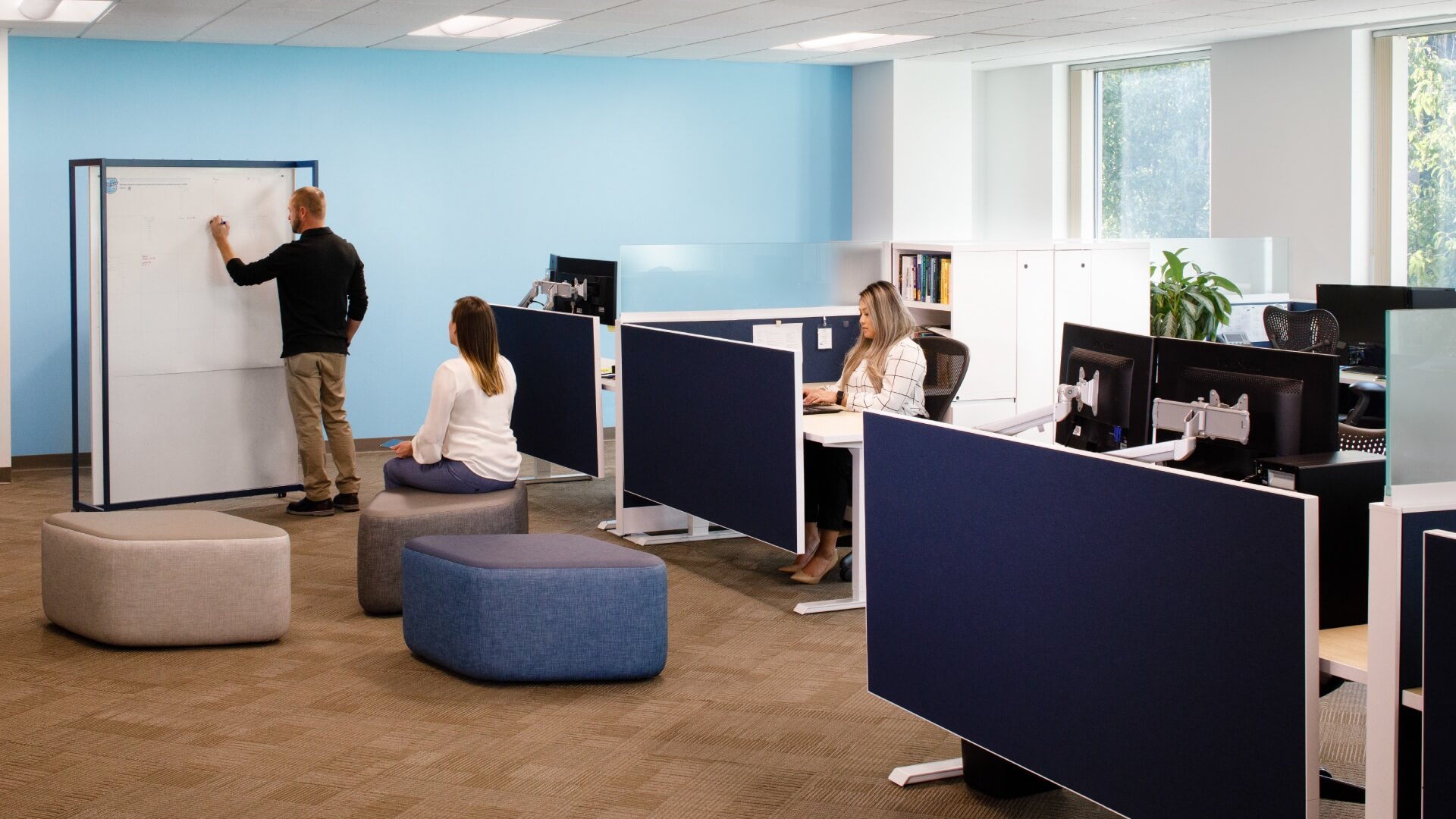
Following the completed renovation, a post-occupancy evaluation (POE) was conducted in 2023 to assess the new workplace design through an online employee questionnaire, which gathered insights about experiences working in the office, functionality of spaces, and utilization patterns. Several measures from the pre-occupancy were repeated to assess changes in satisfaction from the old to new office design. With the impact of COVID-19 on in-person work that happened between study periods, additional insights were gathered regarding how hybrid work has changed employee perspective and use of in-person workplace environments.
Post-Occupancy Evaluation Findings
 New Design Improved Workplace Experience
Overall, the post-renovation workplace experience was very positive across all respondents.
Personal workspaces: Improved satisfaction with furniture, storage, and light.

Collaborative work areas: Improved satisfaction with the variety of spaces and options for places to collaborate, share ideas, socialize, and have private conversations.

Overall design: Improved satisfaction with natural light and views in the office and feeling that the design reflects SACOG values.
Workplace Utilization Lower but More Collaborative Post-Pandemic
Respondents are spending less time in the SACOG office post-renovation and using office spaces less frequently, a finding attributed to a shift in work modes during COVID-19.
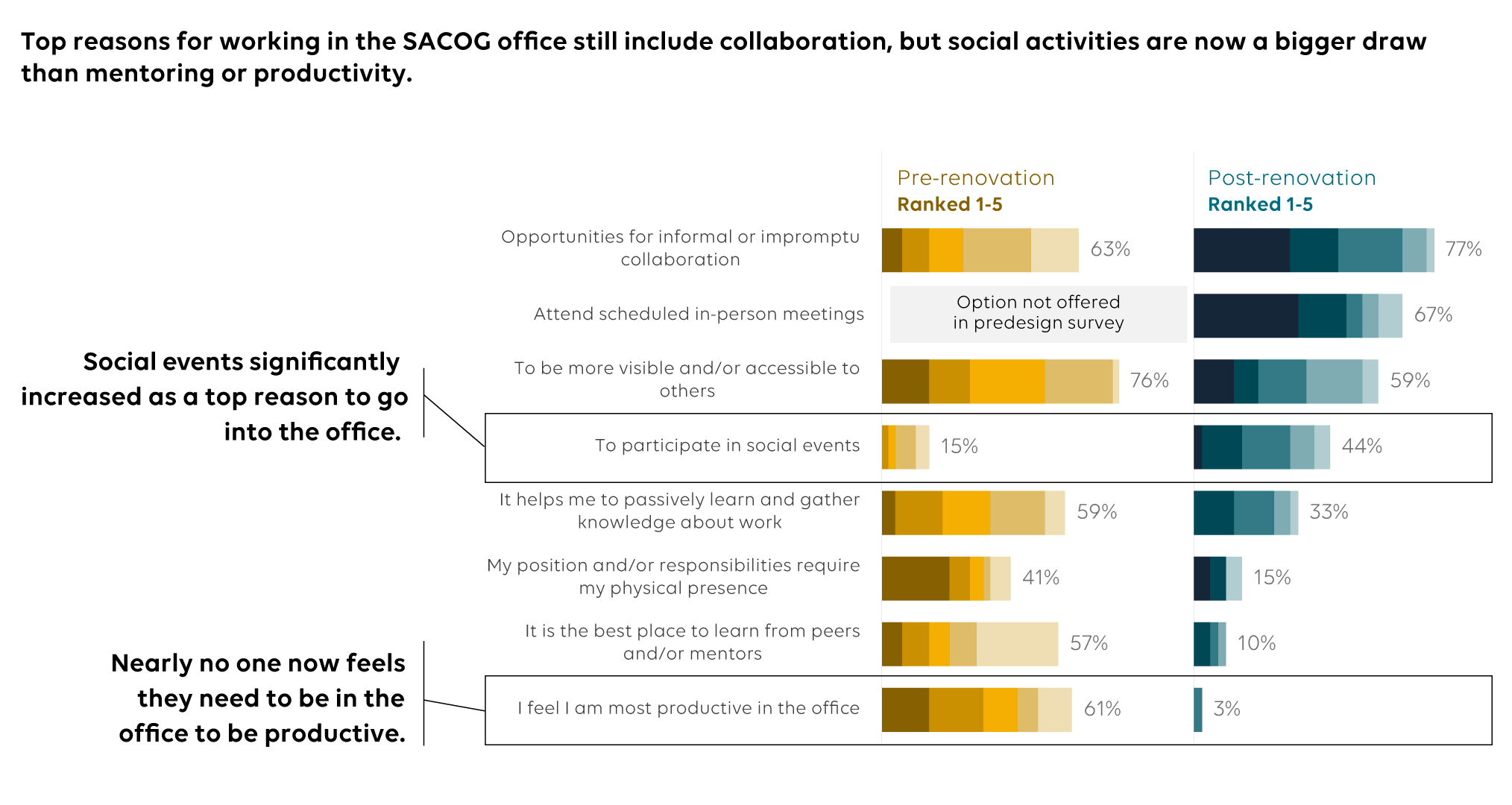
Respondents’ top reasons for working in-office highlighted the role of the SACOG office post-renovation (and post-pandemic) as a place for person-to-person connection: opportunities for informal or impromptu collaboration, attending scheduled in-person meetings, and to be more visible and/or accessible to others.
While respondents viewed the office as the preferred option for collaboration and socialization, working from home was seen as a better option for focused work and individual productivity. Respondents appreciated being able to choose where they work based on their work activities that day. Commute, productivity, and work-life balance were the main considerations for employees when choosing to work remotely.

Lessons Learned for Workplace Design in a Hybrid Environment
The post-renovation experience with collaborative work areas was very positive; however, not everyone is working in-person on the same days and the addition of virtual meetings in open work areas made noise a concern. Such changes in how people now work highlight new considerations for workplace design:
- Provide more small private rooms with technology to support calls or virtual meetings.
- Upgrade workstation technology, including docking stations with one or two monitors and noise-cancelling headphones to accommodate virtual meetings at workstations without disturbing others.
- Coordinate in-office schedules to maximize benefits of in-person collaboration.
- Create dedicated areas to store and display project work for asynchronous in-office schedules.
Download the full report to learn more about this occupant evaluation.
Curiosity is one of our core values at HGA. It fuels our research-driven, holistic approach, allowing us to uncover unique insights that when applied to design, generate truly meaningful solutions.
HGA’s Design Insight Group views occupant evaluation as integral to this design process, and our work with SACOG demonstrates the power of these assessments, guiding design improvements that enhance employee satisfaction and productivity.
While DIG works across multiple markets, scales, and complexities, our goal is focused: to make a positive impact for our clients, and the people and communities who experience our designs. By applying our deep expertise in research and innovation, we help the design—of spaces, systems, and experiences—work better.∎
About the Authors

As a Design Researcher, Oshana Reich works with HGA’s Design Insight Group (DIG) to build deeper understandings of markets, clients, and the people impacted by our design solutions.

As the Occupant Evaluation Manager at HGA, Renae Rich oversees a program within the Design Insight Group (DIG) to build HGA’s reputation for research and measured results through the systematic evaluation of design projects in terms of occupant experience and satisfaction across all our market sectors.