
Our Commitment to Sustainability
Great design is sustainable design.
Every act of sustainable design, engineering, planning, and construction contributes to our common future. At HGA, we embrace this as both a responsibility and an opportunity. With vision and strategy, we have made progress toward sustainability commitments; built a portfolio of projects with innovative and elegant solutions; and aligned our internal structure and processes to position our company and clients to create the greatest possible impact.
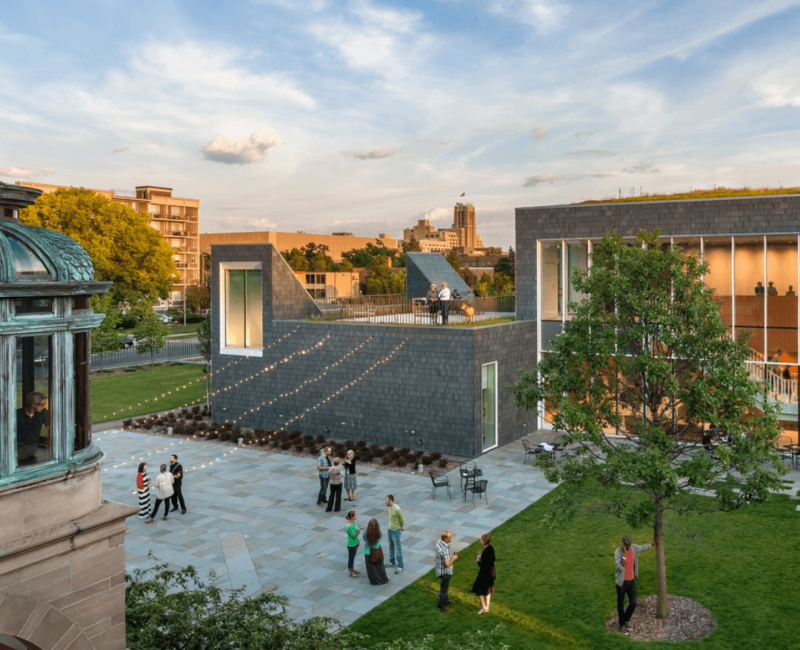
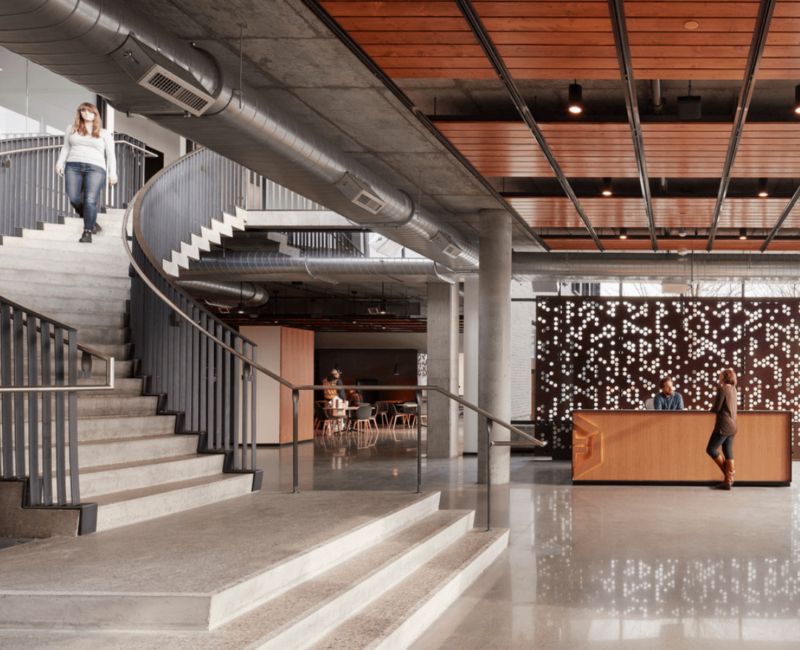

OUR COMMITMENT TO SUSTAINABLE DESIGN
With our clients
Throughout our nearly 70 years of experience, we have developed an integrated, holistic approach to design. Collaboration happens early and often, resulting in innovation throughout the process. With the impacts of climate change growing every day, this mindset is even more important—we have no time to waste.
In partnership with our clients, we aim to establish a holistic vision for every project. This includes sustainability goals such as specific energy performance, carbon emissions reduction, or third-party certification. Our comprehensive baseline design process includes:
- Identifying a sustainability lead on the design team
- Setting sustainability goals for every project in
partnership with the client - Tracking and reporting progress toward achieving those goals.
OUR COMMITMENT TO SUSTAINABLE DESIGN
Within our industry
Significant change requires collective public agreement to set goals, establish plans to meet those goals, and hold ourselves and others accountable by reporting on progress. As a leader in the industry, HGA is a signatory to several key sustainability commitments, including AIA 2030, SE 2050, and AIA Architecture & Design Materials Pledge.
AIA 2030: Operational Carbon—As a founding signatory of this commitment to eliminate building emissions, we are advancing our clients’ goals and challenging our industry by developing the expertise and research to push beyond net zero energy to net positive energy.
SE 2050: Embodied Carbon—Our structural engineers are committed to adapting and improving current practices to reduce and eliminate embodied carbon in our building structures.
AIA Materials Pledge—To confirm our commitment to healthier and sustainable materials specifications, HGA has adopted this pledge to help inspire a shift in our practice and our industry.
OUR COMMITMENT TO SUSTAINABLE DESIGN
Within HGA
In addition to client projects, we recognize that our own operations present an opportunity to take measurable action and demonstrate accountability.
LEED Certifications at HGA—Five of our 13 offices have achieved LEED Gold or Platinum certification. We plan to certify every office through a third-party verified program, whether LEED, Fitwel, Living Building Challenge, or WELL.
WELL Health-Safety Ratings—We are committed to ensuring employee and client well-being. Eleven of our offices have achieved the WELL Health-Safety Rating by the International WELL Building Institute (IWBI). This firmwide achievement is a visible sign that best wellness and safety practices are being adopted and third-party verified.
Understanding Our Own Carbon Footprint—We conducted pre-pandemic carbon footprint analysis of all offices to set a baseline and are currently tracking 2022 emissions to set quantitative goals and strategies with the goal of decarbonizing our offices.
HGA's Sustainability Action Plan
HGA’s core values drive us to act on climate change for the protection of our communities and our planet. We are committed to leaving a positive impact on the world through sophisticated, human-centered design responses to the most profound challenges of our time. As a signatory of the AIA 2030, SE 2050, and MEP 2040 challenges and the AIA Materials Pledge, we have mobilized an internal sustainability network to research, innovate, and integrate the operational changes needed to meet our clients’ sustainability goals and create new industry best practices.
Our Sustainability Action Plan demonstrates how we are integrating sustainability into our practice and operations. This is an urgent and inspiring opportunity to shape a positive future through design.
If you have questions or comments about this report, contact Director of Sustainability Ariane Laxo.
Learn more and download our Sustainability Action Plan
Measuring Our Impact
To advance sustainability in our work we are focusing on three key initiatives: strengthening our network; integrating sustainability into our design process; and establishing clear accountability measures. In our 2024 Impact Report, we share our approach to holistic design and the progress we are making, including our strengths and our challenges.
Learn more and download our annual Impact Report

SPOTLIGHTS
A Global First
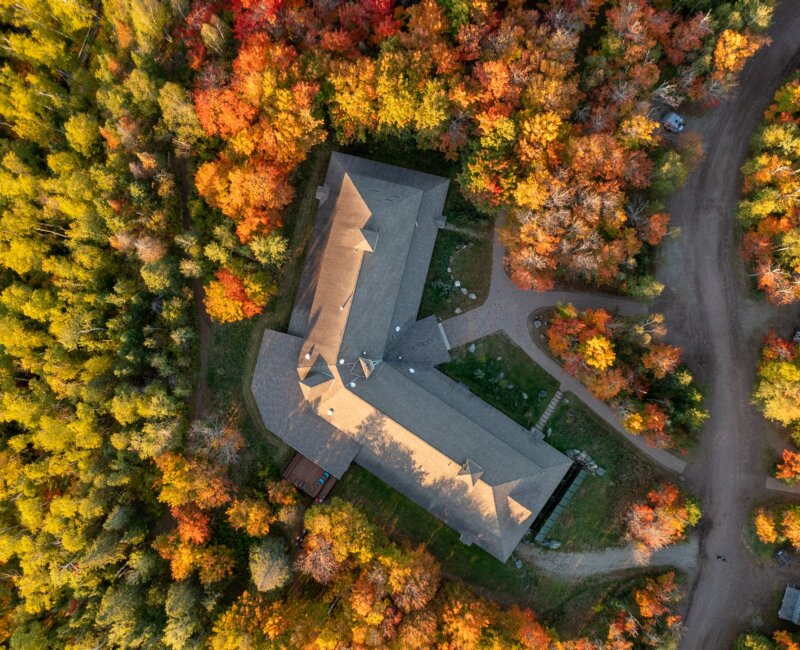
The first renovated building to meet the world’s most rigorous standard for sustainability is at Wolf Ridge Environmental Learning Center in Northern Minnesota. In 2021 the Margaret A. Cargill Lodge renovation of the old West Dormitory achieved full Living Building Challenge (LBC) certification by the International Living Future Institute. Among other milestones, the 22,000-square-foot dormitory has proven its ability to achieve net positive energy and net positive water over a 12-month period, generating more energy than it consumes.
Learn MoreSPOTLIGHTS
Nature Supports Healing
Healing gardens, calming sunlight, natural materials, and plentiful window views of the outdoors: the St. Elizabeth Healthcare Cancer Center demonstrates how thoughtful biophilic design promotes wellness and enhances healing.
Learn MoreSPOTLIGHTS
Planning for Net Zero
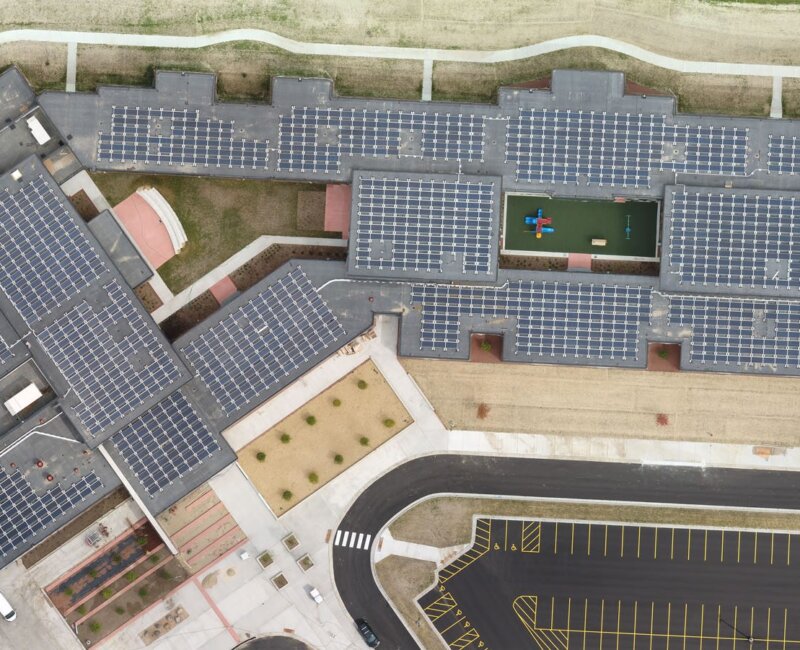
Responsible energy planning for cities, campuses, and real estate portfolios should be a collaborative, proactive process that includes goal setting, assessment of current systems, and identification of solutions to align desired performance benchmarks, timelines, and capital constraints. HGA’s experience in master planning for carbon neutrality allows us to develop creative, viable strategies for our clients like Forest Edge Elementary School, the first net zero energy school in Wisconsin. After one full year of operation, the building generated as much energy as it used.
Learn More

"Just as the industrial revolution was the catalyst for global warming, the current wave of climate action is the catalyst for a future sustainable, resilient world. Two hundred years from now, historians will look at this decade as the moment everything changed. We feel the weight of that responsibility and are honored to be working with so many clients who are leading this transformation."


