
Across New England, architectural traditions have long been shaped by clarity of form, natural materials, and a close relationship to landscape. When reinterpreted today, these familiar elements create environments that feel grounded while supporting diverse forms of learning and creative work.
The four HGA projects below show how a shared architectural language can flex across disciplines—supporting musicians, engineering students, and recreational sailors alike. Each is shaped to support its specific program while maintaining a strong connection to place.

The Five Cottages at Marlboro Music give musicians calm, self-contained places to prepare and practice during an annual summer festival. Inspired by the modest Cape Cod form, the buildings rely on simple geometries and restrained detailing—low profiles, straightforward rooflines, and natural cedar cladding that blend naturally within the surrounding woods.
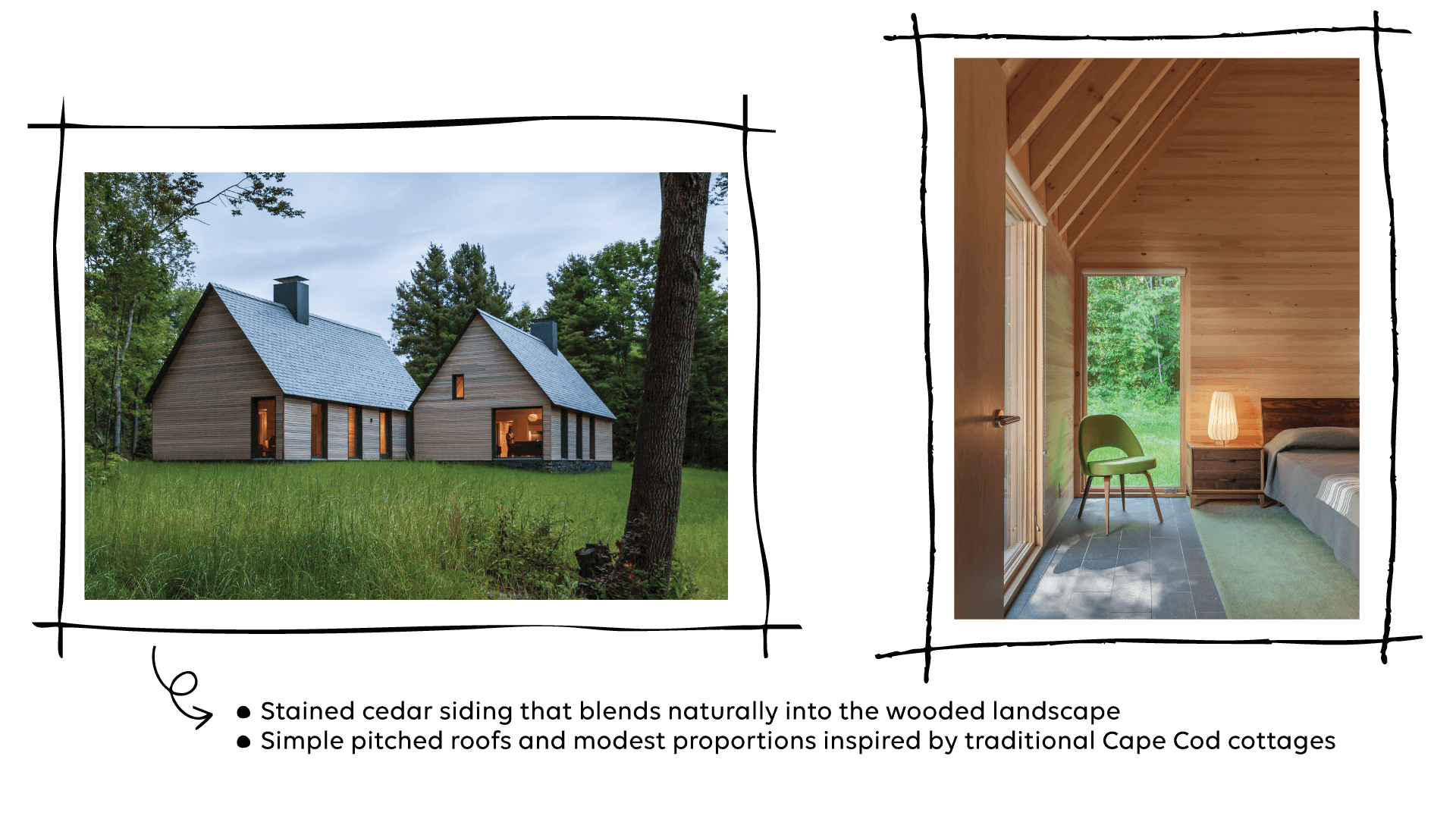
Generous windows frame views of the forest, creating comfortable spaces that offer a quiet counterbalance to the intensity of rehearsals across campus. As the first project in HGA’s long-standing collaboration with Marlboro Music, they form part of a small collection of spaces that support different stages of the creative process—providing musicians with both independence and a sense of connection to the wider community.

The Reich Rehearsal Building & Music Library extends HGA’s ongoing work at Marlboro Music, serving as a hub for rehearsals, coaching, and study. Its compact, gabled forms and natural materials draw from familiar New England influences, helping the building step gently into the wooded hillside and maintain a close relationship to the surrounding landscape.
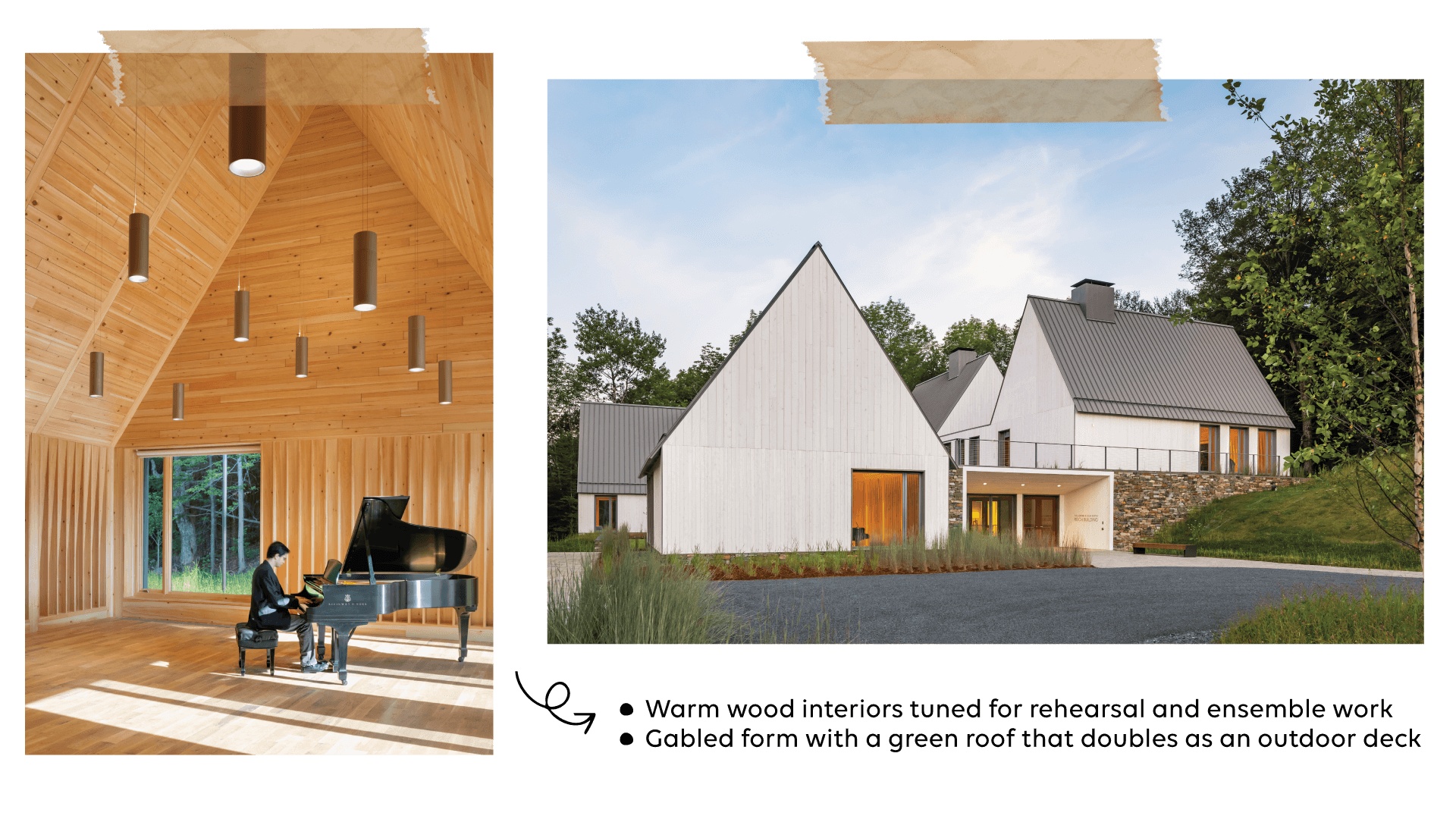
Reich Hall’s rehearsal rooms, studios, and library are planned to support focused musical work, with daylight, acoustics, and circulation shaping an environment that is both efficient and comfortable. Positioned near the cottages, the building extends the campus’s sense of place while offering a distinct function within it. The project received a 2023 AIA Architecture Award for its thoughtful contemporary design and contribution to musicians’ experience on campus.

Paul J. LeBlanc Hall brings together Southern New Hampshire University’s School of Engineering, Technology & Aeronautics in an environment designed for hands-on, project-based learning. Labs, maker spaces, and flexible studios support a wide range of technical exploration, while shared collaboration areas create a sense of community for students and faculty.
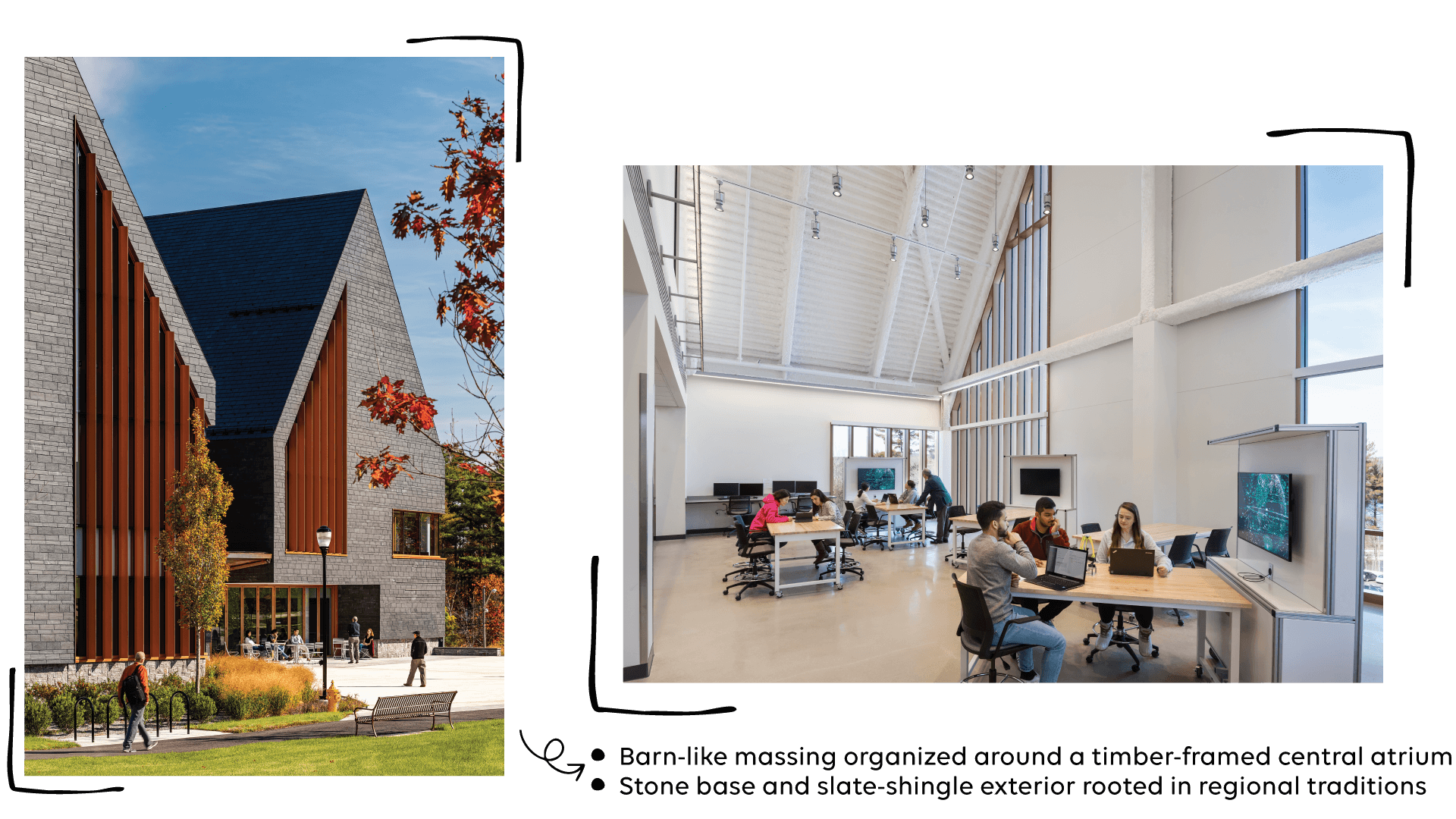
Architecturally, the building draws from New England vernacular traditions—barnlike forms, slate shingles, a stone base, and a timber-framed atrium inspired by covered bridges. These familiar elements ground the facility within its regional landscape, creating a setting that pairs contemporary innovation with an enduring sense of craft and place.

The Wayzata Community Sailing Center sits along the shoreline of Lake Minnetonka, providing a home for sailing education and community programming. Although located in Minnesota, the building draws from the same New England–influenced vernacular seen across this collection—simple forms, durable materials, and a clear relationship to its waterfront setting.
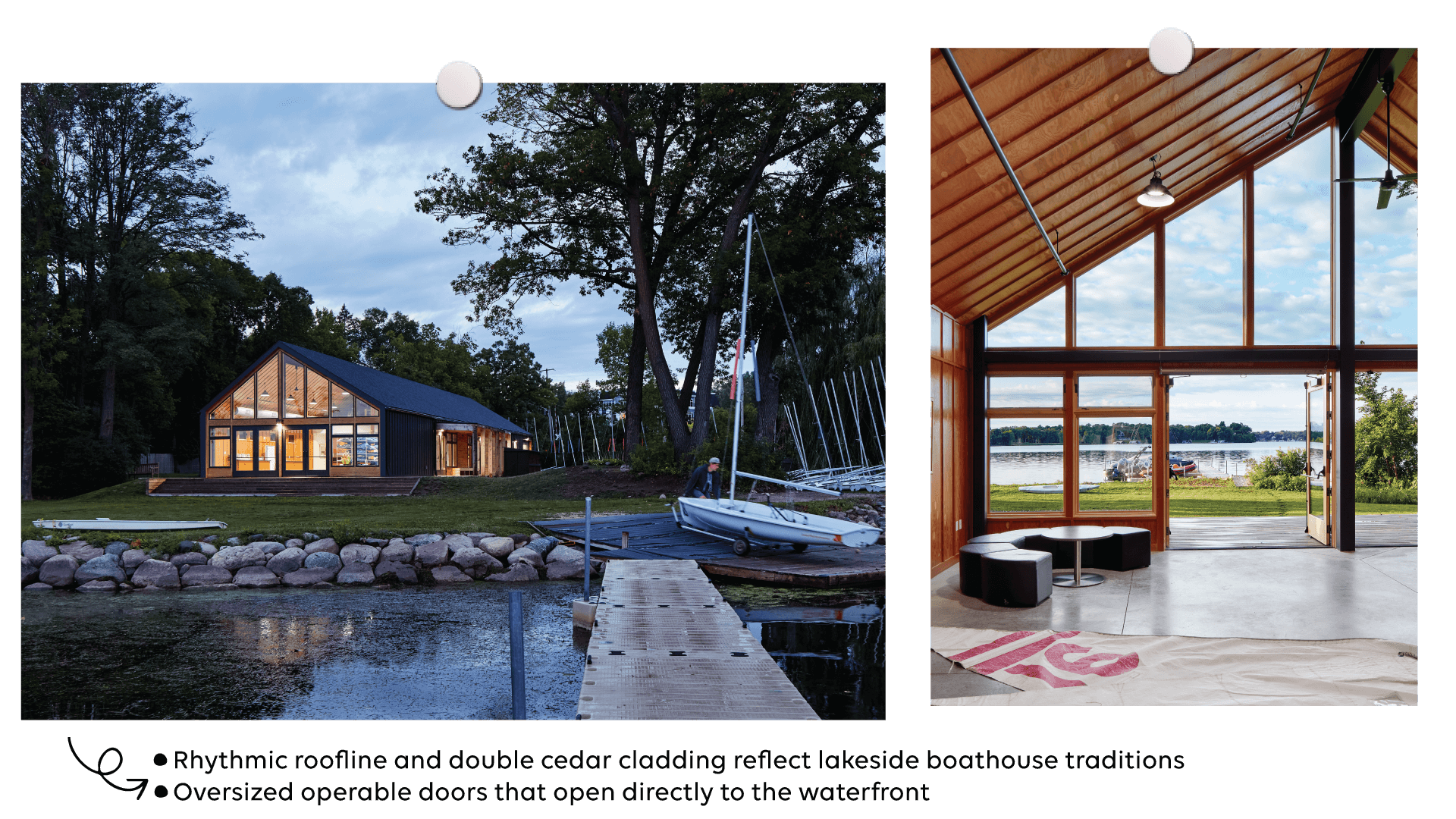
The new boathouse replaces an aging structure with a more flexible, accessible setting for year-round programs. Indoor and outdoor areas are arranged to support instruction, boat preparation, and community gatherings, all oriented toward the lake. Scaled to its residential context, the building maintains a modest presence while providing a durable home for sailing education.
A Shared Sensibility
While these projects serve different purposes, they share a design approach rooted in clarity, craft, and regional character. Each environment is shaped to support the specific needs of its users—whether focused practice, ensemble work, technical exploration, or outdoor education—while maintaining a thoughtful connection to place.
Together, they demonstrate how contemporary interpretations of familiar New England forms can create settings where creativity, learning, and community thrive.