
Dartmouth College envisioned the Class of 1982 Engineering and Computer Science Center (ECSC) as a space to elevate and expand its engineering and computer science programs within a liberal arts setting. Dartmouth’s academic model fosters innovation and problem-solving through a human-centered approach.
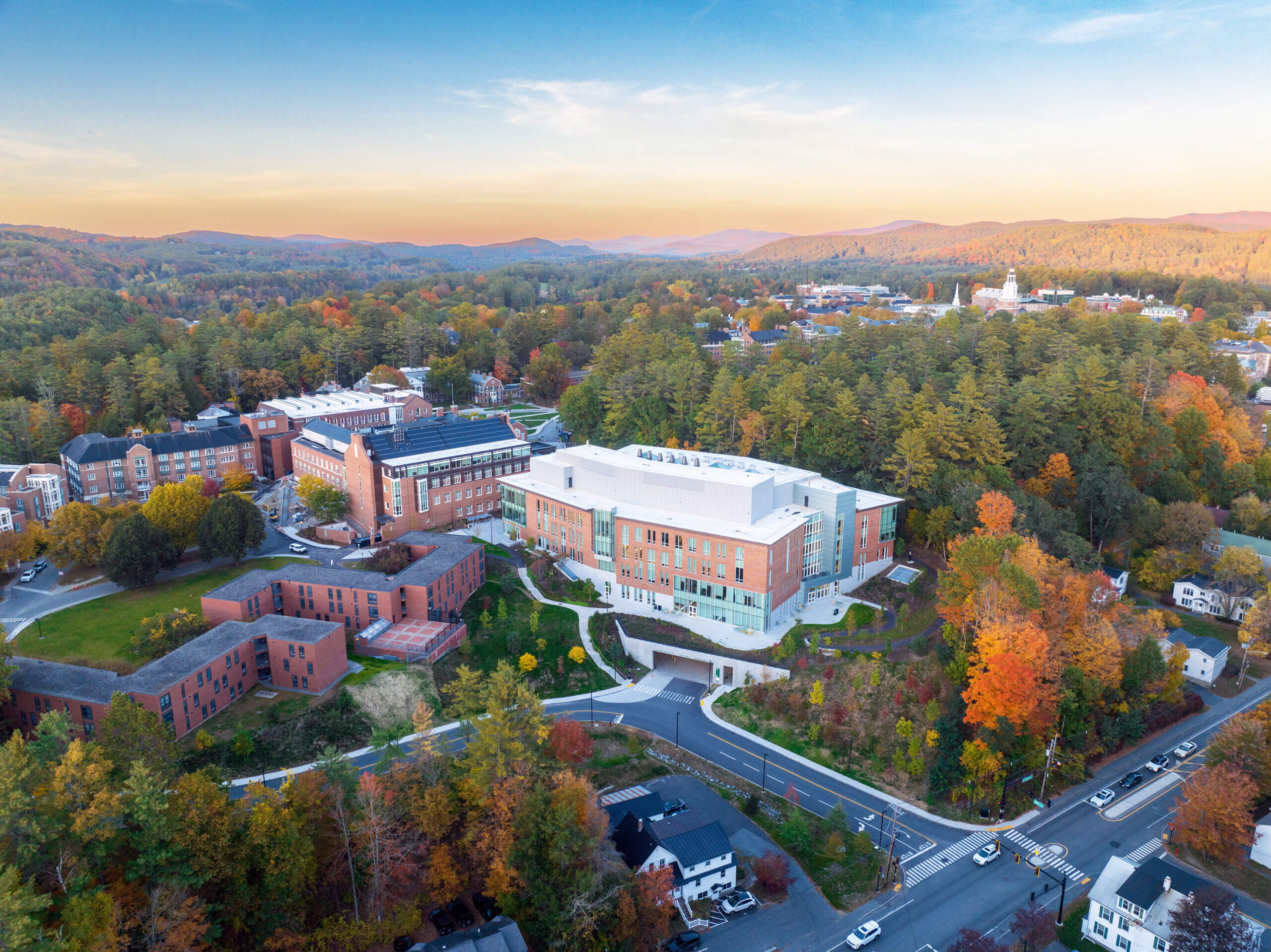

Dartmouth College — Class of 1982 Engineering and Computer Science Center
A Hub for Innovation and Collaboration
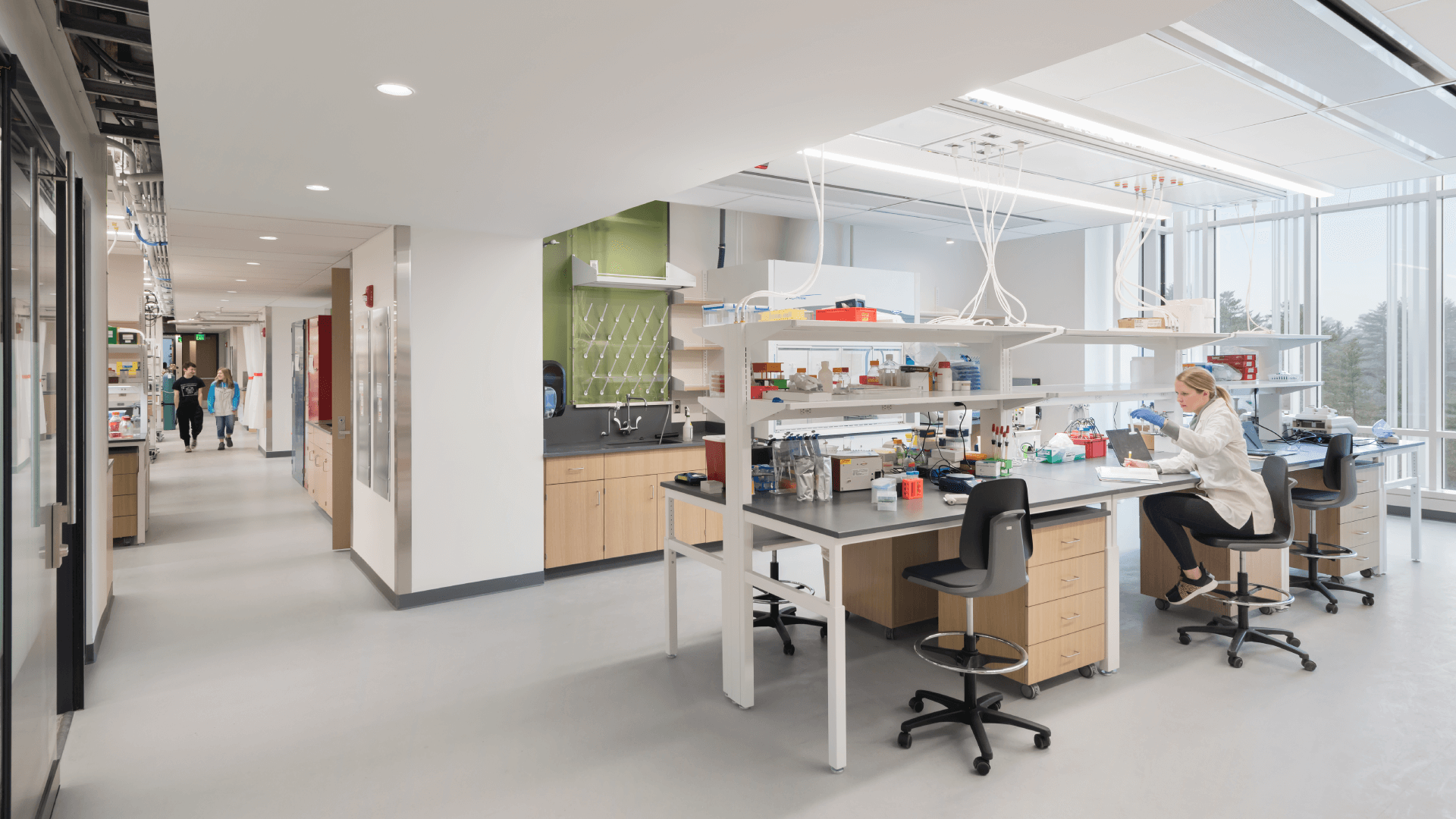
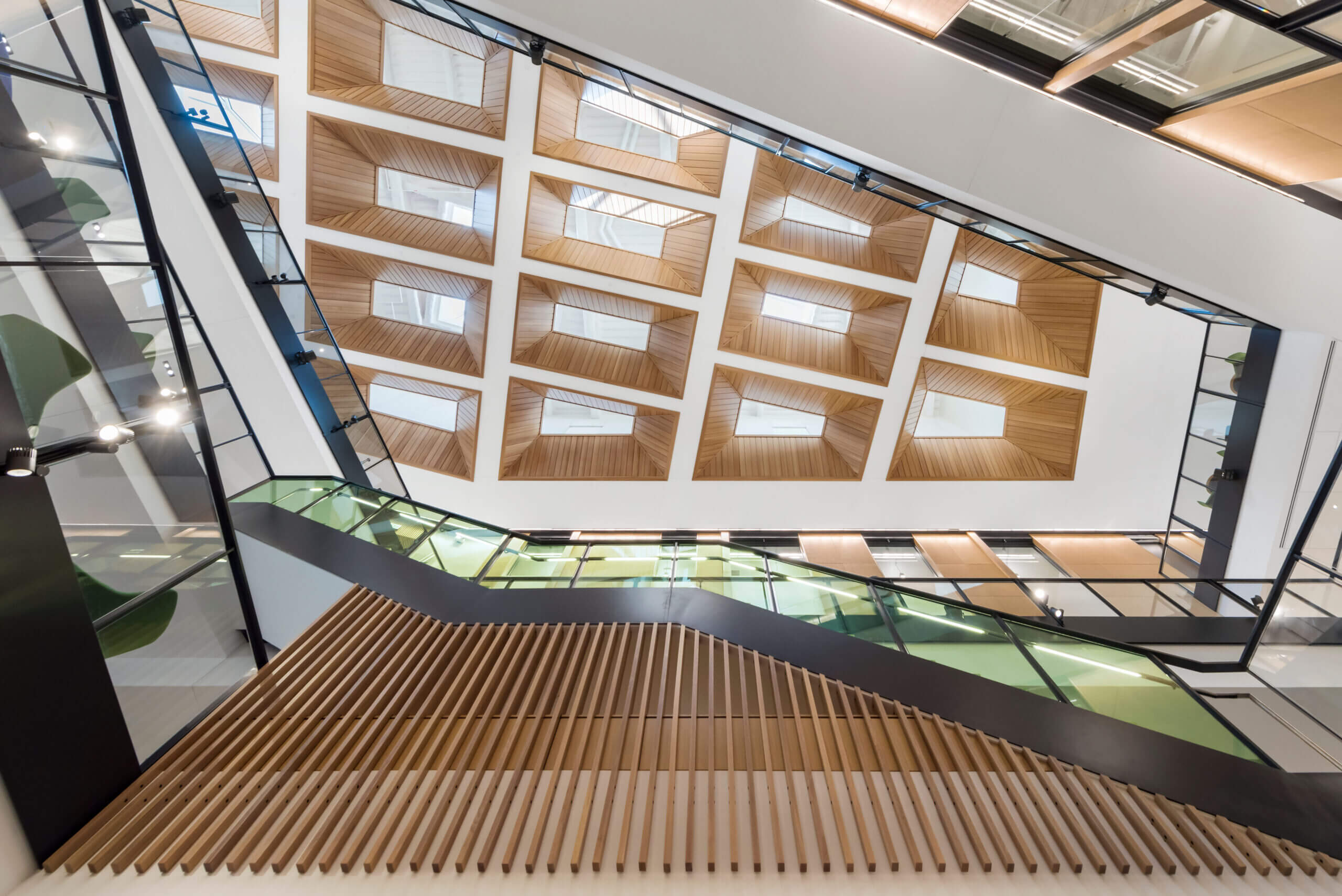
The ECSC was designed to spark interdisciplinary synergies and address global challenges, enhancing Dartmouth’s ability to attract top-tier faculty drawn to its cutting-edge facilities and collaborative ethos. It provides students with opportunities to blend engineering with the liberal arts, expanding avenues for research and entrepreneurship. The building’s design centers around collaboration, with an interior that encourages interaction and transparency. The central atrium serves as a social hub, featuring various collaboration spaces where researchers, students, and visitors can observe ongoing work in the surrounding laboratories.
When designing a new academic science building, it is essential to prioritize the client’s vision and intent throughout the design process. At Dartmouth, this meant fostering innovation and growth while integrating the program into the broader campus community. Meeting campus sustainability goals and creating a healthy building environment were equally critical. Establishing a distinct identity for the building solidified its role as a prominent campus landmark that aligns with its mission to inspire and engage both faculty and students.
A Catalyst for Growth
Strategically located in the West End District, the heart of technological innovation on campus, this 160,000-square-foot facility integrates science, business, entrepreneurship, and the liberal arts. The ECSC nearly doubles the footprint of the Thayer School of Engineering, Department of Computer Science and the Magnuson Center for Entrepreneurship. This dynamic environment strengthens digital literacy for students from liberal arts backgrounds. Since its opening in 2022, the ECSC has attracted more than 40 new faculty members, reenergizing high-growth disciplines with fresh insights and expertise. The inclusion of unassigned shell space during the design phase has further bolstered faculty recruitment efforts and allowed for the fit-out of a cleanroom shortly after completion.
Integrating Science and Community
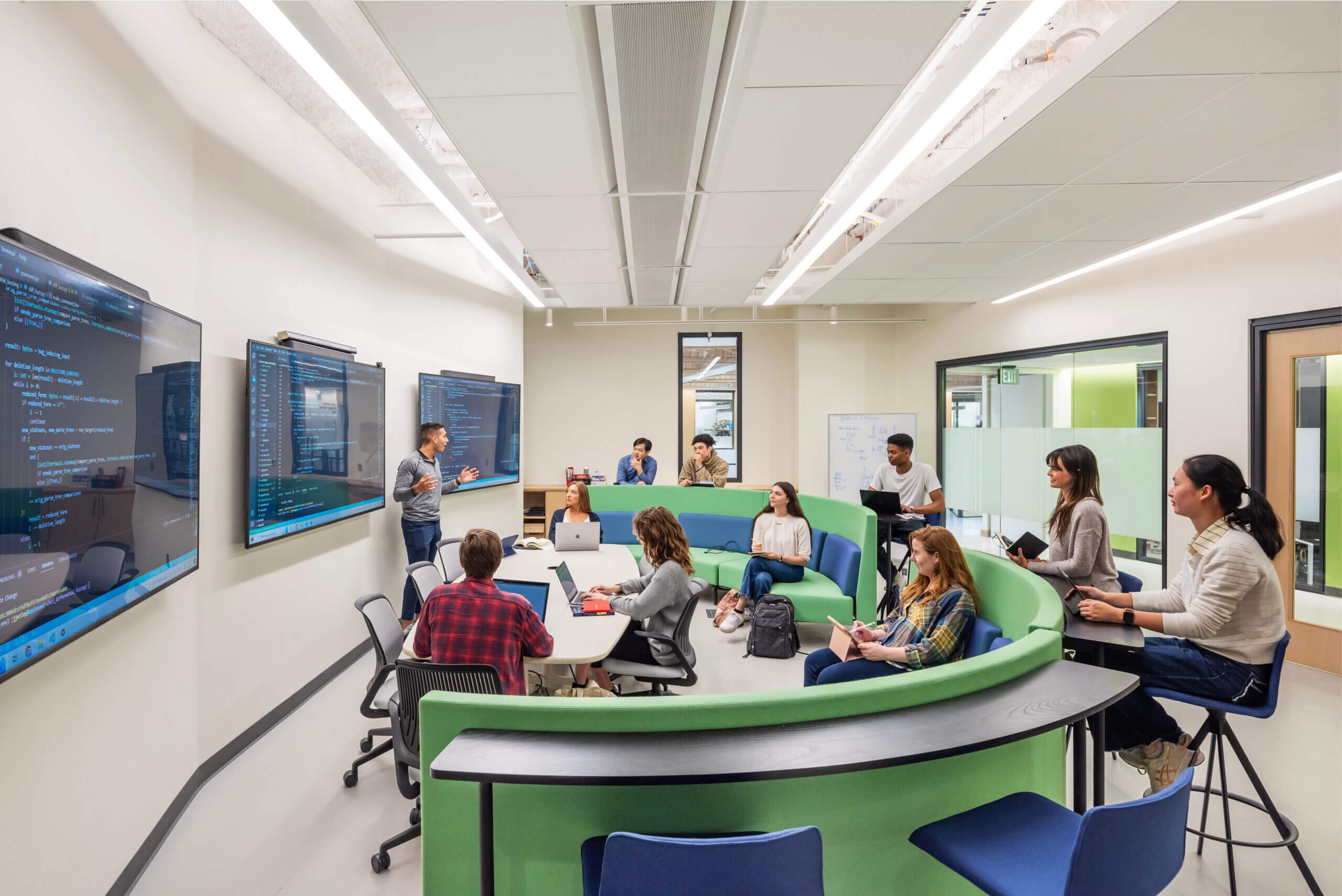
Aligned with Dartmouth’s commitment to lifelong learning and discovery, the ECSC offers a dynamic hub for teaching and research, promoting a culture of innovation and entrepreneurship. The building’s interdisciplinary programming reflects academic trends that merge computational sciences, engineering, and digital innovation, further enhancing this integration at Dartmouth. It emphasizes social connections while integrating advanced technology to drive research and amplify the impact of student projects. Supporting Dartmouth’s distinctive campus ethos of close faculty-student interaction, the ECSC offers a modern take on academic environments. Its design fosters collaboration and active learning through diverse spaces, encouraging interactions among researchers, students, and visitors while providing visibility into surrounding lab activities.
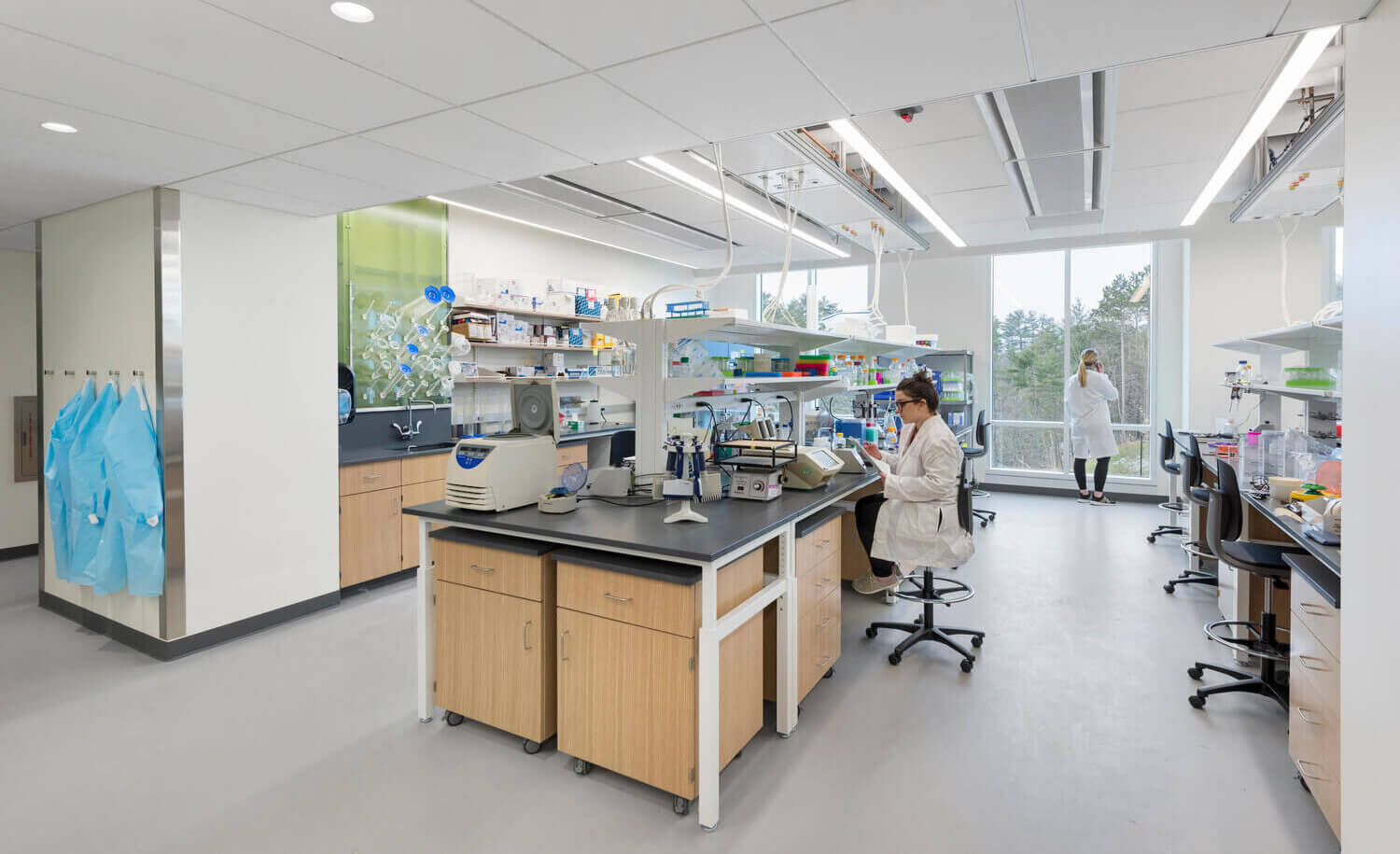
Biological and Chemical Engineering programs share the top two floors
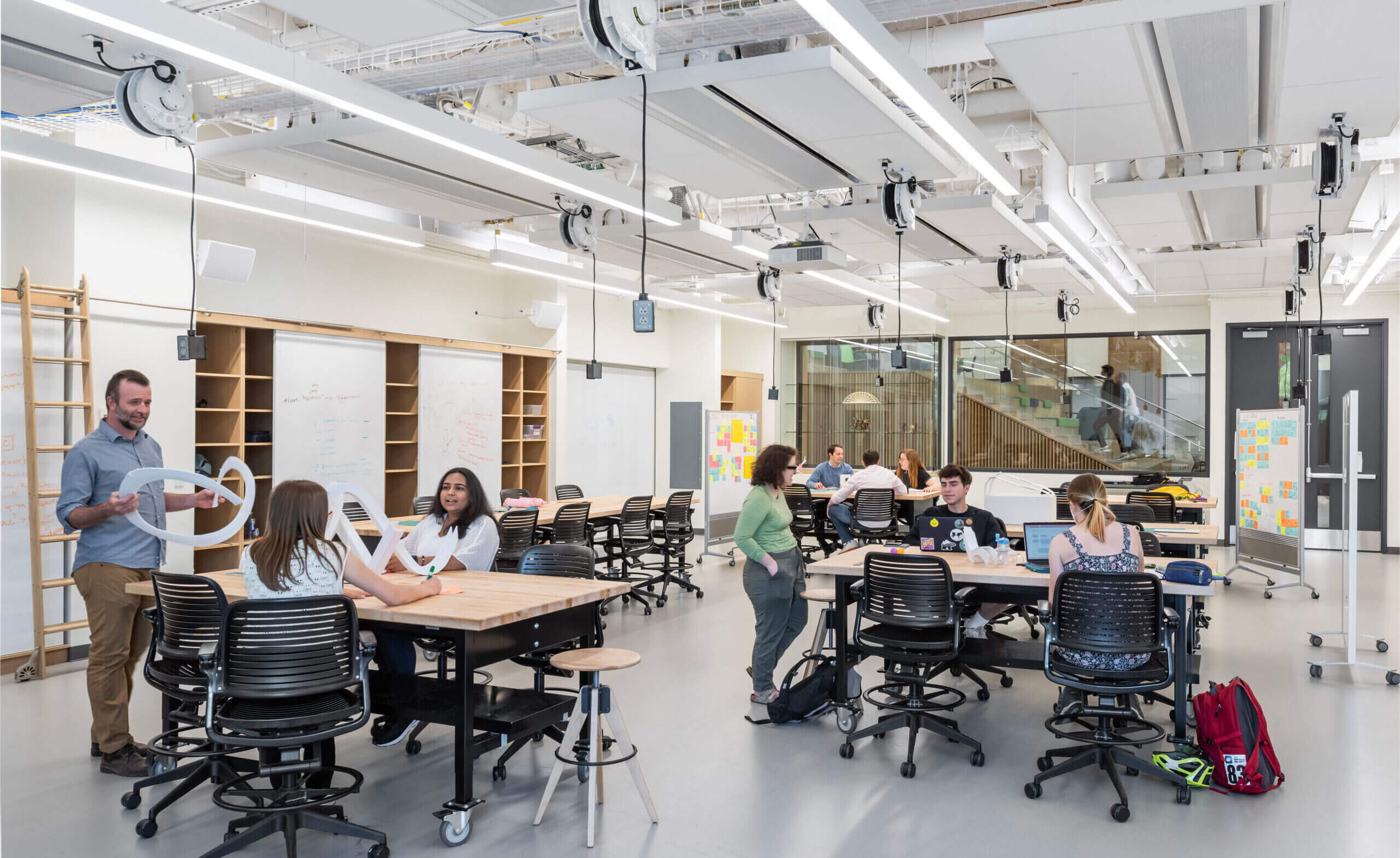
Couch Lab II — a project-based learning space
Sustainable Design for Human Well-Being
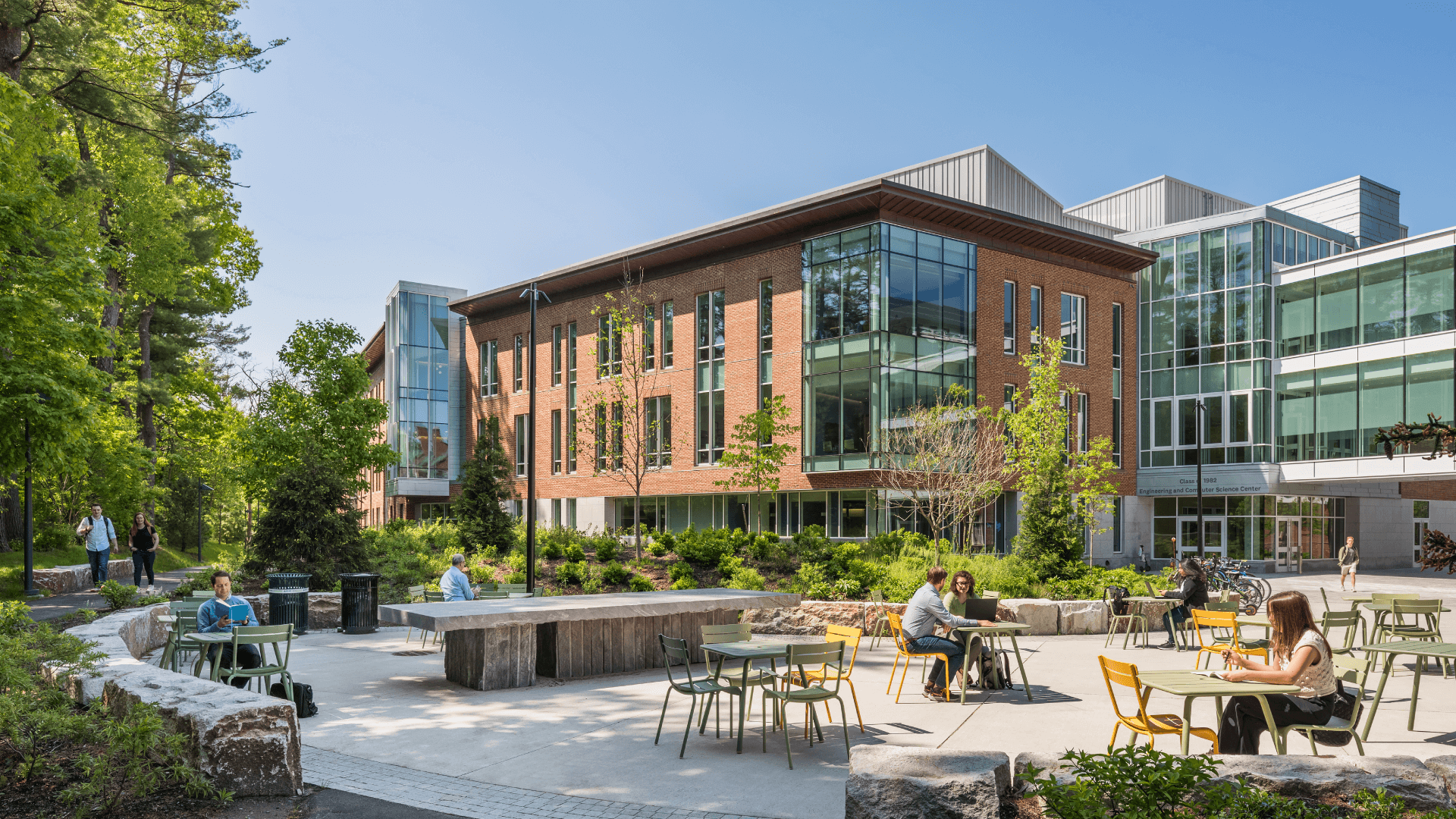
The LEED Platinum certified building underscores Dartmouth’s commitment to sustainability and its goal of achieving net-zero carbon emissions by 2050. The building’s design maximizes natural light and open spaces, enhancing psychological well-being. Prominent stairs in the central atrium promote physical activity, while views of the outdoors and surrounding plantings connect occupants to nature. The exterior façade is highly energy-efficient, and accessible paths wind through landscaped areas, offering outdoor respite spaces. Thoughtful site planning improves campus walkability and pedestrian movement, with winding footpaths and new landscaping that seamlessly integrates the new building within the campus context. Stormwater collection further supports filtration and reuse practices.
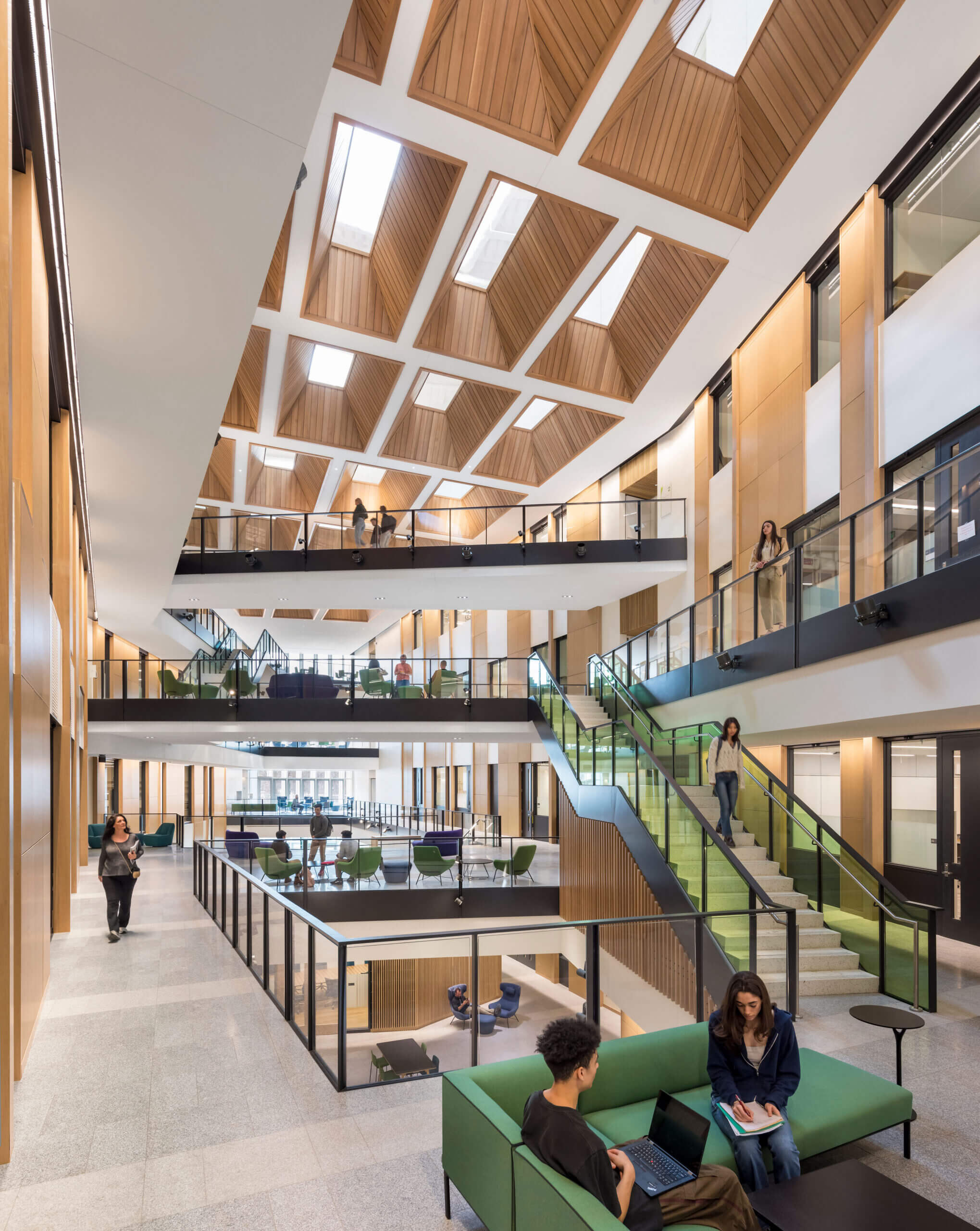
Interior spaces offer visual connection to all levels
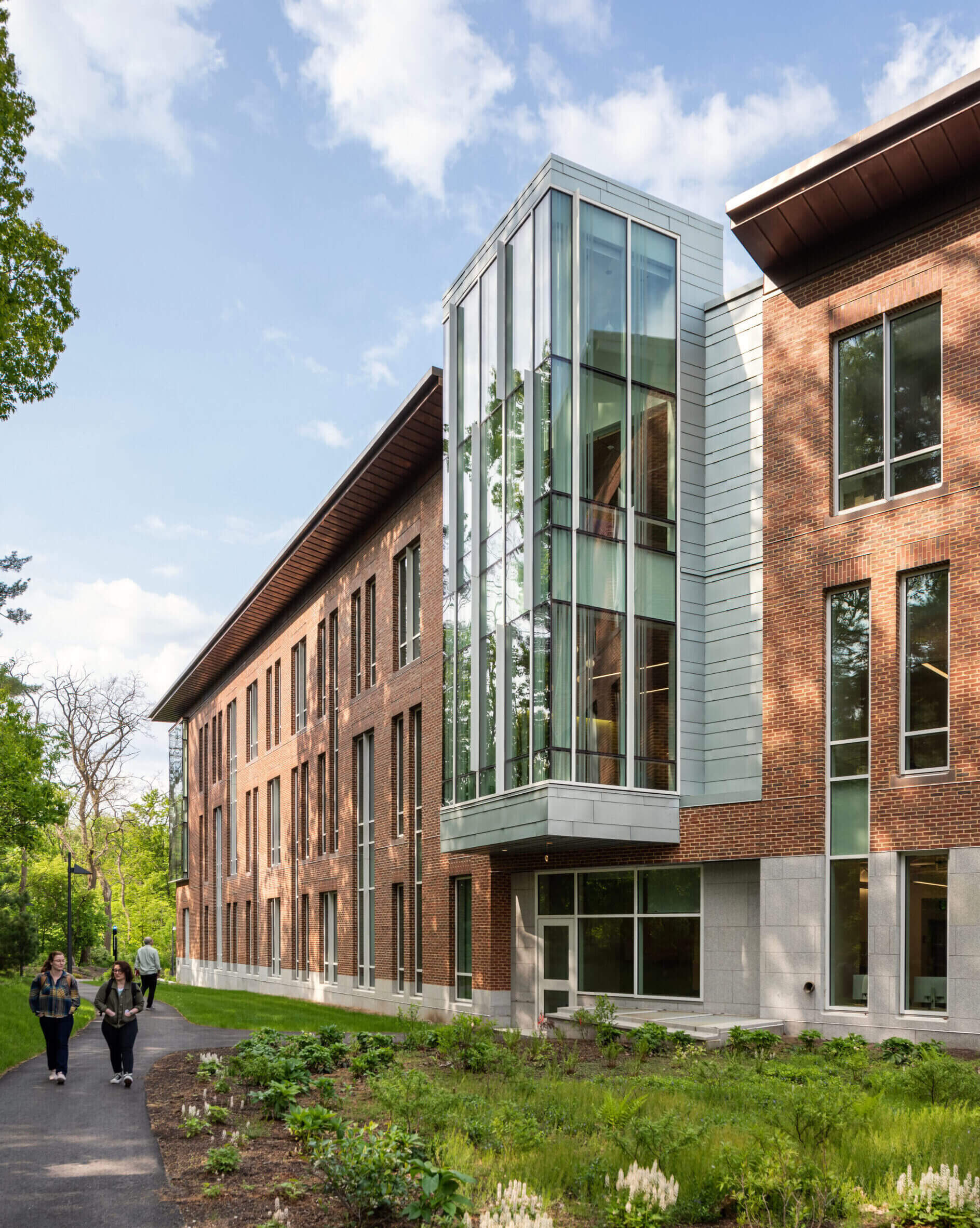
Winding footpaths promote walkability and pedestrian movement
A Sense of Place and Identity
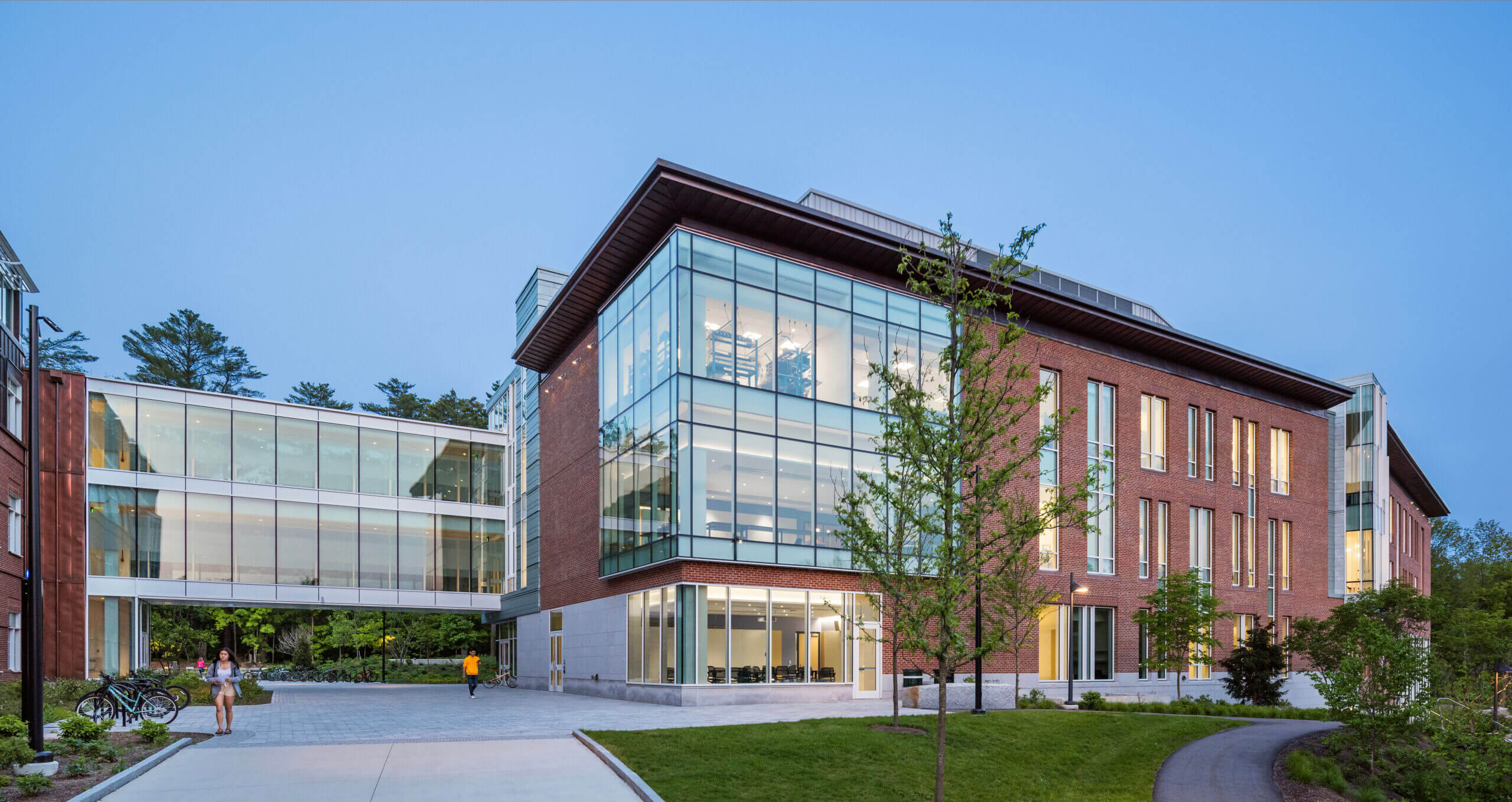
The building enriches the campus setting with traditional materials such as brick, stone, and copper roofing, alongside contemporary architectural articulation. Flexible laboratories are designed to draw natural light into the building’s core, providing breathtaking views of the surrounding hills. The design harmonizes with its collegiate environment, incorporating Dartmouth Green to balance campus identities and optimize shared resources. A secondary quad and an elevated pedestrian bridge connecting the ECSC to the Thayer Engineering Complex reinforces this cohesion. Below-grade parking and a loading dock preserve pedestrian and bicycle-friendly spaces, demonstrating a significant investment in maintaining the rural quality of the adjacent neighborhood and campus character.
What Comes Next
For Dartmouth College, the ECSC is a dynamic hub that nurtures entrepreneurship, increases density, expands faculty, and encourages interdisciplinary learning and discovery. By offering cutting-edge facilities and fostering innovation, the center attracts top-tier faculty through its commitment to advancing research and exploration. Supporting innovative programs in rapidly advancing technical fields, the ECSC is strategically poised to continue driving recruitment and growth in emerging technologies.
As interdisciplinary initiatives continue to gain momentum in academia, the ECSC demonstrates the power of aligning architecture with academic visions. Such alignment is pivotal in advancing academic aspirations and empowering faculty and students to explore solutions for increasingly intricate global challenges.
Explore how HGA partners with leading academic research institutions to design spaces that attract and retain faculty, support breakthrough discovery, and reflect each institution’s unique academic vision.