
In Conversation: Meredith Hayes Gordon and Chris Martin reflect on 30 years of designing environments that foster collaboration, accelerate discovery, and drive groundbreaking research—sharing how these experiences continue to inspire their commitment to client success.

As our Science + Technology group marks a 30-year milestone, we took a moment to talk with our incoming and outgoing leaders.
Meredith Hayes Gordon, AIA, LEED AP, stepped into the role of Science + Technology Market Sector Leader this year, providing strategic direction for a national team of planners, designers, and architects focused on delivering optimal design solutions for our clients.
She succeeded Chris Martin, AIA, LEED AP, who led the market sector since 2020. A founding partner of Wilson Architects, which merged with HGA in 2018, Chris will continue as a principal, bringing leadership and expertise to our work with clients nationwide.
In the following conversation, Meredith and Chris reflect on the evolution of their work and share their outlook for the future.
HGA has been designing research facilities for more than 30 years. How have challenges and opportunities evolved over the past decades?
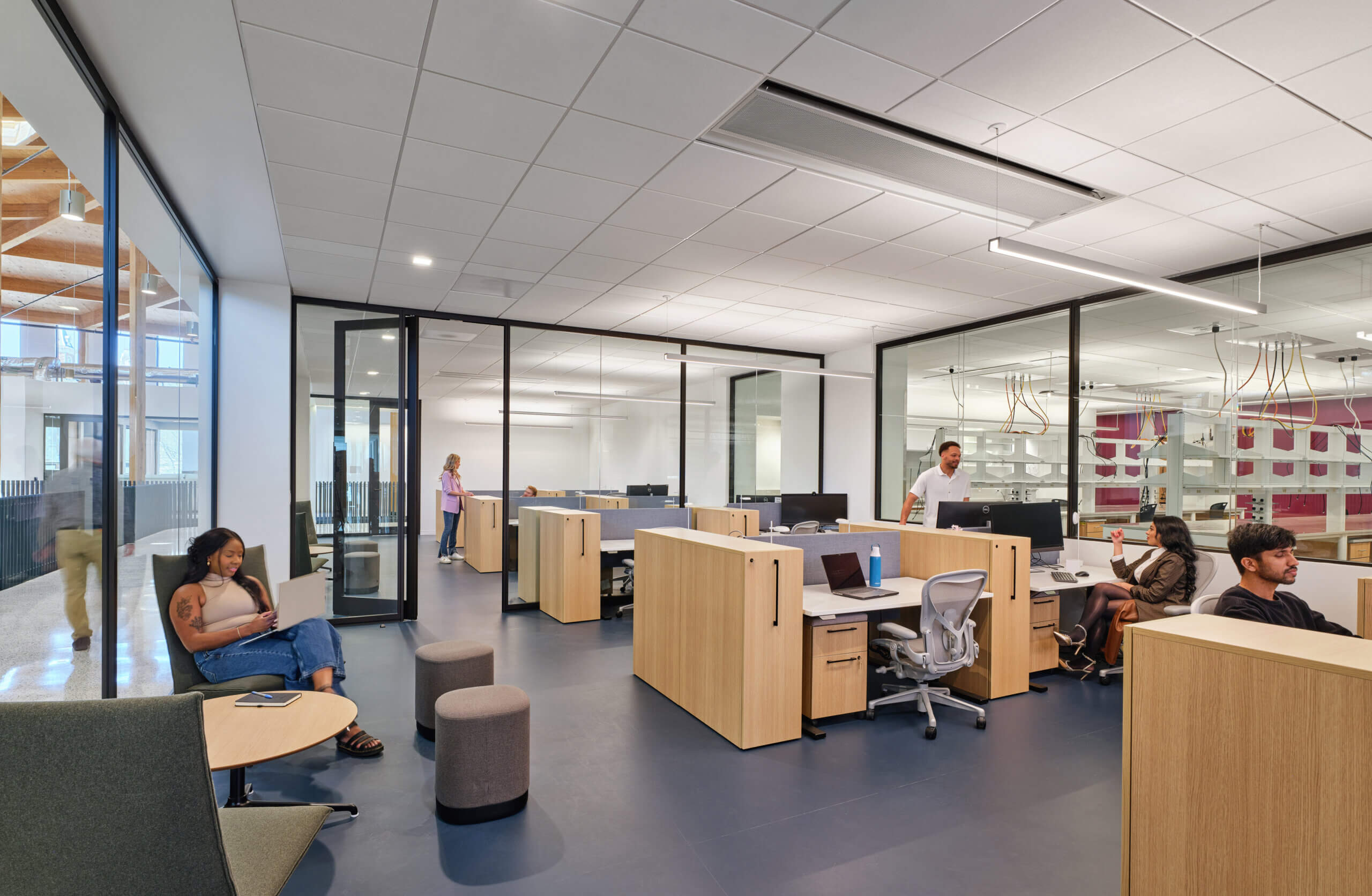
Chris Martin: Everything and nothing has changed. The way we engage clients to understand their unique culture has largely remained the same. But the nature of science—and how research has become increasingly multidisciplinary—has changed significantly. Rather than designing a building to support a single discipline, we now plan what I call highly adaptive or agnostic research environments that support multidisciplinary teams and anticipate what cannot be anticipated. That shift, along with the diversity of spaces needed to support today’s research, represents the biggest change.
Meredith Hayes Gordon: That is certainly one of the biggest changes. We have shifted from developing research environments that were much more cellular to a stronger focus on collaborative communities of research and scientific endeavors. As Chris referenced, we are now designing environments that foster success across multidisciplinary teams.
What core values have been most instrumental in building lasting partnerships with clients to support these changes?
Meredith: Building trust within our teams, and then extending that trust to clients, is a hallmark of how we work. We approach each unique situation and client inquisitively to uncover what is specific about their mission. We help clients understand the benefits and trade-offs that come with highly specified environments and balance what will work today with what will work in the long term. But it all stems from a culture that appreciates what everyone brings to the table.
Chris: We often think of ourselves as intermediaries, helping realize unique buildings that support unique outcomes. As a team, we are fortunate to work with exceptional clients who challenge us in inspiring ways. A professional and personal benefit of what we do is getting first-hand exposure to these exciting research scientists and engineers.
What was the most inspiring conversation you had with a client that shaped your approach to design?
Chris: I can list a whole bunch of people who have influenced me, but one person particularly comes to mind—Jim Brooks. He was the former Chair of the Physics Department at Florida State University and Director of the Condensed Matter Science Experimental Program at the National High Field Magnet Laboratory in Tallahassee. He had an incredible impact before he passed in 2014.
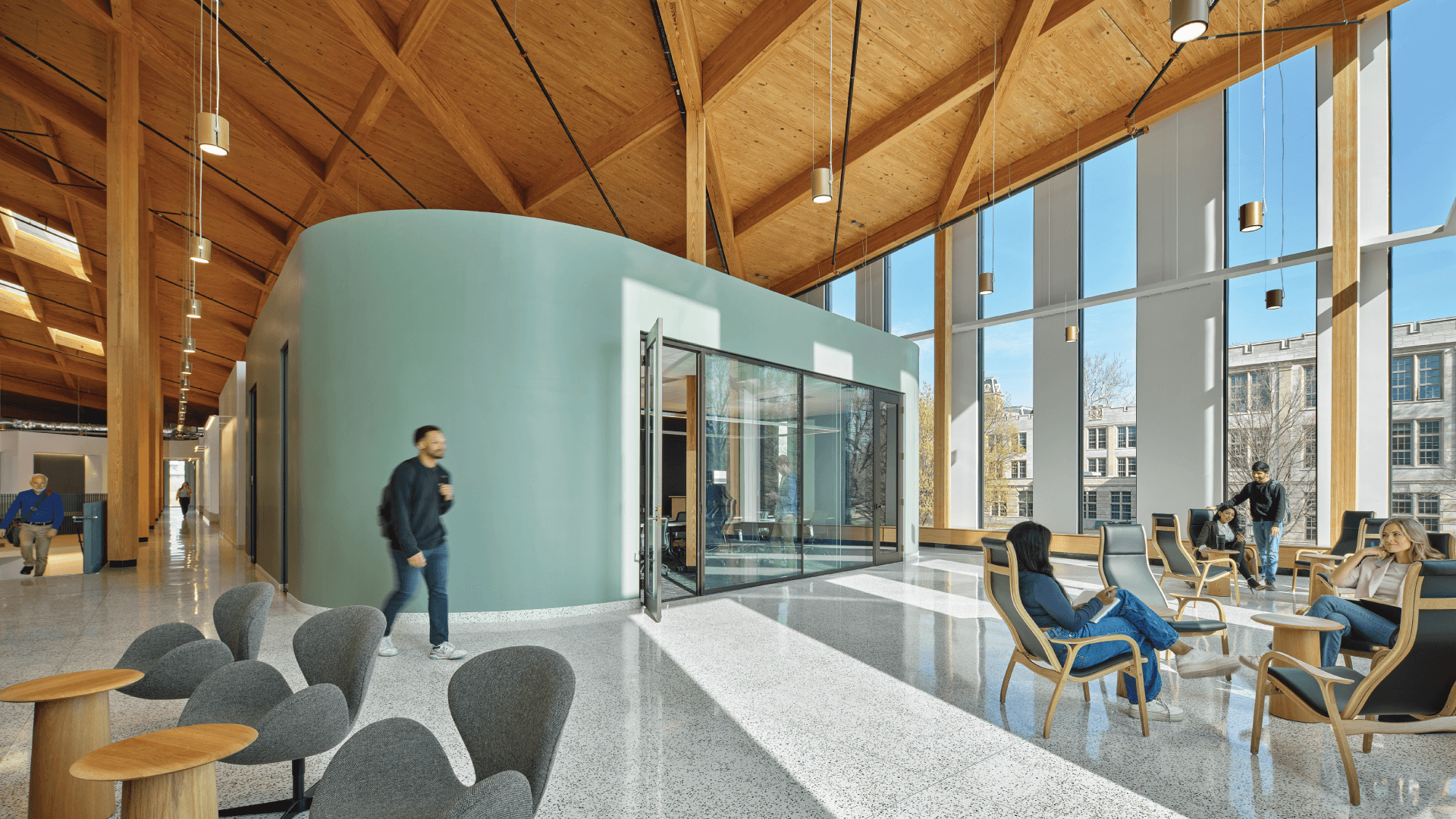
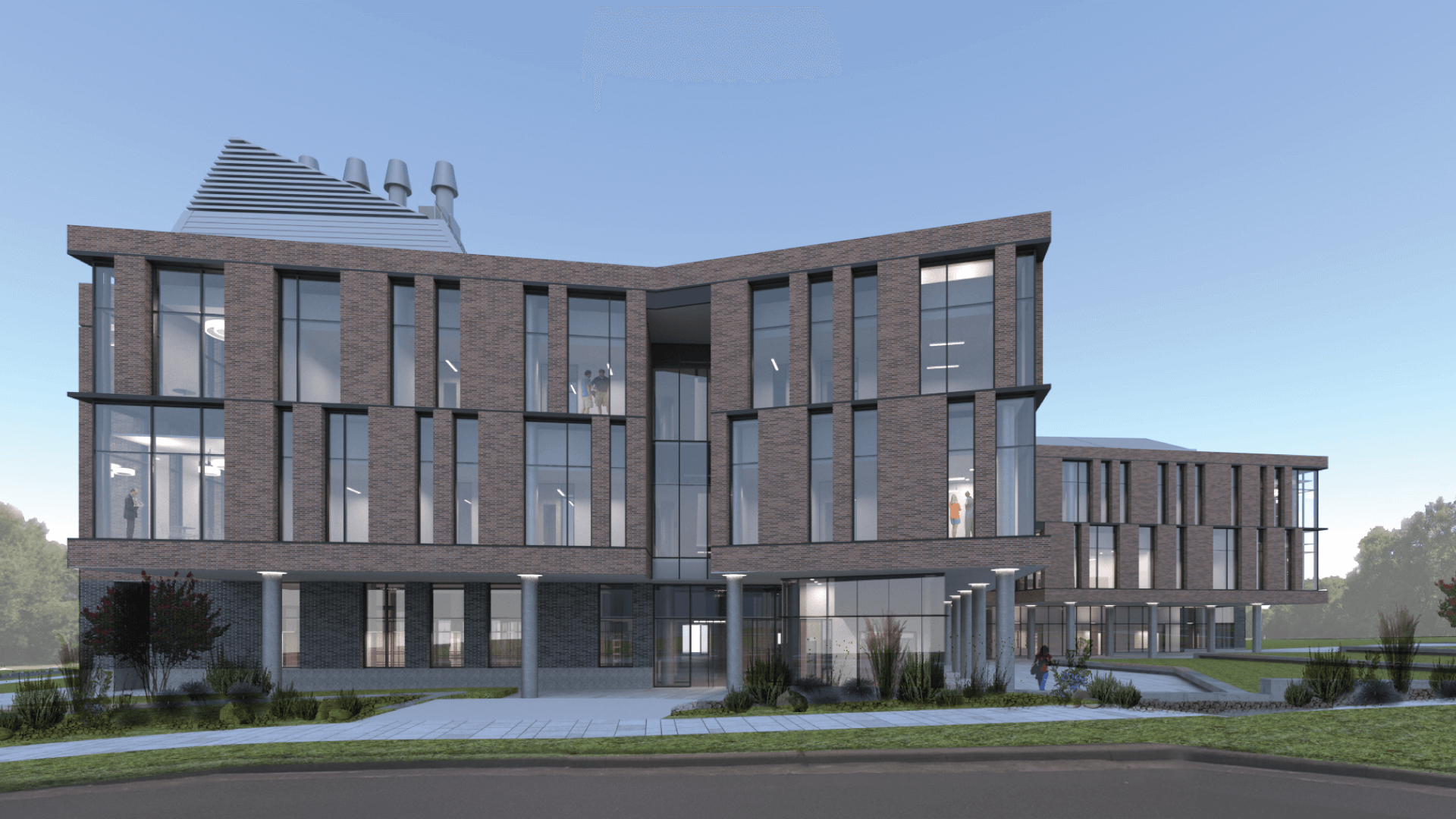
When we began conceptualizing the Interdisciplinary Research & Commercialization Building at FSU, Jim was brought in as a consultant. He described what this building should be, writing down specific details and functions that became the inspiration for its organization. He emphasized the need for natural light, spaces that support cross-disciplinary collaboration, and visual transparency to remove barriers and silos. The way he articulated all this was exceptional—one of those moments where you think, ‘Wow! He really gets it.’ His ideas became a touchstone for the project, which is about to open. It is everything he described.
Meredith: Chris, that speaks so much to the culture of an institution and the importance of designing a building that supports that culture. The architecture is not going to do that on its own, because so much of it is about the people.
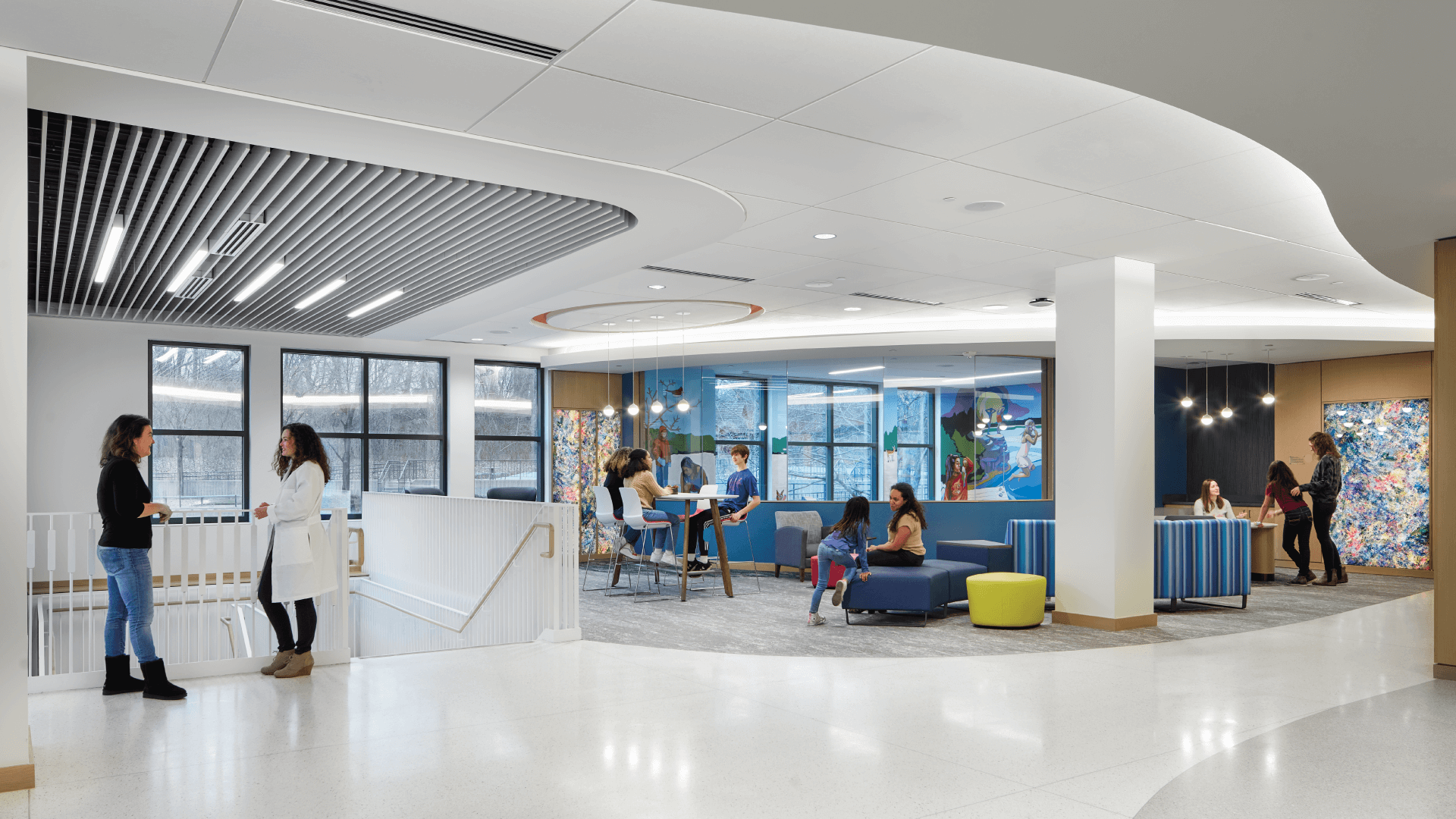
One client who similarly inspired me is Damien Fair at the Masonic Institute for the Developing Brain at the University of Minnesota, who coined the term ‘creative collisions.’ He wanted to design a facility where creative collisions happened naturally—where researchers, clinicians, or community advocates could bump into each other and spark new ideas. Since opening, the Institute has increased the number of seed grants awarded to support graduate student research—creating more opportunities for these creative collisions. Again, it goes back to how architecture can support a culture that drives scientific success.
It sounds like this has been an evolution throughout your work, that scientists are embracing this collaborative spirit rather than operating in silos.
Chris: Absolutely. The problems around health, energy, quantum research, and the environment are complex. The research community is talking about how to build effective networks to solve these tremendous challenges. One idea they have discussed is how disciplines converge in ways that build on themselves, generating a second generation of unique fields through a continuous process of convergence, divergence, and renewed alignment.
Meredith: Again, we are there to support our clients. Sometimes we enter the process after someone like Jim Brooks has written a visionary statement. Other times, we are there at the very beginning.
For instance, I’m thinking of our work at the University of Arkansas, where there was a high-level statement by the chancellor about what the Institute for Integrative & Innovative Research (I3R) could be before there even was an Institute. They were just beginning to conceive the vision, and we were there helping shape it. Conceptualizing a vision with a client is increasingly where we are going, because the challenges presented to scientists require unique approaches to planning research spaces.
What inspires you most about your work?
Meredith: Chris and I are lucky to work with a smart, talented team that is passionate about what we do. But what is most inspiring is what our clients do and the opportunity to play a part—however small—in their success. That is incredibly exciting.
Chris: And if they become your friends, it is even better. To have the opportunity to build lasting friendships with such extraordinary people is a nice career perk.
So now you are handing off the baton. Meredith, as you step into your new role, what is your vision for building on the firm’s legacy?
Meredith: Our team culture is based on trust and respect for each other, and a passion for delivering exceptional results. My number one goal is to see that continue. If we build on the success of the last 30 years and do important projects that help clients achieve new discoveries, that will be the true testament to whether I have done my job well.
Chris: Yes, and I look forward to continuing to work with clients and supporting Meredith. I think she is the perfect person to lead this group because of what she just said—she understands our team culture, how we engage with clients, and the core value of that mutually beneficial process. I’m thrilled. ∎
Explore more work from our national Science + Technology team.