
Most visual arts facilities on college and university campuses were built in the 1960s and 1970s—when Andy Warhol was still painting soup cans. As a field, the visual arts have evolved and expanded significantly since then. But apart from some superficial changes, the buildings where art instruction occurs have largely remained unchanged—with many now approaching the end of their life span.
Replacing or renovating a visual arts facility offers school administrators an array of opportunities: to expand course offerings, improve health and safety, and add multipurpose spaces that captivate and inspire campus visitors. So when HGA’s team embarks on a new project, we start with a broad-ranging inquiry that gets at the heart of what leaders hope to accomplish. Here are six questions that help spark ideas and frame the conversation:


 What are you teaching?
The range of visual arts (i.e. ceramics, painting, drawing, sculpture, etc.) offered by your institution informs the size and layout of your facility. Most disciplines have specific needs: Traditional photography requires a darkroom, for example, while a kiln room is essential to ceramics. On the other hand, digital strategy and graphic design could potentially share a space.
The breadth of your program also shapes the building’s mechanical and electrical needs. Programming affects power requirements, humidity control, dust collection, plumbing systems, waste streams (including hazardous materials collection), and more. Infrastructure considerations in visual arts facilities are more akin to the needs of a light industrial fabrication space or science lab than a traditional classroom building. Your overall ambitions must also align with the facility’s structural design: You can tell students to dream big, but ceiling heights, hallway widths, door sizes, and elevators all impact how materials, equipment, and finished art pieces flow through the building.
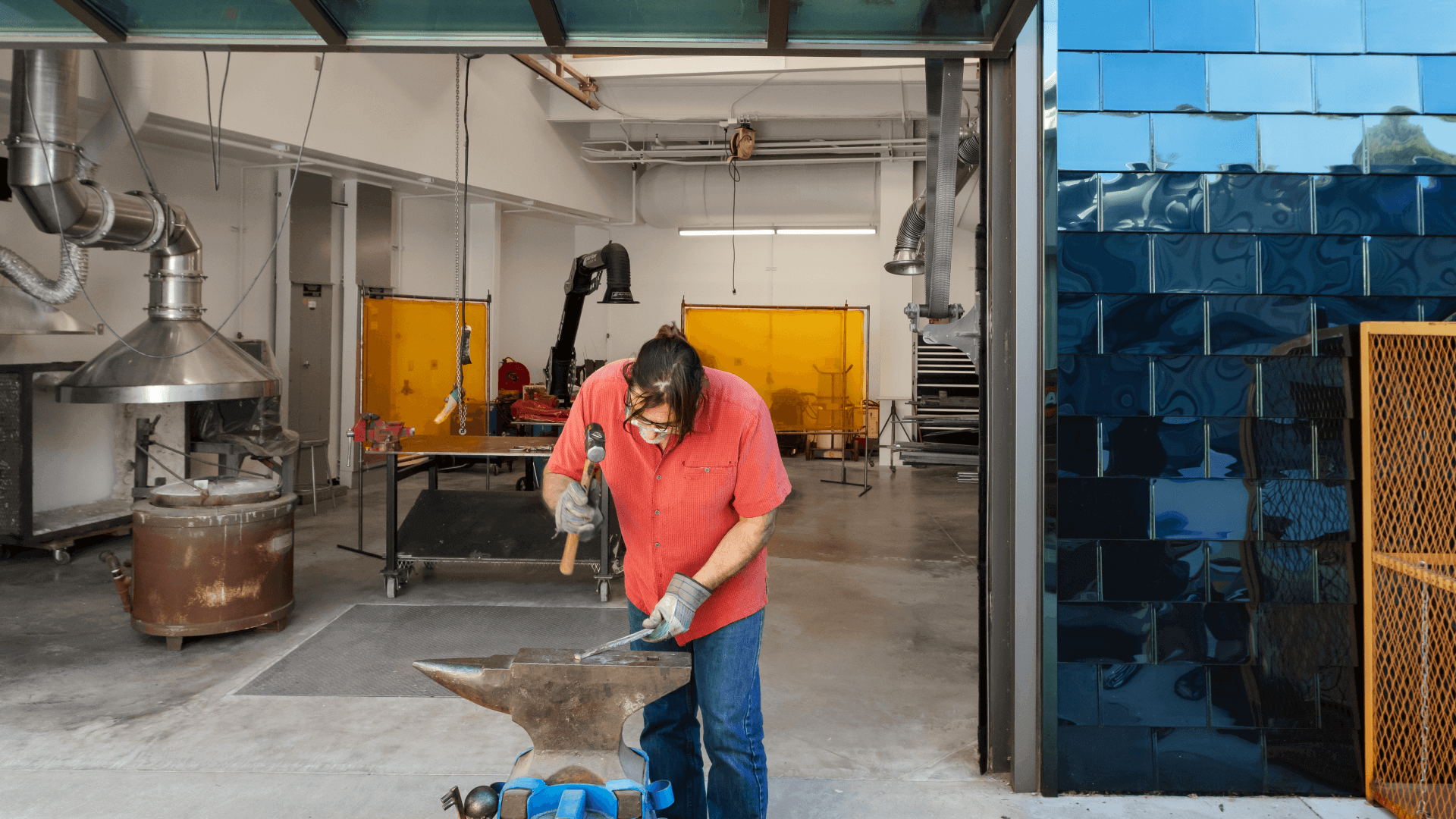

Sculpture studio at Boise State University

Art metals studio at Boise State University

Ceramics studio at Macalester College
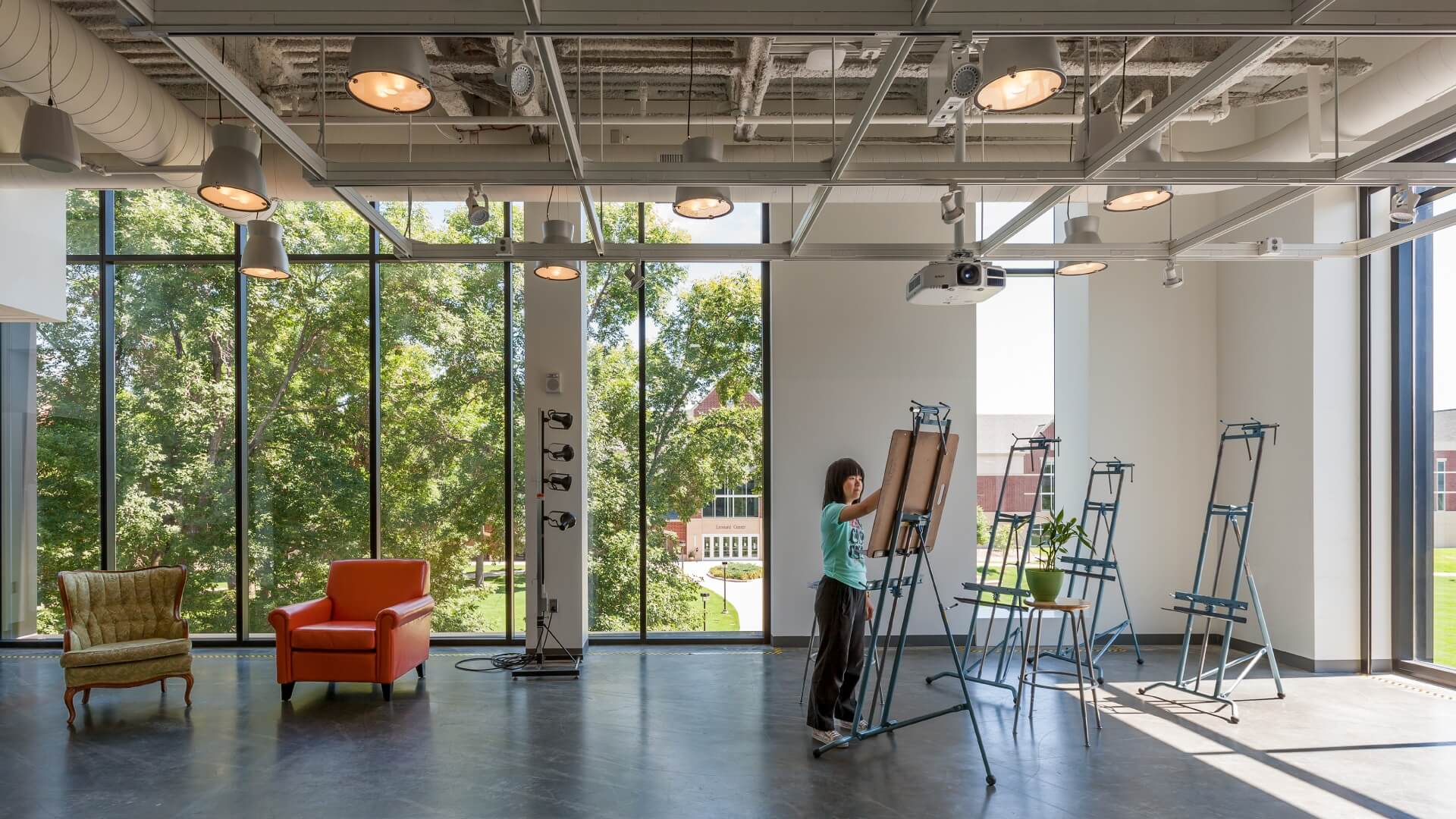
Drawing studio at Macalester College
 What safety issues require consideration?
From chemicals to power tools, hot kilns to air-borne dust, art buildings are rife with potential dangers and health hazards. Safety is a top priority we consider in developing visual arts centers. How will chemicals be stored and disposed of? What kind of ventilation is needed to use chemicals safely? How will materials enter and exit the building? What clearances are needed around power tools, foundry furnaces, and printmaking presses to allow the studio to operate safely?
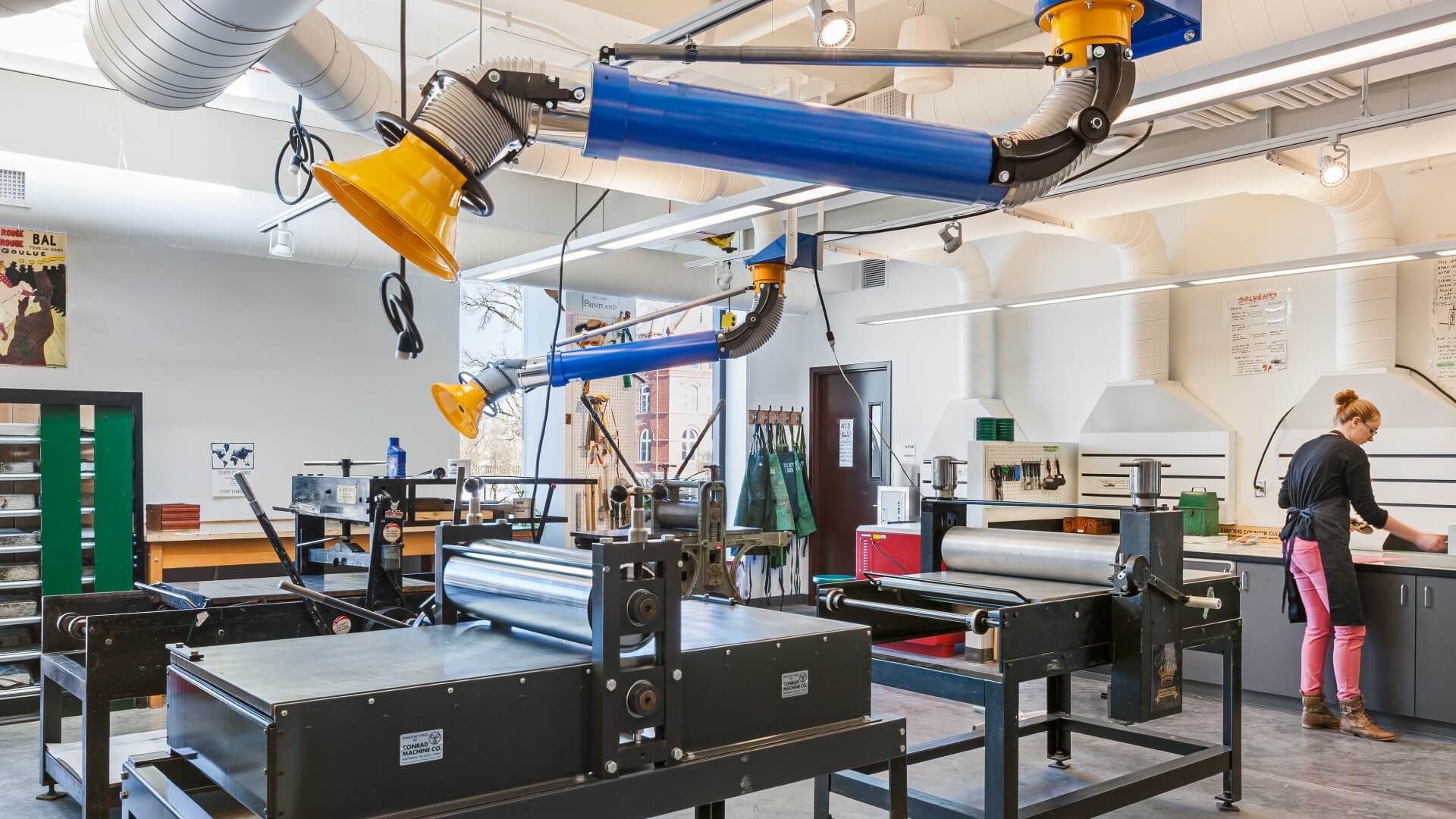
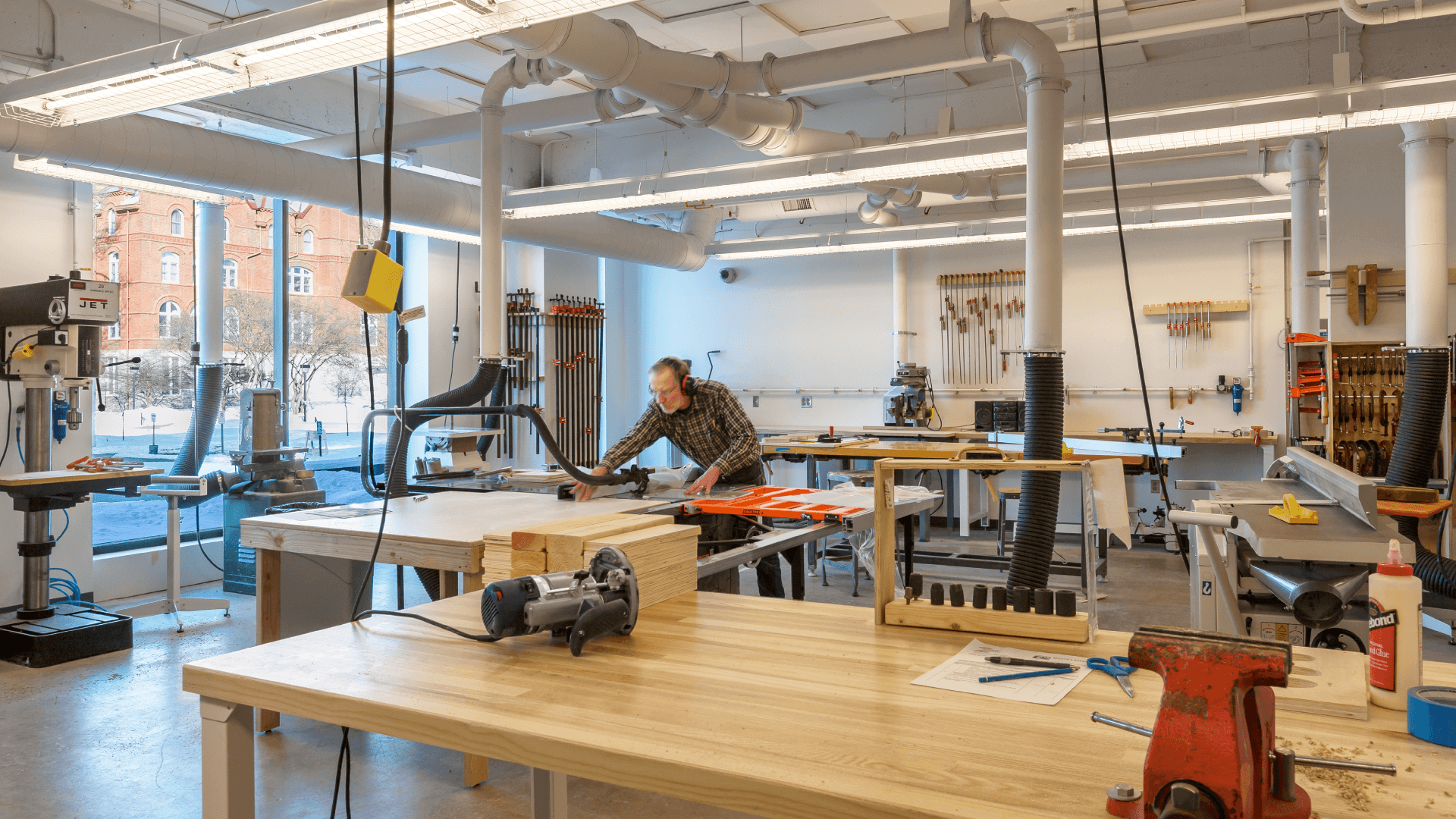

Our team addressed many of these questions during the recent renovation and expansion of Macalester College’s studio art spaces in the Janet Wallace Fine Arts Center in St. Paul, Minn. Process-exhaust intensive spaces for printmaking, sculpture, woodworking, and ceramics were carefully zoned within the building to minimize duct work and to remove chemical vapors, heat, dust through carefully designed exhaust systems. Ventilation and dust collection are key considerations in any visual arts center design.
 Who will use the building?
Students and staff focused on the visual arts will, of course, use the facility. To accommodate them, most visual arts facilities include offices, studios, galleries, classrooms, lounges, storage, computer labs, and resource spaces.
But visual arts buildings can also be attractive spaces to host public events, from donor receptions to professional conferences. At the College of Charleston in Charleston, S.C., a gallery space in the recently completed Simons Center for the Arts is used for student shows and other exhibitions during the school year, but in summer it becomes a gathering place for music lovers attending the Spoleto Music Festival. Many of our facilities also have public gathering spaces that welcome the broader campus and local community.

The Arts Commons at Macalester College have become a popular campus gathering spot.
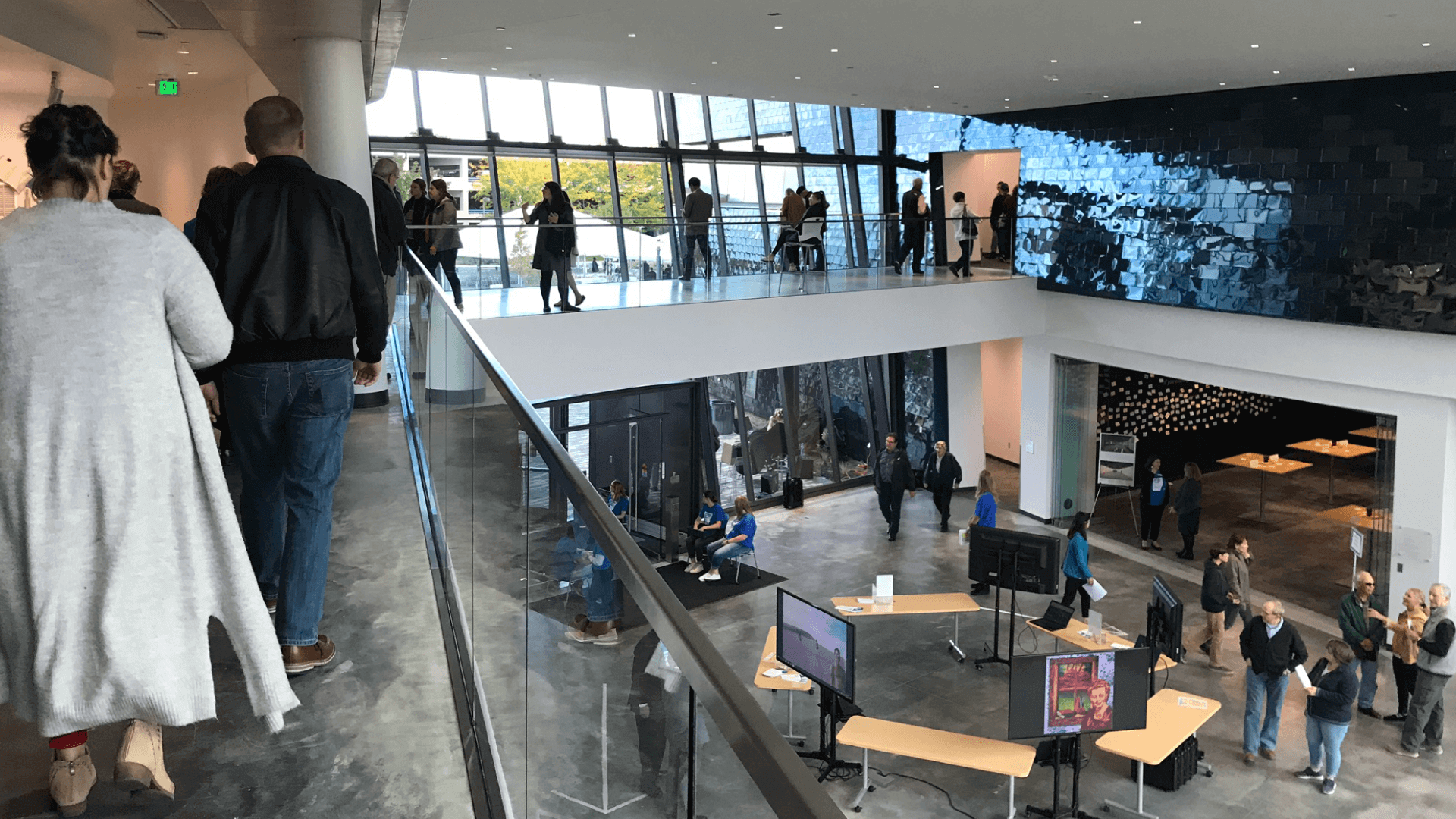
The lobby of Boise State University’s arts building regularly hosts campus-wide events.
 Are there spaces that can be shared?
Combining functions of some programs isn’t always practical (ceramics and photography, for example, can’t inhabit the same space). But in other cases, shared spaces can result in cost savings—or the reallocation of funds to other building resources. Spaces that are sometimes commonly owned include lounges with kitchenettes, critique and gallery spaces, matting/framing studios, spray booths and finishing rooms, art supply “stores,” and small studios where students can photograph their work.
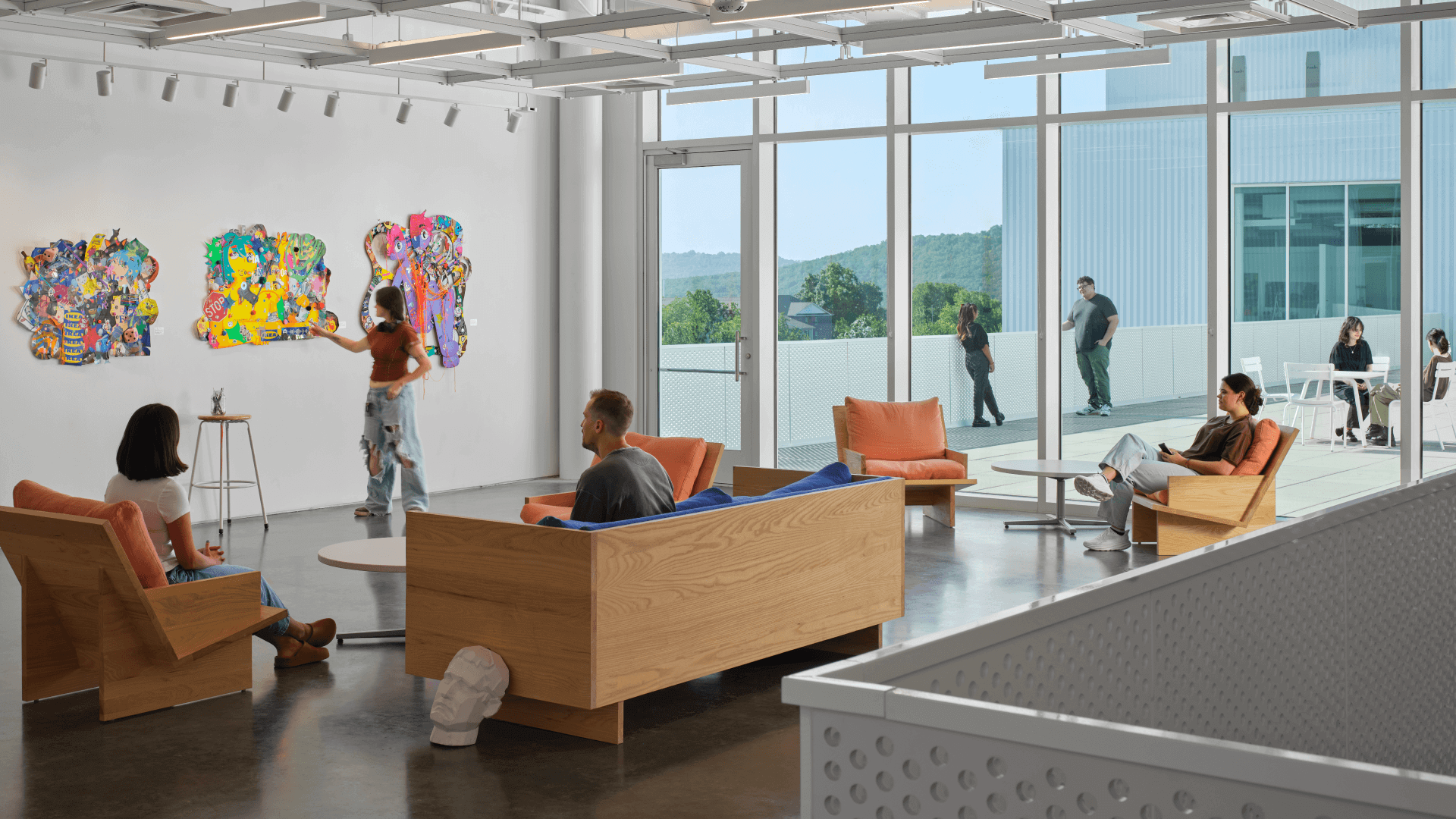
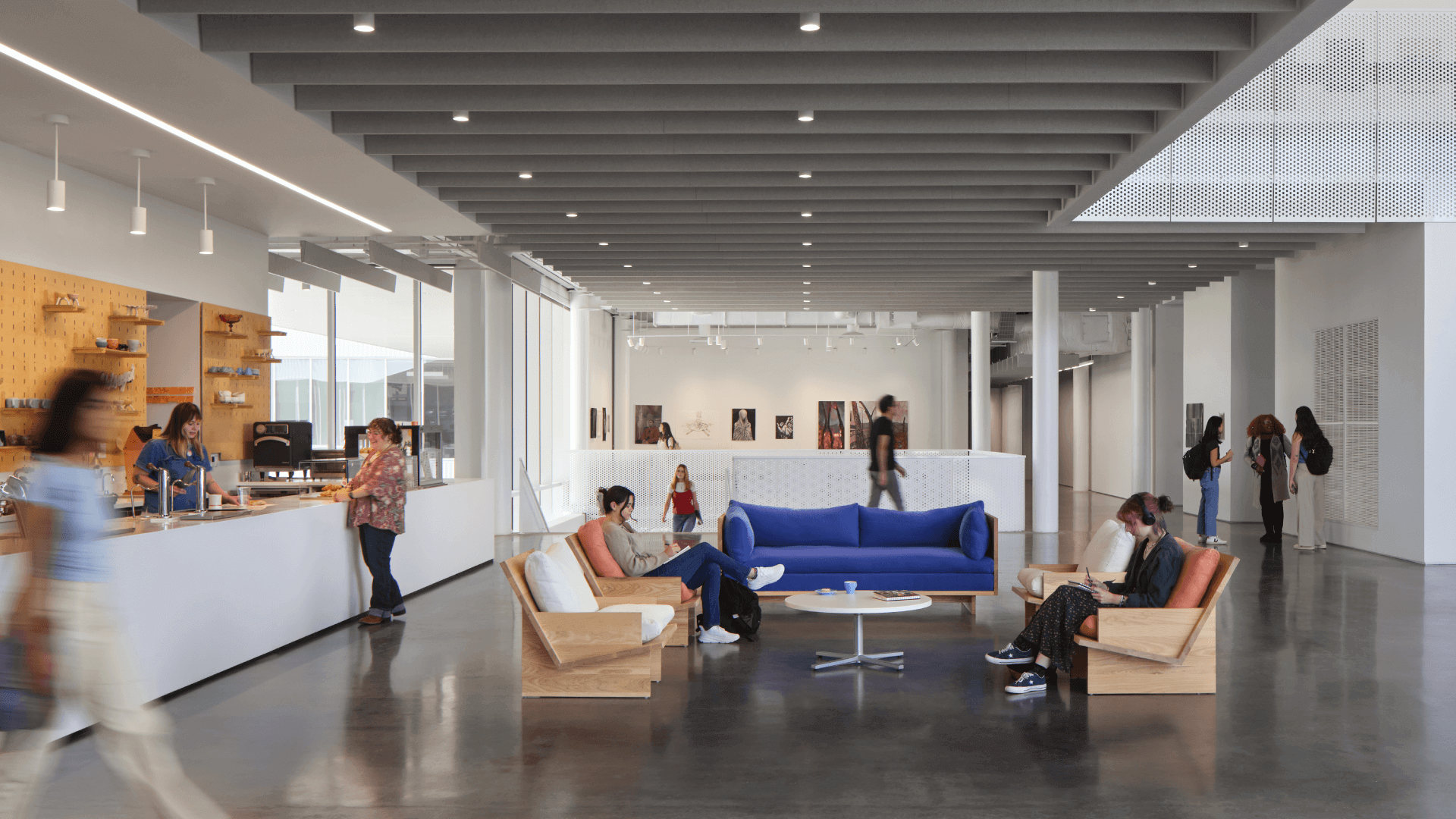

In Arkansas, HGA’s recently completed Windgate Art + Design Center features many of these spaces, and a key feature of the design is the inclusion of shared critique and lounge areas. These areas—where students in painting, drawing, ceramics, and other disciplines display their work for review by peers and instructors—are one of many that foster an open and collaborative culture.
 Will the building itself be a piece of art?
School administrators often want visual arts facilities to outwardly reflect the creativity that takes place inside the buildings. These buildings should attract and welcome visitors, showcase the artistic process, and embody the experimentation happening inside.


View into lobby from entry courtyard

Gallery with view out to entry courtyard
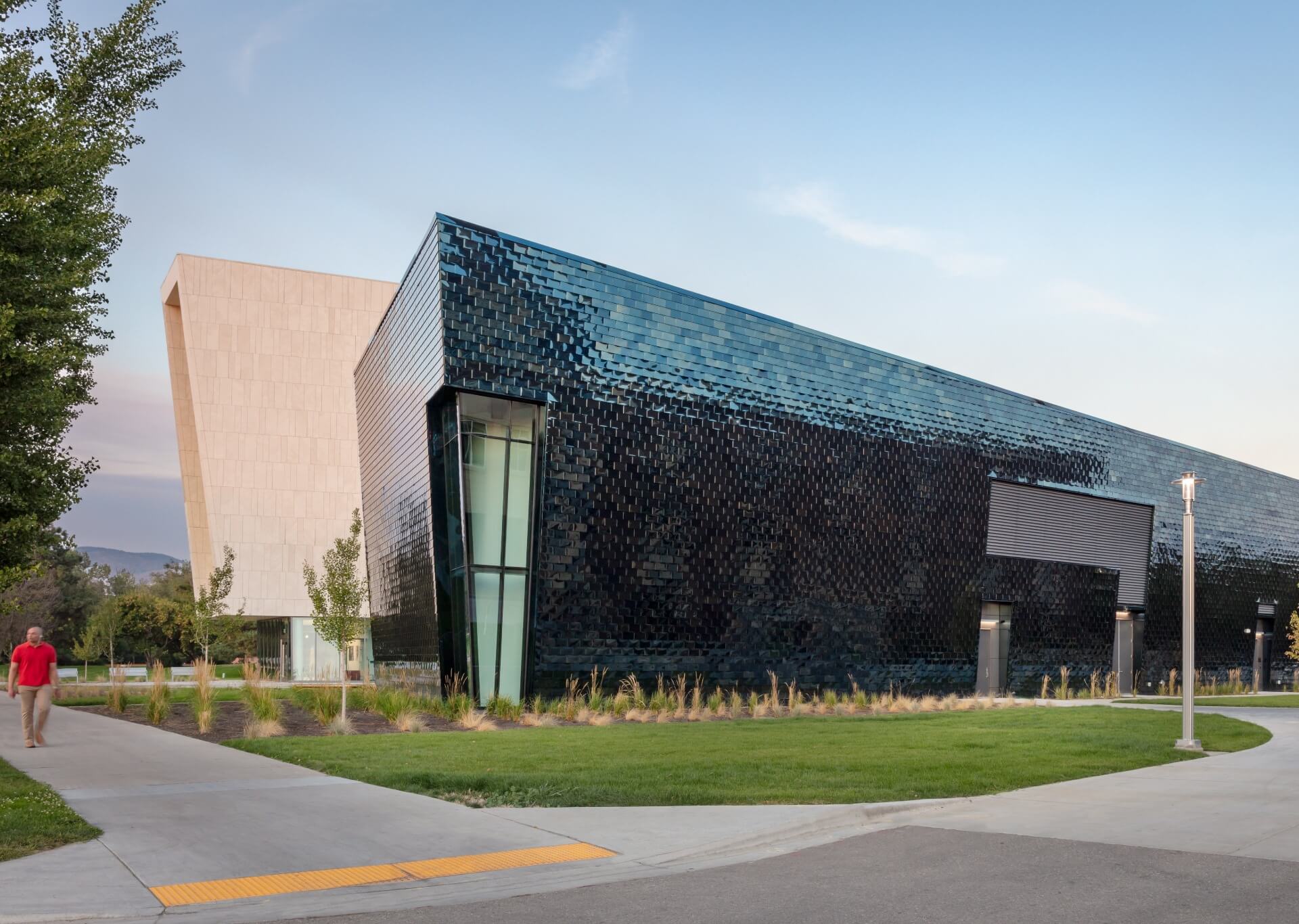
Gallery wing with iconic blue stainless steel panels
For Boise State University, HGA designed a new 98,000 SF Center for Visual Arts that delivers that kind of impact: A five-story tower clad in limestone overlooking the Boise River and situated on Capital Boulevard (the primary town thoroughfare) was paired with a two-story gallery wing covered in blue stainless steel. This distinctive shimmering exterior appears black, blue, or even gold depending on the time of day and how the sun strikes the building.
 What is the art of the future?
How do you design for the ideas of the future—the art that’s yet to come. Items like laser cutters and 3D printers, for example, unheard of when many visual arts centers were first built, are now commonplace in arts programs. Successful facility designs must be flexible—anticipating both the art we see coming around the corner, like NFTs and digital arts, which have extensive power and computing requirements, as well as art-making that’s yet to be developed. None of us knows exactly where art will go in the next half century—but if we approach the design of visual arts facilities with the right mindset, we may play a part in helping it flourish. ∎
To learn more about how HGA can help you reimagine your visual arts facility for the future, please contact Amy Braford Whittey, National Arts Market Strategist, at abrafordwhittey@hga.com
About the Author

Rebecca Krull Kraling leverages her breadth of knowledge and 25 years of experience focused on projects for the visual and performing arts to help resolve design challenges thoughtfully and efficiently. She is adept at integrating the unique planning and technical criteria of arts spaces with the overall design to create functional and inspiring spaces.