
Mass Timber
Conscience meets creativity
Mass timber is a structural approach that uses engineered wood products, such as CLT and glulam, for floors, walls, and framing. Mass timber buildings can reduce embodied carbon and accelerate construction when planned with the right code strategy, detailing, and MEP coordination.
Minimizing Environmental Impact
We believe in integrating sustainable design into all our projects to lower operational costs, consider long-term durability, create healthy learning and working environments, and minimize impact on the environment. Architecture 2030 reports that just three materials used frequently in structural and architectural systems — concrete, steel, and aluminum — account for 23% of annual global carbon emissions. Less intensive carbon alternatives, like mass timber, provide a viable structural solution while carrying embodied carbon advantages. Our process includes early modeling to understand how structural system selection can impact carbon emissions. In addition to the superior sustainability characteristic that wood products offer, mass timber buildings also offer accelerated construction schedules, an improved environment for occupants, and aesthetic and architectural design advantages.
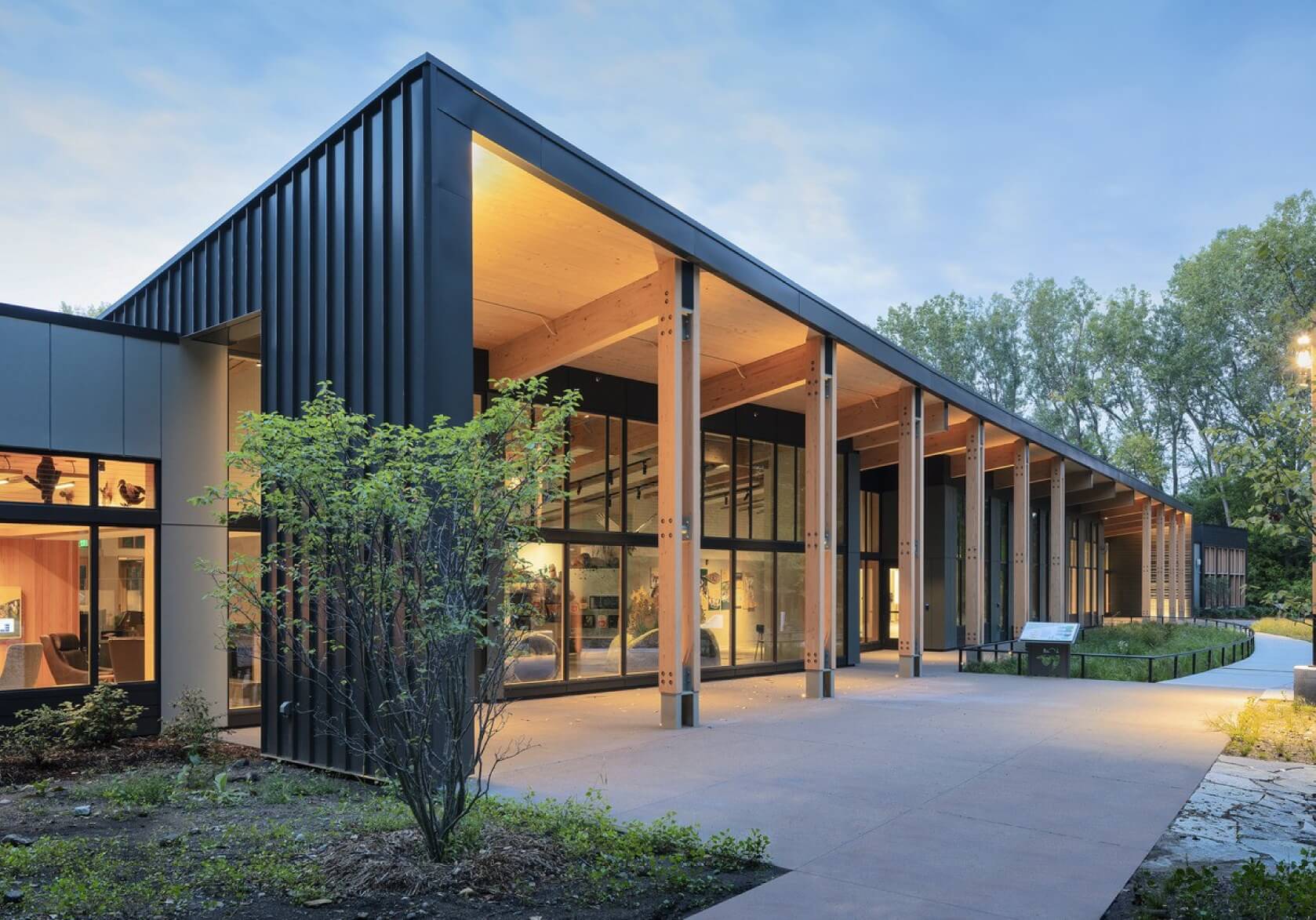
Featured Mass Timber Projects View All Work
Furthering Mass Timber Construction




Common Questions
Mass timber uses large engineered wood elements—for example, CLT panels, glulam beams—as primary structure. Light-frame construction uses smaller dimensional lumber. The size of mass timber elements leads to an inherent fire resistance, which allows mass timber to be used in taller buildings or in building types where light-frame construction would be impractical. Because mass timber is often prefabricated, coordination of penetrations and connections happens earlier to reduce field conflicts.
Mass timber projects can meet code requirements with the right assemblies, fire-resistance strategies, and connection details. Compliance depends on building type, height, occupancy, and local amendments, so early code analysis is essential.
Cost depends on spans, availability, market conditions, and fabrication logistics. Schedule benefits from prefabrication, early trade coordination, and faster erection. Early alignment across architecture, structure, and MEP prevents late changes that erode schedule advantages.