
Editor’s Note: This is the second in a series on workplace design in television and film. Find more lessons learned in Part 1.
Now more than ever, business leaders are eager to imagine the office of the future. Hybrid working, employee wellness, and enhanced collaboration may feel like new concepts, but these needs have existed for some time, documented both directly and indirectly in pop culture for decades. Read ahead to learn how TV and movies have portrayed workplace design—and how HGA’s current work is incorporating these insights.

Form Ever Follows Function

As a part of his Men in Black (MIB) interview, Officer Edwards (Agent J), is asked to complete a hand-written test while sitting in a chair supremely ill-suited to the task. The Ovalia Egg Chair was a Space-Age icon when it debuted in 1968. Its swivel base, wool accent upholstery and fiberglass shell formed an enveloping design meant for lounging and not writing. Arguably, it was fashioned first and foremost to just look cool.
“Form ever follows function” is one of the best known and most misunderstood architectural quotes. Some have confused it to mean that aesthetic delights should be secondary to pragmatic needs. However, when Chicago architect Louis Sullivan first penned these words in 1896, he was actually trying to convey that aesthetic forms should take their inspiration from functional needs. Later, Frank Lloyd Wright, a protégée of Sullivan’s, expanded on this to say “form follows function—that has been misunderstood. Form and function should be one, joined in a spiritual union.” 1,2
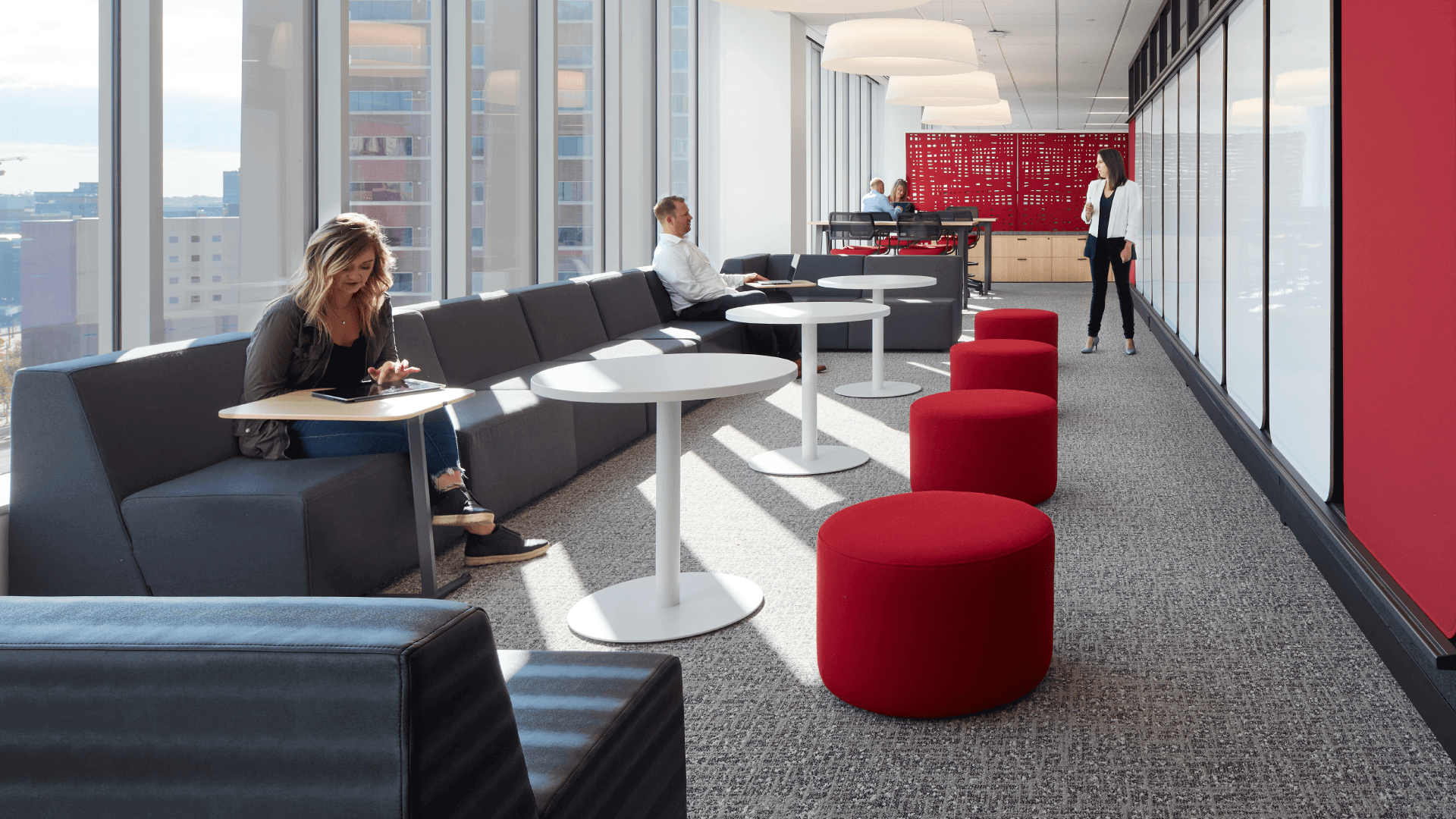
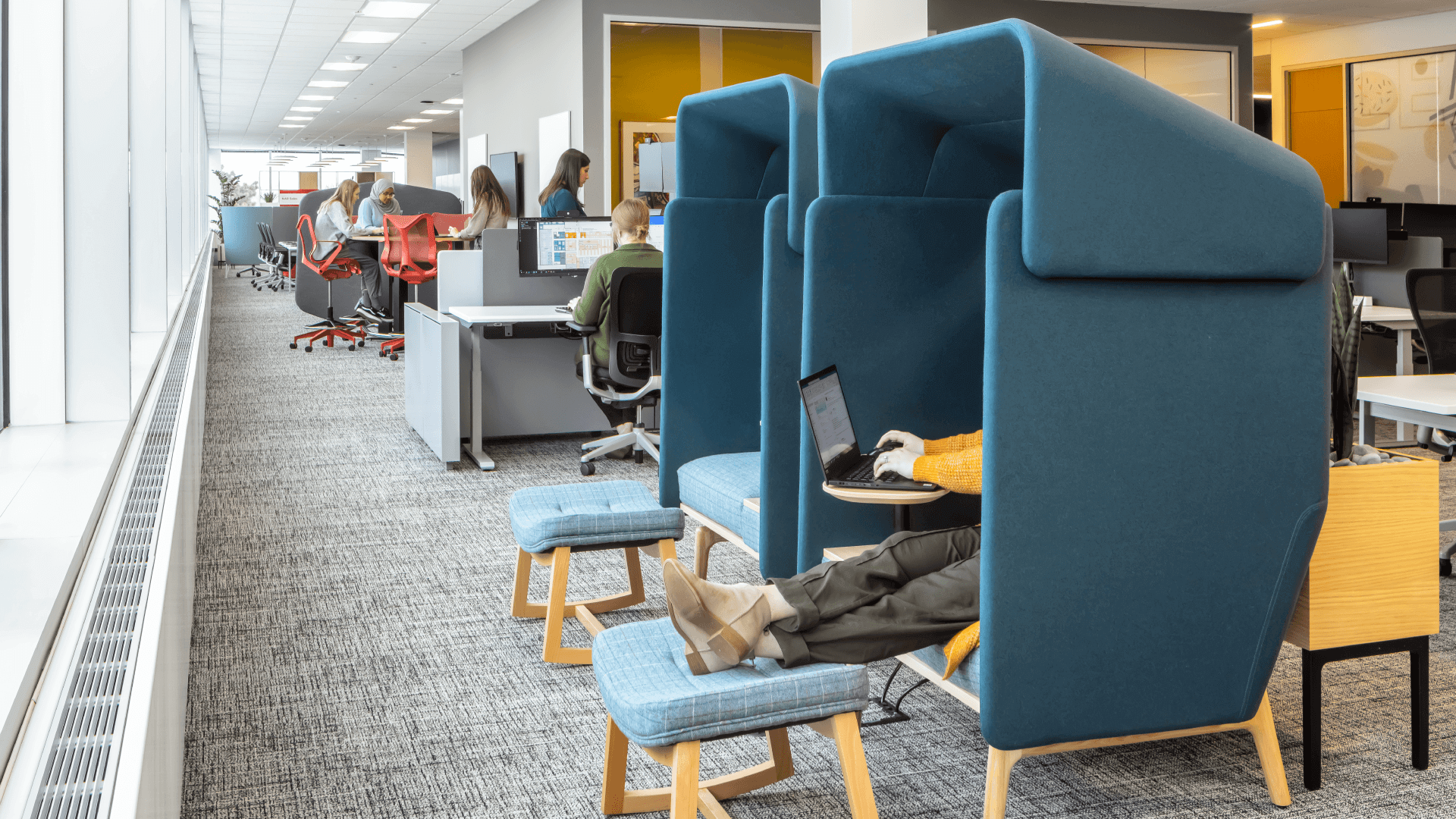
Because the beauty of a furniture piece influences our wellbeing, aesthetics are as much a priority as other functionalities. To achieve the highest level of beauty, furniture and workspaces should take inspiration from their intended use. Today attractive work lounges include seat bolsters, laptop tables and many other components that support work tasks better than dragging an 80 pound coffee table across the floor.
A Branded Environment Entails More than Logos
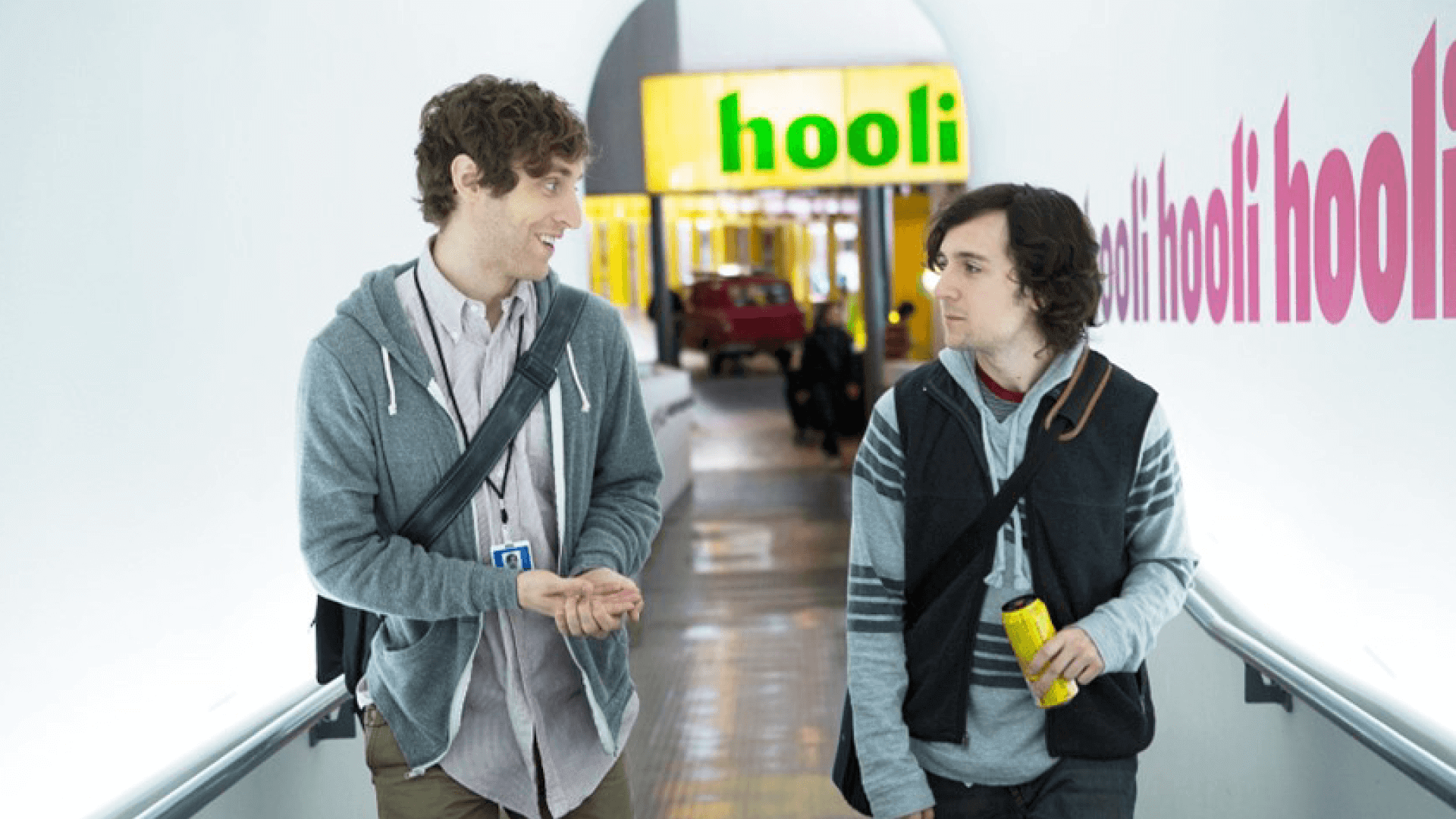
In the pilot episode of HBO’s Silicon Valley, Richard and Big Head walk into Hooli’s Headquarters surrounded by Silicon Valley stereotypes, including a gratuitous use of the company logo. Unlike viewers being introduced to a new show, in real life most people walking into an office already know the company’s name. What is often more opaque is that company’s brand message.
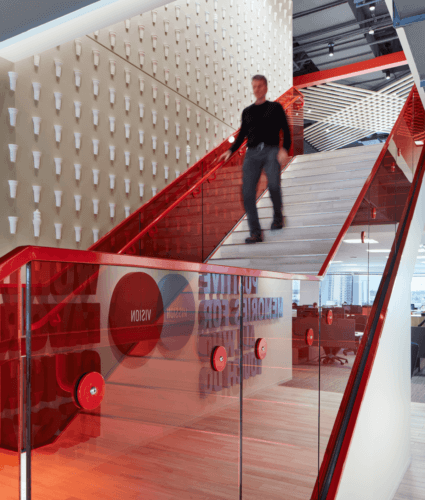
A company’s brand is the sum total of our experiences with it and ranks among each organization’s most valuable assets. Companies work hard to shape their brand—and logos play a key part in that messaging. However, within the context of a physical space there are design elements with far greater influence on our experience.
A thoughtfully branded environment will use form, materiality, and other design elements to craft a space that embodies the values and culture of that organization.3 It will go beyond the superficial to touch all parts of the workplace, from location and planning down to amenities and architectural detailing. If done well, it will strengthen client loyalty, recruitment, and team retention.
But then again, perhaps Hooli’s values and culture are indeed superficial, and Mike Judge wanted this known from the first scene.
Business Happens in the Break Room as Much as in the Boardroom

After 162 episodes of Black-ish, Dre chose to quit his urban marketing job at Stevens & Lido not in a formal setting like the conference room, but in possibly the most informal corner of any office—the break room. Water cooler conversations, once undervalued as the place for mere gossip and weekend plans, are finally being recognized as indispensable vehicles for serendipitous collaboration, innovation, and unfiltered conversation. Along with missed opportunities for mentoring and general culture building, these impromptu discussions were among the costliest casualties of remote working during the pandemic.
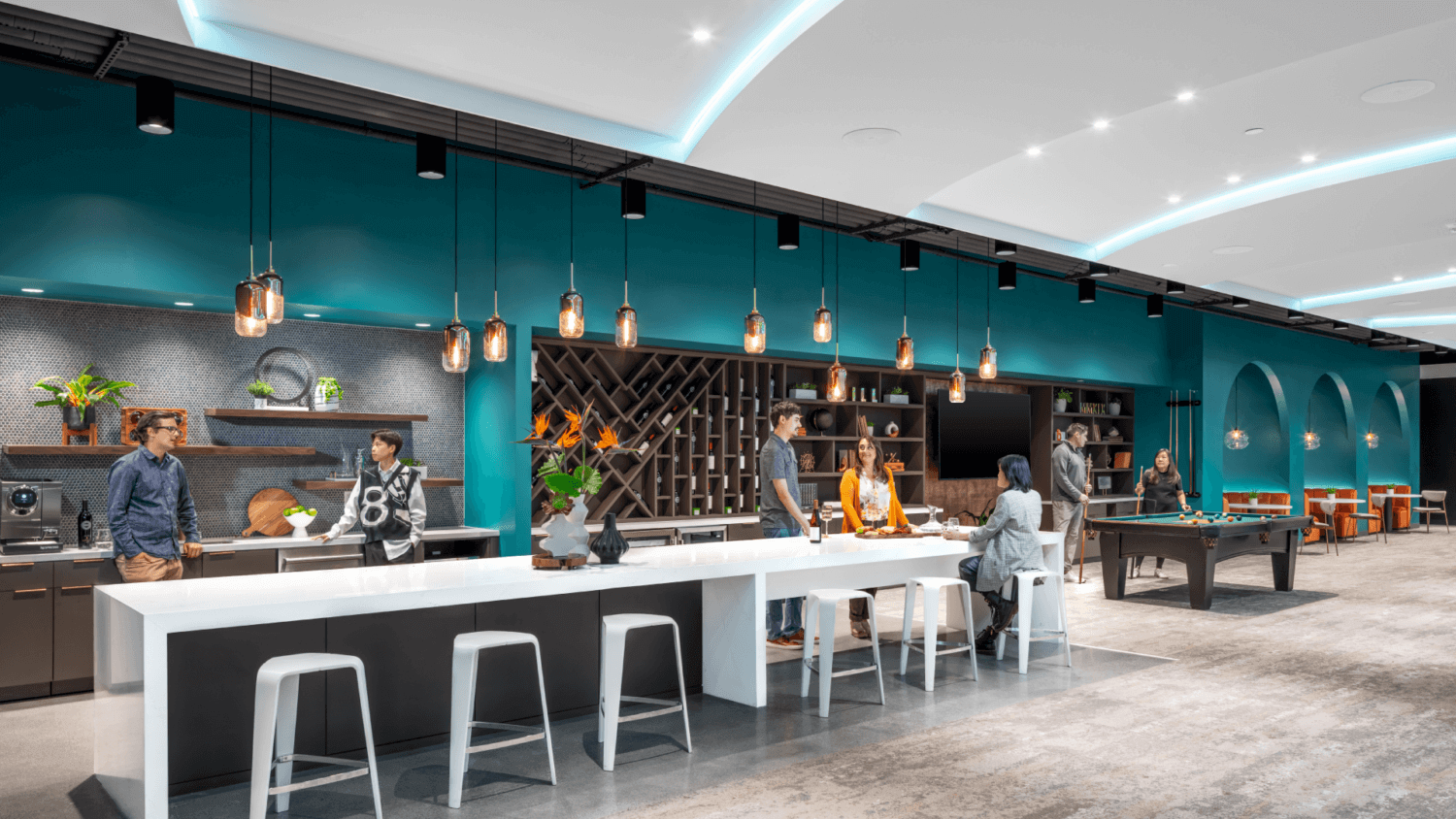
Given the important role break room and work café spaces play in a company’s culture, it only makes sense that their location, level of finish, and furniture choices are becoming higher priorities. In fact, they may be the most important and functional spaces within the modern workplace.
Designing for Acoustic Privacy has Come a Long Way
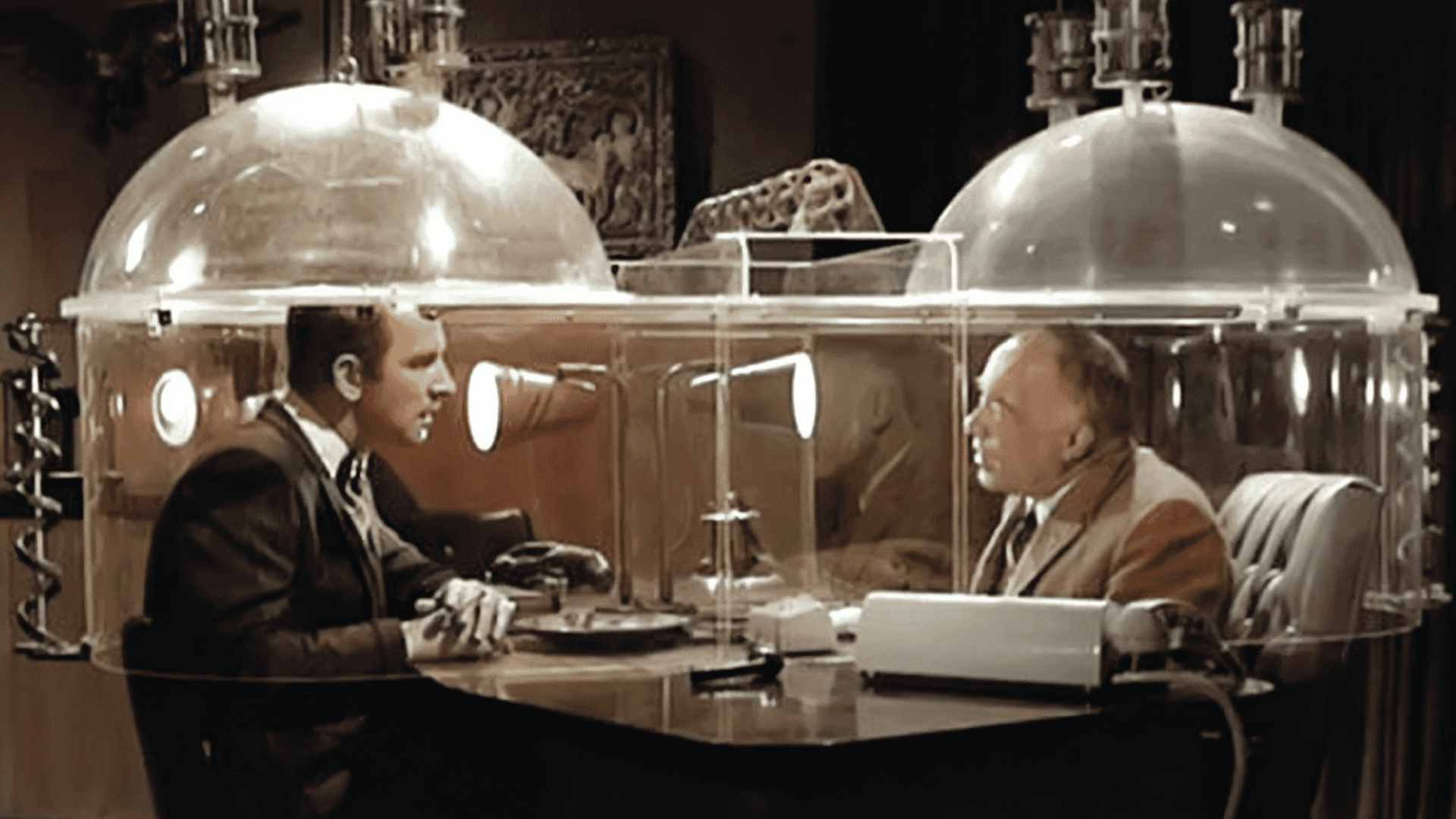
Since its debut in 1965, the Cone of Silence has transcended its association with Get Smart to become part of America’s business lexicon. In the end, this invention never did support a private and intelligible conversation between Max and the Chief. Nevertheless, 59 years later, “Cone of Silence” has become shorthand for a confidential conversation.
Over the last six decades, workplace designs have continued to limit wall construction in favor of furniture-based solutions that improve spatial efficiency, collaboration, flexibility, and access to daylight and views. All too often acoustic privacy has been sacrificed in the process. Those working in environments with good acoustic qualities have been proven to have significantly higher work performance than those working in environments with poor acoustic qualities.4
Proper space planning, wall detailing, and sound masking technology go a long way to improving acoustic privacy and satisfaction. Furniture and finish-based strategies may include:
- premanufactured glass walls (better sealed than contractor-built)
- hinged doors (rather than sliders)
- prefabricated phone booths
- sound-absorbing wingback chairs (surprisingly effective)
- acoustic wall panels
- shear curtains (in lieu of glazing film)
Office Design Impacts Mentoring
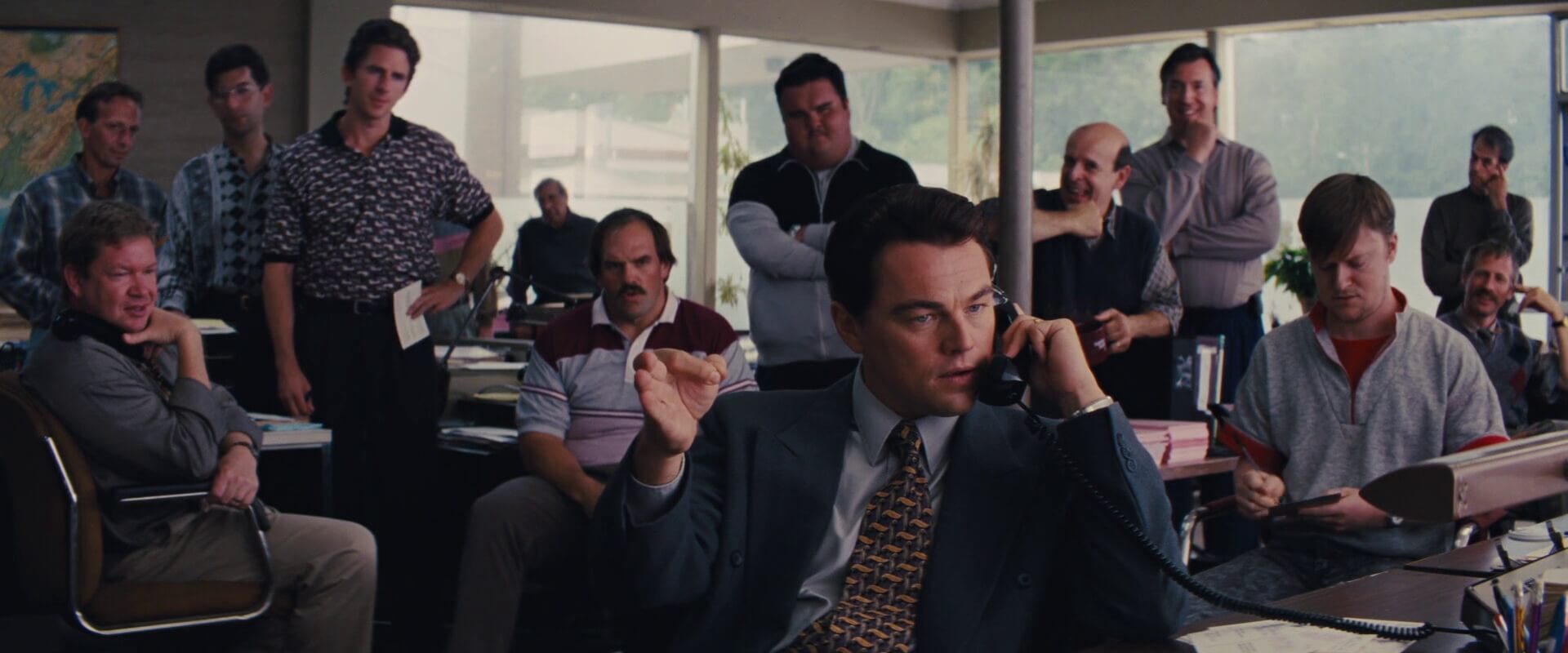
Emulating corporate culture from The Wolf of Wall Street is a great way to get fired, imprisoned, or worse…with perhaps one exception: mentoring. When the pandemic forever changed how and where many of us work, it disproportionately affected those newer to an organization and earlier on in their career. A 2022 study of high school and college-age job seekers identified in-person training as the number one expectation for employer investment. This was nearly twenty percentage points higher than the second-place response, assisting with student loan payments. 5
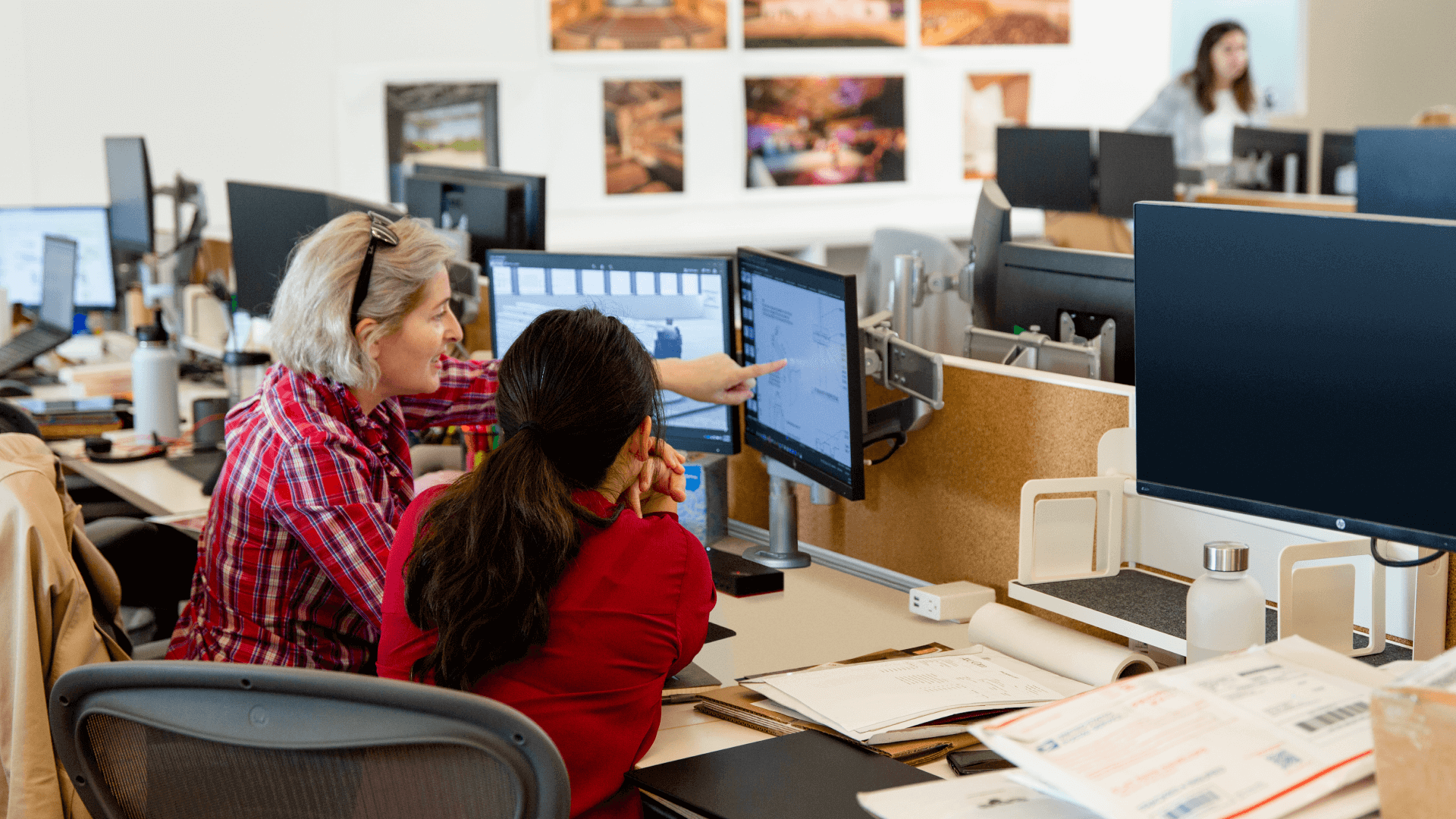
Learning through ambient mentoring is exponentially richer than remote mentoring since mentees can absorb context and nuance that cannot be conveyed through emails and video conferencing. Creating interactions that are both formal and informal, planned and impromptu, and seen and overheard, ambient mentoring steepens the learning curve for new and early-career employees.
Workplace designs that foster mentoring will intentionally incorporate features like guest seating at work points, readily available writing surfaces, and two-person booths or huddle rooms. They may also intentionally exclude dedicated manager offices and high workstation panels. Without even mentioning benefits such as improved innovation and stronger culture, the value of thoughtful workplace design should sell itself, leaving business leaders more time to ask their mentees to “sell me this pen”.
Learn more about workplace design through the lens of TV and movies.
About the Author
 As Workplace Principal, David Little, AIA,CID,LEED AP, focuses on partnering with corporate clients to transform under-performing work spaces into collaborative, inspiring environments. He has been with HGA for 10 years and has worked with organizations like International Dairy Queen, Marvin Windows, and Trane Technologies.
References
- Gutheim, Frederick, editor. “Frank Lloyd Wright on Architecture: Selected Writings (1894-1940).” Grosset’s Universal Library, 1941.
- Sullivan, Louis H. “The Tall Office Building Artistically Considered.” Lippincott’s Magazine, March 1896.
- https://designmatters.iida.org/2014/04/18/what-is-a-branded-environment-anyway/
- Shengxian Kang, Cheuk Ming Mak, Dayi Ou, Yuanyuan Zhang, ‘The effect of room acoustic quality levels on work performance and perceptions in open-plan offices: A laboratory study’, Applied Acoustics, https://www.sciencedirect.com/science/article/abs/pii/S0003682X22004704, December, 2022.
- NSHSS (2022). 2022 Career Interests Survey. https://www.nshss.org/lp/2022-career-interest-survey/