
HGA’s Design Insight Group set out to understand what makes an inclusive and welcoming museum experience.
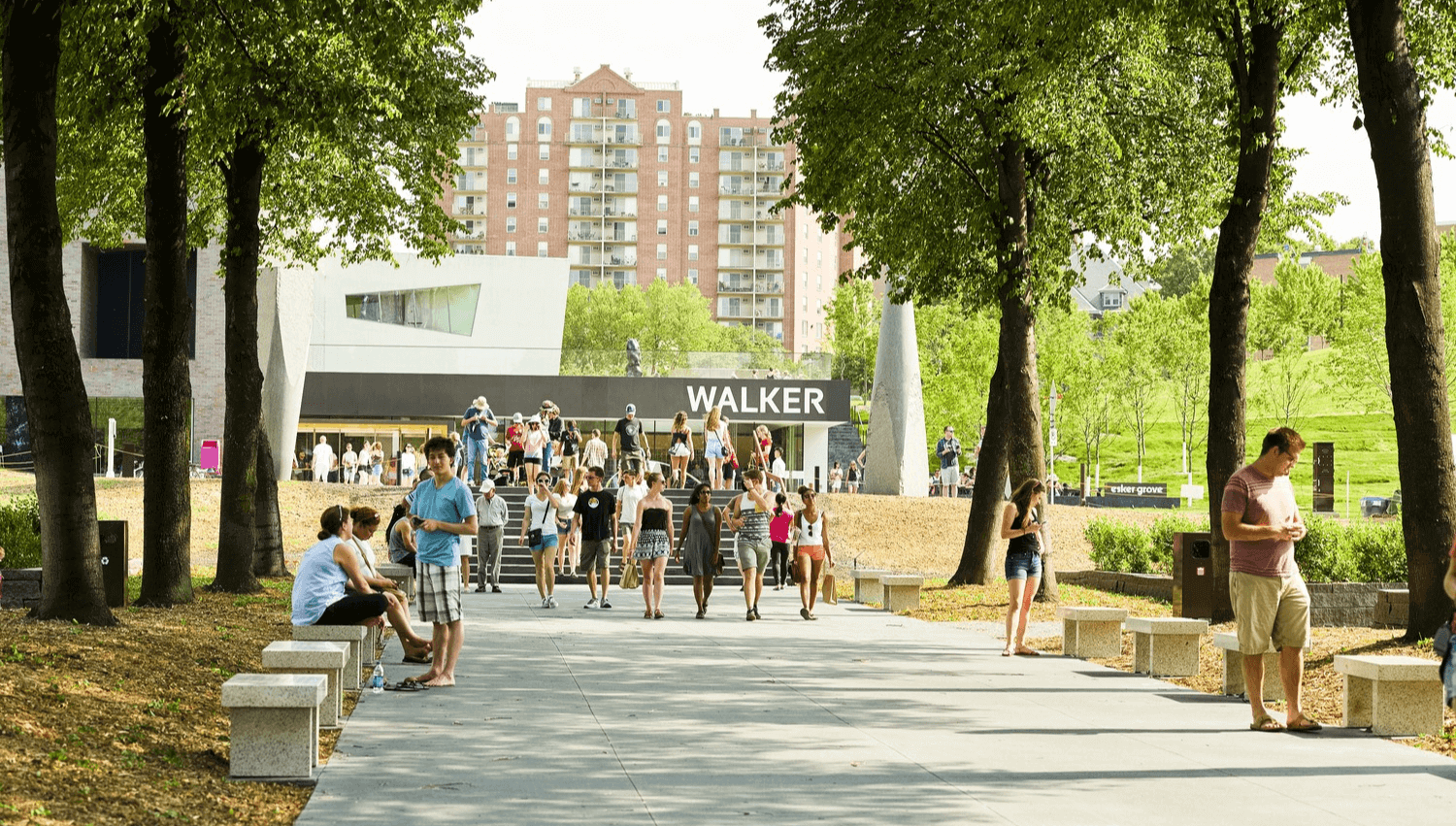
The Walker Art Center in Minneapolis always has placed high value on creating an exceptional visitor experience. But as perceptions of the traditional museum-going experience continue to evolve, the Walker sought to better understand visitor needs by asking: “What is it like to move through the space in relation to accessibility, sensory experiences, wayfinding and signage? What is the perceived value of a first experience at the Walker?”
To answer these questions, the Walker Art Center and HGA undertook a mixed-use research study to understand visitor’s travel patterns as they moved through the museum and recorded their thoughts and expectations. The data-driven study helped identify critical attributes influencing a first-time visitor’s experience to inform process, place, technology, and cultural solutions—and ultimately creating a more welcoming and inclusive experience.
Methodologies
The methodologies used included:
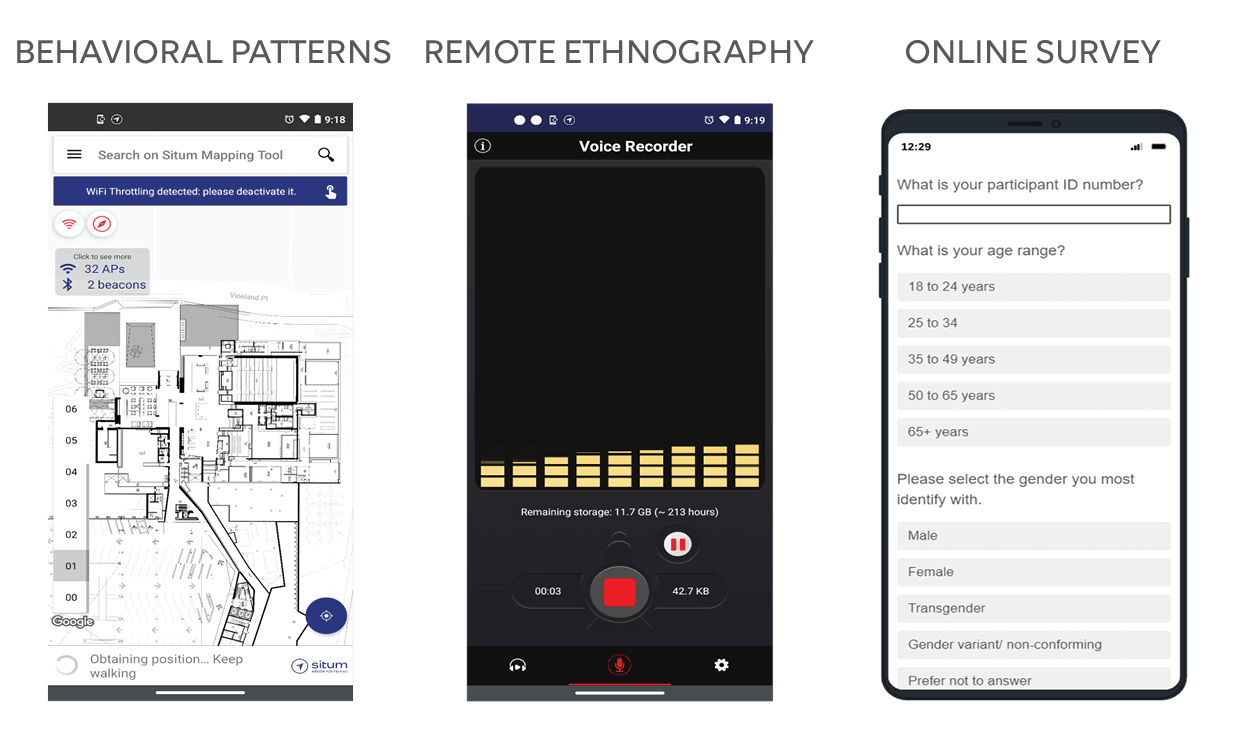
Behavioral Patterns
Participants in the study carried a people-based travel app inside the art center during their visit to understand what they were doing. The intent was to record the amount of time spent in specific areas of the art center, and the travel patterns and galleries visited. Participants carried a smartphone that captured their movement using an indoor positioning platform and recorded the amount of time they spent in a particular location. This approach helped limit the number of onsite observation hours traditionally needed by a researcher and allowed a vast amount of data to be collected with less time and budget. It also eliminated any effect that an observer might have on the behavior of a study participant.
Remote Ethnography
To understand how people felt, participants were also asked to record an audio diary as they navigated through the Walker. They used a voice recording app on the smartphone, along with a set of headphones. Participants responded to a pre-set list of questions as they moved around the building. The questions focused on where visitors were heading and how they felt in finding their way to significant touchpoints. This method captured real time reactions and emotions as people moved through the space, helping researchers and staff understand the “why” behind visitors’ movements and perceptions, and enabling the research team to identify instances of confusion or uncomfortableness.
Surveying Visitors
Participants in the tracking and remote ethnography activity completed an online questionnaire at the end of their visit. The primary intent of the questionnaire was reflective; to understand visitors’ satisfaction with their ability to navigate through the different areas of Walker and the overall building configuration. The survey included Likert-type questions as well as open-ended questions. There was also a demographic section that inquired about self-identified gender, age group, race, and ability.
Each participant was assigned a unique identifying number linking their demographic data to the data collected during tracking. The survey method was especially valuable in understanding the overall reaction of visitors, and to identify differences and similarities in age, gender, ability, race, ethnicity, and group size. There was a total of 152 participants over a two-week period.
Building a new visitor experience strategy
The data from this research helped the client build a Visitor Experience Strategy that includes recommendations for space, technology, people/culture, and operational processes. These recommendations allow the Walker Art Center to provide a more welcoming and confident experience for its first-time visitors, with the goal of encouraging membership.
Measurable outcomes of the new strategy include:
- Higher visitor satisfaction
- Less confusion during visitors’ journey and fewer instances of asking staff for directions/assistance
- Increase in repeat visitation
- Better accessibility for visitors with various mobility and sensory needs

By developing and piloting interdisciplinary research tools for this study, the Walker Art Center was able to make informed, verifiable decisions for its facility management, visitor experience, and patron development and build on this research as part of their community and visitor engagement.
Learn more about HGA’s Design Insight Group here.