Tamar Ribnick is an Interior Design Principal in our Minneapolis office, where she focuses on workplace design.
Since joining HGA in 2019, she has led new approaches to workplace culture, propelled in part by the shift to remote and hybrid work. While hybrid offers benefits, certain in-person traditions have suffered—such as mentoring. Her recent co-byline, Crafting Spaces for Mentorship: From Remote to Hybrid, suggests how to reimagine mentoring in an evolving work environment. She has taken these design concepts on the road with a Commercial Real Estate Continuing Education (CRE CE) seminar with Rich Bonnin, talking with real estate brokers, designers, and corporate leaders about challenges and opportunities when designing spaces that support mentoring.
Here, Tamar shares concepts about the changing workplace.

Tamar Ribnick
Interior Design Principal
Since launching your seminar, what are you hearing from the field?
We’re getting positive feedback from participants on how to connect mentorship with space planning, tenant improvement, and corporate culture. Traditionally, mentorship has been in the human resources bucket and never in the space planning bucket. This topic gives the commercial real estate industry a fresh perspective on how to think about workspaces and creating a vibrant work culture.

Mentorship helps drive employee engagement and job satisfaction, which ultimately saves companies money with lower turnover.
Tamar Ribnick
Interior Design Principal

Is this a matter of rethinking workspace and mentorships?
We always took it for granted that mentorship happened in the office. But when we suddenly went remote, we lost that connection to the physical space. Now we need to be more intentional about reconnecting people when they are in the workplace.
How do you reconnect this to workspace?
Mentorship helps drive employee engagement and job satisfaction, which ultimately saves companies money with lower turnover. By framing workplace design through the lens of mentoring, we can envision a combination of remote, hybrid, and in-person concepts that support a range of workstyles.
What was lost with hybrid?
We are trying to rebuild what was lost—collaboration, impromptu meetings, casual interactions, a sense of connection to others. It’s very easy to send an email or instant message. But there is value in in-person contact and getting to know someone on an individual basis and not just as a digital image on a Zoom call.
And what has been gained?
Hybrid has a lot of positives, such as more personal flexibility and increased workflow efficiency. But we need to understand when virtual is appropriate and when in-person is more beneficial. Having colleagues in another office is great but connecting face to face is important to maintaining a strong professional relationship. It doesn’t have to be all the time, but if we never have those moments, the effectiveness of virtual mentorship or collaboration can decrease. We risk experiencing fatigue from virtual work.
How can design help?
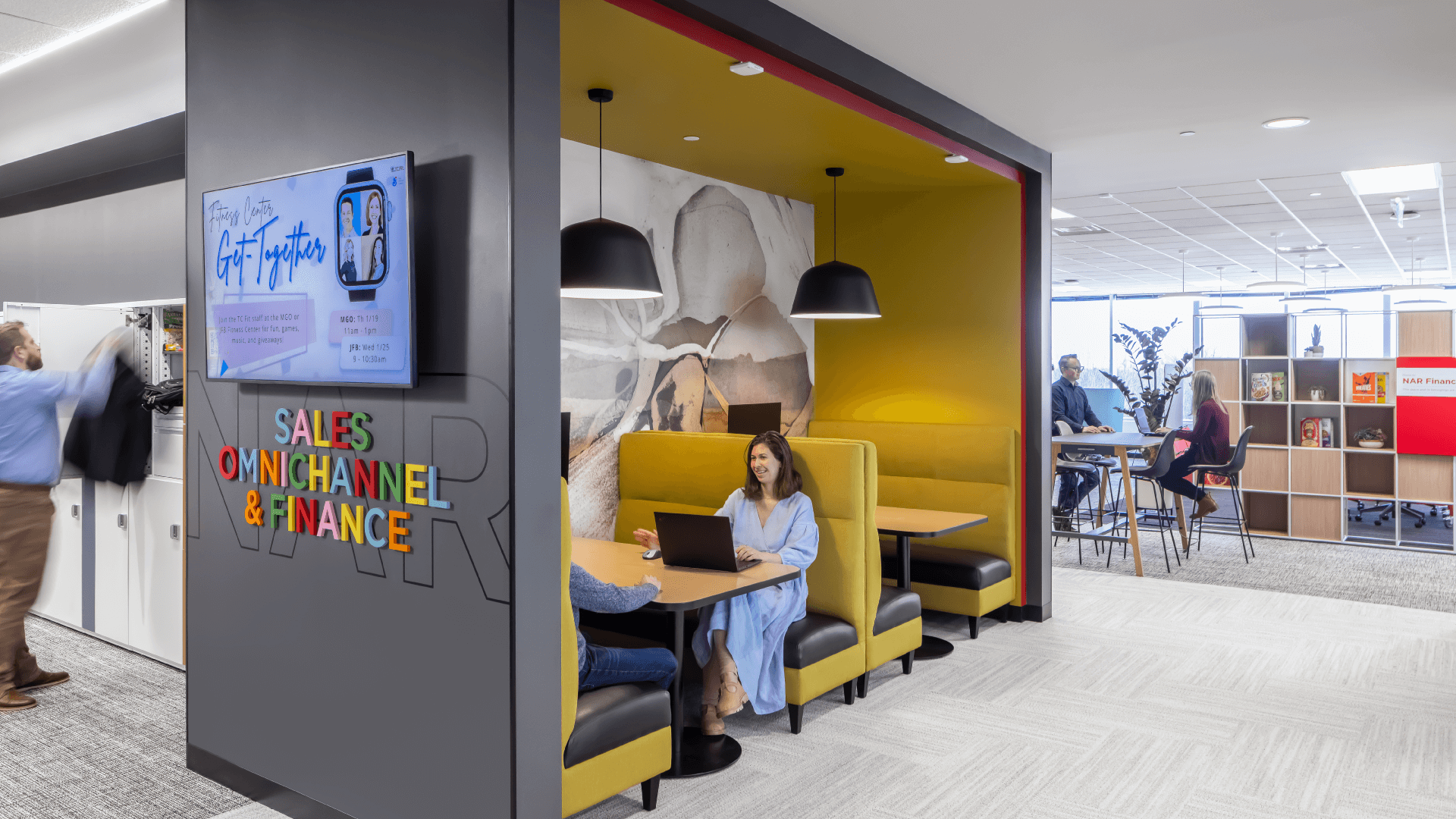
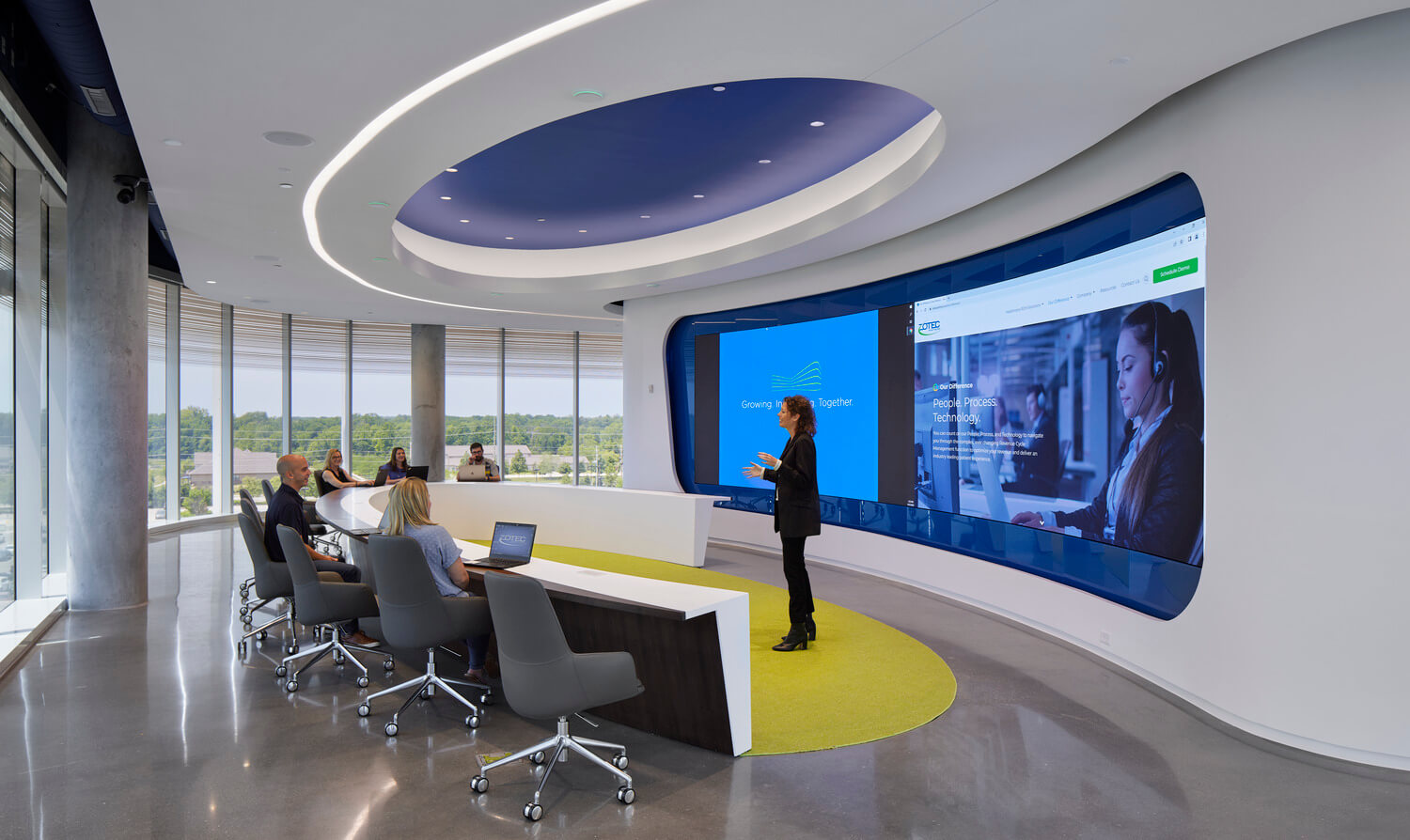
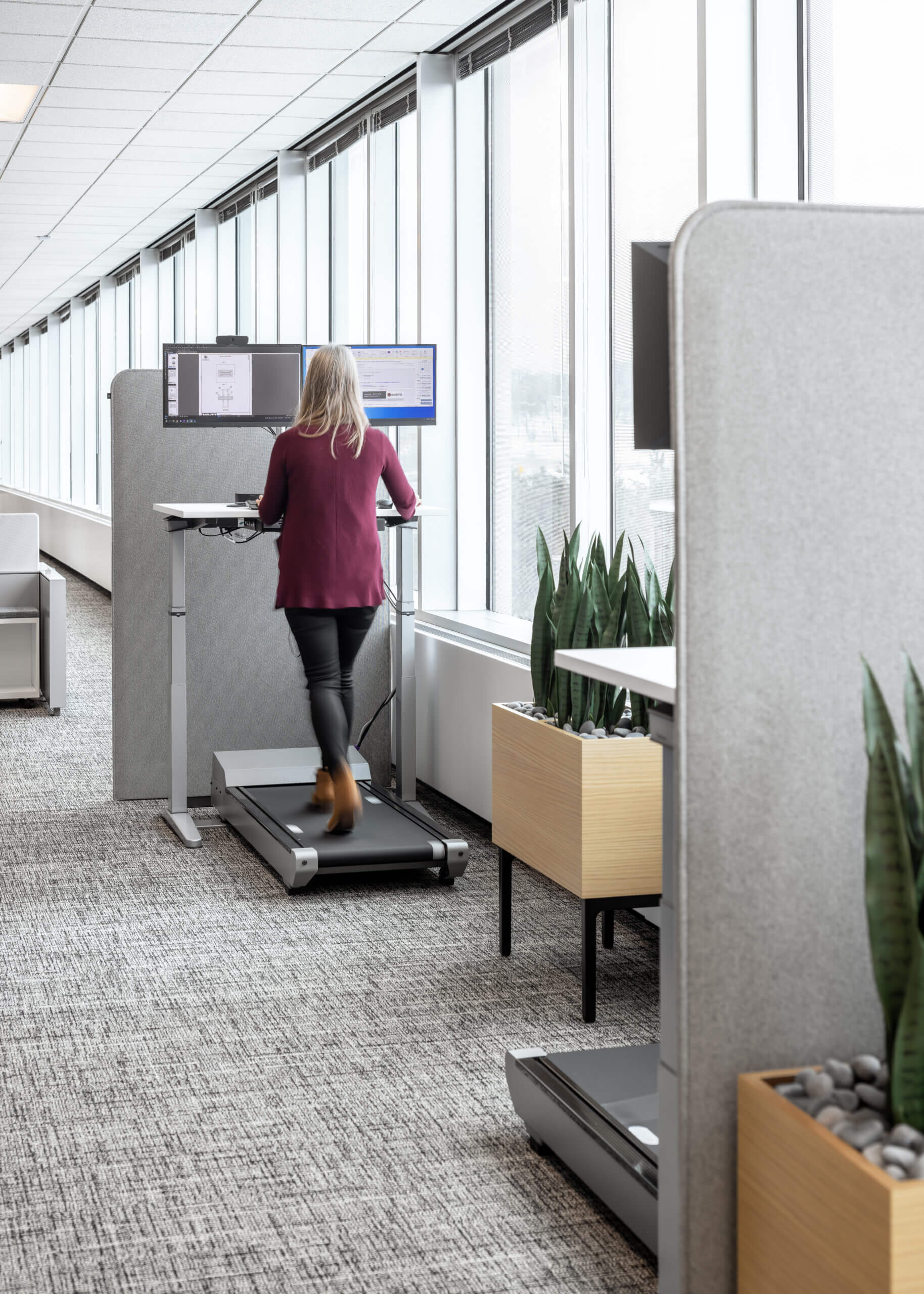
One way is to provide choices through a variety of spaces. This could include private areas for concentrated heads-down work to traditional desk-and-chair workstations, open hoteling stations, variously sized conference and meeting rooms, or other areas for structured or informal gatherings. Choice and variety help employees feel engaged with each other. In a way, it’s about recreating the water cooler in today’s office—finding opportunities for people to naturally come together and start a conversation. Creating that new water cooler is the goal.
What do you see in the crystal ball moving forward?
Our seminar is about building partnership—whether that’s how we as designers build partnerships with allied professionals within the building industry, or how our clients build partnerships with their internal teams or extended network. Looking into that crystal ball, I see that it is important to constantly extend a wider network that informs how we plan workspaces to support collaboration. The path forward is understanding that we all need to connect meaningfully and share ideas. ∎
Learn how HGA supports corporate culture and mentoring through our interdisciplinary approach to workplace planning and design.