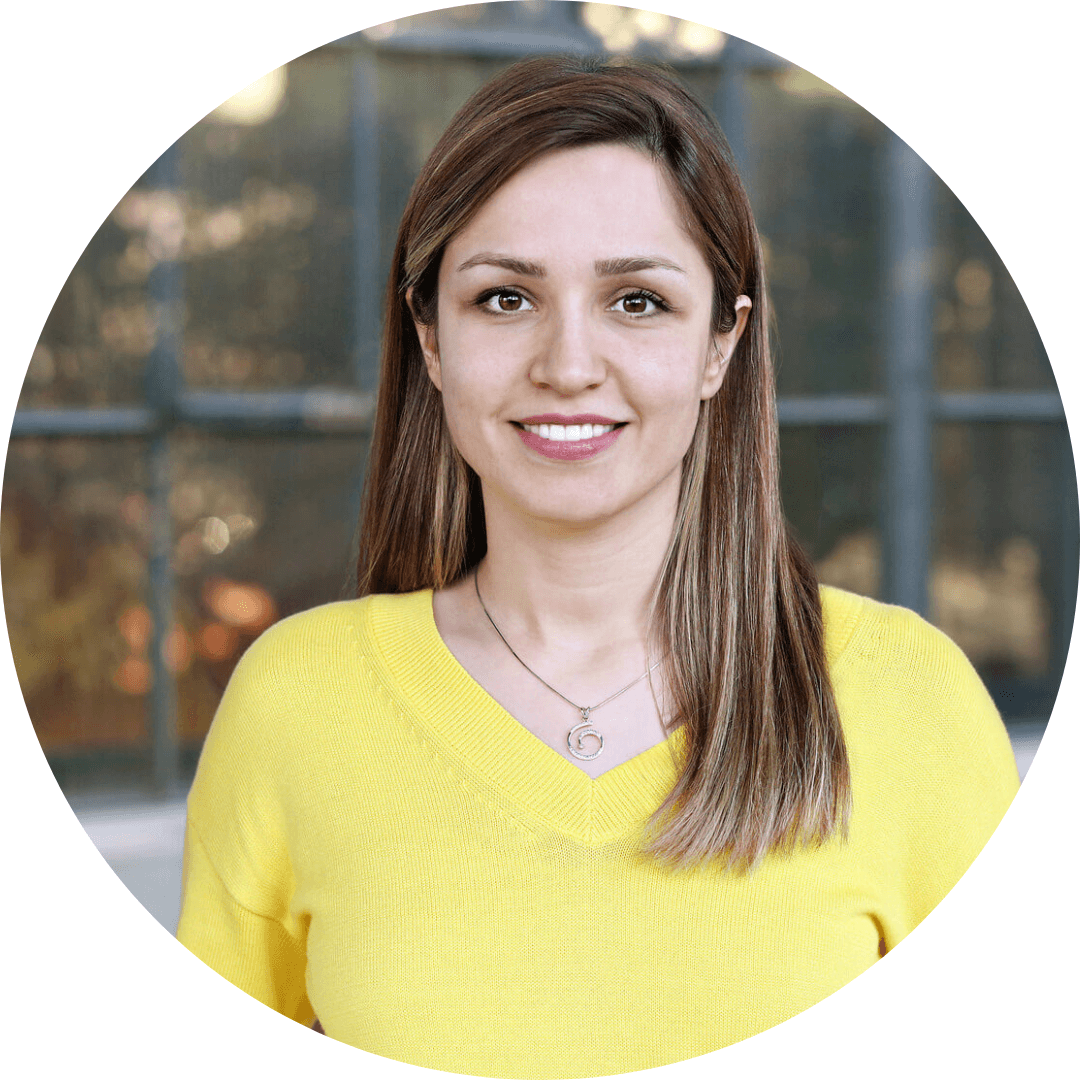
Mahshid Jalalian, PhD, EDAC, is a design researcher at HGA specializing in architecture and environment-behavior research.
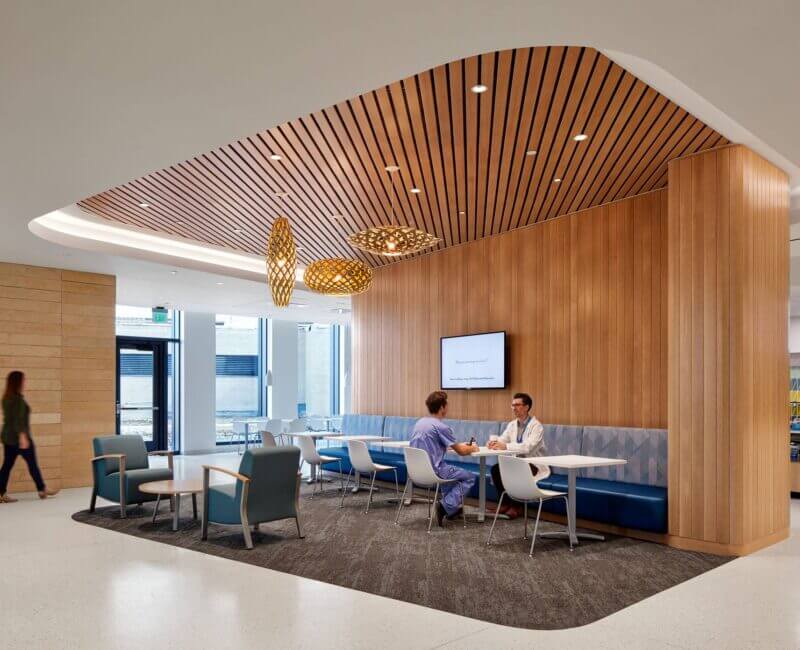
Since joining the firm in 2018, she has distinguished herself through evidence-based research on such projects as St. Elizabeth Healthcare Cancer Center, which was recently published in the peer-review journal Health Environments Research & Design (HERD).
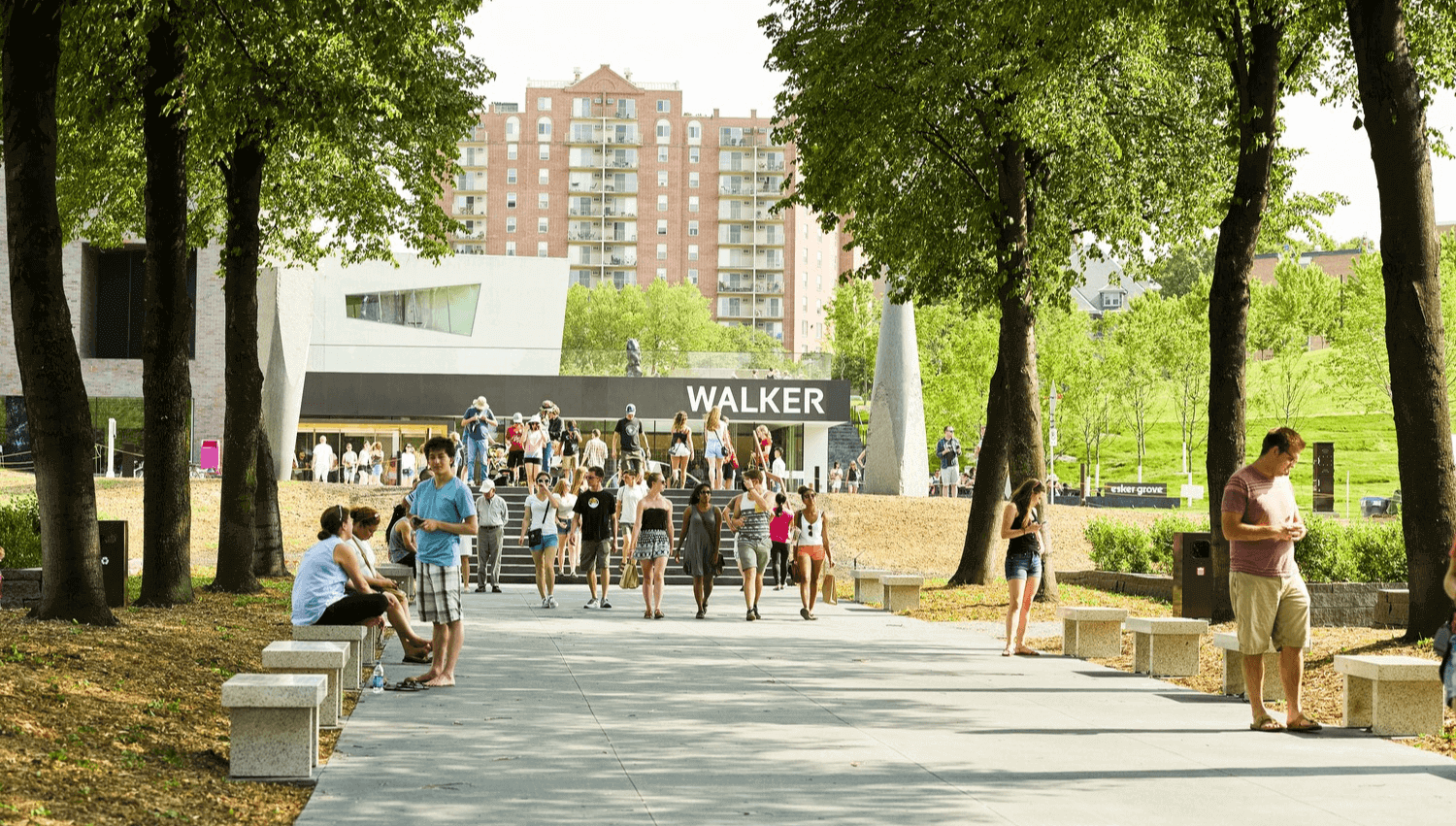
Other studies include Bellin Health Surgery & Specialty Center, University of Wisconsin-Milwaukee Student Union, and Walker Art Center Visitor Experience.
While her research crosses building types, she turns particularly to healthcare and how design impacts patient outcomes and staff efficiency. She has presented her research at conferences and won numerous awards, including being named a 2024 Healthcare Design Rising Star.
In the following, Mahshid shares what the award means to her career goals to “improve human experiences” through research.
Mahshid Jalalian
Design Researcher
Congratulations. What was your reaction when you learned you are a Rising Star?
I was so honored to have received this award and be among 11 other Rising Stars this year who are doing amazing work and share the same passion. This was such a wonderful validation of the work we are doing in healthcare design and research.
Your specialty is environment-behavior research. Tell us about that.
This was the focus of my PhD thesis at the University of Wisconsin-Milwaukee. It explores the relationship between human experiences and the built environment at various scales—from individual buildings to urban spaces—aiming to understand how different design elements can affect how people think, feel, and work in those spaces.

We have designers who have innovative hypotheses as they conceptualize projects. What I do as a researcher is study those concepts, collect and analyze data, and verify hypotheses that support our work.
Mahshid Jalalian
Design Researcher
How did you become interested in healthcare research?
My focus is really about people in any building types, whether that’s healthcare, higher education, or workplaces. Yet healthcare holds particular interest for me because I frequently visited my father in his medical office in Iran when I was young and saw first-hand hospital layout and the patient care process.
Does this research fill a gap in the healthcare industry?
The industry has spearheaded evidence-based design research. But there are always gaps. We have designers who have innovative hypotheses as they conceptualize projects. What I do as a researcher is study those concepts, collect and analyze data, and verify hypotheses that support our work.
Do you have an example of this?
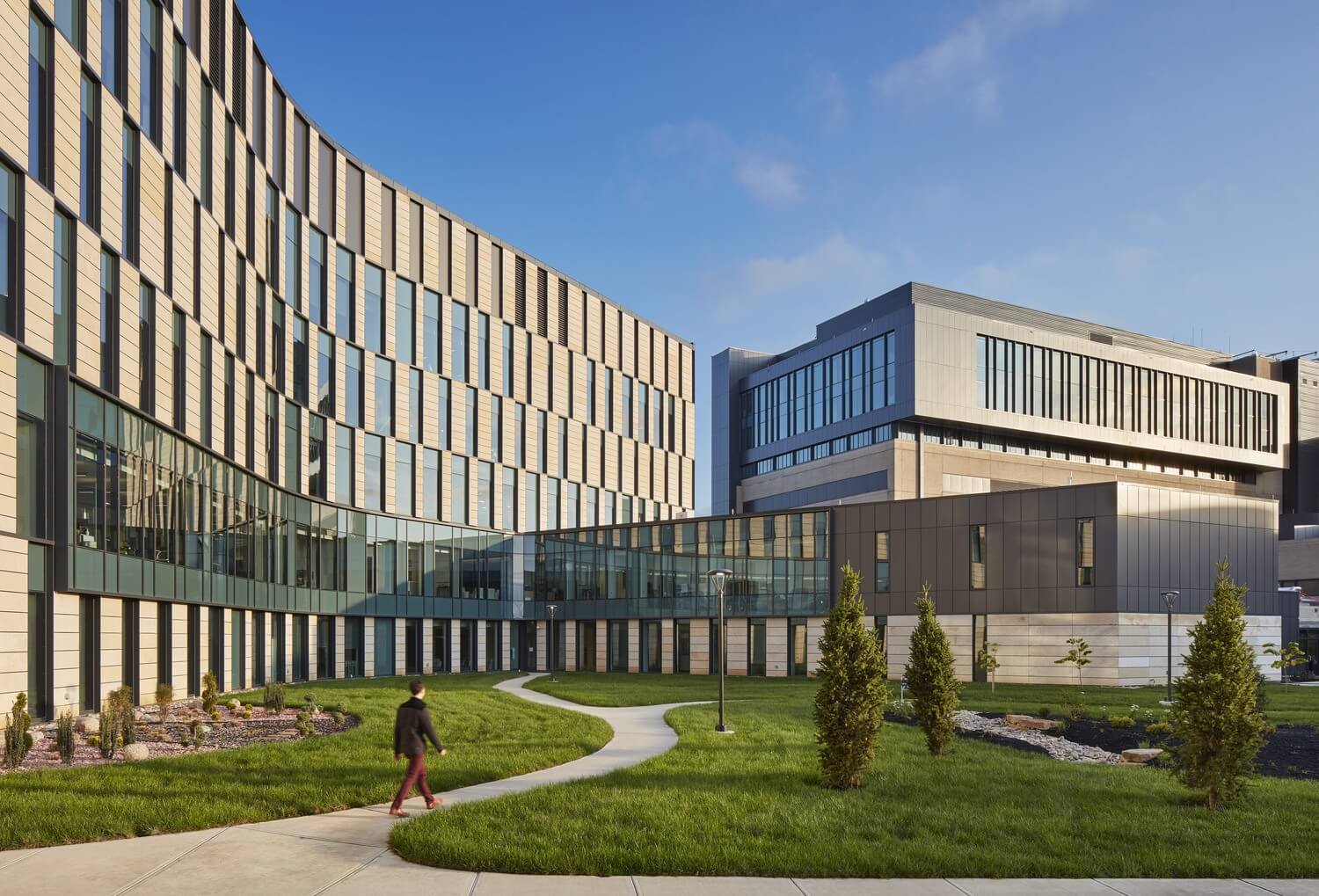
I developed both pre- and post-occupancy evaluations of St. Elizabeth Healthcare Cancer Center in Kentucky, working with our designers, medical planners, and the cancer center nurses and patients. We saw the benefits of our design decisions, what worked as planned and what we needed to tweak. This is all part of the continuous learning process that informs our future work and contributes to industry knowledge.
How do you translate data into an actual project?
As researchers, we have multiple ways of sharing these results. The best projects are those in which we pair up with the medical planner and designers to review data and design ideas. That’s a dream team because we are directly applying research to practice.
Have you made any discoveries about how people react to environments?
It’s fascinating how much the function and flow of architecture influence behavior and emotion. Winston Churchill famously said, “We shape our buildings and afterward our buildings shape us.” And that’s so true. Different settings affect us, sometimes quite subtly, sometimes more overtly. What I’ve learned is that it depends on the unique character of the space and the individual.
What are you looking forward to?
I look forward to continuing my research, discovering new and exciting evidence, and translating that into meaningful designs. Ultimately this is toward one goal—improve human experiences.
Discover something new and exciting by exploring our Research & Innovation page.