
HGA Principal Deepa Balgi, AIA, leads HGA’s growing Science + Technology Practice Group in California. Recognized as a leader who drives innovation in design for research environments, Deepa combines a deep understanding of her clients’ missions with a forward-thinking approach to meeting future research needs. Her work creates spaces that foster collaboration, innovation, and progress.
In this conversation, we explore Deepa’s leadership role in the California practice, and her collaboration with HGA’s national Science + Technology team. She shares how her volunteer work and passion for travel influence her design philosophy. Additionally, we discuss the challenges of bridging laboratory research with clinical application and look ahead to the transformative advancements she envisions for research facility design over the next decade.

Deepa Balgi
Science + Technology Principal
Practice Group Leader
The formation of the Science + Technology Practice Group in California has positioned HGA for continued growth. What are some key goals for this group, and how do you see it evolving in the coming years?
The Science + Technology Practice Group in California strategically positions HGA for long-term impact and growth throughout the West Coast. Our team designs flexible, future-ready research environments that can adapt to evolving research needs, and as technology evolves. We emphasize deepening client partnerships, ranging from academic research institutions, healthcare systems, and private industry. With team members in both SoCal and NorCal, we work with each client to create spaces that support their unique mission and allow them to stay at the forefront of what’s next. Over the coming years, I see the group expanding its reach, while continuing to integrate advanced technologies and sustainable design strategies and designing spaces that truly support interdisciplinary collaboration and discovery.
Your work is known for blending expertise with meticulous attention to detail. What inspires your approach to creating innovative solutions and designing spaces that positively impact your clients’ vision and mission?
My approach is driven by the belief that purposeful design has the power to catalyze innovation and scientific discovery. Designing spaces that facilitate groundbreaking research and transformative medical advancements is both a privilege and a responsibility. It is profoundly rewarding to know that a laboratory we designed has played a role, however indirect, in advancing knowledge and improving human health. By combining expertise from past experience with attention to detail, we create unique spaces that not only align with our clients’ vision and mission but also foster collaboration, and creativity, ensuring that every design decision contributes to meaningful advancements that benefit humanity.
What are some of the key challenges in designing facilities that effectively bridge the gap between laboratory research and clinical application, and how have you addressed them?
Designing facilities that bridge laboratory research and clinical application requires spaces that support both scientific rigor and a collaborative culture. A central challenge is cultivations environments that encourage spontaneous interaction and cross-disciplinary idea exchange, critical drivers of translational research. To address this, we integrate “Habitats”, which are communal zones strategically placed along natural circulation paths that foster collaboration, provide daylight access, and offer inspiring views. These shared spaces serve as catalysts for innovation. Equally important is connectivity, linking localized research groups with the broader campus ecosystem. Physical connections, such as bridges between research and clinical buildings, help facilitate the seamless flow of people, knowledge, and discoveries, accelerating the journey from bench to bedside.
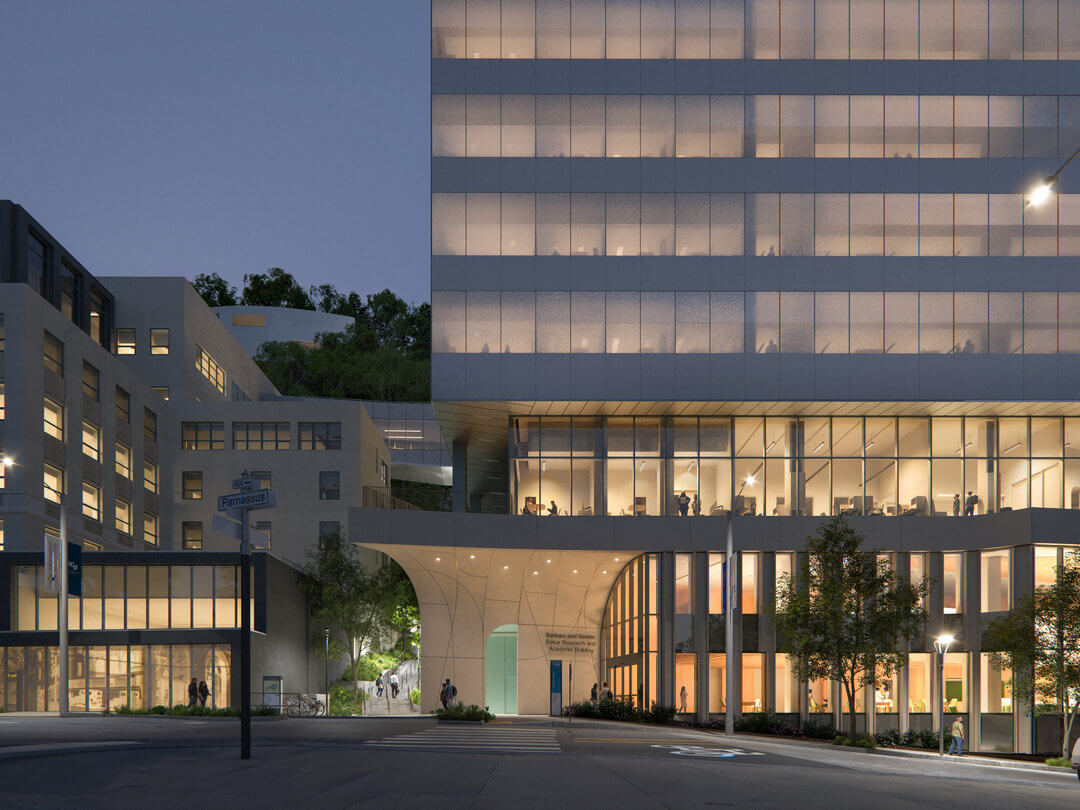

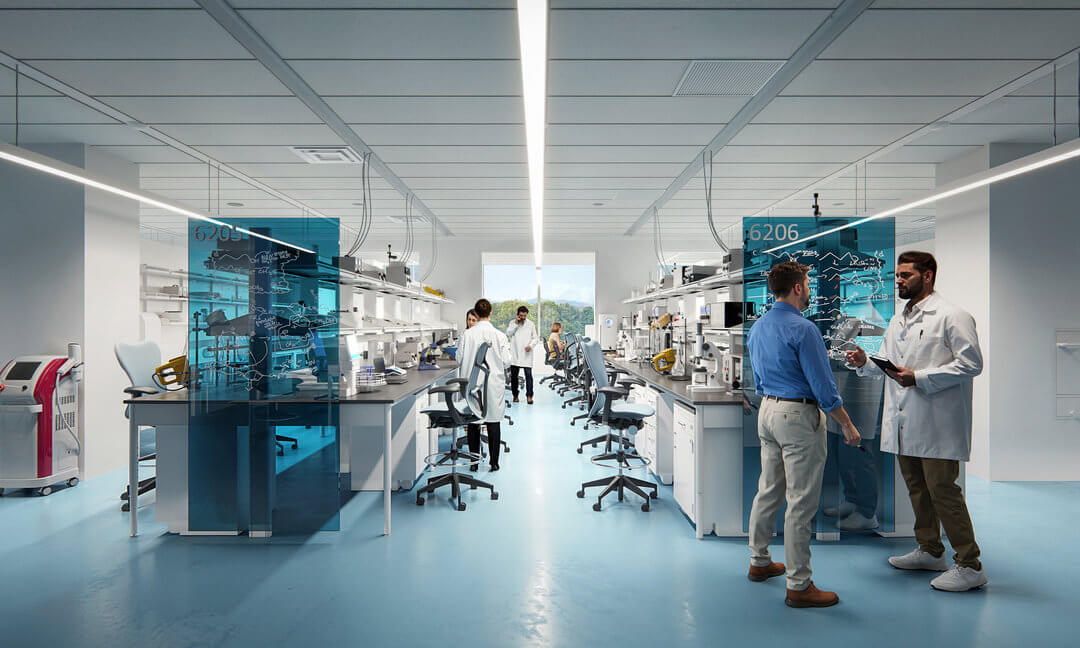
Deepa Balgi is the Principal-in-Charge on the Barbara and Gerson Bakar Research and Academic Building (BRAB) at the Univesity of California, San Francisco. The facility is designed to support advanced research programs in cancer, microbiology, diabetes, immunology, and cell biology. BRAB is a design-collaboration between HGA and Snøhetta.
When working with institutions that are expanding or redefining their research priorities, how do you approach change management to ensure a smooth transition?
When institutions shift or expand their research priorities, we approach change management by deeply engaging stakeholders early and often. We listen to their evolving needs, align design strategies with institutional goals, and build consensus across disciplines. Our approach leverages stakeholder workshops, scenario planning, and visioning sessions to build consensus and ensure adaptability. Flexibility is essential, both in spatial planning and in supporting cultural change, so that the facility not only addresses current needs but is also designed to evolve alongside future research priorities.
Interdisciplinary collaboration is key to advancing research. How can design more effectively facilitate integration between different scientific disciplines?
In my experience, it’s rarely a single design element that drives success, but rather the strategic placement and integration of multiple components. When working with clients, we dedicate significant time to engaging directly with researchers to understand their unique workflows, needs, and aspirations. This collaborative process helps ensure that the design not only meets functional requirements but also promotes a culture of interaction and innovation.
Key strategies that facilitate integration across scientific disciplines include open and flexible collaboration spaces. This includes lounges, shared worktables, and informal seating areas placed near labs and offices to spark conversations. Visible and accessible circulation paths, such as wide staircases, interconnected floors, and transparent partitions, enhance visual connectivity and encourage unplanned interactions. Cross-disciplinary hubs like cafés, maker and prototype spaces, and project rooms serve as magnets for diverse teams, while intentional programmatic overlap that blend labs, offices, and social areas create natural opportunities for interdisciplinary exchange. Centralized tools and lab support spaces, including shared equipment rooms and freezer farms, provide common ground for researchers across disciplines. Together, these elements help dissolve silos, support collaboration, and create vibrant environments where innovation can thrive.


My approach is driven by the belief that purposeful design has the power to catalyze innovation and scientific discovery.
Deepa Balgi, AIA
Science + Technology Principal / Practice Group Leader
You’ve mentioned that you enjoy traveling—could you share more about how this passion helps with work/life integration? Also, do you have a memorable moment from your travels that stands out to you?
Travel has always been a key part of my life, offering inspiration and balance between work and personal growth. Whether it’s the vast landscapes of Denali National Park in Alaska, the rich history of London, or the thrill of ziplining or a jungle safari, every experience fuels my creativity. The balance of nature and culture, adventure and history, keeps me inspired and energized. Travel also teaches adaptability and open-mindedness, which are crucial in both professional and personal life.
One of my most memorable travel moments was a white rhino safari in the Pobitora Wildlife Sanctuary in India. There’s something deeply moving about coming face-to-face with such magnificent creatures in the wild, in their natural habitat. It reminded me of the importance of respecting nature and the preservation of these incredible species. These adventures remind me of the importance of taking risks, embracing new challenges and enjoying the journey, which translates directly into both my personal life and professional work.
Ask me about my close encounter(s) with elephant(s) sometime…

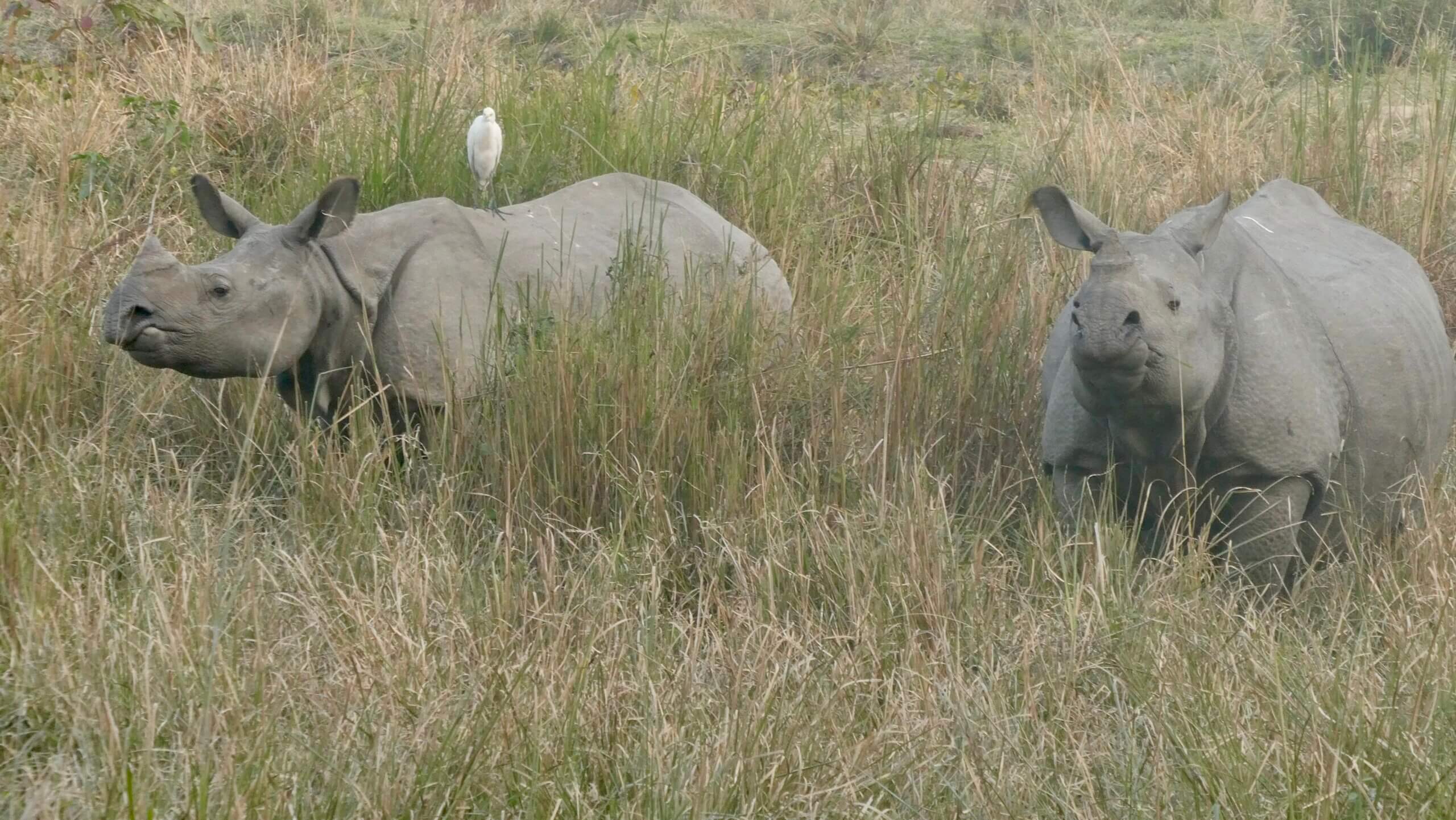
Deepa Balgi and her son (left) enjoying the thrill of ziplining in/above Hawaii. Asian One-Horned White Rhinos (above) photographed by Deepa Balgi while on safari in Pobitora Wildlife Sanctuary in India.
With your busy schedule, you still find time to volunteer with local organizations. How does this experience inspire you and contribute to your growth both professionally and personally?
Volunteering is a meaningful part of my life, and it’s something I intentionally make time for. It inspires and grounds me in many ways—both personally and professionally. I’ve been volunteering at my son’s high school track meet every year, even long after he graduated. Supporting the local school and working alongside the coach, who’s a friend. I developed an efficient process for registration and distributing hip numbers and train the new parents every year.
I also serve on the Architectural Review Committee for our Homeowner’s Association, where I help guide thoughtful design decisions in our community. In addition to this role, I took part in installing solar panels for low-income housing—a hands-on opportunity to support both environmental and social equity. More broadly, I simply enjoy contributing to the community. These experiences bring a sense of fulfillment and strengthen my connection to those around me. Volunteering helps me grow as a person by reinforcing patience, empathy, and teamwork. It reminds me of the power of small efforts to create meaningful change, lessons that resonate in both my personal life and professional work.
Looking ahead, what do you see as the most transformative advancements in research facility design over the next decade?
I anticipate that the most transformative advancements in research facility design will focus on flexibility, seamless technology integration, and human-centered environments. Laboratories will need to adapt quickly to evolving scientific demands, with modular, reconfigurable spaces that support a range of research activities. Advanced digital infrastructure, such as AI-powered lab management systems, virtual collaboration platforms, and real-time data sharing, will become integral to daily operations. Equally important, design will continue to place greater emphasis on well-being, sustainability, and spaces that encourages cross-disciplinary collaboration, creating environments where innovation can flourish across both physical and digital realms.
Learn more about how our Science + Technology work fosters collaboration, accelerates discovery, and enables groundbreaking research.