

Andy DeRocher, PE, is a senior project engineer in our Madison office, where he specializes in integrated MEP systems, geothermal design, energy efficiency, renewable energy sources, and commissioning. Throughout his work, Andy considers a building’s life cycle to make systems more reliable and energy efficient for long-term value—and make communities better and healthier. Here, he breaks down the technical side of energy systems to highlight his professional and personal interests in sustainable energy.
What drew you to engineering and renewable energy?
These fields came together in a fortuitous way for me. I started as a computer science major at the University of Wisconsin-Madison in the early 2000s. I was a couple years in when I caught a glimpse of the engineering classes and curriculum available—it jumped off the page and grabbed me. The subject matter, technical nature, variety, and real-life applications all appealed to my personality.
And this eventually led to your interest in renewable energy?
Around the same time, I became aware of energy challenges and climate change. I felt it would be a lifelong opportunity to use my technical interest in energy and building infrastructure to address these challenges and help lessen the impact buildings have on the environment—and contribute in a positive way.
What new technology is driving our energy future?
It’s a combination of technologies, and not necessarily new. Much of what we use is time-tested and has continuously improved over the years. As engineers working in building performance, we have two goals.
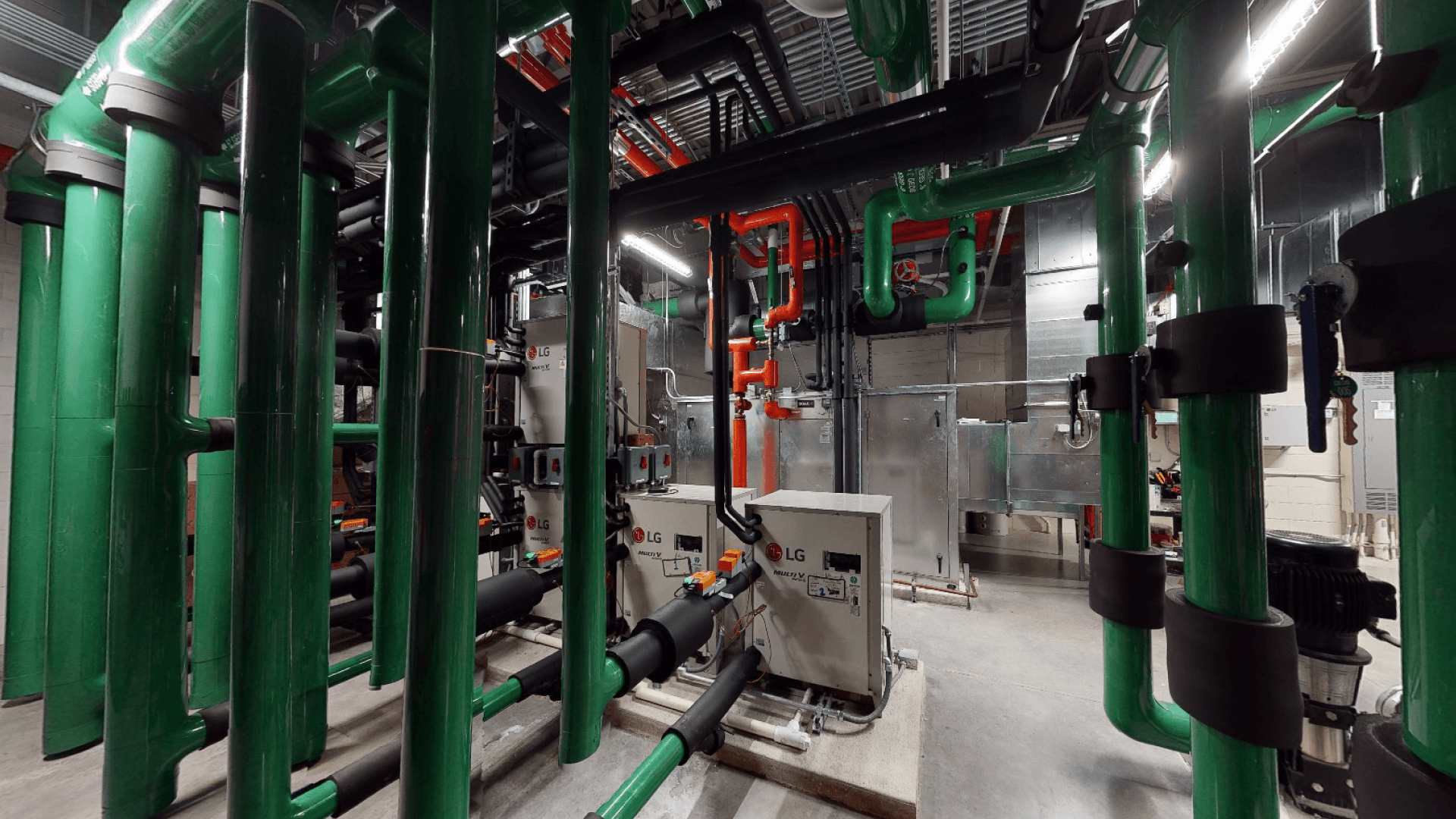
First, we need to reduce energy consumption and support energy efficiency. Geothermal heat pumps, for instance, use the constant temperature of the earth to heat and cool a building and can be used nearly anywhere. The recent Inflation Reduction Act tax credit has made geothermal even more cost-effective for building owners. Yet this is only one of several other technologies that may be more appropriate for clients depending on location, climate, and geological conditions.
And the second goal?
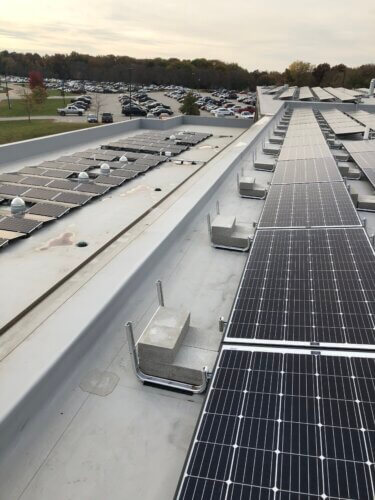
Generating clean energy, preferably on site. The best option for most building types and locations is solar electric photovoltaic (PV) systems. This technology has been around awhile and has gotten increasingly more efficient at generating energy. In addition, PV panels have become more aesthetically integrated into the architecture, to the point where building occupants or passersby might not even notice them. There could be other technologies in the future, but I see this as the best current option looking out 10 years.
How do you talk with clients about these highly technical systems?
If we’re not communicating, then we’re not doing our job. When I’m in a room during a client meeting, I try to get to know the audience and be flexible with how I communicate—whether that’s being more technical, less technical, or both—because there can be a range of technical knowledge in the same room.

What have you learned from your clients?
We learn to design systems for performance, low operating costs, and high thermal comfort. But more importantly, we learn how to keep our systems simple so that they can operate and maintain them. And we learn that they want systems that are time proven and reliable. Learning is always a mutual exchange of ideas that makes our design process better.
Tell us how your work impacts communities.
Sometimes our systems are buried underground or hidden in a mechanical room, out of sight. But when the community learns about the benefits of these systems, we see a lot of engagement. I’ve seen K-12 schools use solar energy data in their curriculum. I’ve seen clients get excited about their increased energy independence that reduces uncertainty about future costs and sources. Communities get inspired by what their neighboring community has done—and that inspiration and excitement spreads.
What’s on your horizon?
I love having something new every day. Everybody should find the thing that fits their skillset and their passion. Engineering does that for me. So, what’s next on my horizon—to stay open to learning opportunities, new challenges, and see what the future brings that we can resolve creatively. That’s on the horizon. ■
Learn more about Andy DeRocher’s work in geothermal design in this video featuring the Stockbridge-Munsee Health and Wellness Center.