
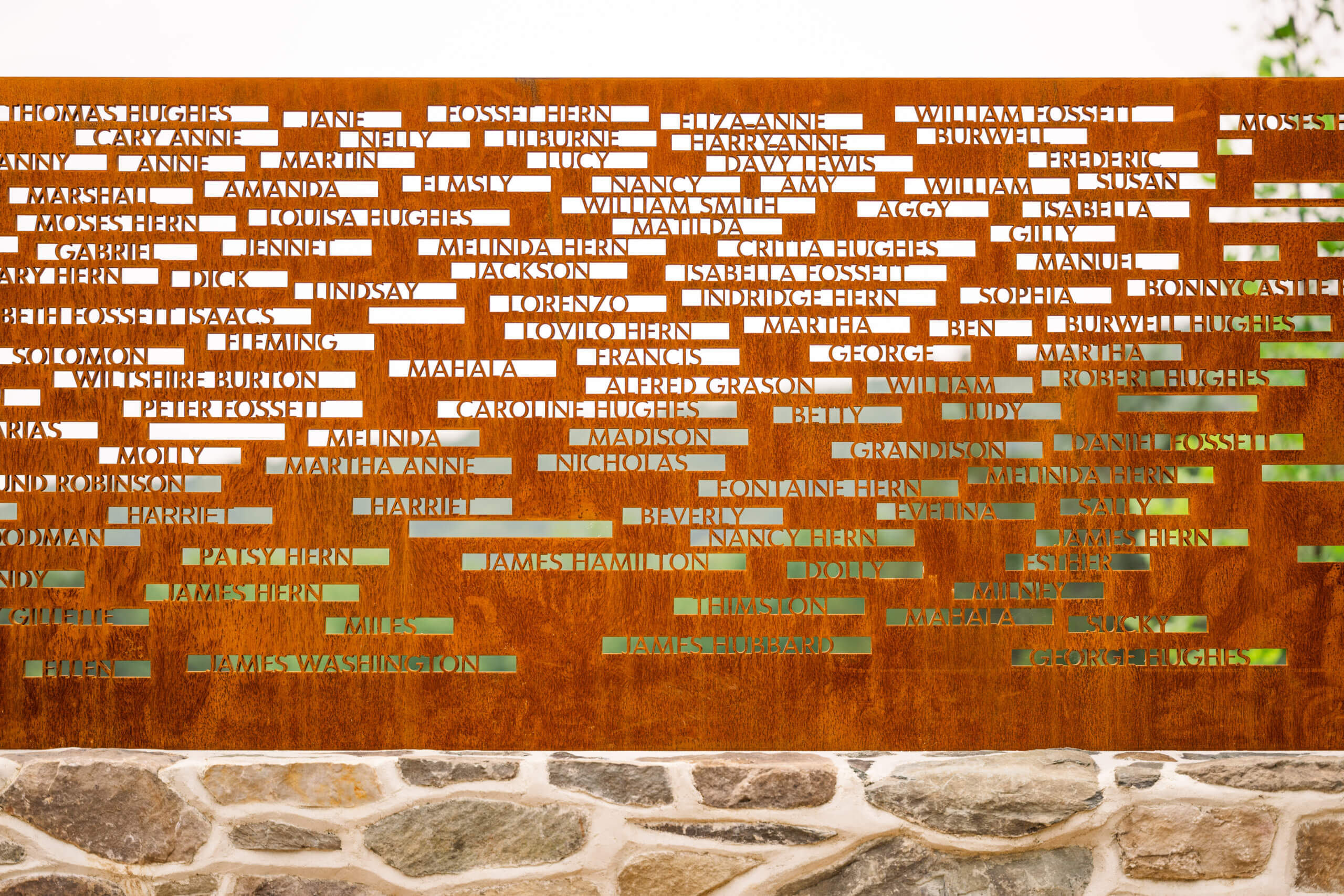

Thomas Jefferson Foundation - Monticello Contemplative Site and Burial Ground for Enslaved People
A Quiet Space that Fosters Reflection and Dialogue
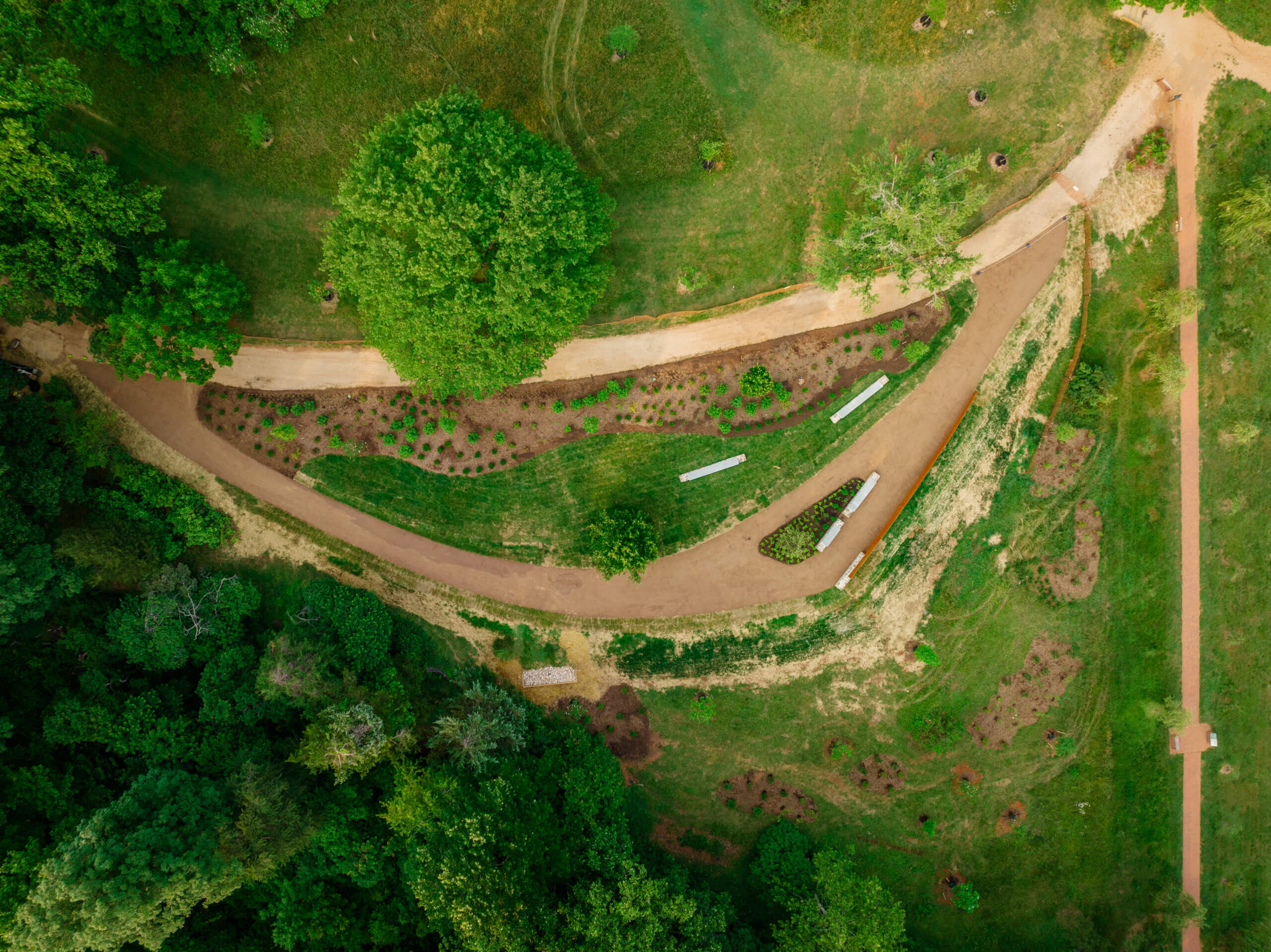
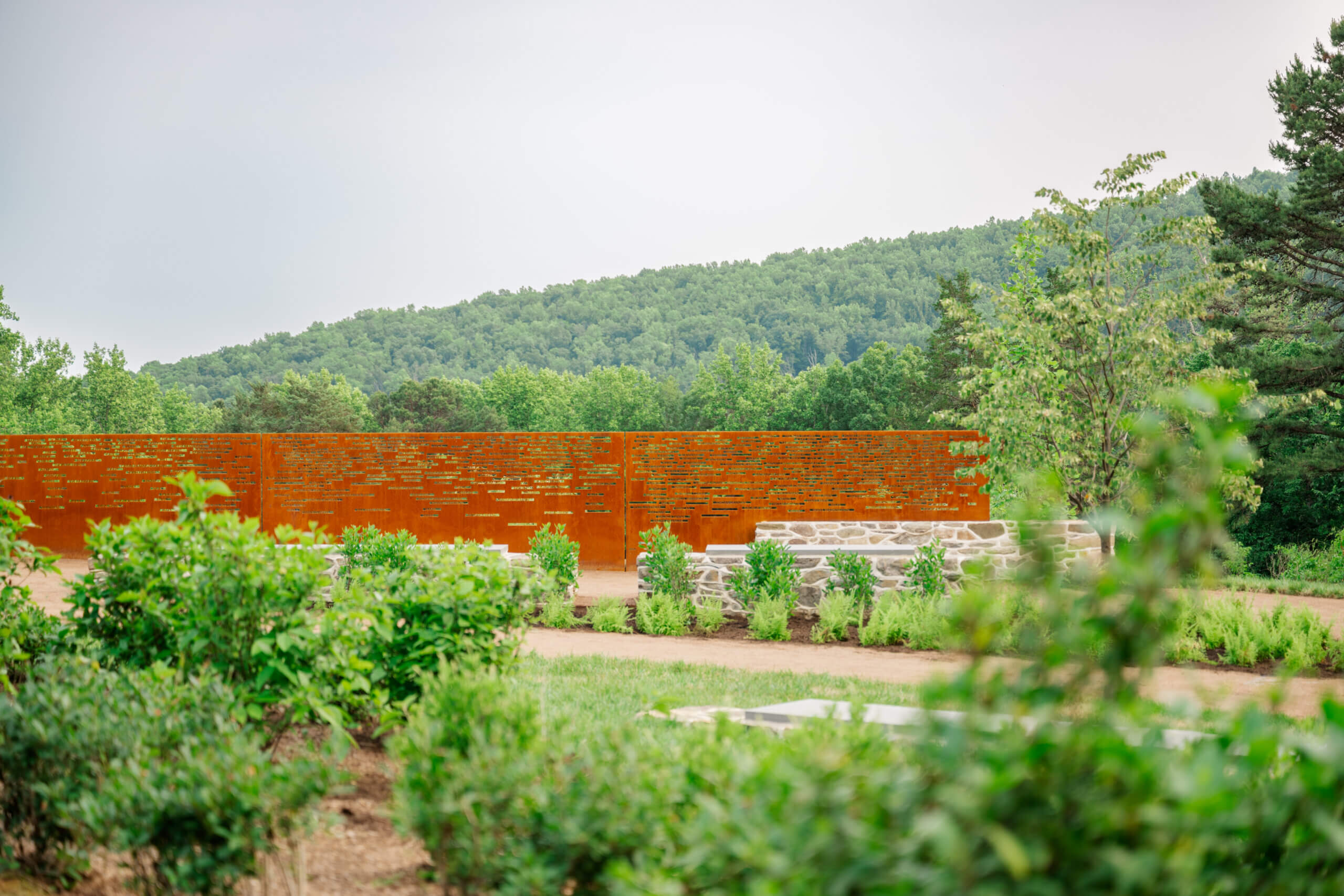
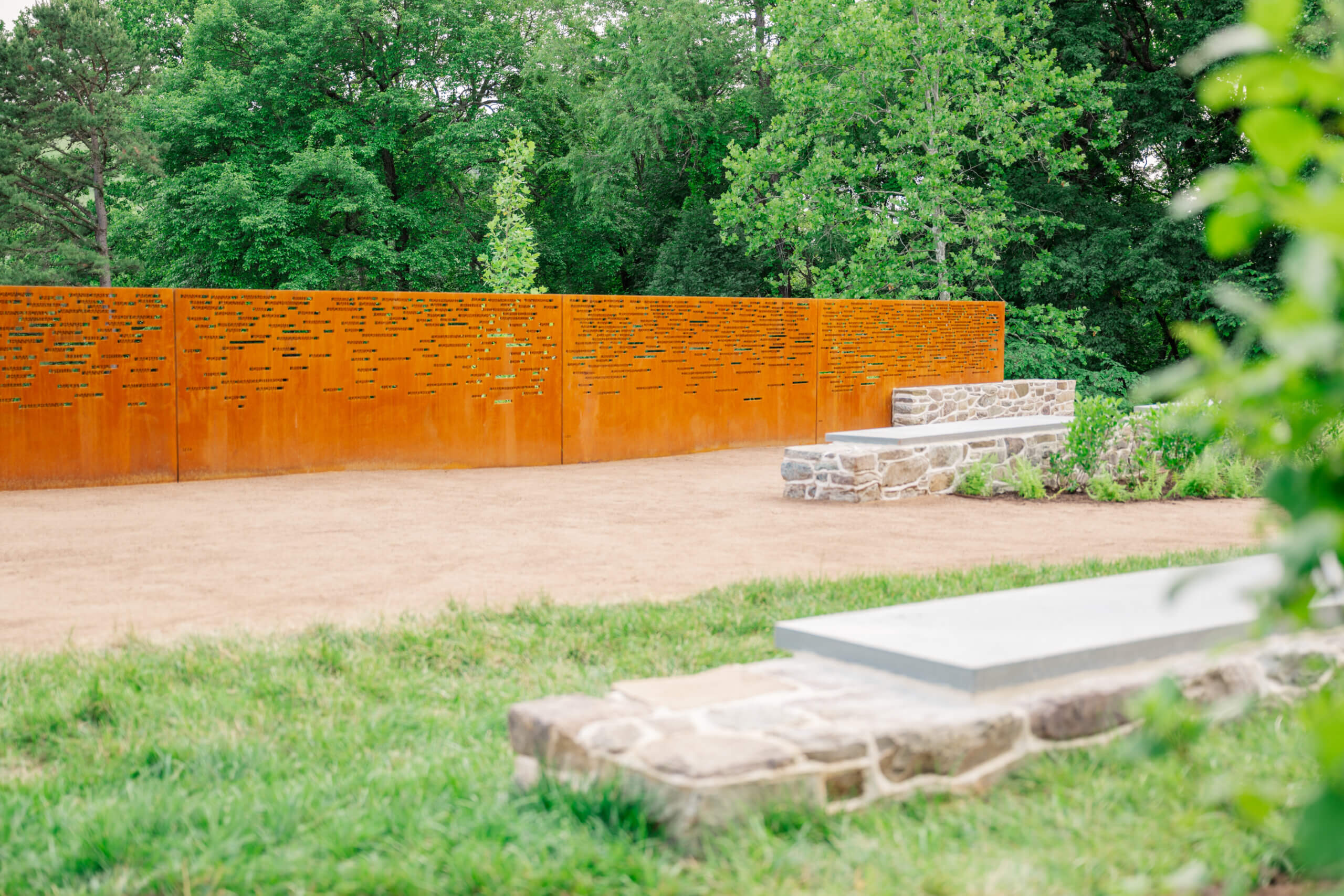
Located at the end of what was once the industrial hub of the Monticello plantation, this project honors the plantation’s enslaved population, while providing strong connections to the Burial Ground for Enslaved People at Monticello’s David M. Rubenstein Visitor Center. The goal of the project was to provide an introspective site where visitors, staff, and descendants of the enslaved can reflect on the experience of slavery at Monticello, the people entangled in it, and the impact on our society today.
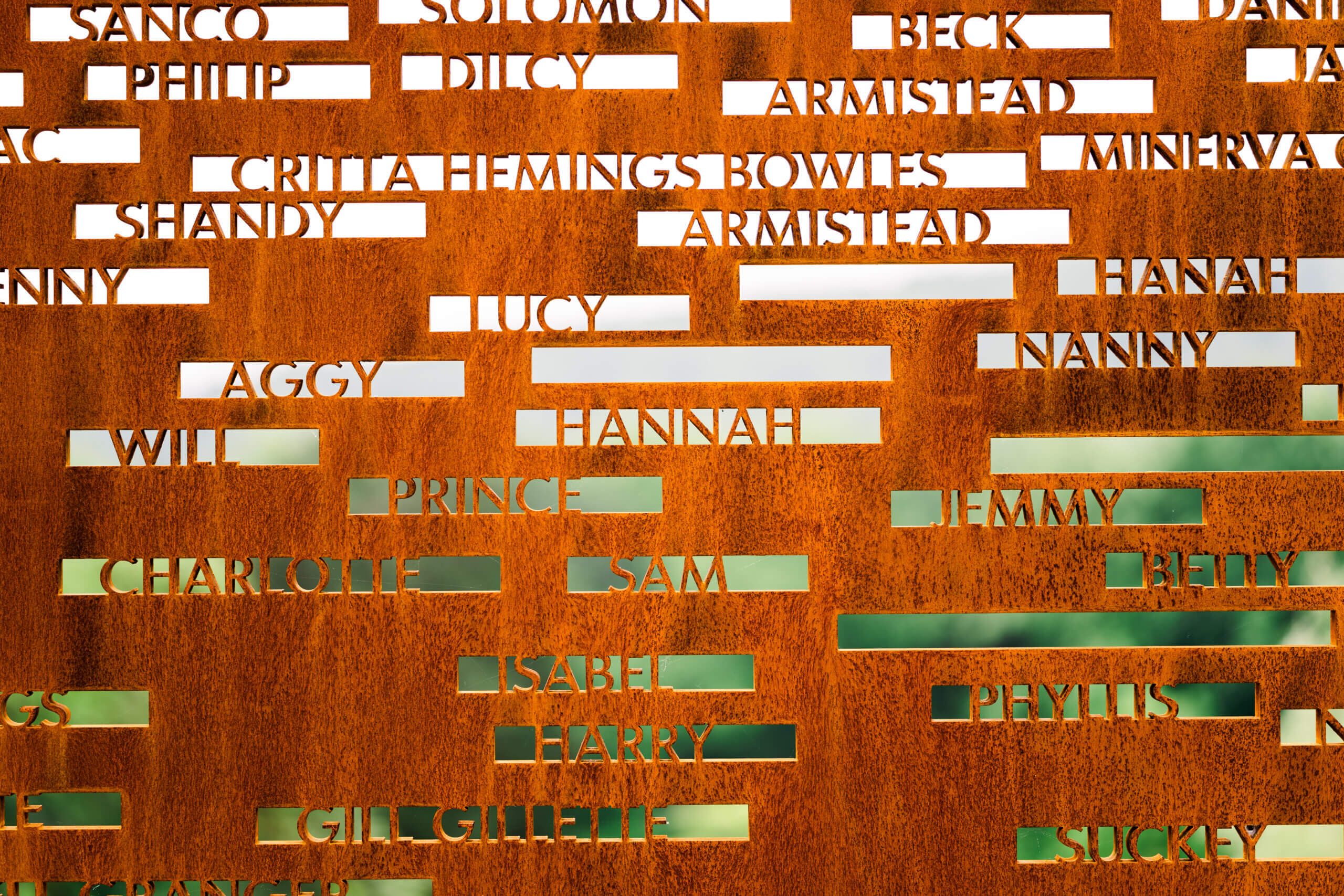
This new place of reflection affords an opportunity for healing, processing difficult information, and honoring the over 600 enslaved men, women, and children who lived and worked at Monticello. Each individual is identified by name to recognize and remember their lives.
A parallel design intervention at the Burial Ground for Enslaved People creates a strong connection between the sites of labor and final rest. This project lies not only with history and memory, but also with the opportunity to offer a fuller contemporary perspective on the story of Monticello.
Location
Charlottesville, Virginia
Building Type
Museum & Memorial