
Rethinking Accessibility Through Hands-On Learning
Accessible design is often discussed through the lens of code: dimensions, clearances, path of travel requirements, restroom layouts, parking standards, and other technical criteria that shape the built environment. But while code knowledge is essential, designing truly accessible spaces also requires curiosity, empathy, and a deeper understanding of how people experience buildings every day.
This June, HGA’s Sacramento office piloted Sacramento Access Week, an internal learning initiative developed in partnership with HGA’s Equity team and Certified Access Specialist team. The week was designed as a refresher on code and ADA requirements, while also creating opportunities for staff to engage more directly with accessibility through hands-on activities and shared learning.
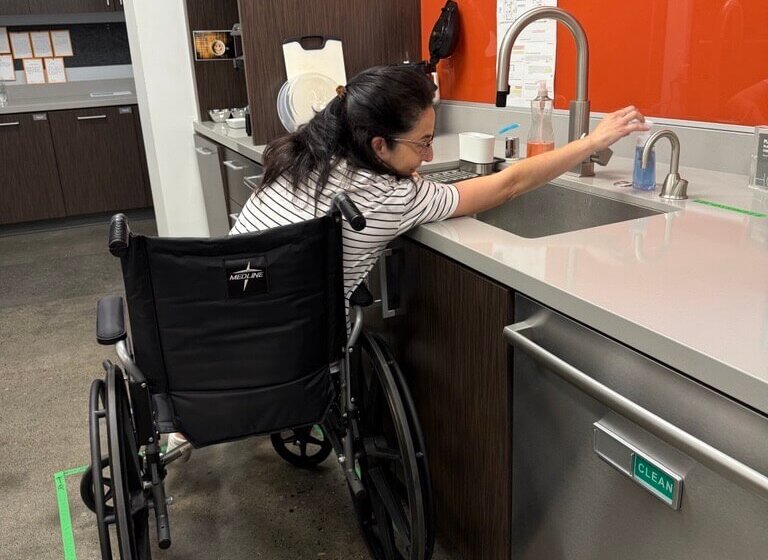
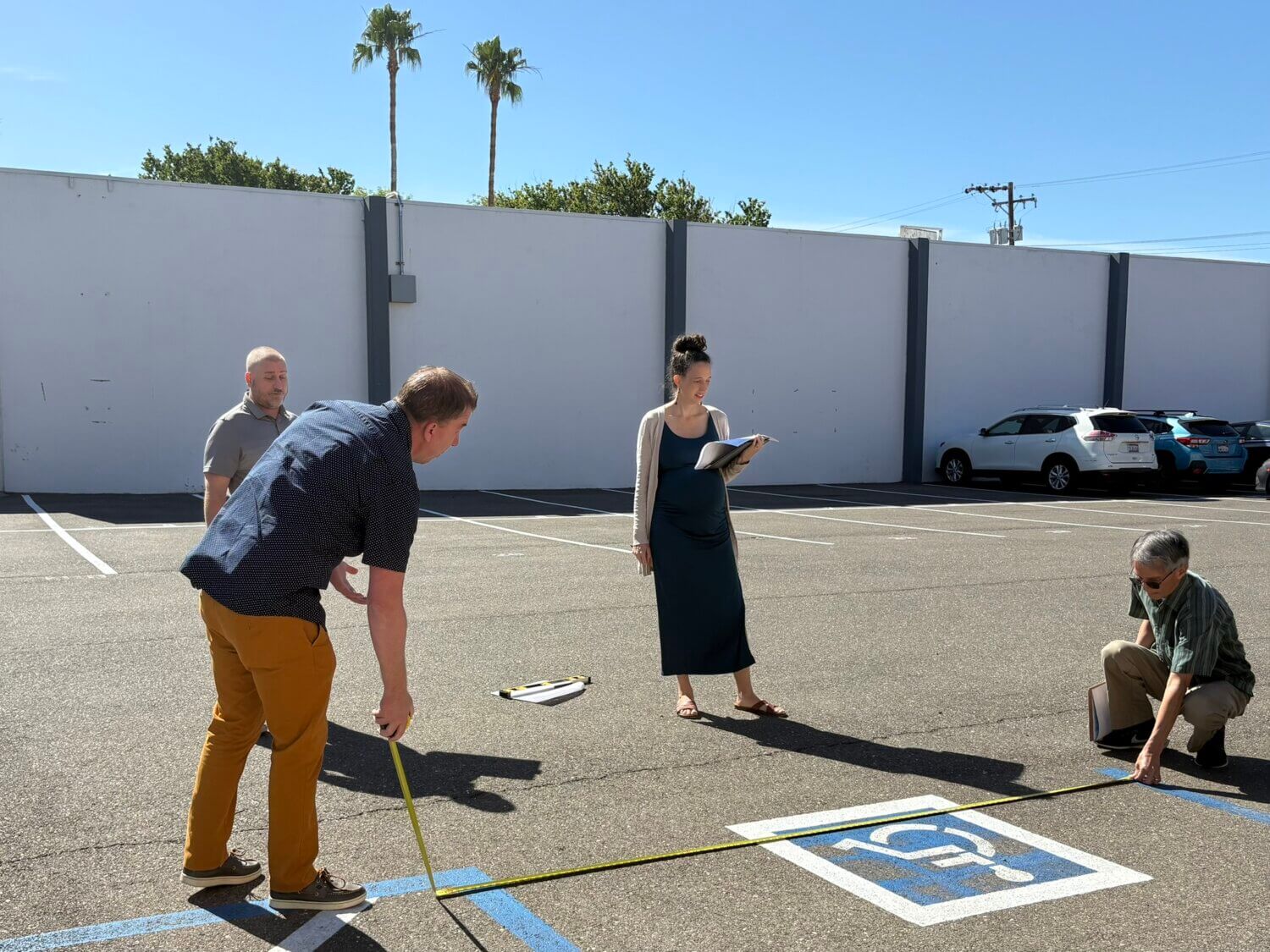
Throughout the week, staff participated in a variety of activities designed to make accessibility more tangible. Wheelchairs and canes were brought into the office so team members could better understand how different mobility tools interact with everyday spaces. An ADA-themed bingo card encouraged staff to complete quick accessibility-related activities between meetings or during coffee breaks. Small-group demonstrations led by Certified Access Specialists Angela Falla and Joel Chapin walked participants through how to evaluate path of travel elements, including restroom and parking assessments using the office building as a real-world learning environment.
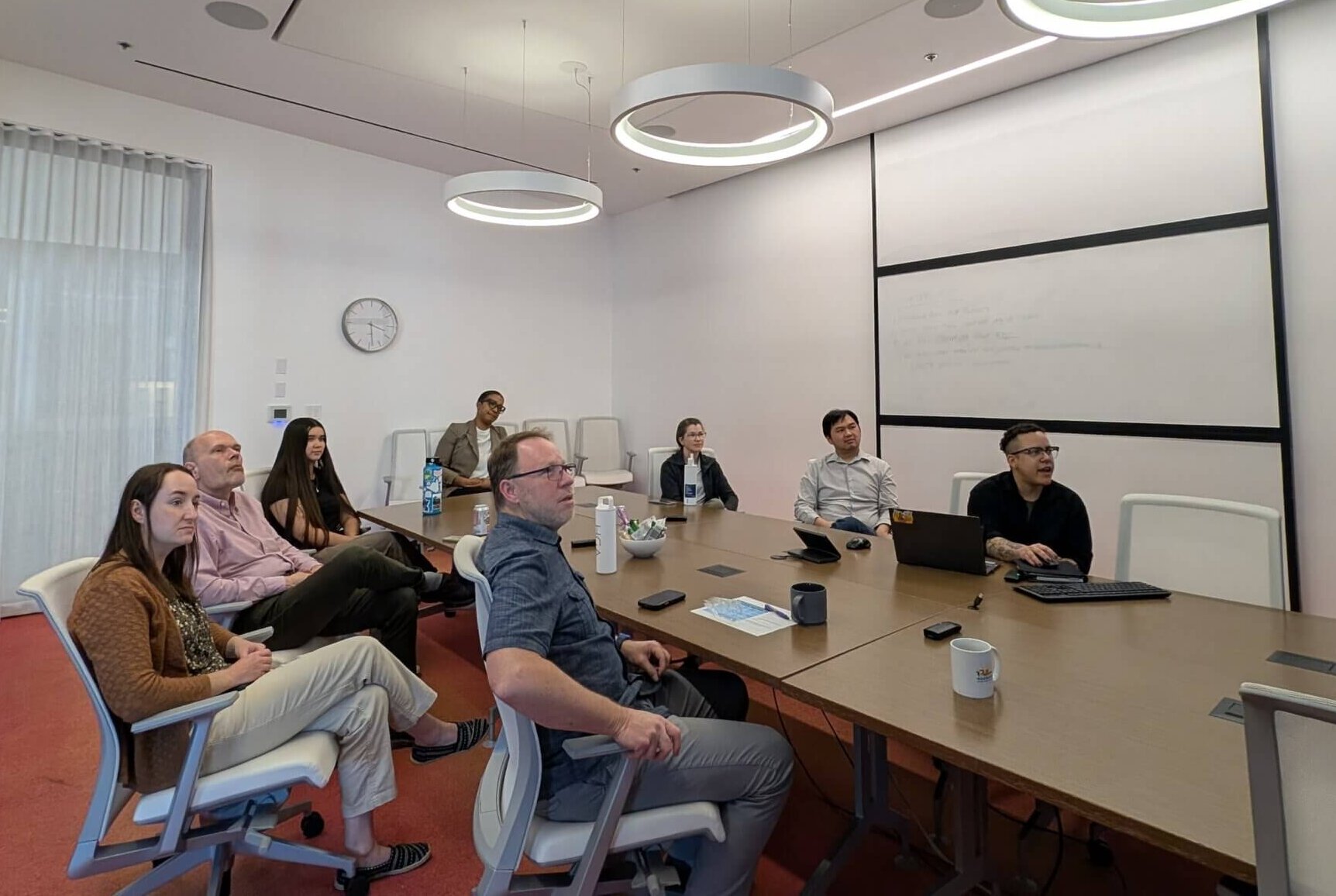
The week also included continuing education sessions focused on both the technical and human side of accessibility. A CEU on Integrating Accessible Design for All explored why and how design teams can move beyond code minimums, while Decoding Accessibility offered practical guidance on how to determine accessibility scope across projects.
Equity Design Lead Noah Exum joined the Sacramento team in person to support the pilot and lead one of the week’s CEU sessions, helping connect the activities to broader firmwide conversations around equity, access, and design quality.
What made Sacramento Access Week especially meaningful was its balance of rigor and play. Staff explored code requirements, asked questions, tested assumptions, and participated in activities that made accessibility feel more tangible, relevant, and connected to everyday design decisions. The pilot created space for people to think not only about what accessibility requires, but why it matters.
The pilot offered an opportunity to test a model that could be shared with other offices in the future. By combining technical training, empathy-building activities, and real-time demonstrations, the initiative helped strengthen document quality while reinforcing a larger design responsibility: creating environments that work better for more people.