
Building owners are discovering the tax benefits of the Inflation Reduction Act—and opportunities to plan toward a net zero future.
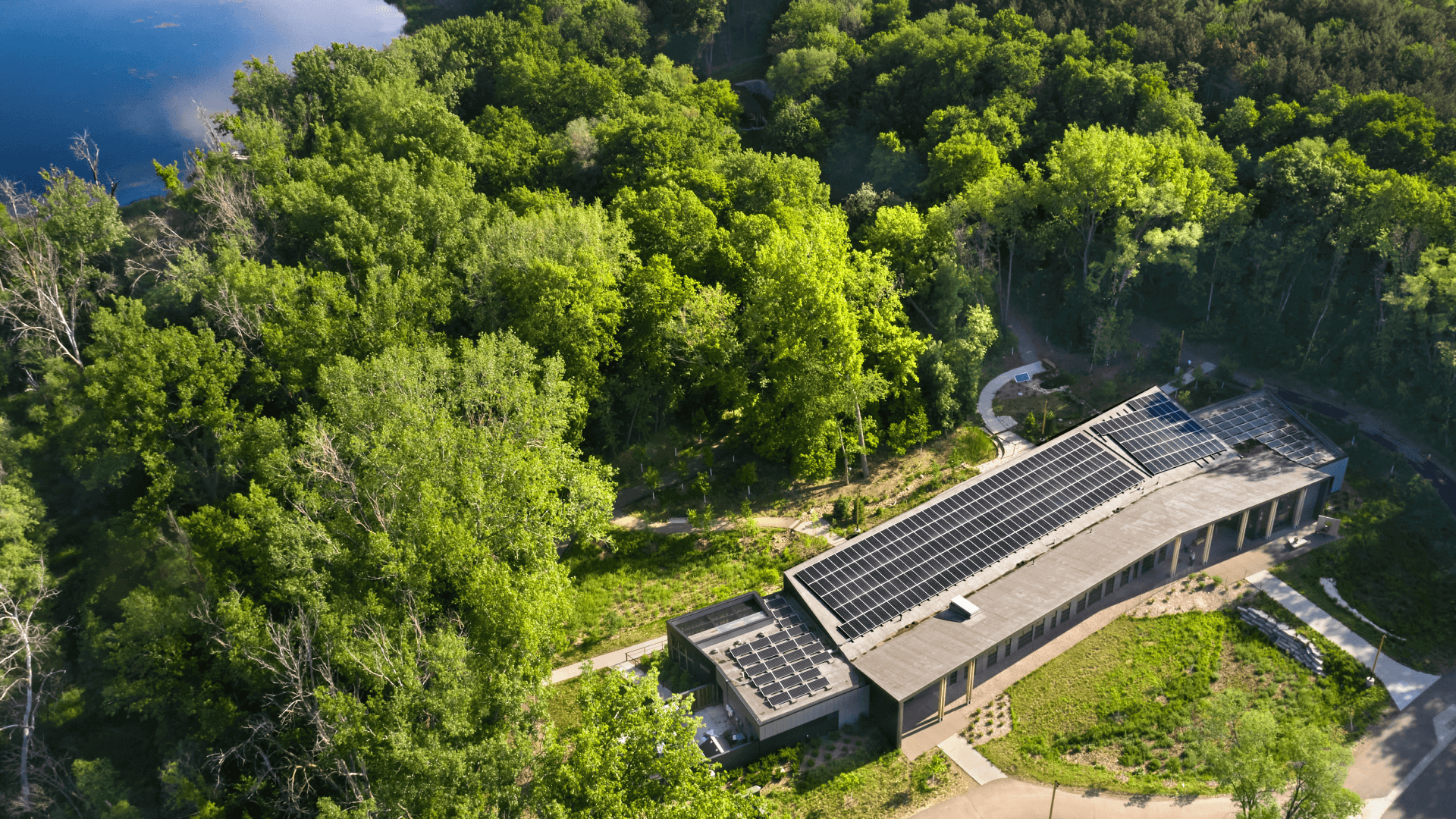

The Inflation Reduction Act (IRA) gives building owners something to look forward to with their accountants. By expanding tax credits for high-performance buildings and energy-efficient infrastructure, the IRA offers owners incentives to achieve net zero energy and decarbonization planning for new construction and renovations.
The credits—which reduce the final tax bill, dollar-for-dollar—offer significant opportunities across the building industry. Integrating energy-efficient photovoltaic systems, solar thermal systems, geothermal systems, energy storage, combined heat and power, low VOC materials, and locally sourced construction materials can net significant savings.
The building industry contributes approximately 30 percent of global carbon emission from operational energy, while embodied carbon—generated from extracting, manufacturing, and transporting construction materials—adds another 10 percent, according to MEP 2040. These statistics demonstrate the importance of developing benchmarks to reduce carbon emission.
Case studies
Several recently completed projects show how our clients are tapping into tax credits provided by the IRA, through strategies that support sustainable communities and their bottom line.
 Village of McFarland – Public Safety Building
The Village of McFarland in Wisconsin has experienced rapid growth over the past 20 years, straining operational resources of the existing Municipal Center housing the fire, EMS, police, and municipal court services.
Annual Utility Cost - Traditional
$74,000
Renewable Clean Energy Usage
$19,000 in savings
Annual Utility Cost - w/ Geothermal + PV
$44,000 in savings
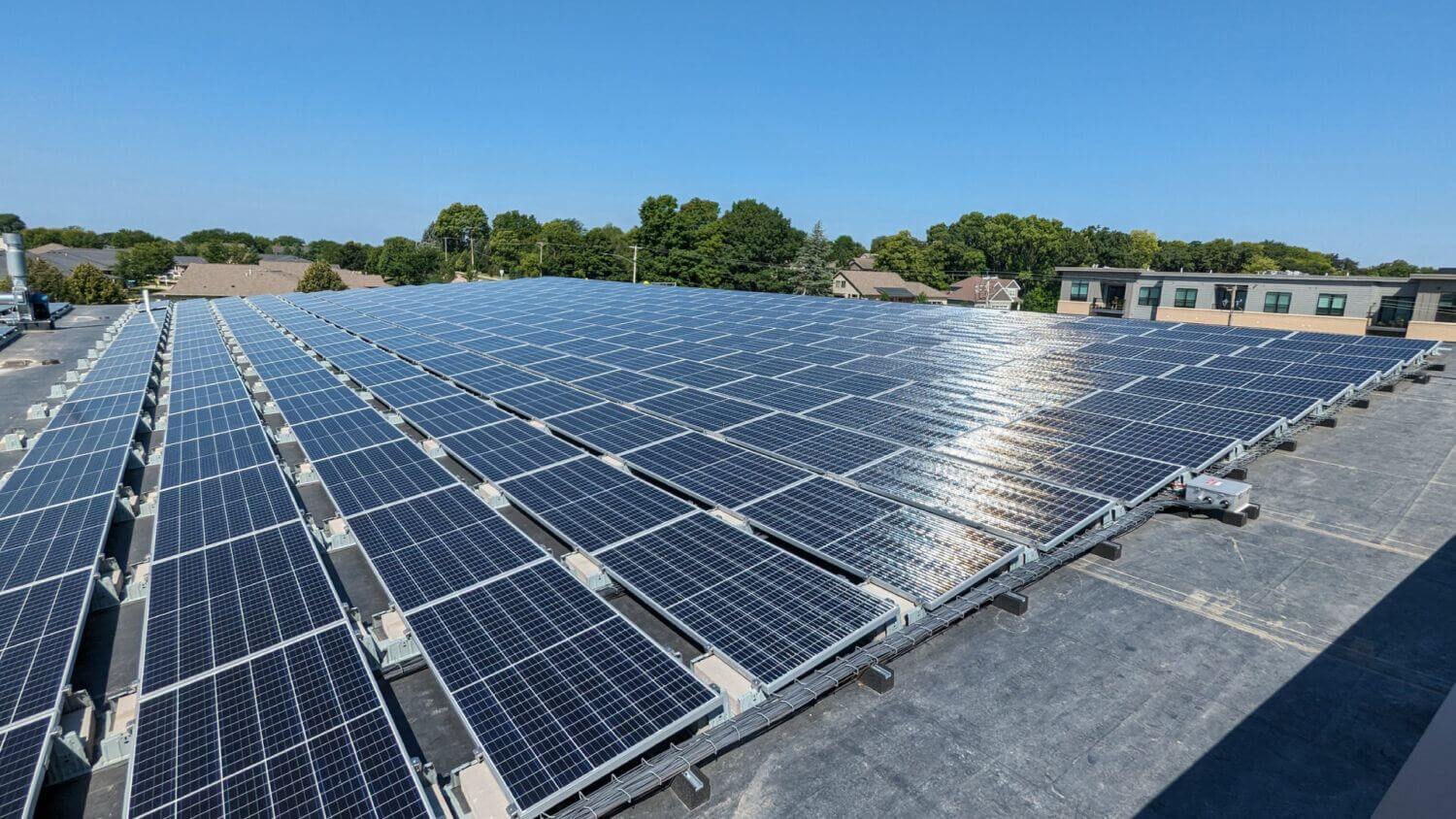
To address this growth, the Village completed a new Public Safety Center in August 2023. HGA and McFarland’s Sustainability Committee completed a Net Zero Energy Feasibility Study to plan the project, with the goal of creating the first net zero public safety building in Wisconsin, as tracked by the New Buildings Institute. The Feasibility Study considered cost saving estimates for a geothermal system alone or combined geothermal and solar photovoltaic (PV) rooftop system.
The study estimated annual utility cost of $74,000 using traditional nonrenewal utilities for the new building. With the geothermal system alone, the estimated annual utility cost was $55,000. With installation of both the geothermal and PV systems, the estimated annual utility cost was $31,000.
During construction, the Village gained an added incentive when Congress passed the IRA, providing tax credits for projects that integrate geothermal and solar systems into the plan, making net-zero more cost-effective. Additionally, with the IRA direct pay structure for the Investment Tax Credit (ITC), this reduced projected payback from 16.3 years to one year.
 Bowdoin College – Barry Mills Hall & Gibbons Center for Arctic Studies
Barry Mills Hall and the John and Lile Gibbons Center for Arctic Studies at Bowdoin College in Brunswick, Maine, is the first commercially scaled mass timber building in the state. Opening in fall 2023, the project features a classroom building and companion museum that aesthetically complement each other with steeply pitched rooflines, campus red brick, and mass timber structural expression throughout the interiors.
Approximate Tax Deduction Savings
$250,000
Renewable Clean Energy Usage
100%
Reduced Embodied Carbon Footprint *
50%
*compared to a traditional steel structure
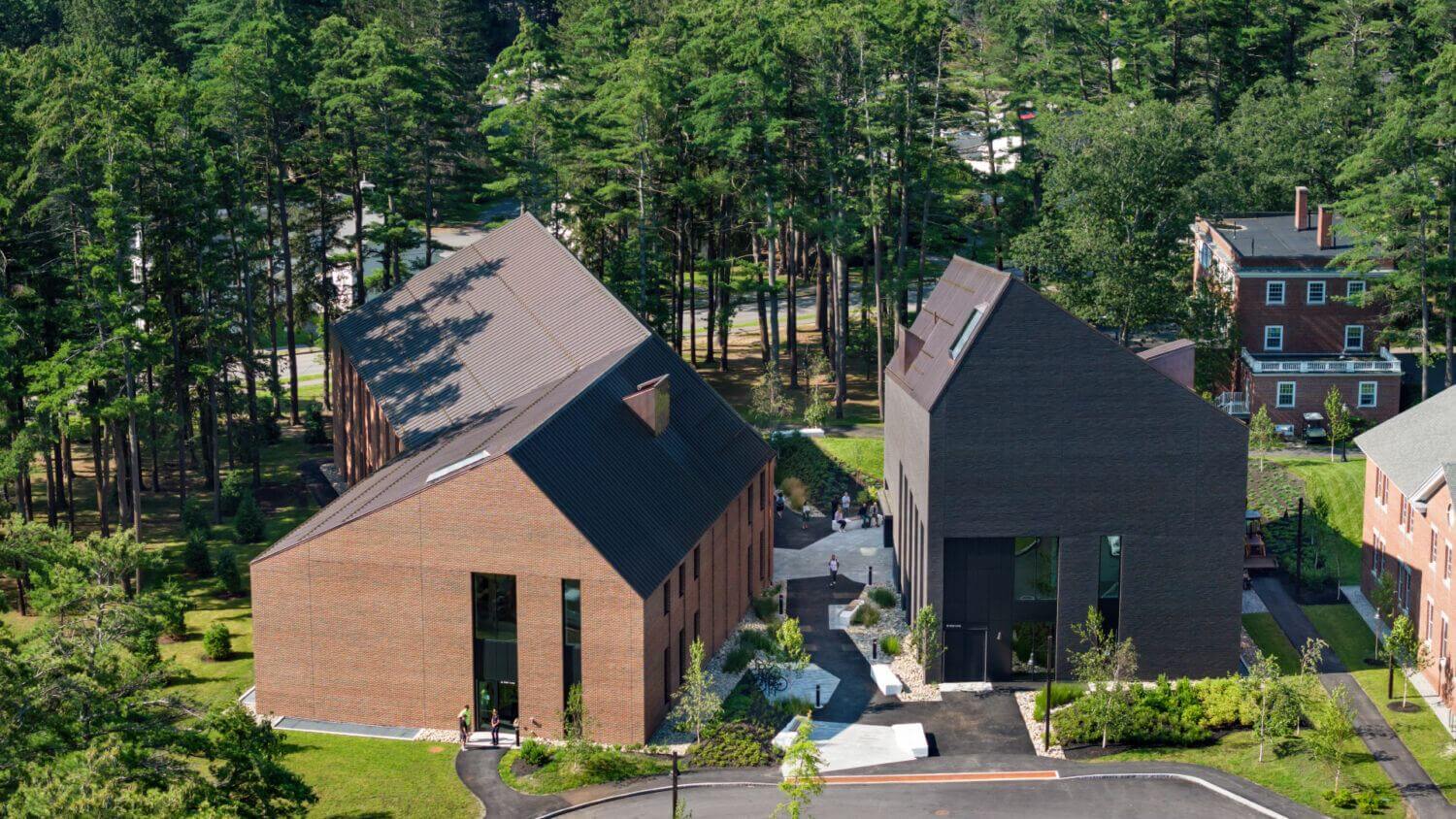
The program minimizes the Center’s environmental impact through sustainable materials, specifically the mass timber system that reduces the embodied carbon footprint by approximately 50 percent compared to a traditional steel structure. Additionally, an all-electric mechanical system connects to the campus’s solar PV array to achieve 100 percent renewable clean energy usage while meeting museum-level indoor climate requirements. And complementing the energy and structural systems, newly planted regional trees bolster the surrounding grove of white pines while replacing those lost during construction.
Positioned as a statewide showcase for sustainable design and environmental stewardship, the project already is on track to accomplish its campus energy goals. HGA completed an Energy Efficient Commercial Building Deduction study under the new IRS 179D rules, identifying approximately $250,000 in tax deduction savings.
 Aurora Health Center – Pleasant Prairie
Aurora Health Center in Pleasant Prairie, Wisconsin, features a new medical office building and surgery center serving a growing population in Racine, Kenosha, and Lake counties south of Milwaukee.
By 2030
Achieve 100% renewable electricity
By 2050
Achieve net zero energy
IRA Direct-Pay Incentive
40% for rooftop solar PV system
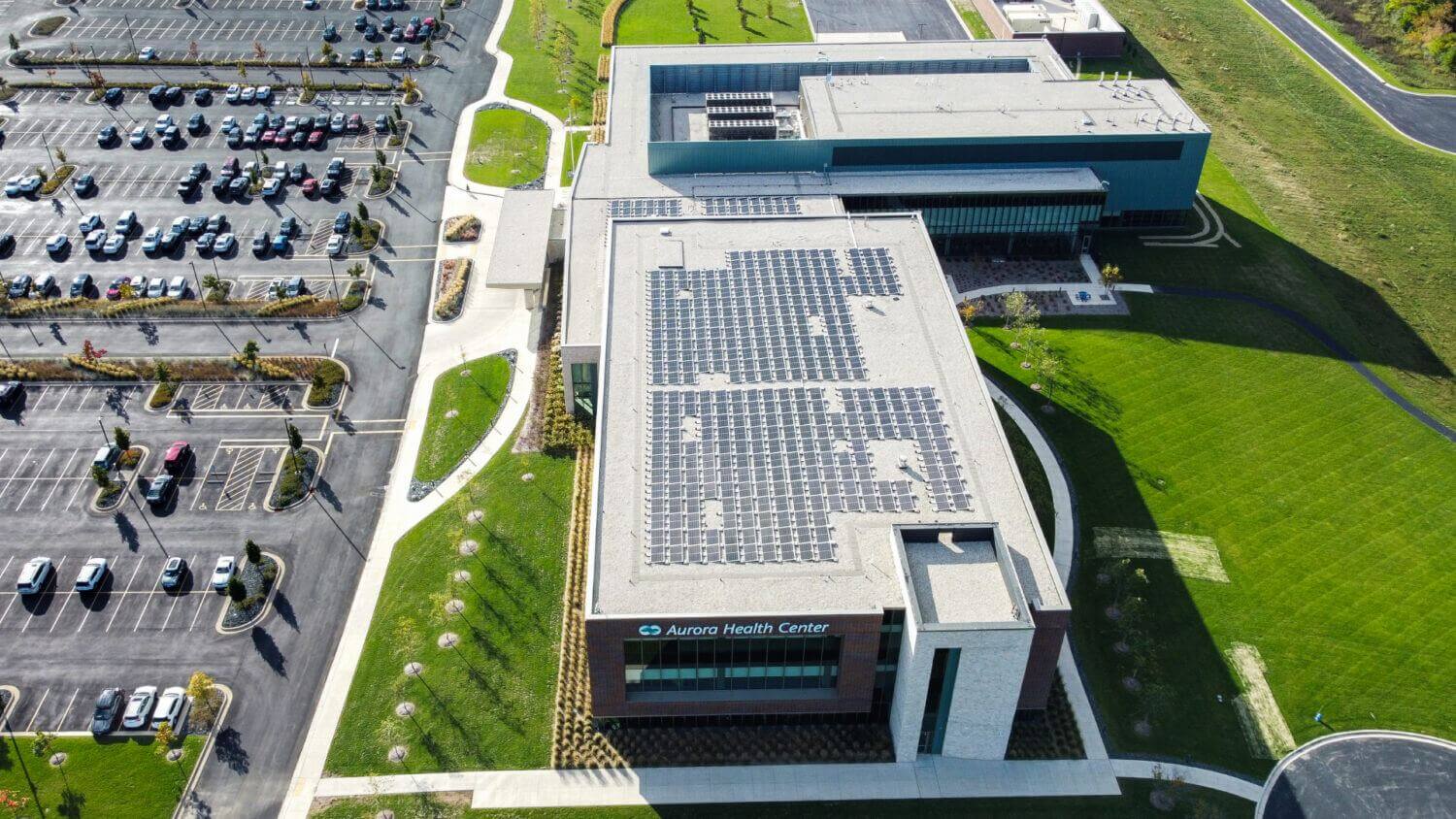
Aurora is committed to environmental sustainability throughout its multiple campuses in Illinois and Wisconsin, pledging to achieve 100 percent renewable electricity by 2030 and net zero energy by 2050. To help meet goals, HGA worked with the healthcare provider to design a rooftop solar PV array. The system was installed and commissioned in October 2023 and will be eligible for a 40 percent direct-pay incentive through the IRA, which was increased from 30 percent due to the location in an Energy Community containing a shuttered coal-fired power plant. Incentive funds from this project will be rolled into future sustainability initiatives.
Looking Forward
The Inflation Reduction Act will support our energy future—leading to a sharp growth in clean energy production and a decline in greenhouse gas emissions. Yet this is not just about tax incentives. Sustainable planning shapes neighborhoods into more equitable communities. In prioritizing decarbonization, architects and clients working together can create healthier environments for this and future generations. Let’s start planning. ∎
Visit Energy & Infrastructure to learn more about how we can help clients save money while meeting sustainability goals.
About the Author
 Alex Harris, CEM, is a Project Manager specializing in sustainable design, retro-commissioning, commissioning, and net zero energy.