
Floodplains present unique challenges—and solutions—for campuses to maintain research operations after a natural disaster.
Historically, buildings are designed to meet minimum code requirements to protect occupants in the event of natural disasters. This remains true today—especially as an increasingly volatile climate leads to more disasters, as seen with Hurricane Ida this summer. While codes are intended to safeguard occupants, they do not necessarily support continued operation of buildings following a disruption. This can be particularly problematic for academic research enterprises. In an ideal scenario, all research buildings would be designed, constructed, and maintained to withstand disasters with little interruption to the programs and occupants.
Unfortunately, this is not always the case. Yet there is a growing shift toward resilient guidelines that address occupant safety and building operations impacted by a potential disaster, led by federal, state, and local public and private institutions.
These resilient guidelines include:
- The National Institute of Standards and Technology (NIST) Community Resilience Planning Guide for Buildings and Infrastructure Systems (2015), adopted by the National Academies of Sciences, Engineering and Medicine, is the first comprehensive program for improving resilience of the built environment at the community level.
- The LEED Pilot Credits on Resilient Design, by the U.S. Green Building Council (USGBC), provides national benchmarks for individual buildings.
- The RELi rating system, adopted by the USGBC and Green Building Certification Inc™ (GBCI), factor in more than 50 requirements in eight categories, including panoramic design, hazard mitigation, construction materials, and community vitality.
- Stretch codes from insurance companies include Fortified for Safer Business Standards and FM Global Property Loss Prevention Data Sheets to reduce potential property loss due to fire, weather conditions, and failure of electrical or mechanical equipment.
Defining Resilient Labs
When designing for resilience, it is important to have a shared language and understanding of how it applies to campus planning, in general, and different buildings types, specifically—such as research labs.
Resilient design is “the intentional design of buildings, landscapes, communities, and regions in response to vulnerabilities to disaster and disruption of normal life,” according to the Resilient Design Institute.
Resilient lab planning prioritizes likelihood of risk—such as disruption to supply chains, power outages, structural damage—and implements processes to resume operations quickly from disruption.
Two Case Studies
Two recent campus labs in flood zones illustrate the importance of resilient planning to prevent or minimize disruption.
International Yacht Restoration School
The International Yacht Restoration School (IYRS) is within a working waterfront business district in downtown Newport, Massachusetts. This commercial wharf setting also is in a fragile coastal area that has experienced severe flooding, including Hurricane Sandy in 2012. The existing IYRS campus buildings—masonry structures from the 18th and 19th centuries—withstood the storm with little visible damage, although interiors and equipment areas did not.
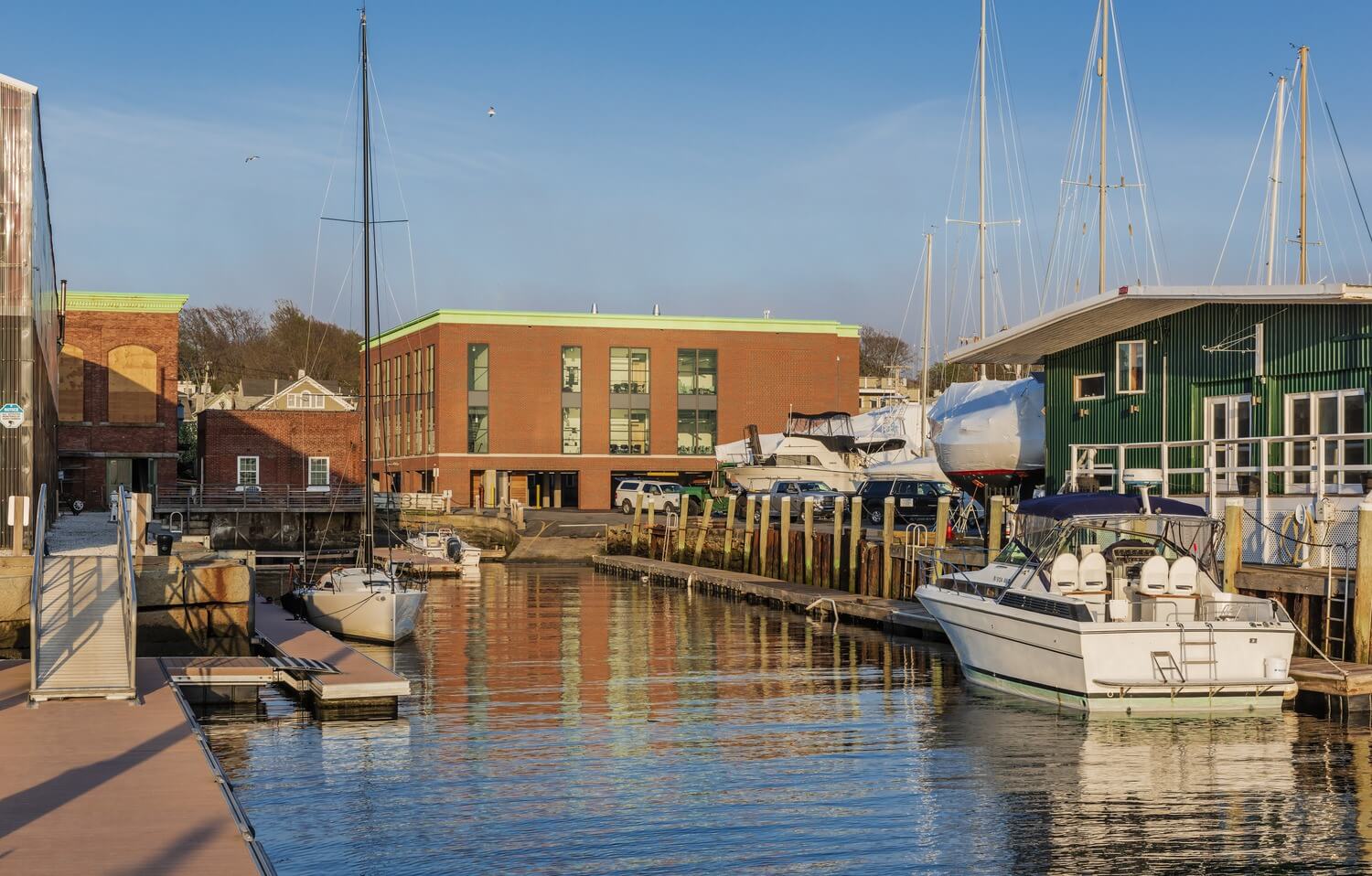
The Brooks Building for Composites and Systems Programs sits adjacent to these historic buildings on the Spring Wharf flood zone, set back 75 feet from the water. The program includes two floors of classroom and teaching areas for Composites Technology, Marine Systems, and Digital Modeling & Fabrication programs.
Planning focused on building systems resiliency. The teaching areas are above an open parking level within the flood elevation. Utility, equipment, and machine rooms are located above the flood elevation, as are elevator components vulnerable to flooding. At grade, columns are encased in concrete to resist wave action and foundations are designed to resist erosion following a storm surge. Walls at grade are limited in area and other enclosures are designed as lightweight screens to partition storage and conceal parking. These enclosures are designed to breakaway in a severe flood event.
Combined, these planning strategies mitigate potential disruption to the research programming, adding a resilient structure in a vulnerable location.
MIT.nano
In another example, MIT.nano is home to world-class laboratories, class 100 and 1,000 cleanrooms, imaging suites, nano makerspaces, and chemistry teaching laboratories.

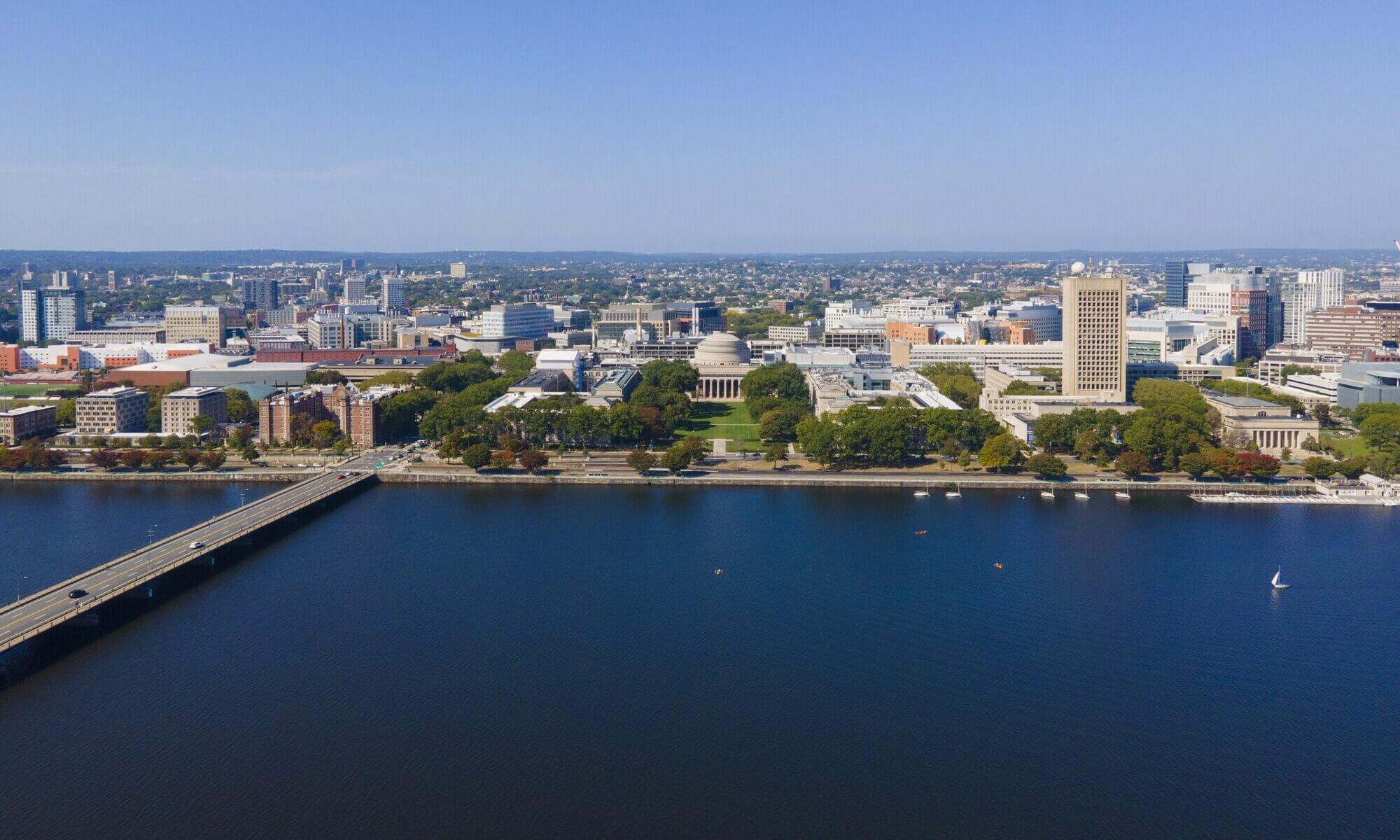
As with most buildings within the Stormwater and Landscape Ecology Masterplan on the MIT campus in Cambridge, Massachusetts, MIT.nano is built on tidal land reclaimed from the Charles River estuary. Approximately 64 percent of the 196-acre campus is covered in impervious surfaces. Stormwater runoff flows into the MIT and the city’s drainage systems, eventually discharging into the river. Climate Resilience Planning by MIT indicates that sea level rise and episodic storm surges could cause the river to back up through the storm drainage pipes and discharge onto local streets.
During the design phase, Hurricane Sandy hit the East Coast, flooding basements of multiple hospitals and knocking out power.
In response, the team evaluated risk scenario where the MIT.nano deep basement could be flooded from the adjacent river. To address the risks, the design team elevated the ground floor at least six inches and elevated the electrical substations—initially designed for the basement—to levels four and five. This included constructing electrical duct banks of conduits (typically underground) up the side of the building to connect to the electrical switchgear on levels four and five. While the air handling units and the emergency generator were already located in the enclosed mechanical penthouse, the fuel oil storage for the generator was in the basement. Therefore, the fuel oil pump was elevated six feet above the floor to buy time in case of a flood event. In addition, slurry wall construction acts as cut-off walls from groundwater hydrostatic pressure.
As for the surrounding landscaping, a series of interconnected outdoor spaces, hardscapes, and plantings help mitigate stormwater runoff, preserve the campus’ history on reclaimed tidal land, and safeguard research operations.
Looking Forward
In coastal areas and floodplains, the demand for resiliency is immediate—as seen from the impact of Hurricane Sandy and now Ida in many areas. Although future development in some coastal areas may become impracticable because of rising sea levels, there are many communities where development is essential for continued growth. These communities need creative solutions for living with water. While both case studies focused on preventive resilient planning in flood zones, every lab building faces unique climate-related risks regionally and nationally. The International Yacht Restoration School and MIT are models for resiliency in fragile urban coastal settings.