
The leading life sciences clusters in Boston and Cambridge, the San Francisco Bay Area, and San Diego are at the forefront of innovation and research. With offices and ongoing life sciences projects in each of these locations, HGA is positioned to monitor and respond to the evolving landscape within these dynamic environments. Our work allows us to observe a nuanced shift in the ever-changing demands for life sciences space planning and design opportunities.
 Inspiring, Healthy, and Collaborative Ecosystems for Research and Discovery
The life sciences sector has undergone a gradual transition in the balance between office and laboratory space. A 50/50 lab to office split was customary in the past, while a 60/40 split is more typical today. This evolution mirrors the rise of hybrid work environments, where shared desks and hoteling spaces have become commonplace across most industries, including life sciences. This realignment of space allocation fosters more collaborative research cultures, nurturing innovation in both laboratory settings and workplace environments.
Concurrently, HGA remains committed to designing research spaces that prioritize access to natural daylight. Recognized for its positive impact on health, well-being, and productivity, facilitating natural light is an essential aspect of our designs. Moreover, an open and transparent layout, with clear visibility into laboratory areas, fosters an inviting atmosphere conducive to collaboration. This design feature breaks down the split between office and lab, uniting staff in spaces that convey they are all part of the research mission of the organization. Incorporating these connections into research space design underscores the importance of HGA’s in-house lab planning expertise—indispensable in crafting comprehensive lab layouts that prioritize mission-driven collaboration, biosafety measures, and the safe delivery, storage, handling, and disposal of hazardous materials.



HGA provided programming and design for this 38,000 square foot space that places Biocytogen’s capabilities in antibody development on display. The overall layout offers ample access to daylight throughout the space, and flexible desking offers a direct view into the laboratory area.
As states and cities increasingly adopt carbon neutrality targets, the demand for all-electric and net-zero or net-zero-ready buildings is becoming commonplace. Similarly, life sciences clients are committed to reducing their carbon footprint, meeting energy efficiency goals, and offering healthy and sustainable work environments where research and innovation can thrive. We work closely with our clients to navigate the path toward achieving these objectives.
Design considerations encompass a spectrum of fossil fuel-free and net zero-ready options, from geothermal wells to on-site photovoltaics and high-performance curtainwall systems that enhance energy efficiency and maintain a controlled interior environment.
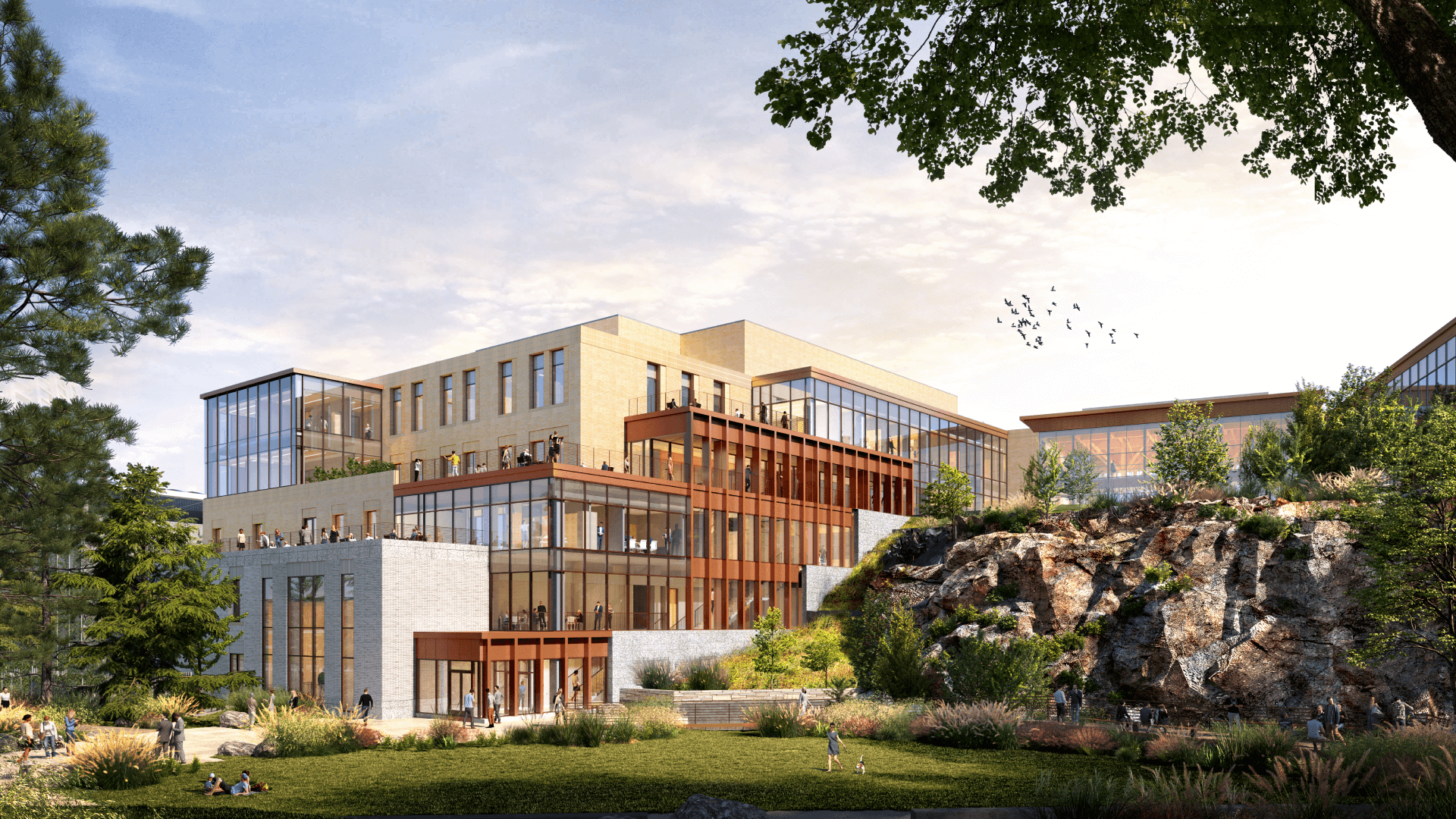
HGA is working with Cell Signaling Technology, a life sciences discovery technology company and leading provider of antibodies, to develop a new research and innovation campus at the site of an abandoned granite quarry. A key goal is to maximize renewable energy sources while reducing and eliminating fossil fuel usage to achieve net-zero emissions.
 Location and Amenities that Attract Top-Tier Talent
The top life sciences hubs offer proximity to leading research universities and access to top talent, as well as arts, culture, food, and entertainment. These urban areas are increasingly dense with new lab buildings. Life sciences firms often find that considering space in high rise buildings—whether new or retrofit— offers the greatest choice in the most sought-after locations. This transition is facilitated by the evolving nature of the research (often less chemistry intensive) and building code regulations, which together permit the placement of research laboratories on higher floors. Our teams work closely with clients to evaluate new and lab conversion options alongside criteria for operations, efficiency, and amenities. We provide strategies to maximize the utility and collaborative impact of spaces.
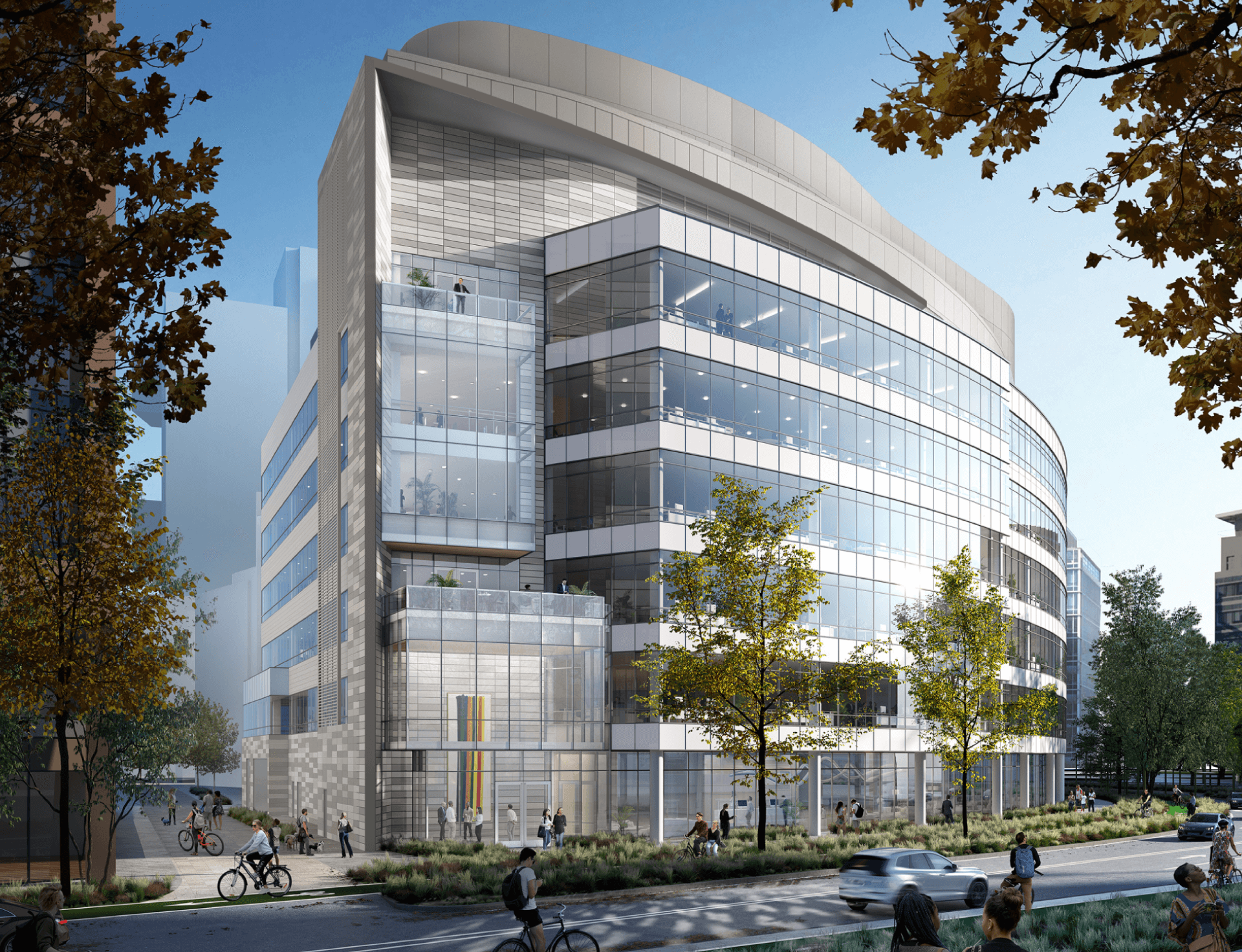
HGA is working closely with the building owner BXP and the Broad Institute of MIT and Harvard to repurpose an existing six story office building. Once complete later this year, Broad Institute at 300 Binney Street will be a 225,000 square foot advanced biomedical research facility located in the heart of Kendall Square in Cambridge, MA.
Multi-tenant facilities boasting appealing shared amenities are highly sought-after. Alongside increasingly typical features such as an on-site gym, dining options, childcare services, and indoor/outdoor gathering spaces, life sciences tenants are drawn to functional amenities that can directly contribute to their research goals. Access to shared functional amenities can be especially advantageous to smaller entities. Tenant spaces offering shared functions such as access to Uninterrupted Power Supply (UPS) systems, tenant standby generators, and provisions for lab gases and purified water are especially attractive to smaller organizations. Similarly, access to a third party-operated vivarium can be invaluable during drug development and as therapies enter pre-clinical studies.
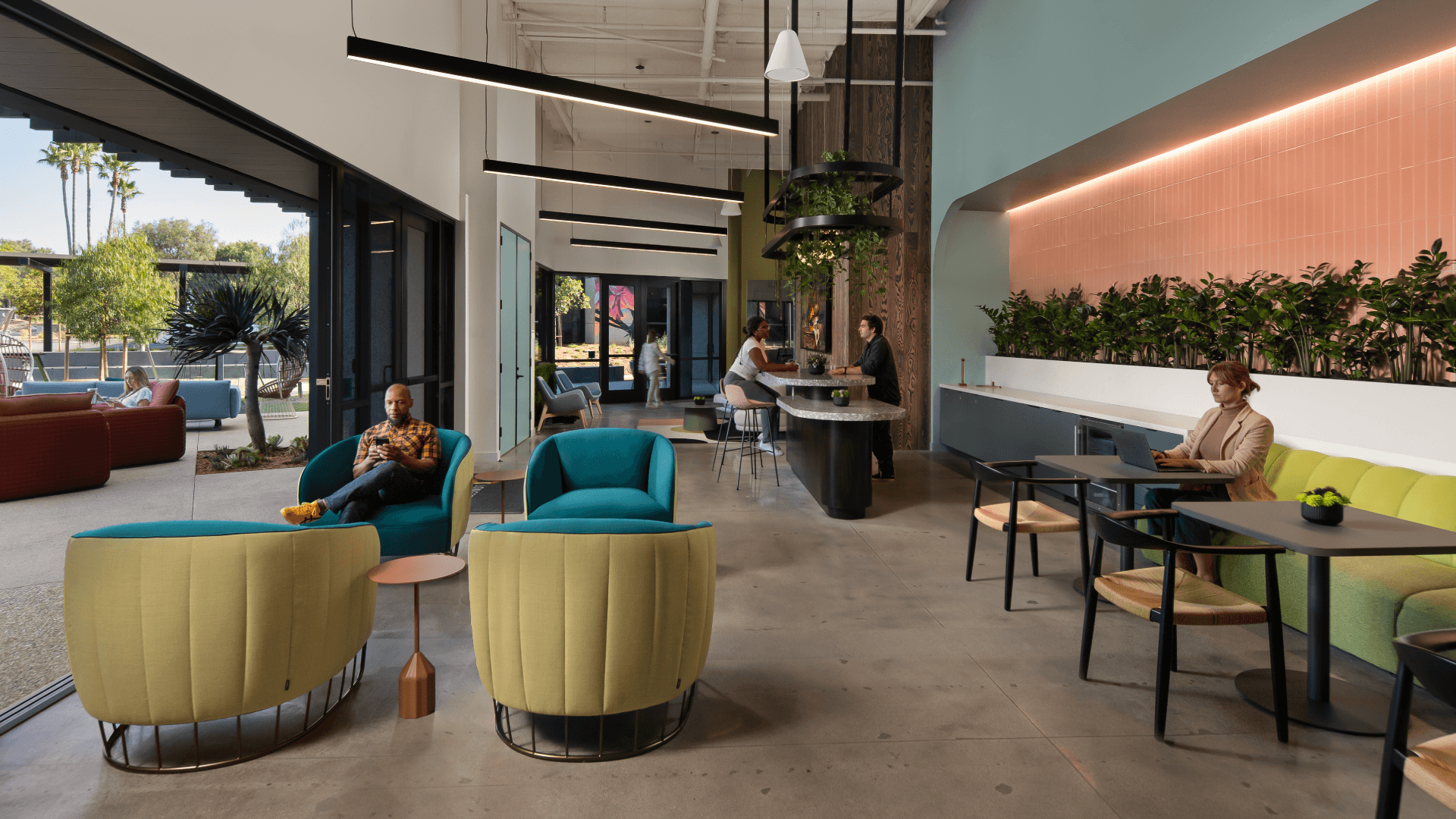
Centerpark Labs is a prominent life sciences development located in the heart of San Diego’s Sorrento Mesa neighborhood. The development features shared amenities, including a gym, café, conference facilities, outdoor spaces, and bicycle facilities.
Looking Forward
Architectural design is evolving to meet the dynamic demands of research and innovation. Positioned strategically within key life sciences markets, HGA stands at the vanguard of this transformation. Through collaborative efforts with a diverse array of clients, we are pioneering the creation of seamlessly integrated office and laboratory spaces.
Our approach prioritizes functionality and amenities, crafting research environments that not only attract top talent but also catalyze cutting-edge discoveries, amplifying the effectiveness and excitement of scientific advancements.
Regardless of a project’s scale or complexity, our teams are dedicated to delivering design solutions that cultivate interdisciplinary collaboration, facilitate active applied research, and optimize sustainable design and operations. Throughout, we remain committed to crafting spaces that are inviting, secure, and resilient. ∎
Check out HGA’s Life Sciences portfolio to see some of our work with clients, ranging from start-ups to well-established pharmaceutical companies and leading research institutions throughout the U.S.
About the Author
 Mark Allen leads the Life Sciences practice within HGA’s Science + Technology sector. He works closely with biotech, pharmaceutical, biomedical, and institutional research clients on a national scale. Mark is regarded for his insight and inclusive leadership.