
New article in Engineered Systems details how HGA designers are using mass timber to embrace Bowdoin College’s commitment to carbon neutrality.
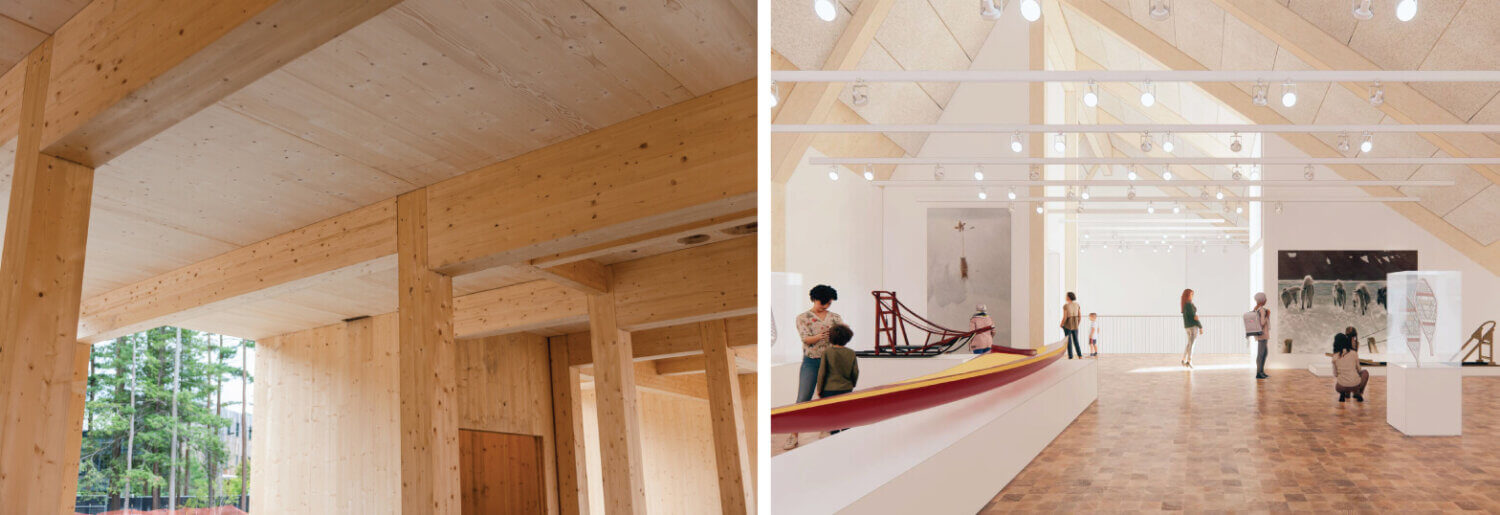
There has never been a more important time to take responsibility for our actions. The world is experiencing unprecedented rates of change in climate, energy supply, technology, and business. The climate crisis is urgent. The sixth Intergovernmental Panel on Climate Change (IPCC) Report, approved in April, states that carbon emissions must be reduced by 50% to ensure a livable planet in the future. Building construction and use contributes more than 40% of human-caused emissions of greenhouse gases. Designers of the built environment have a unique and inspiring opportunity to shape a positive future. This means developing the expertise and research to push beyond net-zero energy to net-positive energy, from a neutral effect on health, safety, and resources to a positive one.
In a new article in Engineered Systems, Ethan Fogle explains the immediate need to address embodied carbon and how mass timber is a better choice than concrete or steel due to its lower embodied carbon nature.
To read the full article, visit Engineered Systems Magazine.
About the Author
 Ethan Fogle, PE, is a structural engineer with a wide range of experience in many project types, including government, corporate, health care, and arts facilities. He combines broad technical project experience with expertise in embodied carbon and life cycle assessment (LCA). He’s passionate about understanding human kind’s deep connection to the natural world while actively and creatively reducing the impact of the planet’s buildings. HGA’s Lauren Piepho and Tony Staeger also contributed to this article.