
When energy and water reduction goals are clear, building occupants can actively contribute to achieving benchmarks. At Wolf Ridge Environmental Learning Center, eco-feedback screens help inform visitors to make environmentally conscious choices. HGA partnered with Wolf Ridge to explore the impact of real-time resource consumption data on decision-making.
The findings demonstrated that technology and thoughtful design influenced behavior choices and offered meaningful insights for owners and designers to connect design, education, and behavior.

Building Design Meets Experiential Learning
Wolf Ridge Environmental Learning Center in northern Minnesota embraces the idea that buildings can be teaching tools to help users participate in resource conservation and sustainable outcomes. The Margaret A. Cargill (MAC) Lodge, the world’s first renovation to achieve full Living Building Challenge (LBC) certification, includes a simple yet powerful strategy. Eco-feedback screens in dorm rooms display real-time data on water, electricity, and heat usage to show visitors how their daily choices add up, informing their daily actions. Additionally, Wolf Ridge can facilitate a conservation competition that rewards the school that conserves the most during student visits, adding a competitive incentive to the screens’ data.
Research Overview
The study, led by HGA and Wolf Ridge in 2024 to 2025, included 521 fifth-grade students from six schools. It explored students’ evaluation of the eco-feedback screens and competition to better understand their influence on environmental behaviors and awareness during and after their visit.
Research methods included pre- and post-visit student surveys, student interviews, and surveys of chaperones and parents/guardians conducted several months after the visits. Results from participants who stayed in the MAC Lodge with access to eco-feedback screens were compared to those staying in the nearby Summit Lodge without screens.
Key Findings
 Feedback screens in rooms helped students save water and electricity.
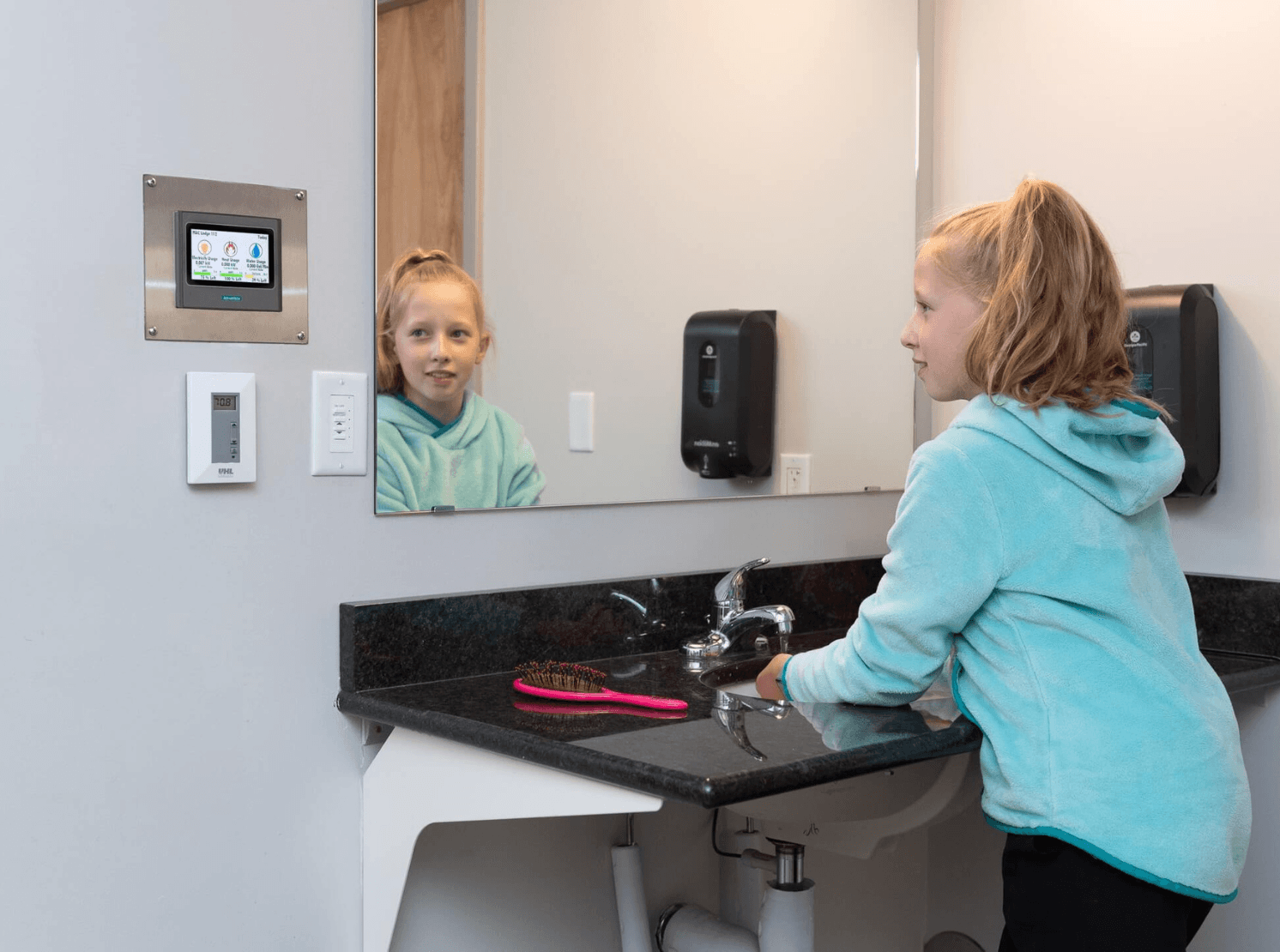
Among students who had access to a functioning screen in their room, 76% reported a positive experience. Eco-feedback screens received favorable ratings for ease of finding (visible by the sink), ease of use, understandability, aesthetics, and fun from students and chaperones. Students said the screens helped them save water and electricity during their stay, but heat consumption control was limited since it was managed at a building level.
“[The screen] really helps.”
“I was using two milk cartons [worth of water] a day! That was surprising.”
– Student Interview Comments
 Screens were useful but user experience could be improved.
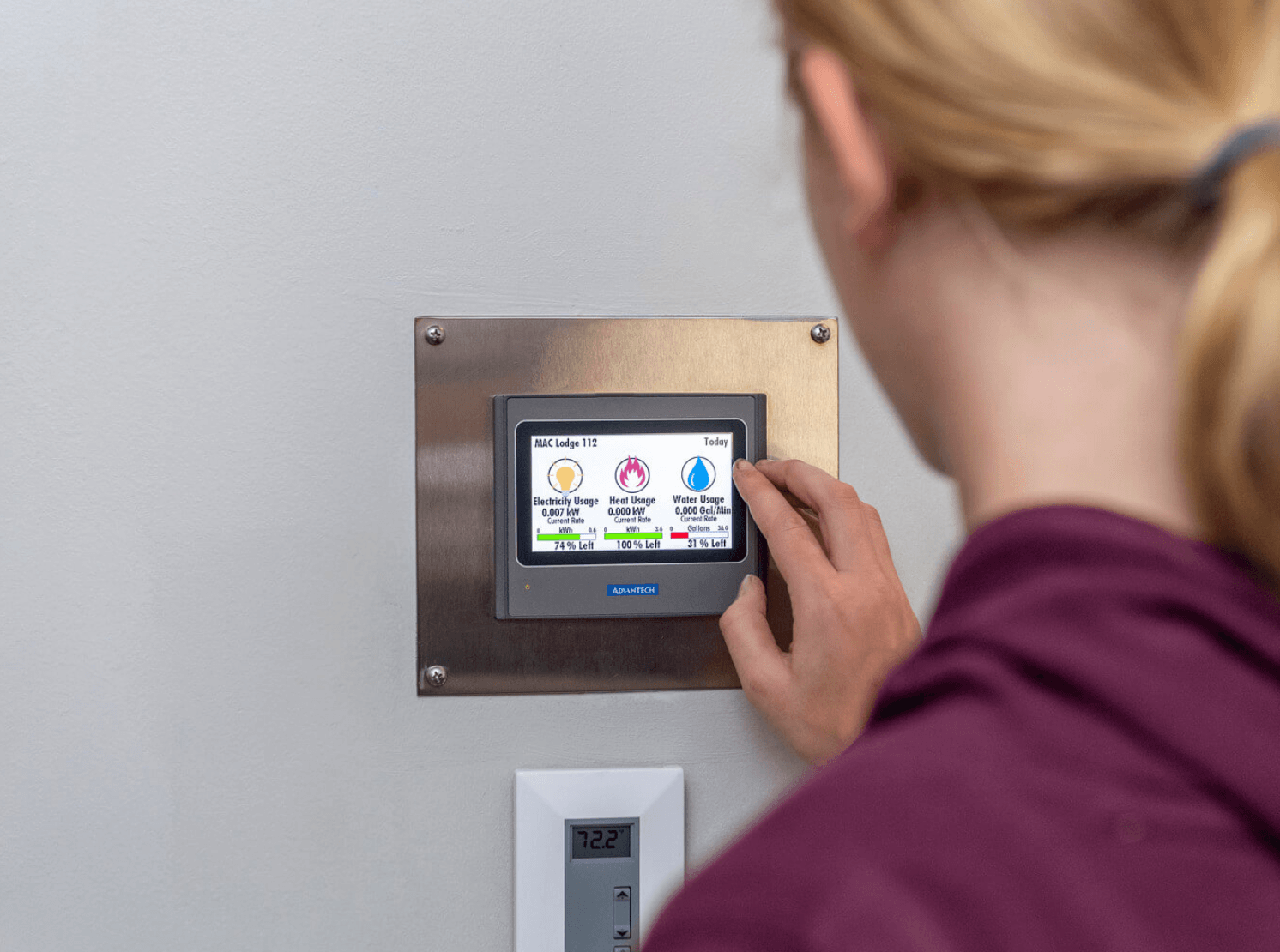
Despite generally favorable experiences with the feedback screens, students noted opportunities for improvement. Recommendations based on student feedback and relevant literature include reducing screen lag, improving navigation, providing instructions on how to use the screens, and providing tips on how to save resources. Chaperones also commented on the accuracy and clarity of the information displayed on screens, noting that potential inaccuracy reduced trust in all numbers displayed.
“I think there should be a button on the screen that said how you can save water heat etc. and how you may be using it.” – Student Survey Response
 Visible feedback combined with competition inspired energy and water savings.
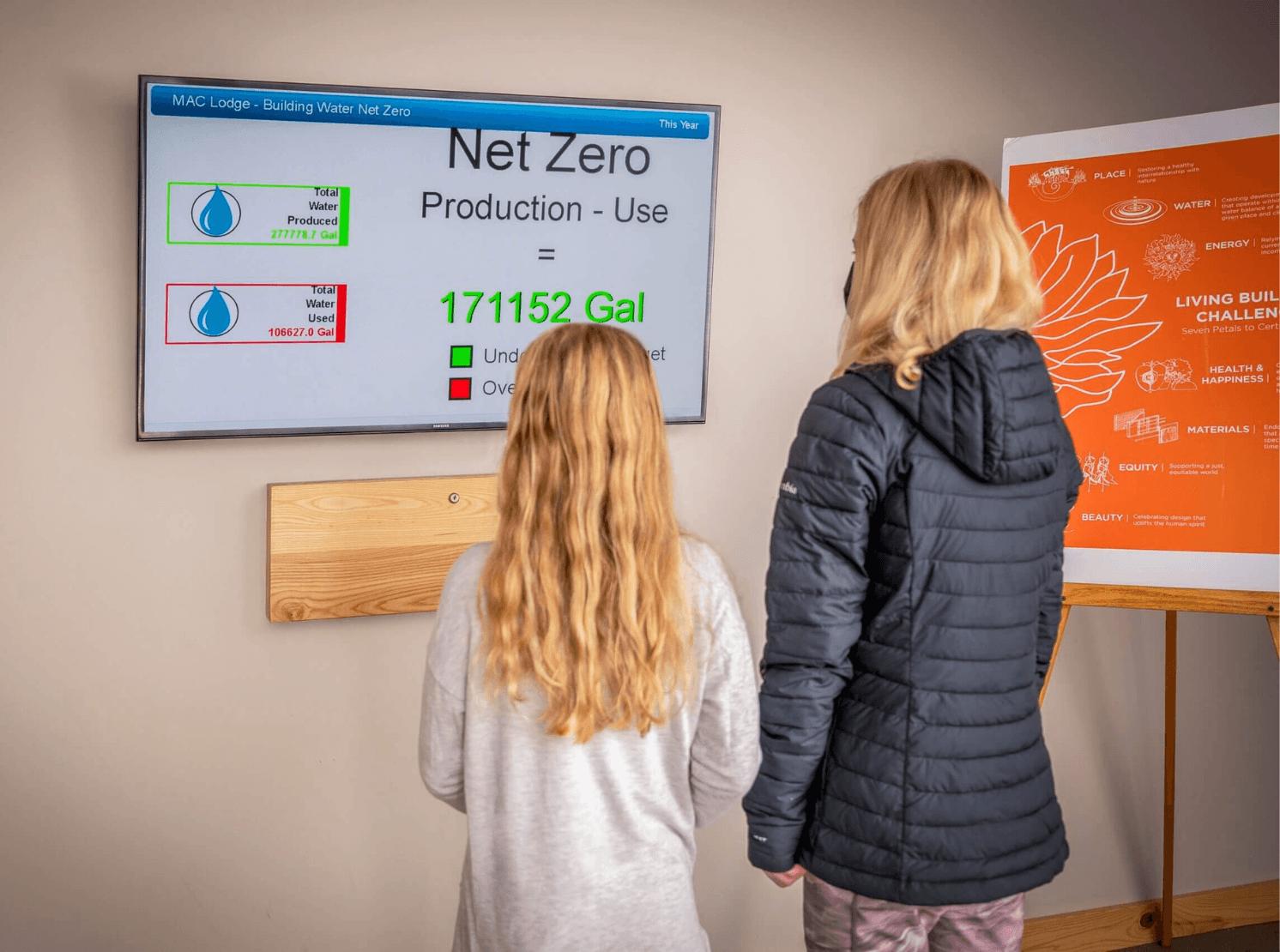
Almost all students who participated in the conservation challenge enjoyed it, and a majority said it inspired them to save resources. A building entryway monitor displaying resource use by room inspired some students to actively monitor their room ranking and adjust behaviors, while others were less interested in competing. Access to feedback screens translated into a perceived advantage for some and confidence in conservation competition success, as students could see and respond to their resource use in real time, compared to those without screen access.
“I had very competitive boys that monitored all energy/water usage multiple times a day. They enjoyed the competition and being as efficient as possible.” – Chaperone Survey Response
 Displays were sometimes interpreted as persuading instead of informing.
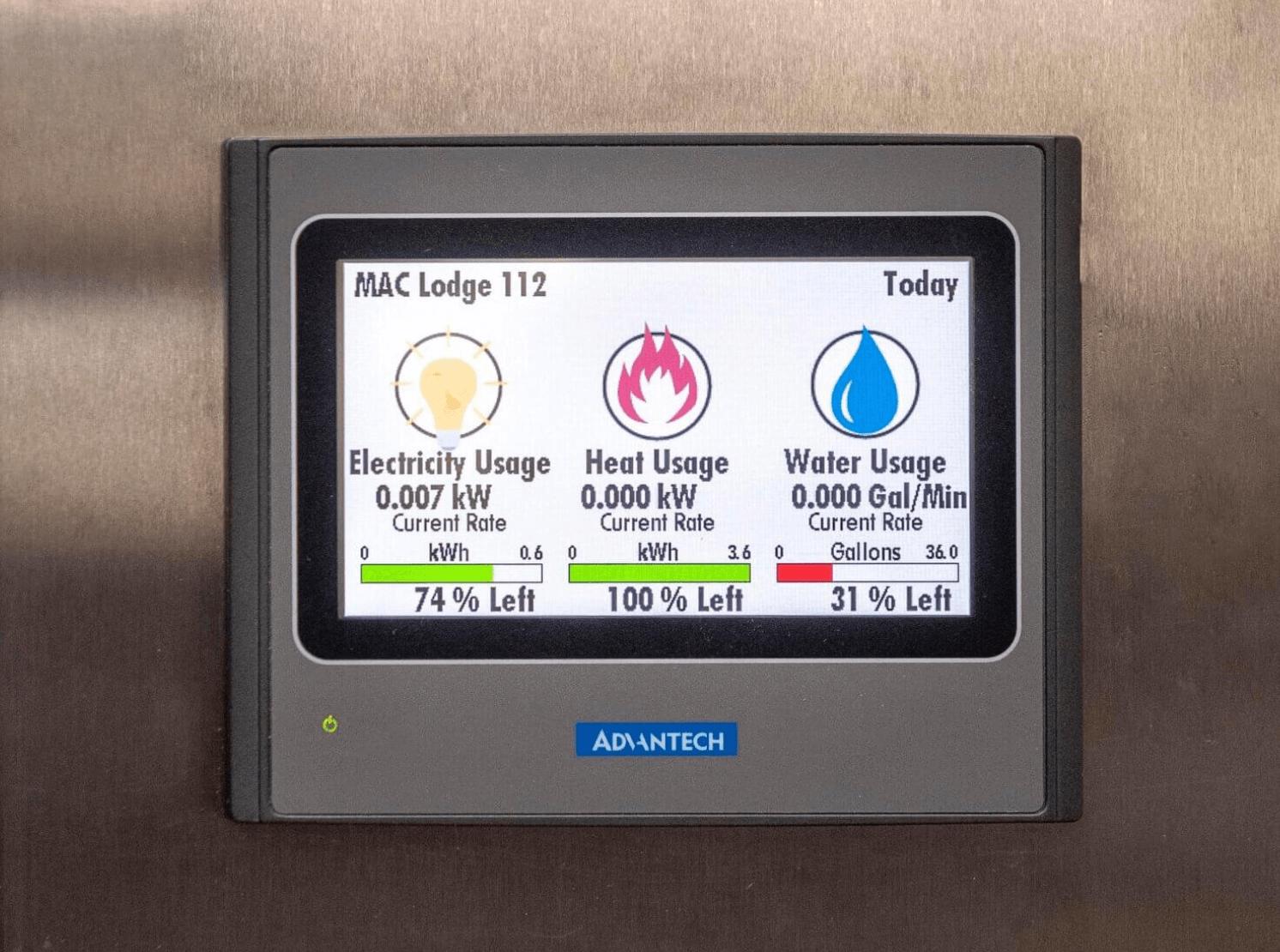
Informative strategies focus on transparency and learning and can potentially lead to wider adoption of behavior, while persuasive strategies introduce stronger cues that may limit influence to a specific moment or setting. The eco-feedback screens were designed to inform students about resource use by showing them the percentage left of each resource’s budget for the day.
In order to maintain net zero water in operations, the water budget was set at six gallons per person per day. Yet a few students perceived this budget as an allowance and believed that exceeding their allowance would result in resources being shut off. Although not true, the perception introduced a sense of scarcity that may have shifted the experience from informational to persuasive for some, an important distinction in the design of behavioral interventions.
 Screens contributed to conservation habits at home.
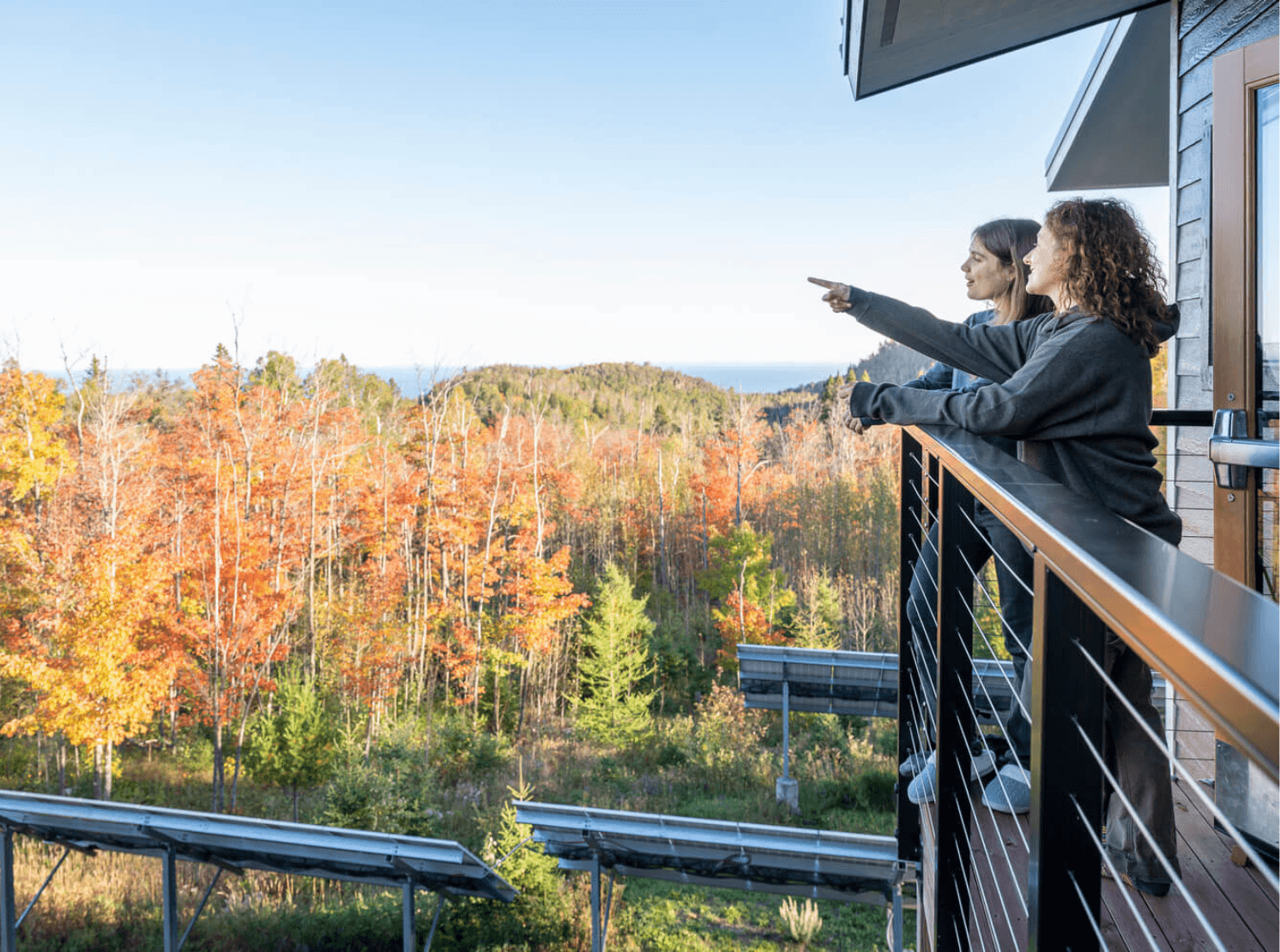
Critically, the study found that after their visit to Wolf Ridge, students in both MAC and Summit Lodges reported knowledge gains and intentions to conserve resources. More than half of students with access to the eco-feedback screen thought it helped them start new conservation behaviors post-visit. In the second survey more students indicated they tried to conserve at home, where they probably felt a greater sense of control compared to at school. Several parents and guardians noted their child displayed increased interest and commitment to environmental issues. While long-term behavioral impact is complex and influenced by many factors, making resource use visible—when paired with education—may reinforce environmental learning with long-term impacts.
“My child really enjoyed the trip. She now has a deeper understanding of conservation. I’ve noticed her being more aware of recycling vs. garbage. She is also more aware of the water flow and turning off the water in the bathroom.” – Parent/Guardian Survey Response
Study Takeaways
For owners and designers, this research offers concrete guidance:
- Display eco-feedback systems in clear and highly visible locations.
- Ensure resource use data displayed on feedback screens are accurate and understandable.
- Consider how strategy and wording could impact perceptions. For example, using language like “% Left” to indicate the remaining resource as compared to the target daily amount could be interpreted as a limitation of resources and change the impact of the intervention.
- Conduct post-occupancy evaluation to measure real-world performance, understand user response, and refine strategies.
By making resource use visible and pairing it with engaging social competition, owners and designers can move beyond modeled performance to building environments that teach, inspire, and empower users to play an active role in achieving sustainable goals.
About the Authors

Danya Hakky
As a design researcher and interior designer, Danya explores the dynamic connection between people and their built environments. By leveraging evidence-based insights, she advocates for environments that enhance well-being, support collaboration, and reflect users’ aspirations.

Renae Rich
As the Occupant Evaluation Manager at HGA, Renae Rich oversees a program within the Design Insight Group (DIG) to build HGA’s reputation for research and measured results through the systematic evaluation of design projects in terms of occupant experience and satisfaction across all our market sectors.

Ariane Laxo
As Sustainability Director, Ariane leads with an evidence-based, collaborative approach to sustainable design that results in positive, transformational impacts. Her expertise includes workshop facilitation, resiliency planning, climate change adaptive design, change management, and positive psychology.