
HGA’s Community Action program strives to positively impact communities. Through key areas of impact—from pro bono projects to days of service, mentoring, advocacy, charitable giving, and more—we partner with nonprofits and community organizations throughout our 13 offices to address challenges and opportunities affecting the communities in which we live and work.


Kaitlin Schalow
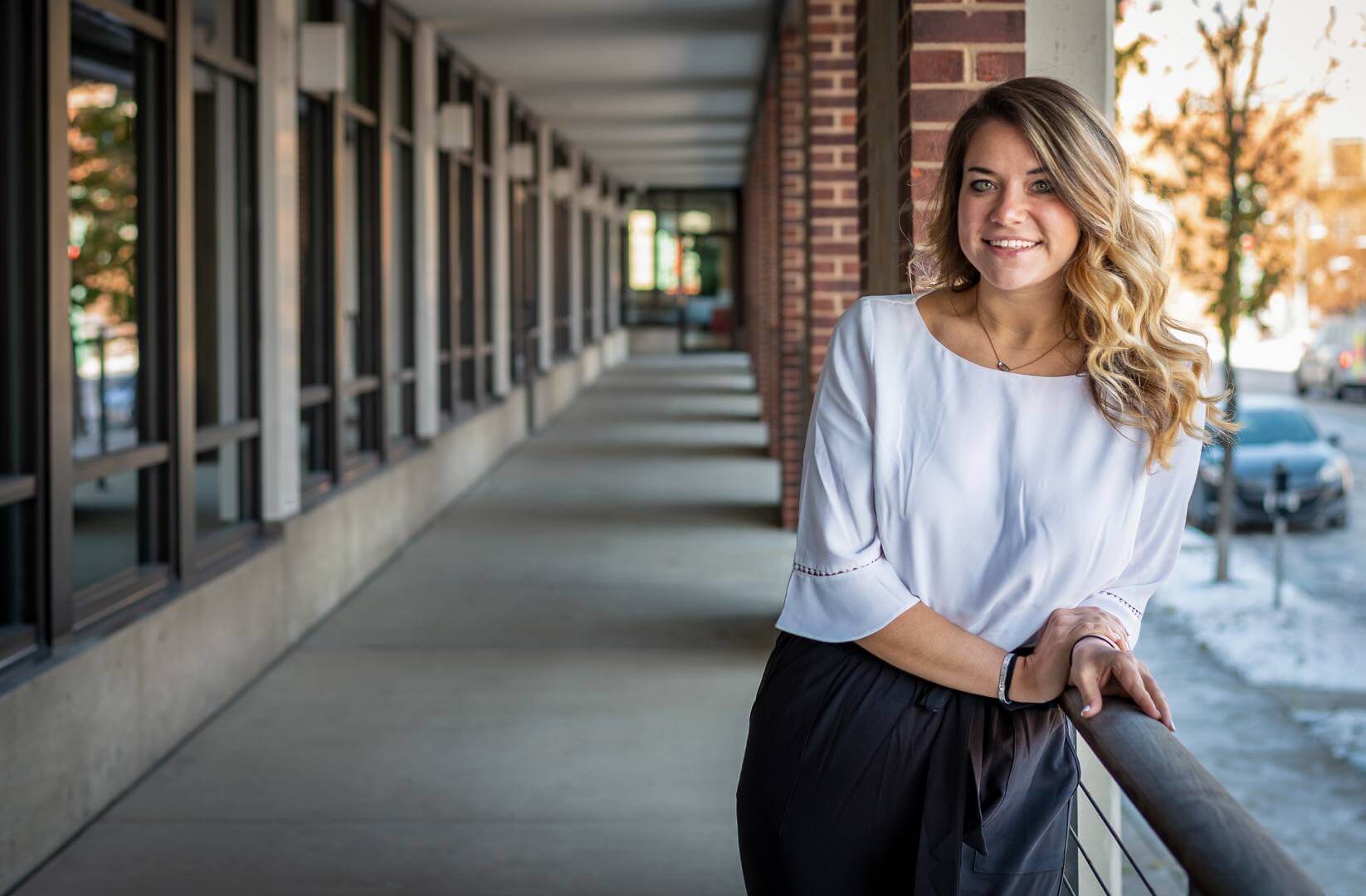
Hannah Holbach
While HGA has a long tradition of in-kind work, the firm officially formalized the Community Action program 10 years ago for a more structured approach to social impact programming.
Co-Directors Kaitlin Schalow, AIA, LFA, and Hannah Holbach are excited to continue to evolve the program. Kaitlin is a project manager and architect in our Minneapolis office focused on arts, education and community design. Hannah is a medical planner in our Milwaukee office. Both have been actively involved in Community Action programming and leadership since joining the firm six years ago. Their passion for making their communities better for all is infectious—and inspiring.
In the following, Kaitlin and Hannah reflect on Community Action’s grassroots beginning and share their vision for the next 10 years.
What was the origin of Community Action?
Hannah: Community Action originally grew out of the Milwaukee office in the early 2000s. The group provided pathways for up-and-coming designers to gain design and leadership experience through pro bono or low bono work outside of traditional projects. The enthusiasm around social impact work started expanding to our other offices in the early 2010s.
Kaitlin: It was during this time that a lot of interest was shown in the design community around public interest design—especially a lot of younger designers coming out of school and earlier in their careers wanting to have more purpose and impact. In 2014, as a firm we formed a task force to explore what a national effort would look like and our Community Action program was soon enacted.
Why is Community Action necessary?
Kaitlin: Through our pro bono efforts, we can bring the positive power of design to nonprofits and community organizations that may not have used professional design services previously. This also creates a stronger awareness between designers and the issues affecting their communities that these organizations are addressing.
Hannah: This also fulfills a desire that people naturally want to promote positive change—whether environmental, social, or economic.
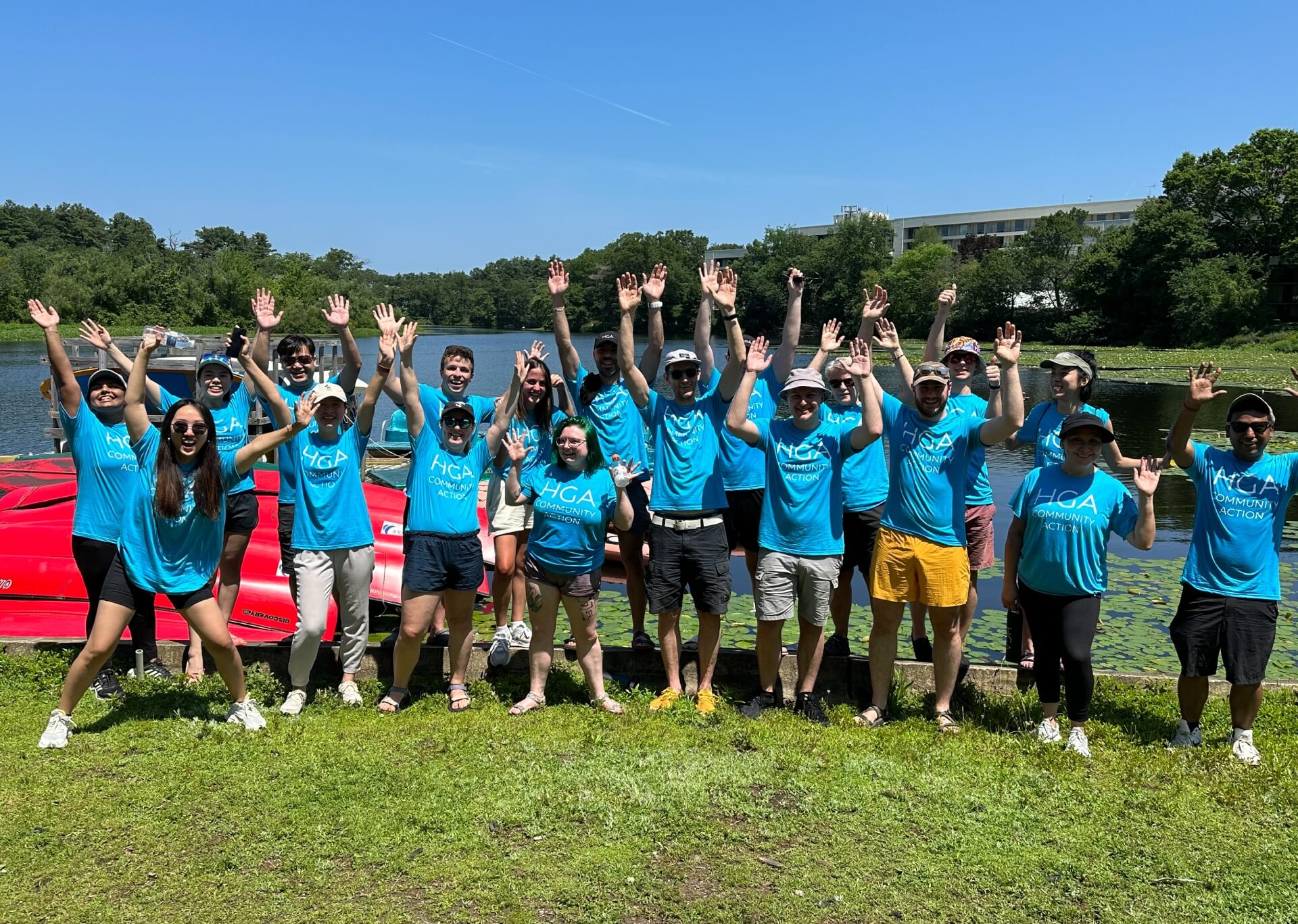
HGA Boston’s Community Action partnered with Charles River Watershed for an invasive water species removal event.
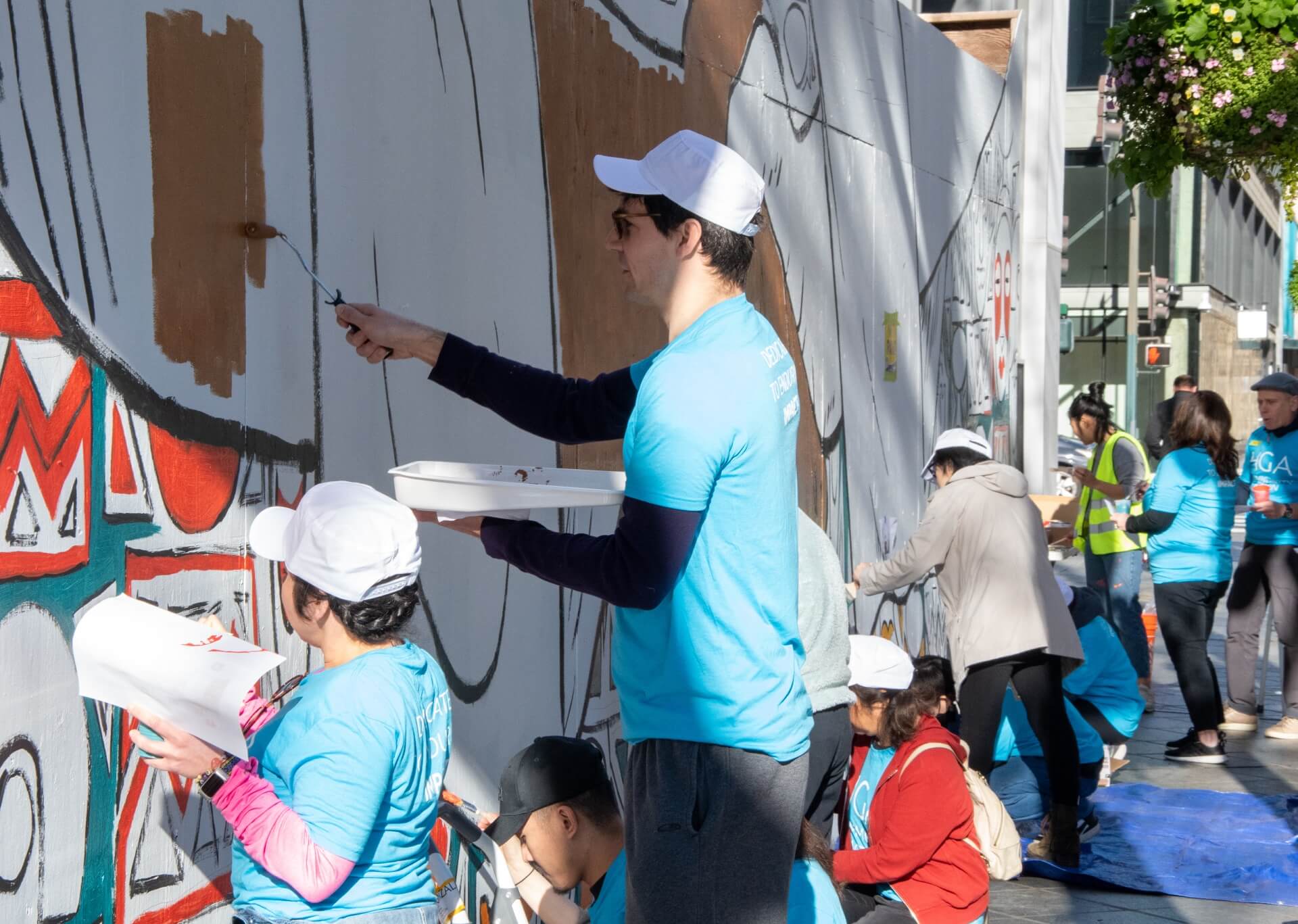
For the Martin Luther King Day of Service, San Jose’s Office painted a beautification mural with the San Jose Downtown Association.
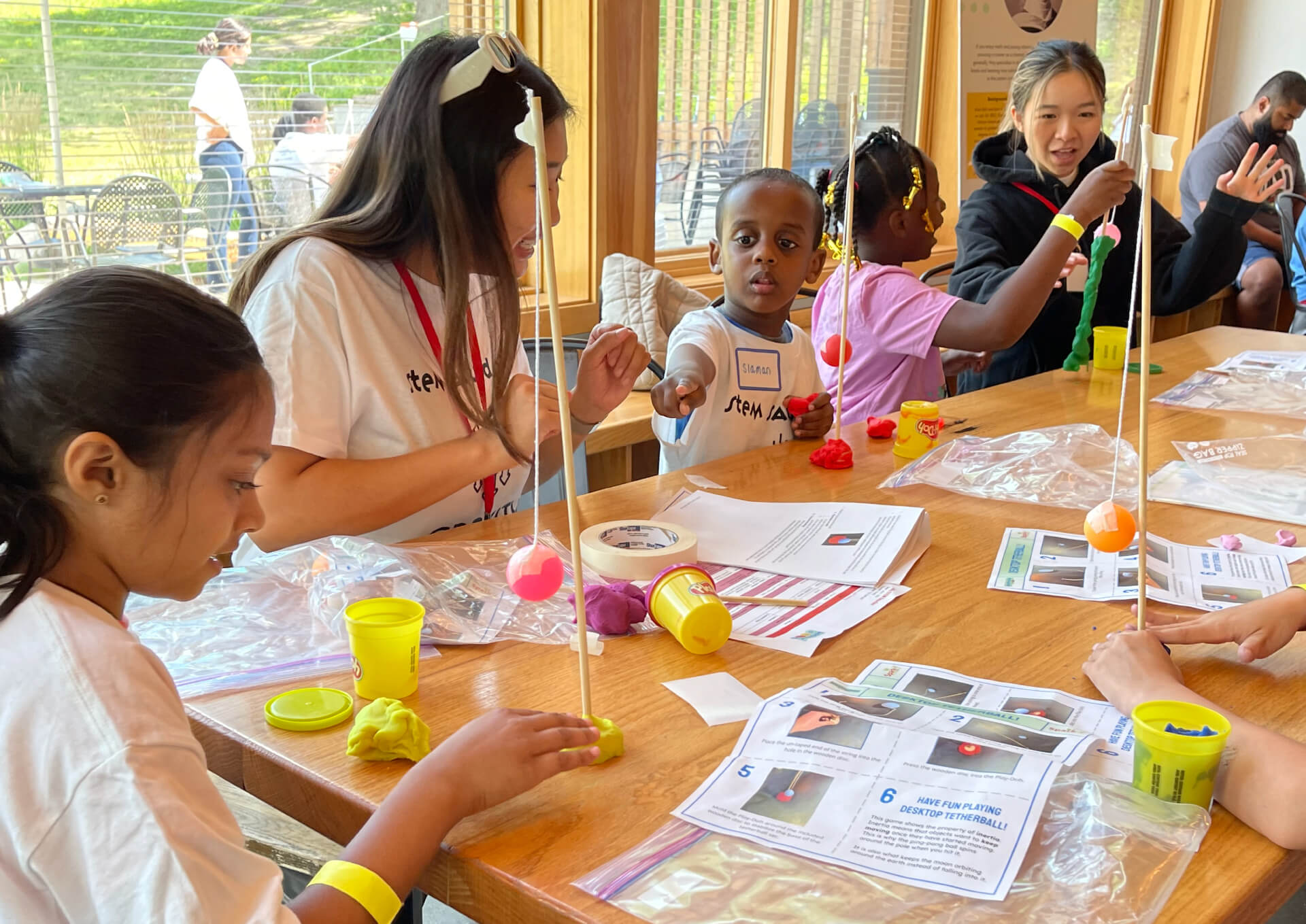
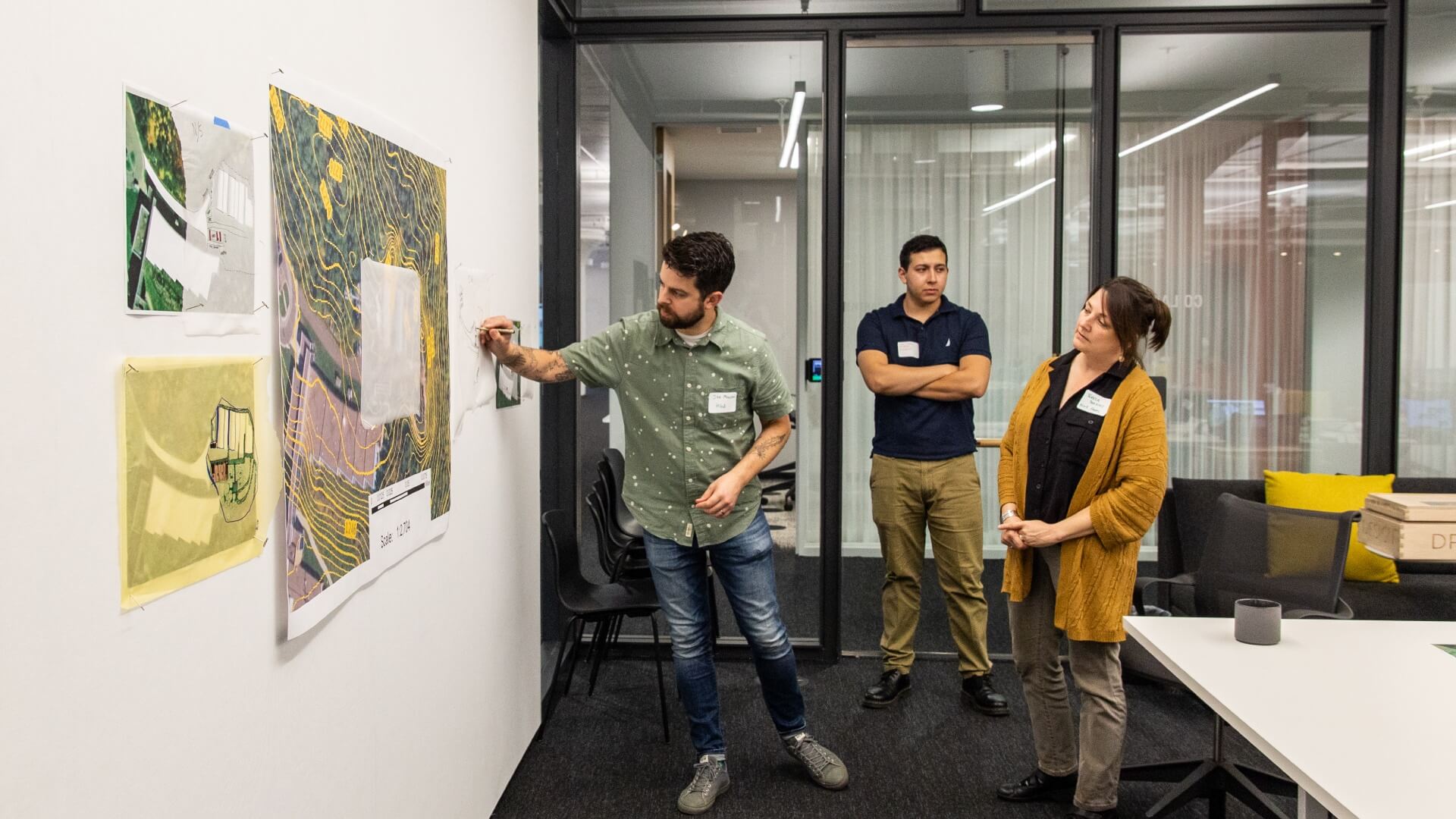
HGA worked with students on engineering projects at Northside STEM, a nonprofit educational resource center in Minneapolis.
How do you create stronger awareness among designers to promote change?
Hannah: In general, Community Action has us thinking about who’s at the table and who isn’t—who are the stakeholders whose voices are not being heard but are profoundly impacted by the decisions we are making. This approach brings into focus that everything we do is about the user and the community.
Kaitlin: This mindset informs our overall design process, especially how we approach authentic and meaningful engagement to truly understand community members and make them feel heard.
How did you become interested in community volunteer work?
Hannah: The importance of volunteer work has been ingrained in me ever since childhood—it was never optional. When I came to HGA and connected with people who had similar interests, I was energized. Getting involved was instinctive for me.
Kaitlin: My experience is similar. My parents instilled the belief that it was important to give back to our community through volunteering. When I was in graduate school, I was drawn to the public interest design movement—seeing a side of design that directly had positive social impact for those that needed it the most. I worked at a nonprofit architecture firm and later became involved with Architecture for Humanity on the ground in Haiti after the 2010 earthquake created a humanitarian crisis. While I eventually entered more traditional firms and practice, I’ve continued to make a personal commitment to give back with my design skills through pro bono design. That’s why I became involved with HGA’s Community Action program.

Has this reinforced a sense of social responsibility in design?
Kaitlin: Absolutely! Communities know their needs better than we do. As designers, we are learning to authentically listen to our partners. To me, success is measured by the community members feeling heard and the final project serving as a source of pride for them.
Hannah: We may be the design experts, but they are the content experts of their vision. Designing in any context is a dialogue based on mutual respect and acknowledgement. As we get more involved in the network of community-based partners, we begin to see more clearly the extent of unmet needs and opportunities.
What have been successes that inspire you as you look forward?
Hannah: Our success is tied to the ongoing relationships we have developed with different people and organizations. It’s gratifying to see so many people across our firm and communities working together to achieve shared goals. Success is really about those relationships—and what we’ve learned from folks through their unique lived experience.
Kaitlin: What I love about Community Action is that it’s a grassroots initiative that taps into the passions of our employees and how they want to make an impact. We started the program with pro bono design, but we’ve grown to include so many other areas of impact over the past 10 years. I’m looking forward to evolving our Community Action program even further and building on that passion over the next 10 years. ∎
Discover how HGA designs for social good through Community Action initiatives.