
Design tells the story of every campus, shaping the way students, faculty, and visitors experience higher education. Beyond providing classrooms and studios, architecture establishes the character of a university—expressing its history, aspirations, and sense of place.
As the new semester begins, we’re exploring three standout projects—each with a distinct architectural style—that illustrate how history and innovation intersect to create engaging, inspiring academic environments. Thoughtful design can turn everyday campus life into a memorable, shared experience.
Contemporary Industrial Vernacular

At the University of Arkansas, the Windgate Studio + Design Center gives physical form to the region’s agricultural and industrial heritage while setting a bold course for the future of arts education.
Its crisp, cubic volumes—clad in white corrugated metal—recall local warehouses and farm structures. Inside, the 150,000-square-foot complex unfolds as a bright, flexible environment for making and learning.
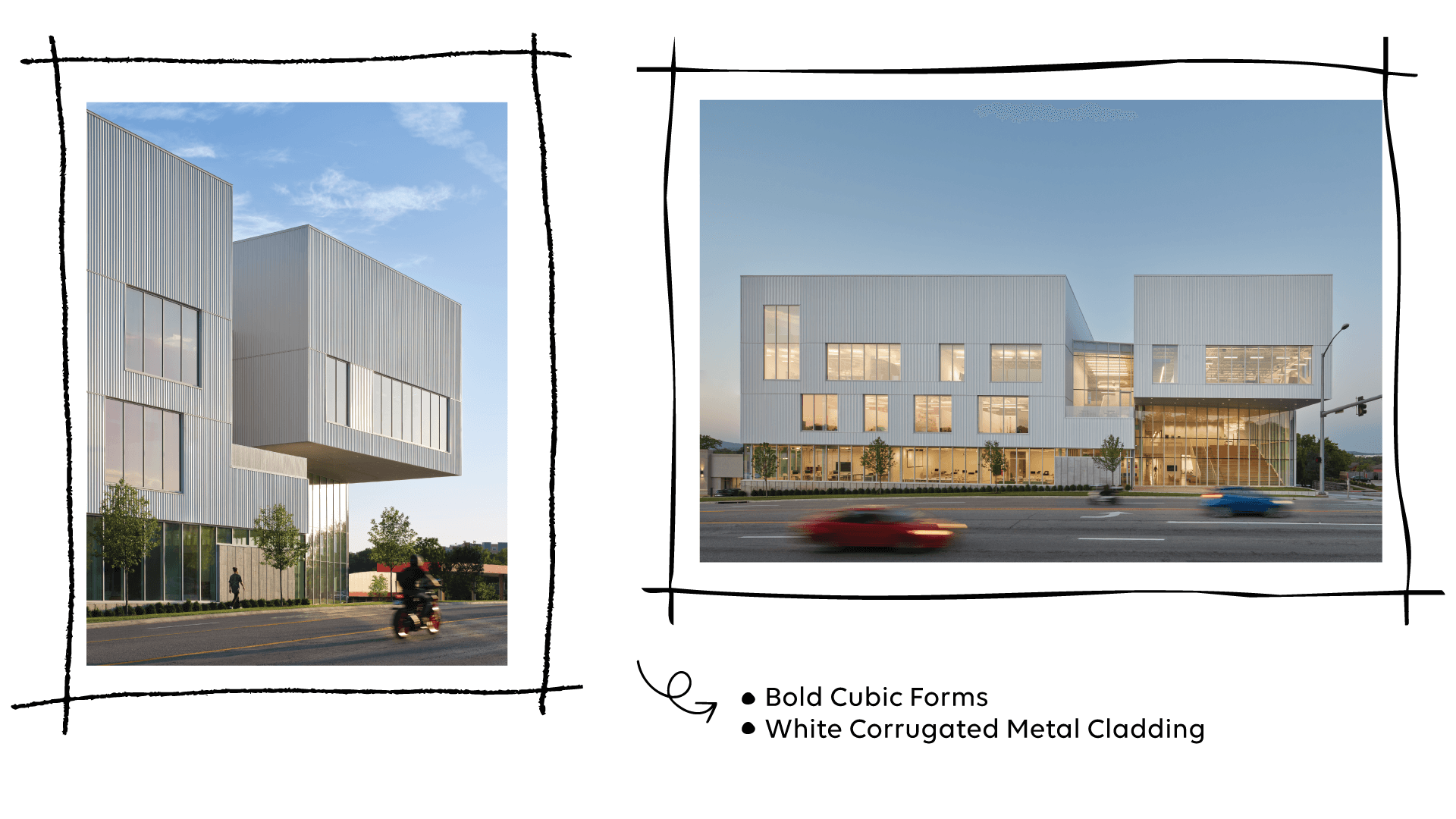
Studios for ceramics, printmaking, drawing, painting, graphic design, and photography share space with community-focused galleries and professional exhibit areas. These settings encourage collaboration across disciplines and invite the public to engage with student work.
By anchoring an emerging arts district in South Fayetteville, the center not only strengthens the university’s School of Art but also helps drive the neighborhood’s cultural and economic revitalization—establishing a new regional hub for creativity and exchange.
Regional Vernacular Minimalist

Offering a sun-washed counterpoint to Arkansas’s industrial energy, the new Experimental Theater forms a welcoming western gateway to San Diego State University’s expanded Performing Arts District and completes the campus arts quad.
Its broad, shaded entry loggia reimagines the traditional campus porch, creating a cool, open-air gathering place before and after performances.
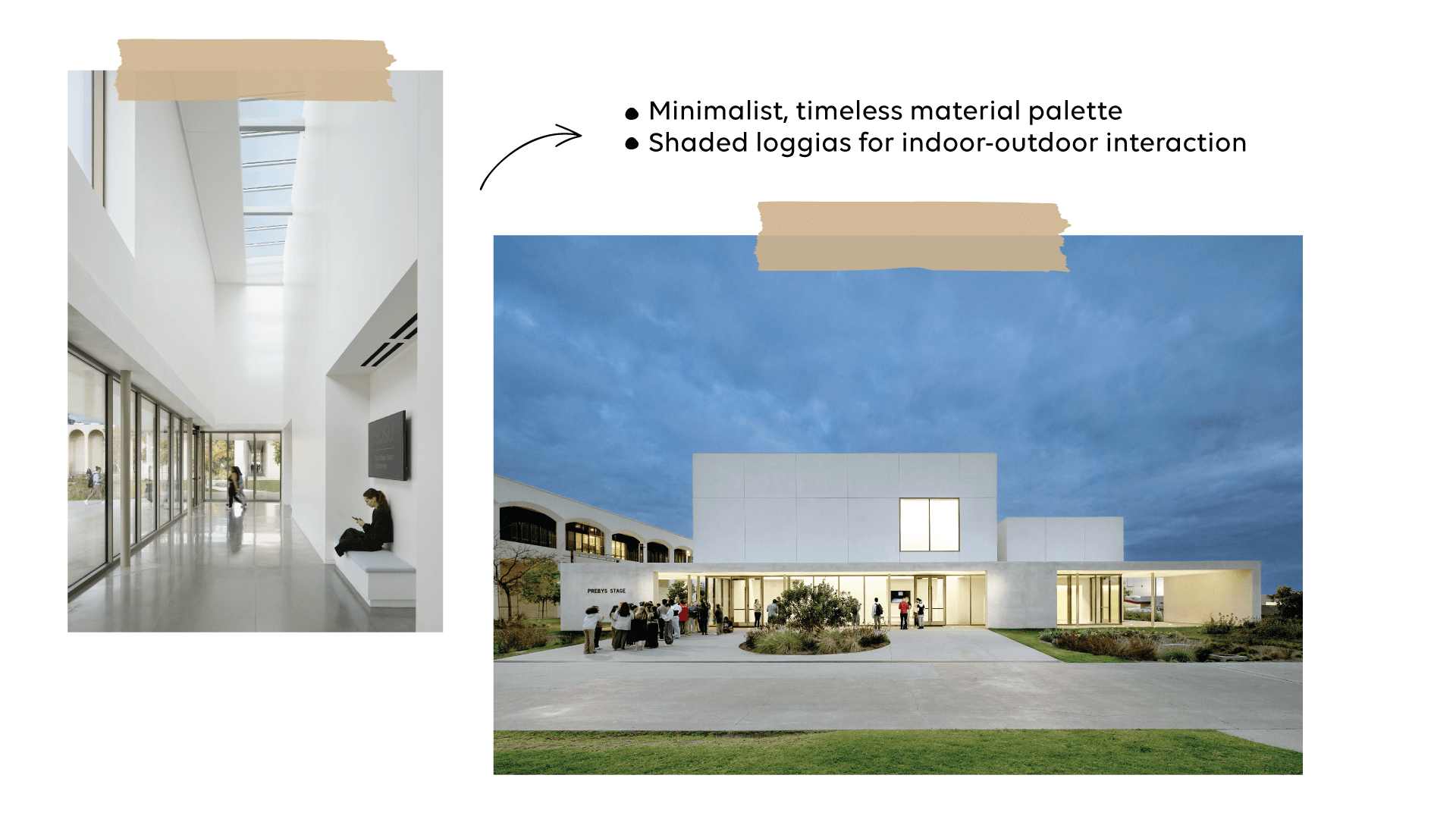
Inside, a flexible black box theater can be set up for everything from intimate plays to student showcases, while the adjacent outdoor stage invites music, dance, and other events to spill naturally into the surrounding plaza.
A nearby sound lab adds an extra layer of creative possibility, giving students space to explore the art of immersive audio. With its clean lines and timeless palette, the building’s quiet, minimalist design lets the energy of performance and community take center stage.
Historic Vernacular Revival

Turning from San Diego’s quiet modernism to Charleston’s layered past, the renewed Simons Center for the Arts bridges eras—from the 1830 Randolph Hall next door to the 1970s building it replaces—while creating a fresh home for the college’s vibrant arts programs.
The transformation opens the once-constricted interior into a bright, inviting hub where music, theater, visual arts, and arts management can flourish together.
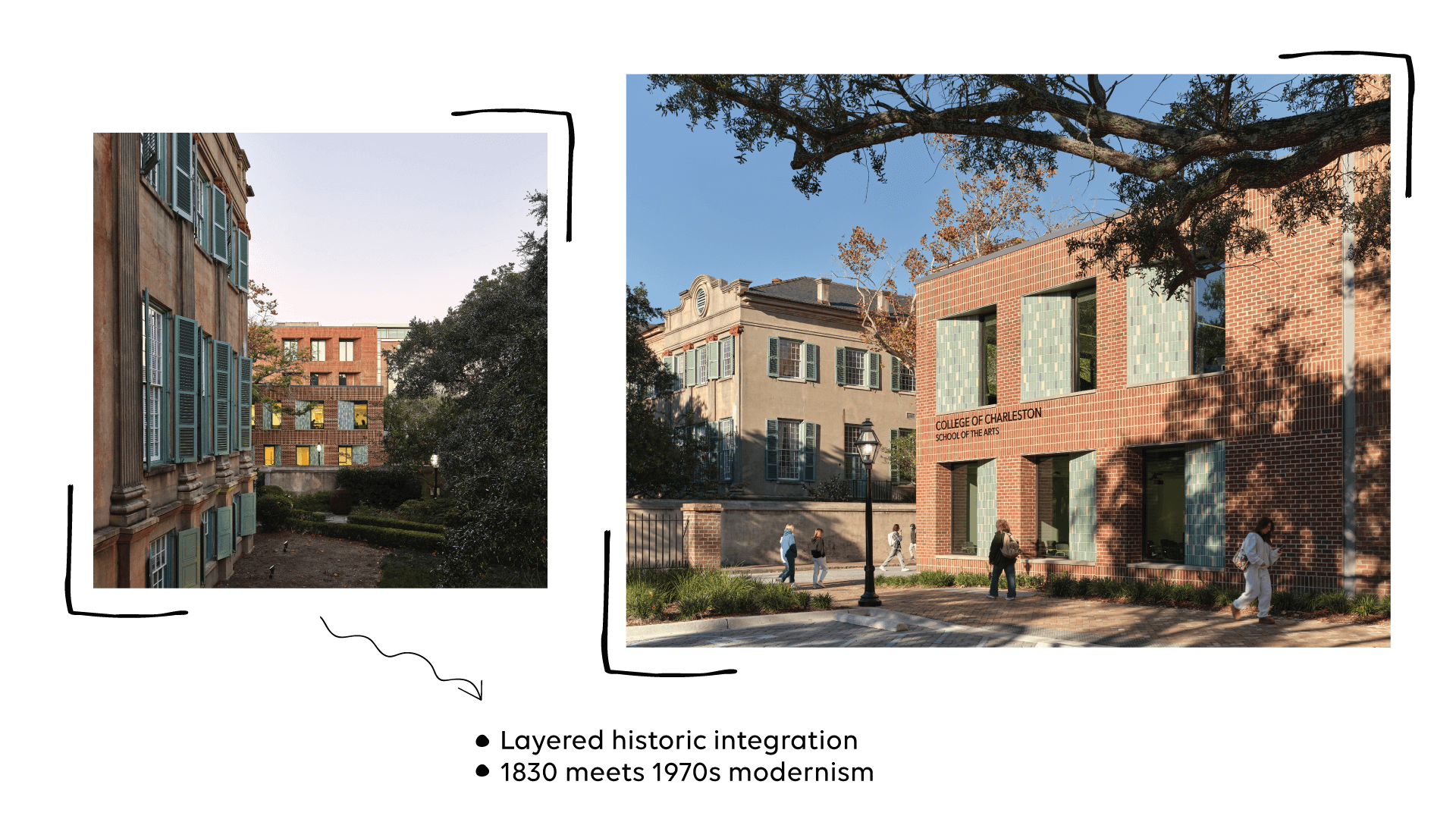
A new black box theater, costume shop, and studios for painting and sculpture join updated classrooms and exhibition galleries, turning the center into a lively crossroads for students and the community.
Along busy St. Philip Street, colorful glazed brick and slender sunshade baguettes enliven the facade and announce the arts to the city beyond. The project also earned two Green Globes for its sustainable design, underscoring the college’s commitment to both historic preservation and forward-looking environmental responsibility.
Design in Context
Across these three campuses, architecture becomes more than a backdrop—it actively shapes the way students learn, connect, and create.
From the industrial forms in Fayetteville to the shaded loggias in San Diego and the historic revival in Charleston, each project shows how design can respect local traditions while embracing fresh ideas.
Collectively, they demonstrate that when buildings foster community and spark curiosity, they help universities cultivate vibrant arts cultures and inspire the next generation of thinkers and makers. ∎
Explore more higher-education projects in our portfolio and see how design shapes learning environments across the country.