
The 116,000-square-foot facility at FSU’s Innovation Park unites research teams in flexible labs, advancing collaboration, commercialization and emerging fields like quantum science
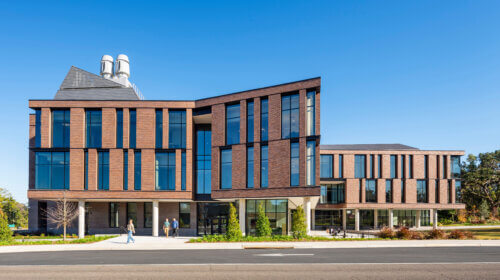
Interdisciplinary design firm HGA has announced the completion of Florida State University’s Interdisciplinary Research & Commercialization Building (IRCB), a 116,000-square-foot facility at FSU’s Innovation Park campus designed to foster collaboration, drive scientific discovery and support research commercialization. The building brings together faculty, postdoctoral researchers and students working across materials science, energy, light, quantum science, engineering and nanoscience in a highly flexible, human-centered environment.
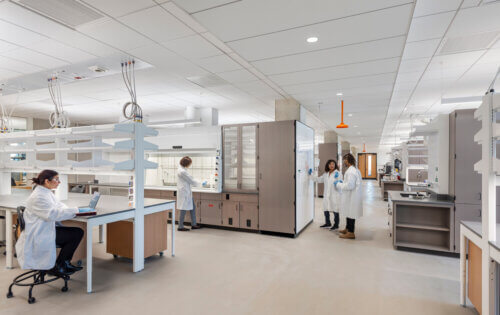
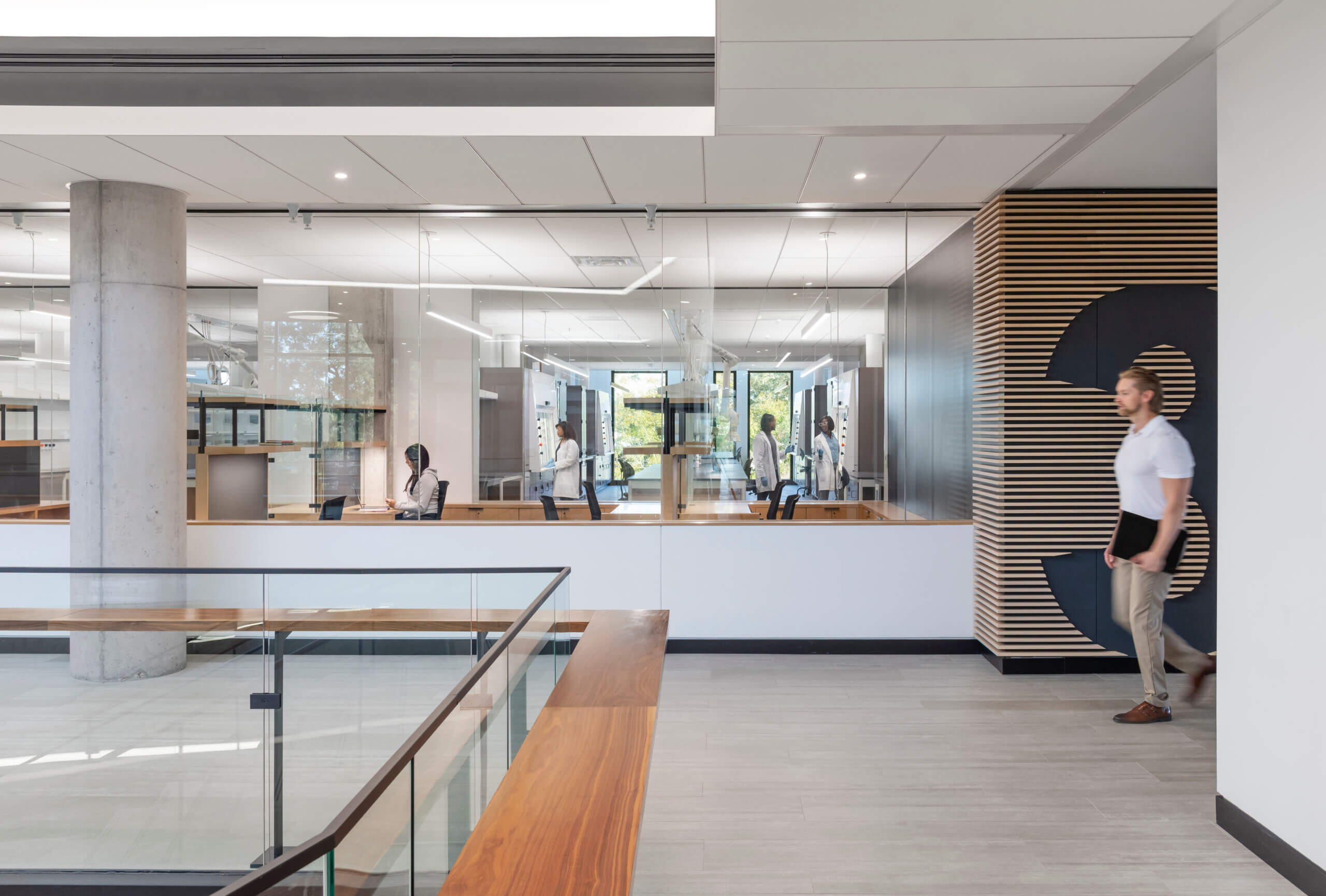
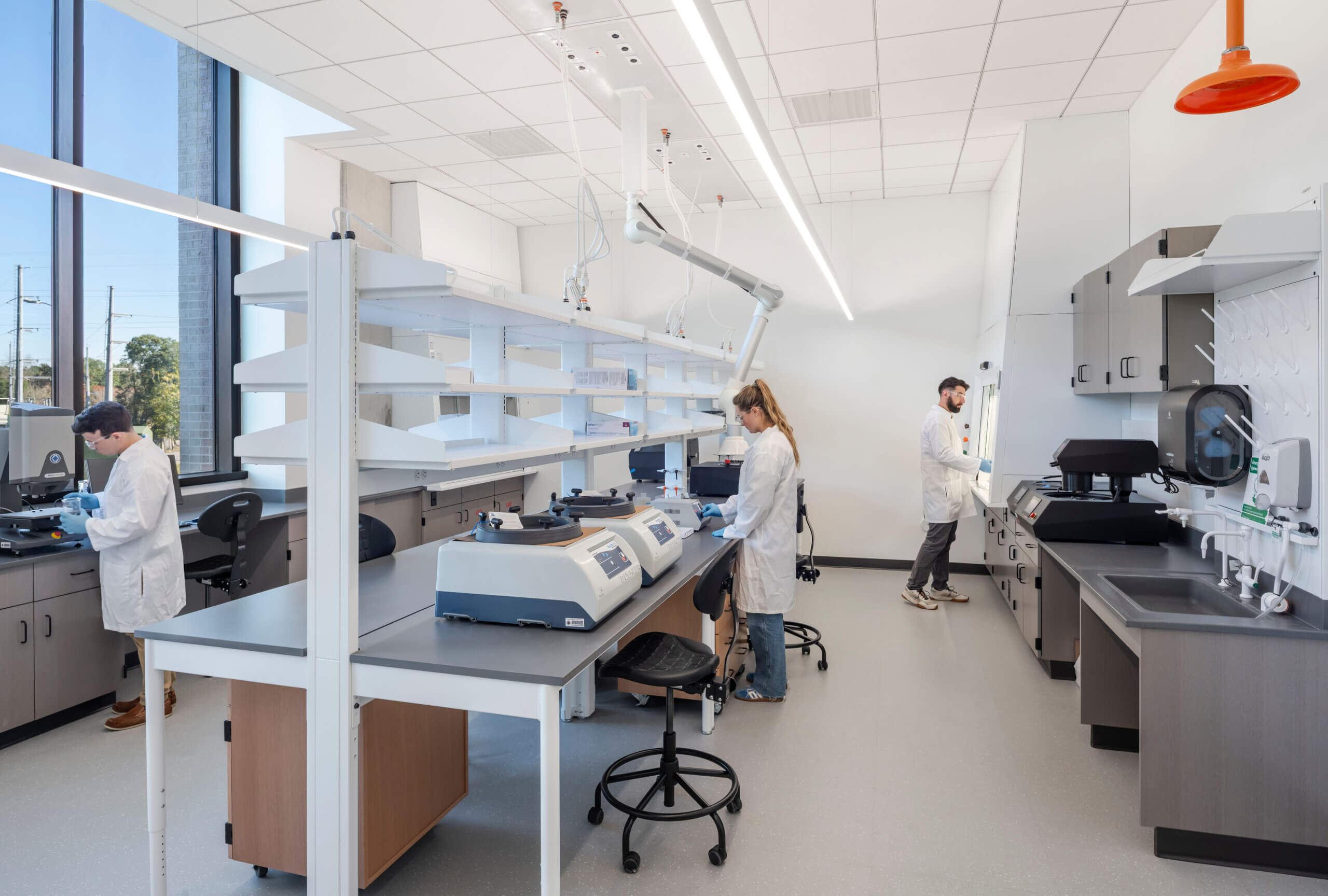
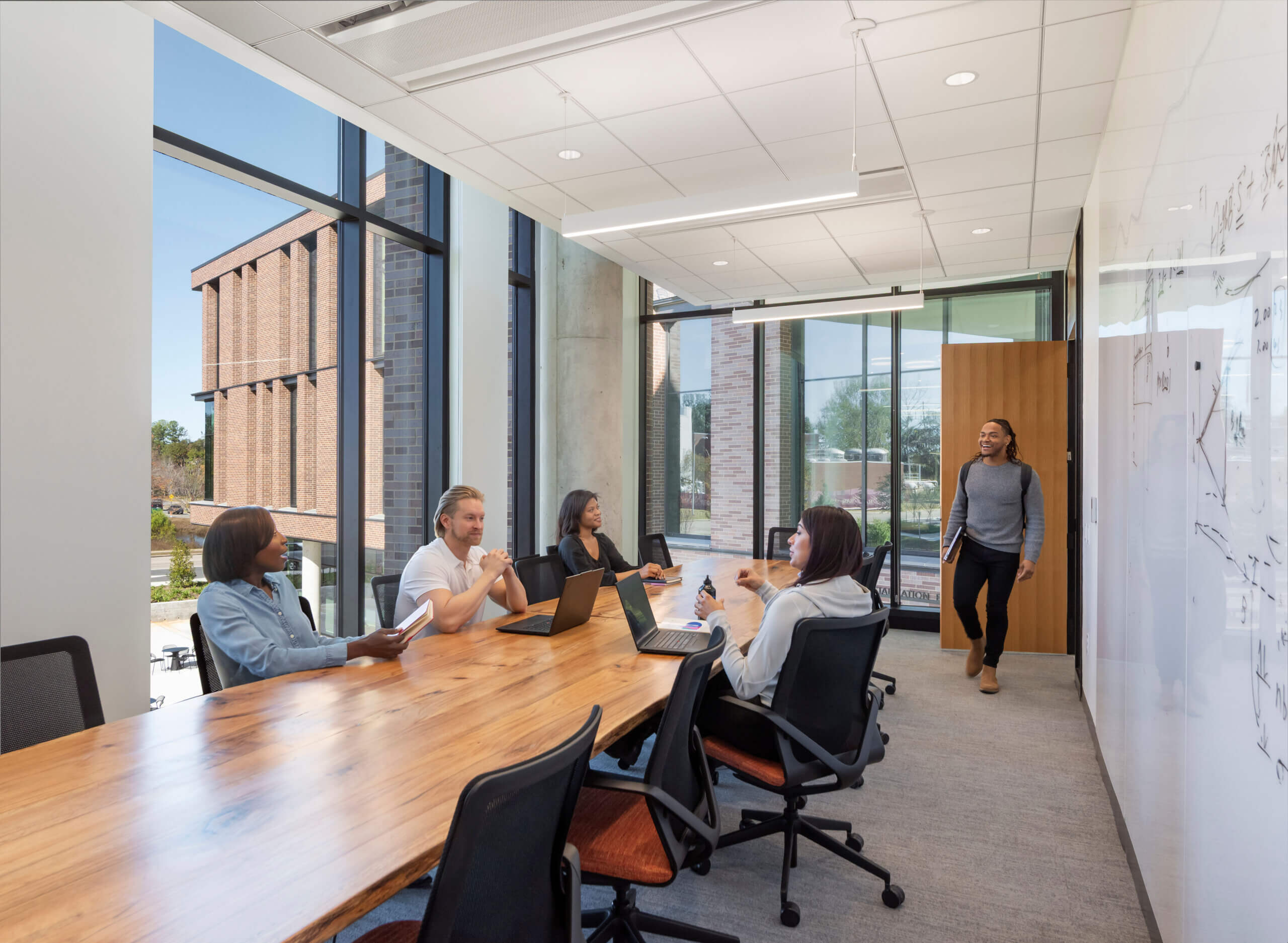
Envisioned as a vibrant hub for research and innovation, the three-story IRCB is designed to spark collaboration as the driving force transformative discovery. Moving beyond traditional departmental models cross-disciplined research teams are grouped around shared themes and initiatives. The building features mostly open laboratory spaces and can accommodate up to 30 research groups, 24 postdoctoral researchers and approximately 155 graduate and undergraduate students. Its adaptable design allows the facility to evolve with shifting research priorities, funding and scientific focus.
“From the outset, this facility was about creating a building that could adapt over time, and the stakeholders at FSU became our true partners as the project evolved across planning and construction,” said Breana Werner, Design Principal in HGA’s Science + Technology market sector. “IRCB demonstrates how nimble designs can adapt to changing funding, shifting research priorities and emerging fields like FSU’s growing focus on quantum science, without compromising the original vision.”
Over the last 30 years, Florida State University has built one of the nation’s most successful university-led commercialization programs. As such, the IRCB was designed to strategically expand these efforts by providing a collaborative environment that supports increased invention disclosures, advances patents and nurtures spin-off companies grounded in cross-functional research.
“IRCB was intentionally designed to grow with our evolving research priorities, which have changed dramatically over the last decade and will continue to shift,” said Mary Jo Spector, former Director of Research Facilities Design, Construction, and Maintenance at Florida State University. “HGA’s collaborative approach allowed them to gain a deeper understanding of our long-term goals, and this synergy produced an environment that embodies our vision for growth, research funding and stronger campus-wide connection across Innovation Park.”
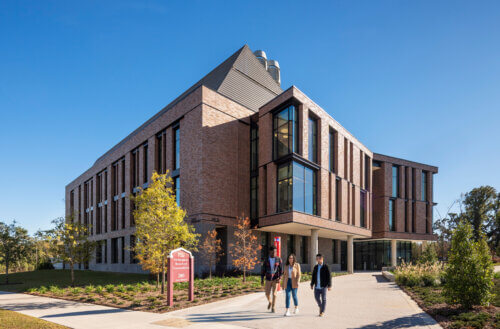
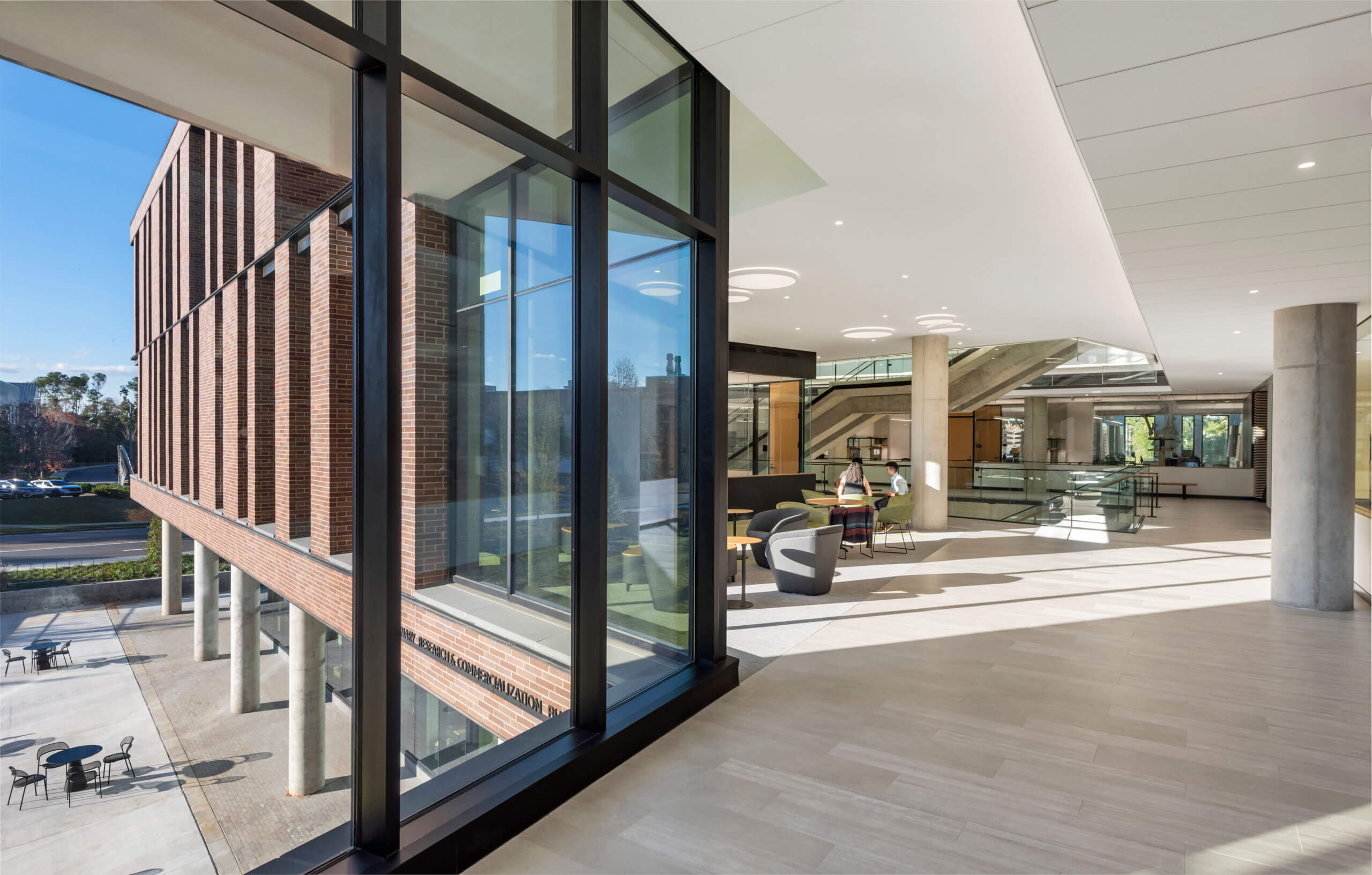
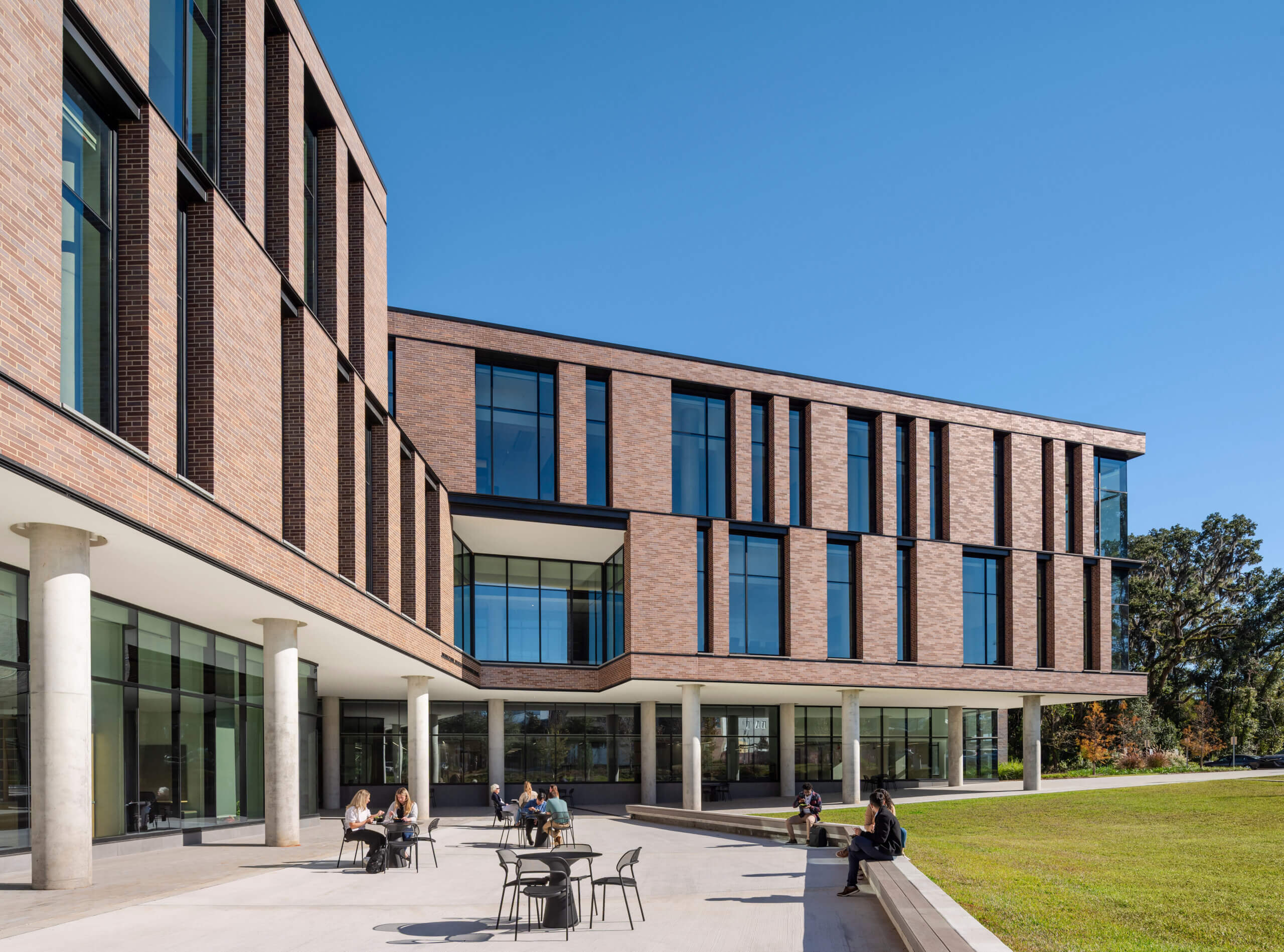
In designing IRCB, HGA incorporated red-hued brick in varied tones and bonds, as well as precast accents and pitched roof forms that echo the Collegiate Gothic architectural style of Florida State University’s main campus, while simultaneously establishing a distinct contemporary research identity within Innovation Park. The site strategy also anticipates future phases of development on adjacent parcels.
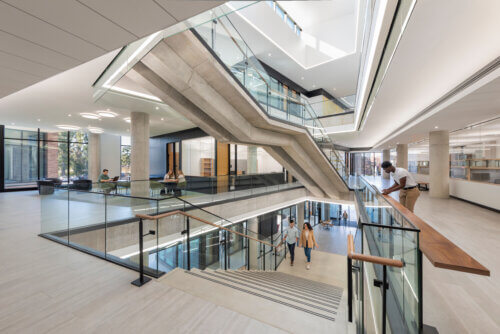
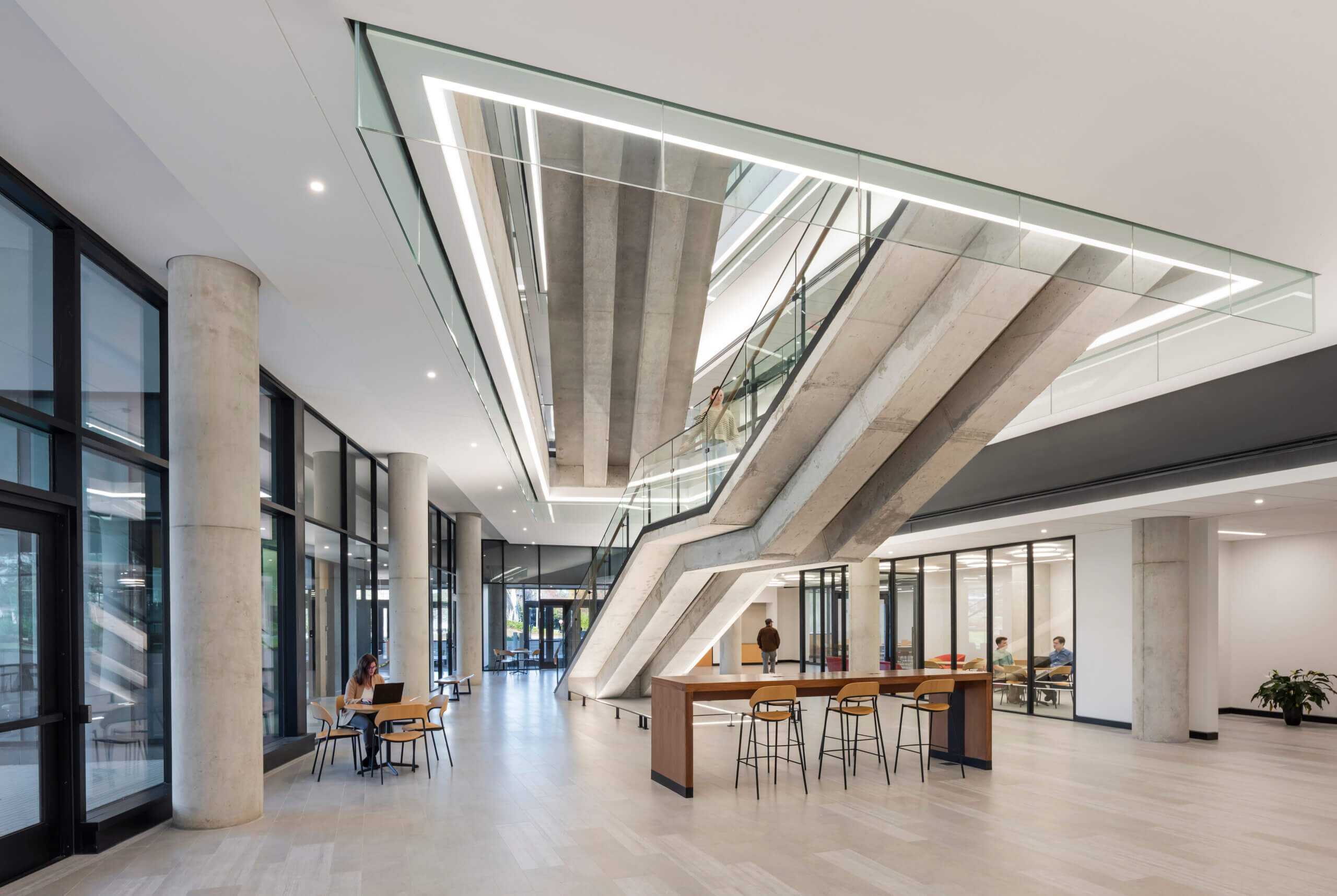
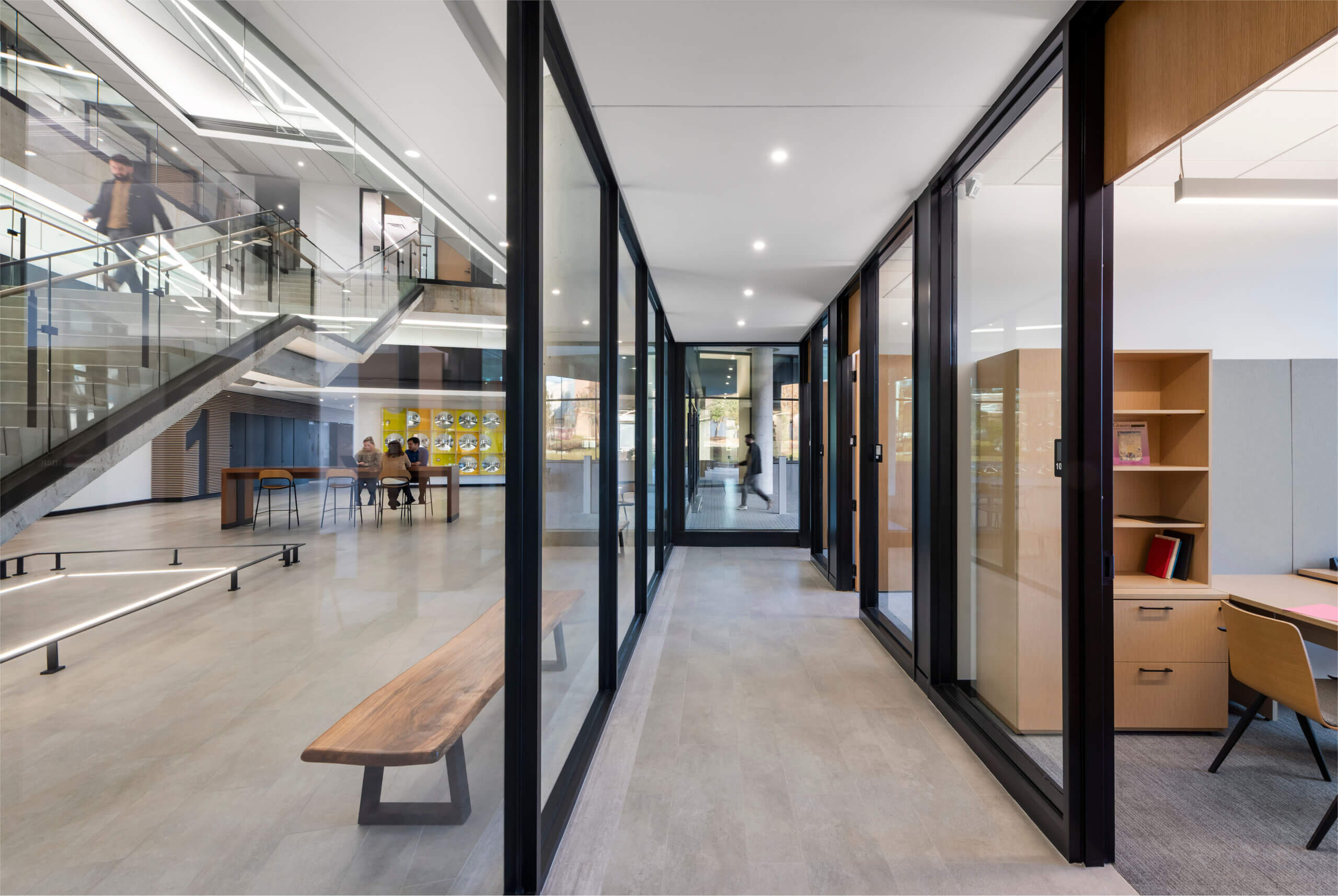
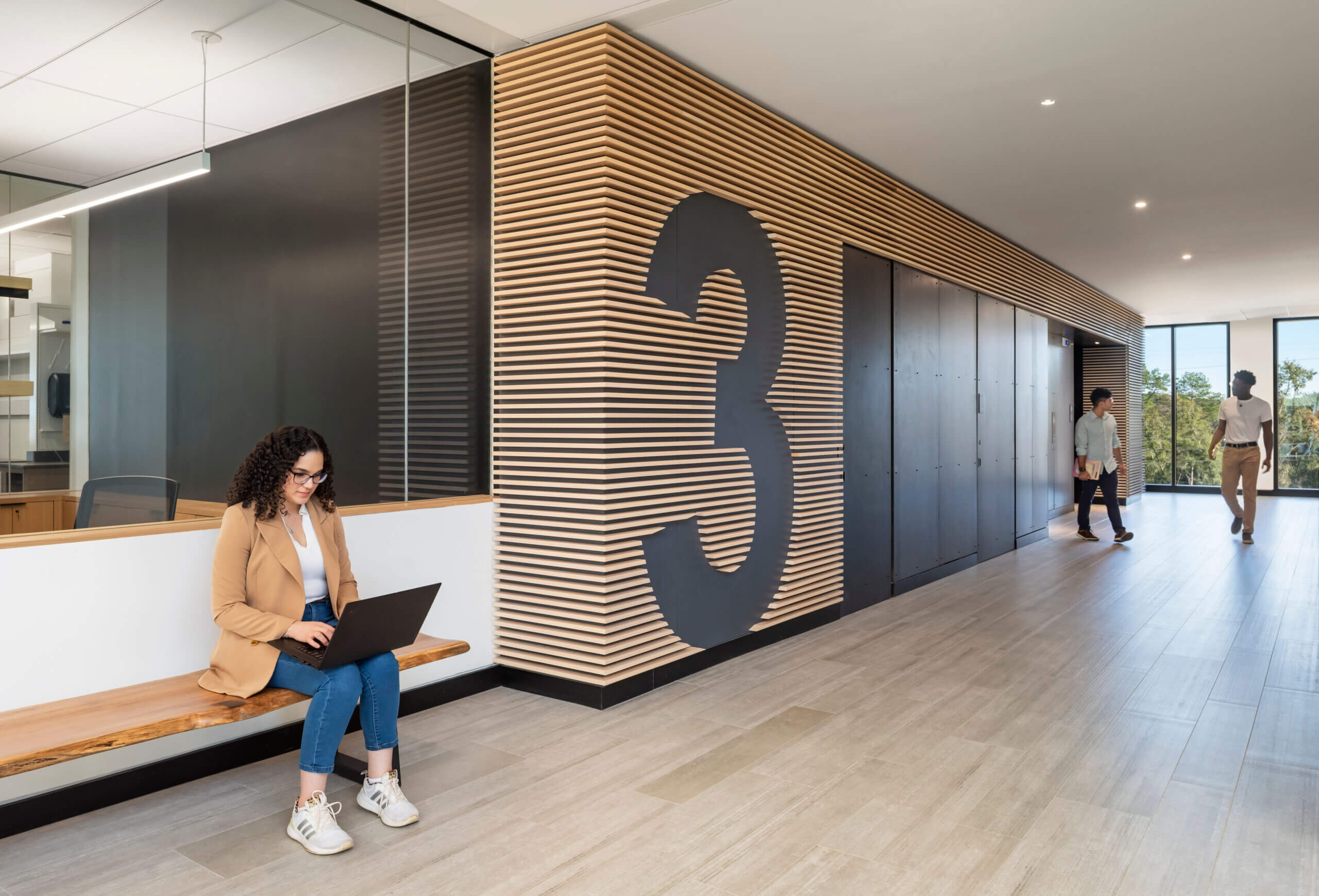
A central monumental staircase links all three floors, offering visual connections into student and research labs and encouraging informal interaction throughout the building. Continuous circulation paths act as a unifying thread, complemented by transitional workspaces, kitchenettes at corridor ends and collaborative spaces crafted to promote social encounters on all floors. Every level is anchored with natural light and sightlines to the outdoors, supporting intuitive wayfinding and orientation and a neuro-inclusive environment, while smaller, acoustically-controlled spaces provide areas for focus, privacy and security.
IRCB is LEED Silver certified and incorporates sustainable and resilient design strategies tailored to Florida’s environmental conditions. These include energy-efficient systems, trees removed during construction were repurposed into custom furniture, as well as a robust structural approach that utilized a thick slab-on-grade designed to effectively bridge the site and address soil conditions prone to sinkholes. Additionally, the building’s mechanical systems and penthouse infrastructure are designed to withstand high wind conditions and to protect vibration-sensitive research, particularly quantum-focused work.
Already 50 percent occupied, IRCB was designed by HGA, with structural engineering by Walter P. Moore; mechanical, electrical, plumbing and fire protection engineering by Affiliated Engineers, Inc.; code consulting by Jensen Hughes; and vibration consulting by Acentech. The general contractor was Whiting-Turner Contracting Company.
About HGA
HGA is a national interdisciplinary design firm committed to making a positive, lasting impact for clients and communities through research-based, holistic solutions. HGA believes that great design requires a sense of curiosity—forming deep insight into clients, their contexts, and the human condition. The firm is a collective of over 1,000 architects, engineers, interior designers, planners, researchers, and strategists. The practice spans multiple markets, including Science + Technology, Workplace, Arts + Culture, Education, Government, Healthcare, Energy + Infrastructure, and Community + Live. Visit hga.com or follow on LinkedIn and Instagram.
HGA Media Contact
Rosa Muñiz, Senior Public Relations Manager
rmuniz@hga.com