
The global community faces a climate emergency,1 and relying solely on an organization’s public commitments to sustainability will not be enough to avert catastrophic levels of global warming. Have we finally reached an inflection point that will drive collective action in the pursuit of a sustainable future?
The simple answer is yes. The historic events of the past several years, including a surge of social justice awareness, COVID-19, and recurring severe climate events, have galvanized cultural change and renewed focus on collective well-being. As a result, an organization’s ability to communicate progress toward Environmental, Social and Governance (ESG) goals is no longer the exception, but rather the expectation.
The outsized influence of ESG reporting has only just begun, and has far-reaching corporate implications, from financial performance to employee attraction and retention.
In the News
Recent federal mandates demonstrate the growing urgency in setting standards to track and measure climate-related risk. In March 2022, the U.S. Securities and Exchange Commission (SEC) announced a proposed rule that would require certain climate-related disclosures in initial filings and annual financial reports, including direct and indirect Greenhouse Gas emissions.2
A study by the Governance & Accountability Institute, Inc, found 90 percent of companies in the S&P 500 publish a sustainability or ESG report.3 However, since there is little regulation regarding data collection and reporting, current reports often only highlight areas of favorable performance rather than provide a comprehensive description of an organization’s activities.
Efforts to report ESG information are not new, but the proposed SEC rule would create more consistent, comparable, and reliable information about how organizations are addressing climate-related risks. This normalization of reporting practices would allow for the development and sharing of industry benchmarking and best practices to elevate larger social change.
ESG Drives Organizational Performance and Talent
There are more forces at play than simply building regulatory pressures for ESG disclosures. A recent study by the NYU Stern Center for Sustainable Business concluded that ESG disclosure on its own does not drive financial performance, but over a long time horizon a deliberate integration of sustainability strategies is positively correlated to an improved bottom line. Sustainability strategies implemented at a corporate level often spur innovation, raise operational efficiency, and improve risk management, resulting in stronger performance.4 As consumers become increasingly conscious of ESG performance and ethical business practices, transparency in reporting can inspire broad organizational trust, build a positive brand reputation, and contribute to revenue growth.
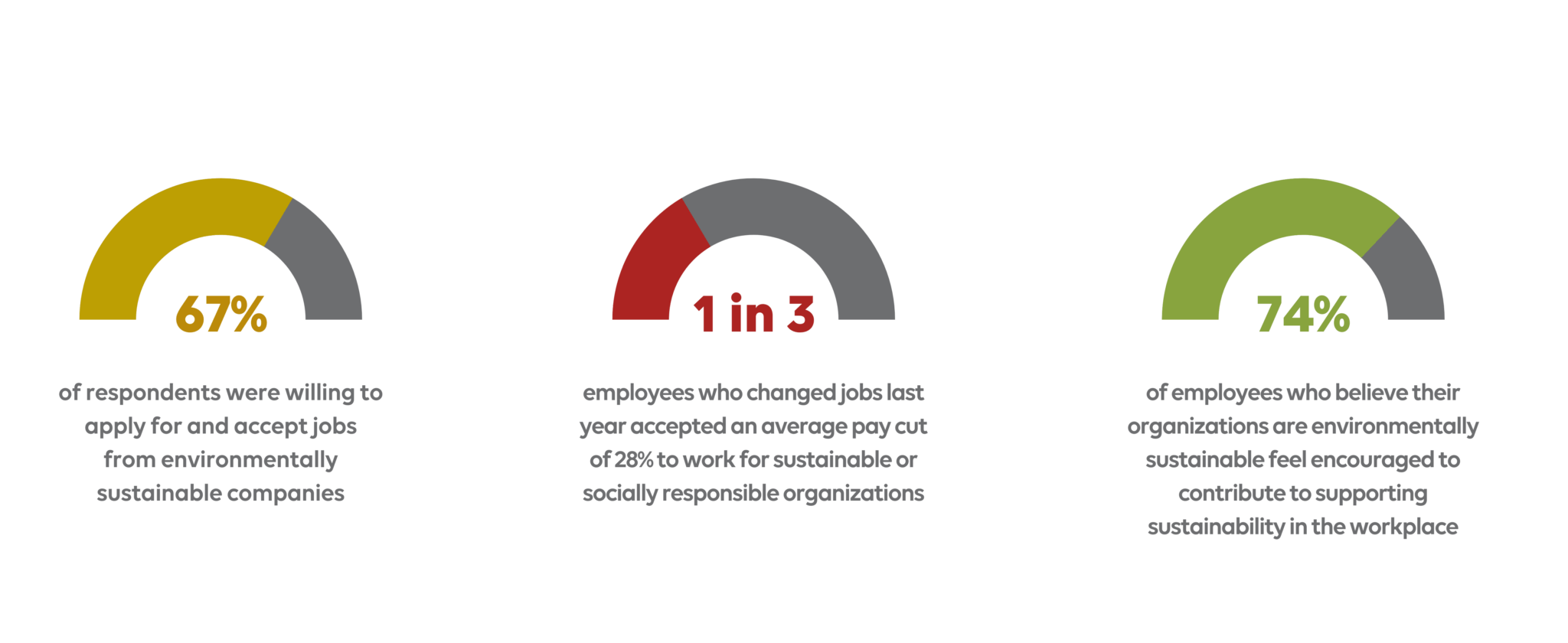
ESG performance also plays a critical role in employee attraction and retention. In a survey of more than 16,000 people across 10 countries, IBM’s Institute for Business Value found that 67 percent of respondents were willing to apply for and accept jobs from environmentally sustainable companies, and 1 in 3 employees who changed jobs last year accepted an average pay cut of 28 percent to work for sustainable or socially responsible organizations. Moreover, 74 percent of employees who believe their organizations are environmentally sustainable feel encouraged to contribute to supporting sustainability in the workplace5—a cascade effect that drives innovation, boosts employee engagement, and affirms a purpose-driven culture.
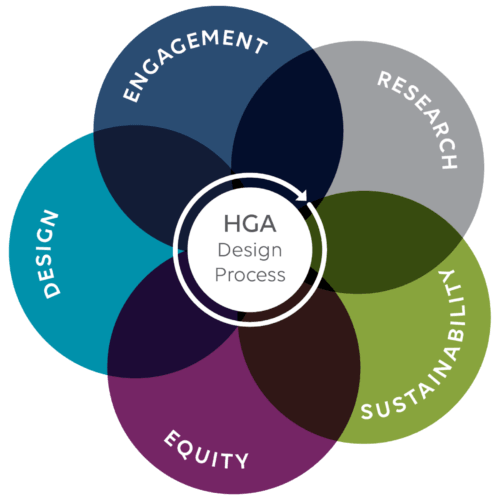 Throughout HGA’s 70-year history as an interdisciplinary firm, creating a positive impact in our communities through our work has been a central ideal. Inspired social change is now recognizing the power of holistic design thinking, rewarding organizations and spurring new opportunities. This is the inflection point we have been waiting for: our passions, expertise and communities have aligned to drive collective action in the pursuit of a more sustainable future.
Collective Action, Partnership & Holistic Design
The opportunity is clear, yet the path ahead is challenging. Meaningful change requires collective action through holistic design thinking.
Organizations widely recognize that stakeholders, employees, and consumer expectations towards sustainability and ESG principles are rapidly evolving, and are in turn aligning their operations to meet this demand. Unfortunately, business leaders can lose sight of the breadth of the opportunities within these strategies and struggle to define priorities. A recent Accenture study found nearly half of more than 600 organizations surveyed cite an “inability to define/prioritize material ESG issues for disclosure” as one of the top challenges for measuring and reporting ESG performance.6
Every organization is unique and requires a understanding of their culture to develop representative strategies and curate their ESG story. HGA’s approach enables our cross-disciplinary teams to leverage unique insights throughout the process to create comprehensive, resonate strategies. The balance between people and operations is crucial.
We seek to involve stakeholders in defining impact metrics. Our ability to engage with communities, customers, and employees to identify what matters most to them and measure progress accordingly is transformative. Human-centered design research can provide a deeper understanding of cultural contexts, stakeholder perspectives, and the human impact of sustainability efforts.
Two notable recent examples of HGA’s broad understanding and depth of expertise can be found in our realization of Westwood Hills Nature Center, as well as our partnership with a Fortune 500 company to achieve their carbon neutrality goals.
Pairing Stakeholder Engagement with High Performance Engineering
The City of St. Louis Park, Minnesota, has a long history of progressive social and city policy and continues to pursue multiple goals to enable an equitable future for all residents. To demonstrate this commitment, the recently completed Westwood Hills Nature Center was envisioned as a physical realization of those goals, creating community connections to the environment and teaching strategies for energy, water, and wildlife stewardship. The result is a Net-Zero Energy building deeply rooted in the fabric of the City’s forward-looking ethos, recognized with architecture’s highest honor for sustainable design, The AIA COTE Top Ten Award.
In addition to energy performance, HGA’s approach to community engagement was also a deciding factor in earning this honor. By incorporating key findings from more than 70 community engagements, our design team gained unique insight to foster an authentic sense of belonging, creating a new community hub rooted in shared community passions.
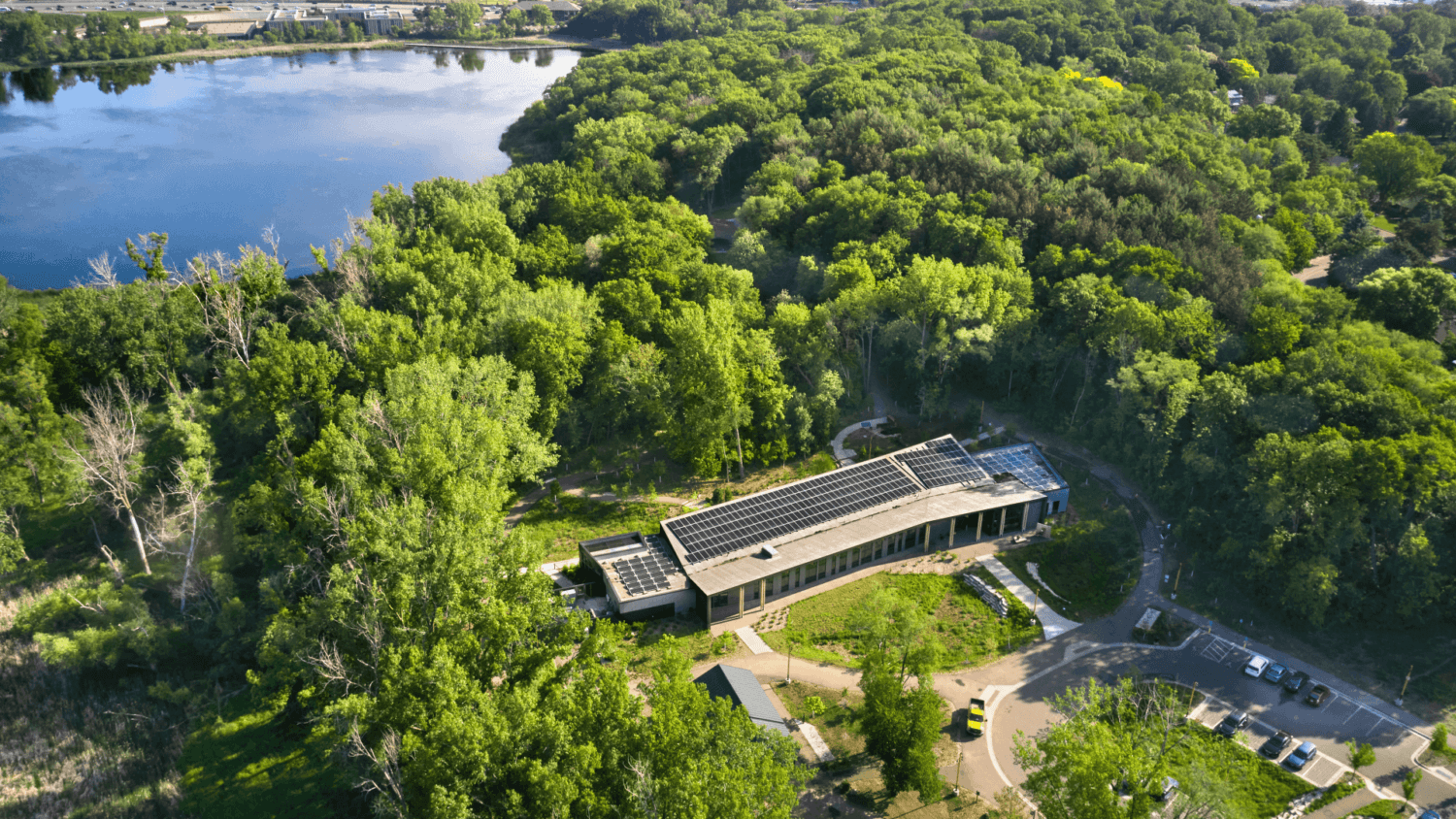
A broad range of methods including surveys, pop-up engagement at community events, and direct staff outreach guided equitable community accessibility through all aspects of the design and operation. Admissions and parking are free, exhibits have integrated technology to achieve universally multi-lingual displays, and braille has been included throughout the building signage. Spaces were envisioned to prioritize flexibility, incorporate local art installations, and promote inclusivity in its broadest sense to welcome all community members. Staff regularly teach, create, and welcome programming partnerships with diverse community groups across multiple generational cohorts and social strata, accommodating varying school curriculums.
Operational Evaluation Capabilities + Implementation Strategies
Our ability to create operational assessments of an organization’s current carbon footprint, Greenhouse Gas (GHG) emissions, and readiness to accept change is an invaluable piece of the holistic ESG approach. HGA can quickly evaluate energy conservation measures (ECM), such as HVAC systems upgrades, smart building technologies, and building envelope improvements. These measures consistently create opportunities for reduced energy consumption and/or paths to net-zero, lower utility bills, and improve indoor comfort.
Building performance improvements often create long-term value and generate higher returns on investment while avoiding the perpetual costs associated with Renewable Energy Credits. Moreover, the costs of ECMs could be offset by tax incentives and/or rebates included in the Inflation Reduction Act.
HGA’s Building Performance Group partnered with a Fortune 500 organization seeking to utilize renewable energy for 90 percent of all energy use by 2027, and to achieve carbon neutrality in manufacturing and key distribution sites by 2030. Through careful evaluation of one of their campuses, HGA developed an approach considering first costs, life-cycle costs, and energy utility resiliency. This decarbonization study primarily focused on Scope 1 emissions (direct GHG emissions used on-site) and Scope 2 emissions (indirect GHG emissions associated with source energy, such as purchase of electricity).
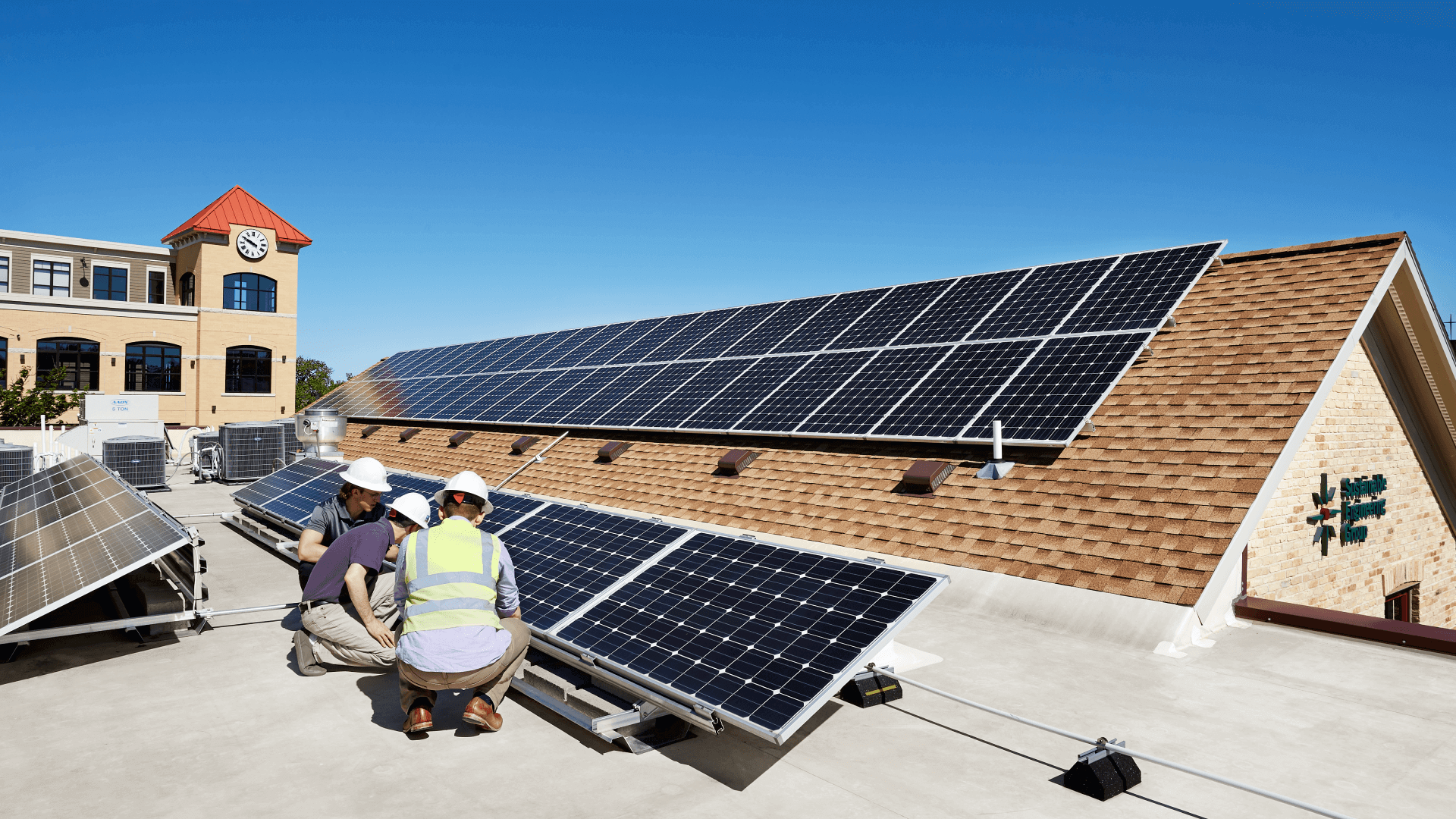
HGA explored how to utilize a phased implementation plan to reduce existing usage, improve efficiency and decarbonization, and replace carbon intensive energy sources with renewable sources. When complete, the organization will ultimately avoid 280,000 tons of CO2 emissions per year and realize $13M of cost savings over the life of the proposed systems.
Forward-looking ESG strategies have moved well beyond compliance and risk mitigation to acknowledge the broad research that links ESG reporting to organizational performance. Between 2013 and 2020, consistently high ESG performance tended to score 2.6x higher in total shareholder return than medium performers.6
The importance of this transformation is undeniable. Regulatory pressures are building across the globe. Organizations that seize the opportunity will outperform their peers, and those that are best able to communicate meaningful, authentic, and impactful actions will rise above the rest.
HGA and the clients we partner with are working to create strategies and achievable paths to a sustainable, equitable future. We are embracing the opportunity—will you join us?
About the Author
 Sam has worked on a wide range of projects from small office build-outs, to complex historic renovations and large corporate campuses. He leads and supports his project teams with a collaborative, client focused process rooted in thoughtful, responsive design solutions.

NOTES AND SOURCES
- United Nations Environment Programme, “United Nations Emission Gap Report”, November 20, 2023
- Securities and Exchange Commission Fact Sheet, “Enhancement and Standardization of Climate-Related Disclosures”, March 21, 2022
- Governance & Accountability institute, inc. “90 percent of S&P 500 index companies Publish Sustainability / Responsibility Reports in 2019,” July 16, 2020
- NYU Stern Center for Sustainable Business, “ESG and Financial Performance: Uncovering the Relationship by Aggregating Evidence from 1,000 plus Studies Published between 2015-2020,” Whelan, Atz, Van Holt, Clark, February 2021.
- IBM Institute for Business Value, “Balancing Sustainability and Profitability”, 2022
- Accenture, “Measuring sustainability. Creating value – Time to rethink performance and redefine success”, 2022