It has been a challenging year for healthcare workers including nurses. Recent statistics tell the story:
- Crisis loom as 800,000 more nurses plan to exit workforce by 2027
- Nurse.org’s new 2023 State of Nursing Report revealed that while 60% of nurses love being a nurse 62% are concerned about the future of nursing
As designers, we acknowledge our role in driving the advancement of nurses and the nursing profession. As we move forward in addressing certain issues, we are proposing three areas to direct attention: empowerment, innovation, and resilience.
Empowerment
“the process of becoming stronger and more confident, especially in controlling one’s life and claiming one’s rights.” (Oxford Languages)
The importance of establishing a healthy work environment for nurses has gained significant momentum, mainly as an appeal to bolster nursing as a profession. For years nurses have focused on the needs of their patients and families at the expense of their own, leading to a lack of breaks, little respite, and long shifts. These factors have contributed to the current state of burnout nurses have experienced—and this was before the pandemic. A recent study presented by HGA at the Healthcare Design Conference outlined the importance of cultivating empowerment for nurses, and detailed key lessons learned from those in the profession who worked through the outbreak of COVID-19.
![Quote: "[Once] you eliminated boundaries and gave people permissoin, they had no other choice. They had to make it work." - Senior Facilities Manager](https://hga.com/wp-content/uploads/2023/05/Correct-Empowerment-quote-1500x283.png)
Leadership allowed staff to solve issues in non-traditional ways to support patient care; for example, in some facilities staff moved IVs to the hallway so nurses did not have to adjust PPE each time an alarm sounded. These new ideas can improve the built environment and offer flexibility to surges in future case scenarios.
How can we support empowerment through design:
- Include nurses in the design process
- Help prove ROI for needed space in academia and in healthcare facilities
- Designing with and for nurses
Innovation
“a new method, idea, product, [and so on].” (Oxford Languages)
Similar to empowerment, it is possible to transform the current state of nursing through innovation.
Lack of supplies on-demand, broken-down equipment, and middle of the night crises has required nurses to cultivate an innovative spirit. In the same post-pandemic research presented at the Healthcare Design Conference, we heard nurse leaders project the opportunities and the innovations around people, process, technology, and place. Here are the top five innovations we heard nurses were working on:
- Reinventing nursing care delivery models
- Cross-training staff with exposure to multiple settings
- Technology to afford and support new models
- Easily adaptable spaces to flex and meet demands
- Intentional focus on staff wellbeing
New models are intended to allow nurses, along with other healthcare staff, to work at the top of their license. One idea involved moving away from a team-based approach to a task-based approach; for example, while nurses continuously work on one task, gaining specialized experience, someone else is in charge of the history and discharge instructions — remotely. This approach enhances efficacy and efficiency.
Another notable idea was to have more experienced nurses connect through remote monitors into patient rooms to mentor those new to the profession. This consideration relieves the physical demand for those that have been on the floor providing bedside care while allowing them to continue to support and provide needed mentorship from a place of comfort.
The design and planning team has the ability to examine staff flow and identify opportunities to eliminate non-value-added tasks, allowing them to shape their design around these crucial workflows.
How we can support innovation through design:
- Elevate nurses voices in order to support their practice
- Work with nurses on the process improvements needed in healthcare, including technology
Resilience
“the capacity to withstand or to recover quickly from difficulties; toughness.” (Oxford Languages)

Nurses realized that while resiliency was key to survive the pandemic, wellbeing is the key to long-term thriving. To recharge this workforce, a focus on wellbeing is essential to their health and safety.
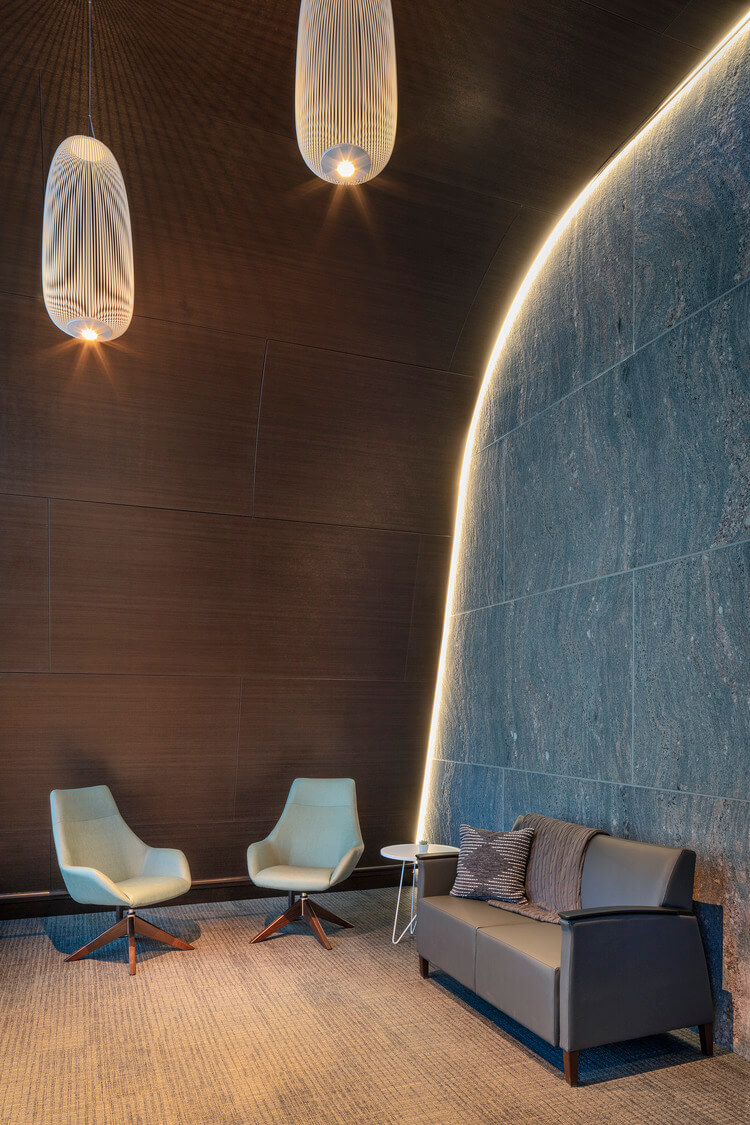
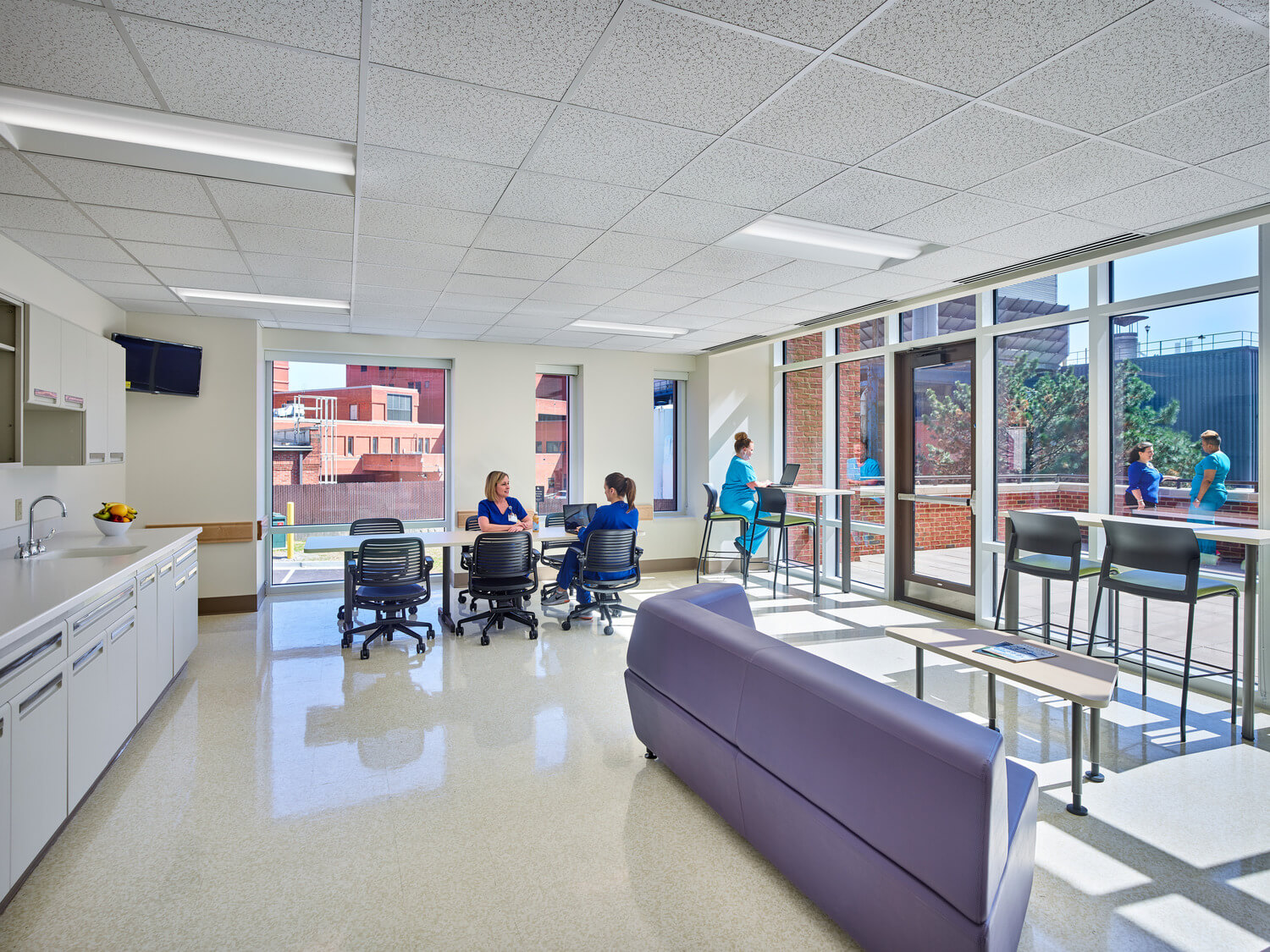
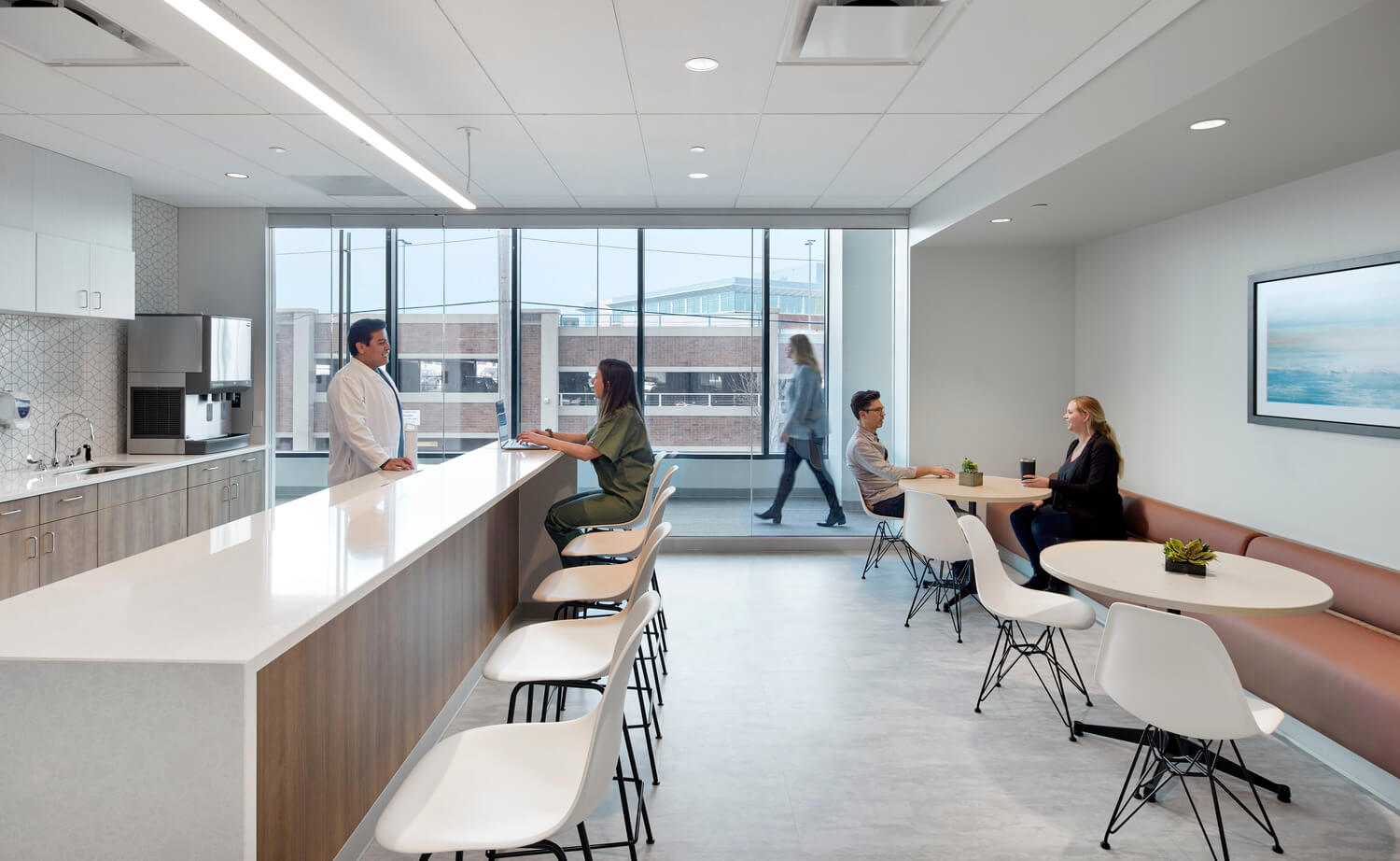
As a design industry we embrace healthcare settings as work environments and strive to make them healthy spaces for all workers, in the process rethinking common assumptions. For example: the staff lounge. Purported to be a dedicated place to support nursing wellbeing, these spaces are not always restorative due to an often high level of activity and distraction. To effectively prioritize nurse’s health, consider alternatives, such as providing separate restorative spaces offering access to nature and immersive technologies, or providing a wellness cart with needed staff amenities.
Supporting wellbeing for staff is also a leadership initiative and translates to giving nurses permission and time for needed breaks and relaxation. These—and all—wellbeing interventions have the benefit of supporting staff recruitment and retention.
How we can support resilience through design:
- Remember: while the healthcare environment is for the patient, it is also a workplace
- Provide spaces such as dedicated lactation rooms as a regular programming element
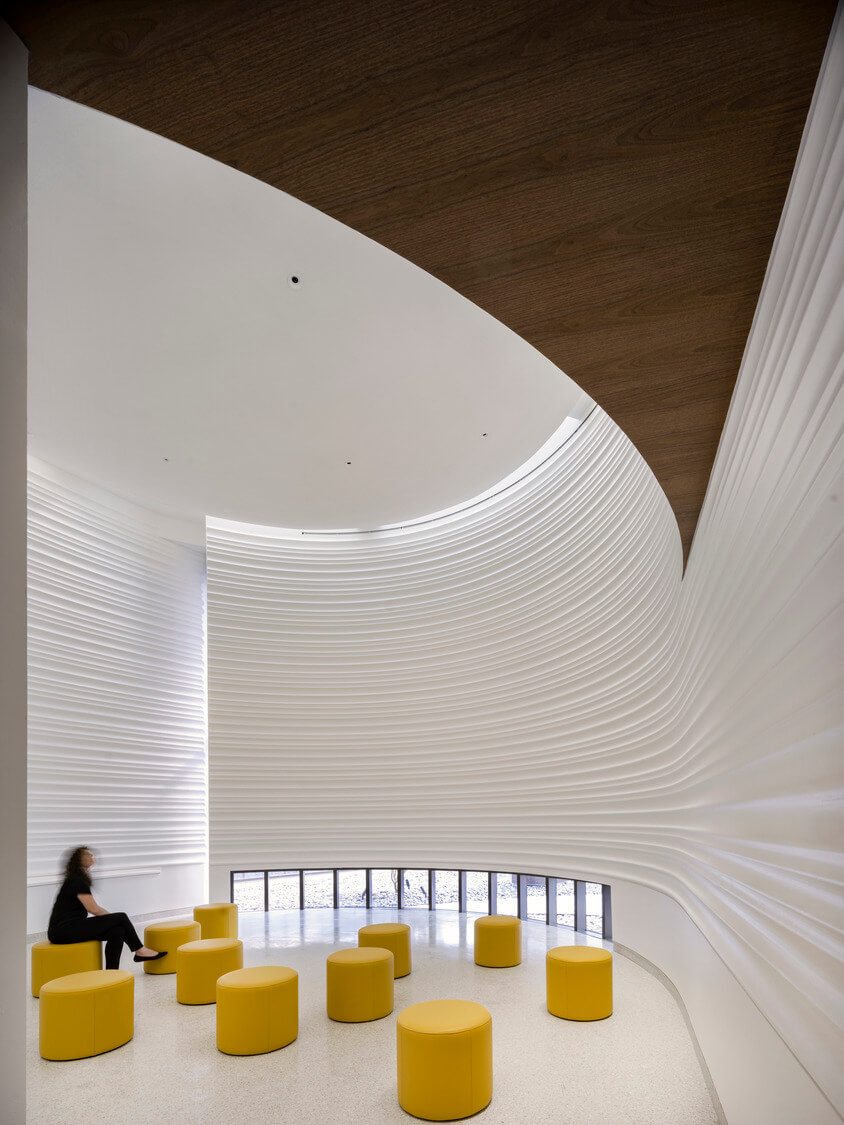
- Provide respite areas/rooms that allow staff to ‘recover’ from their difficult moments at work
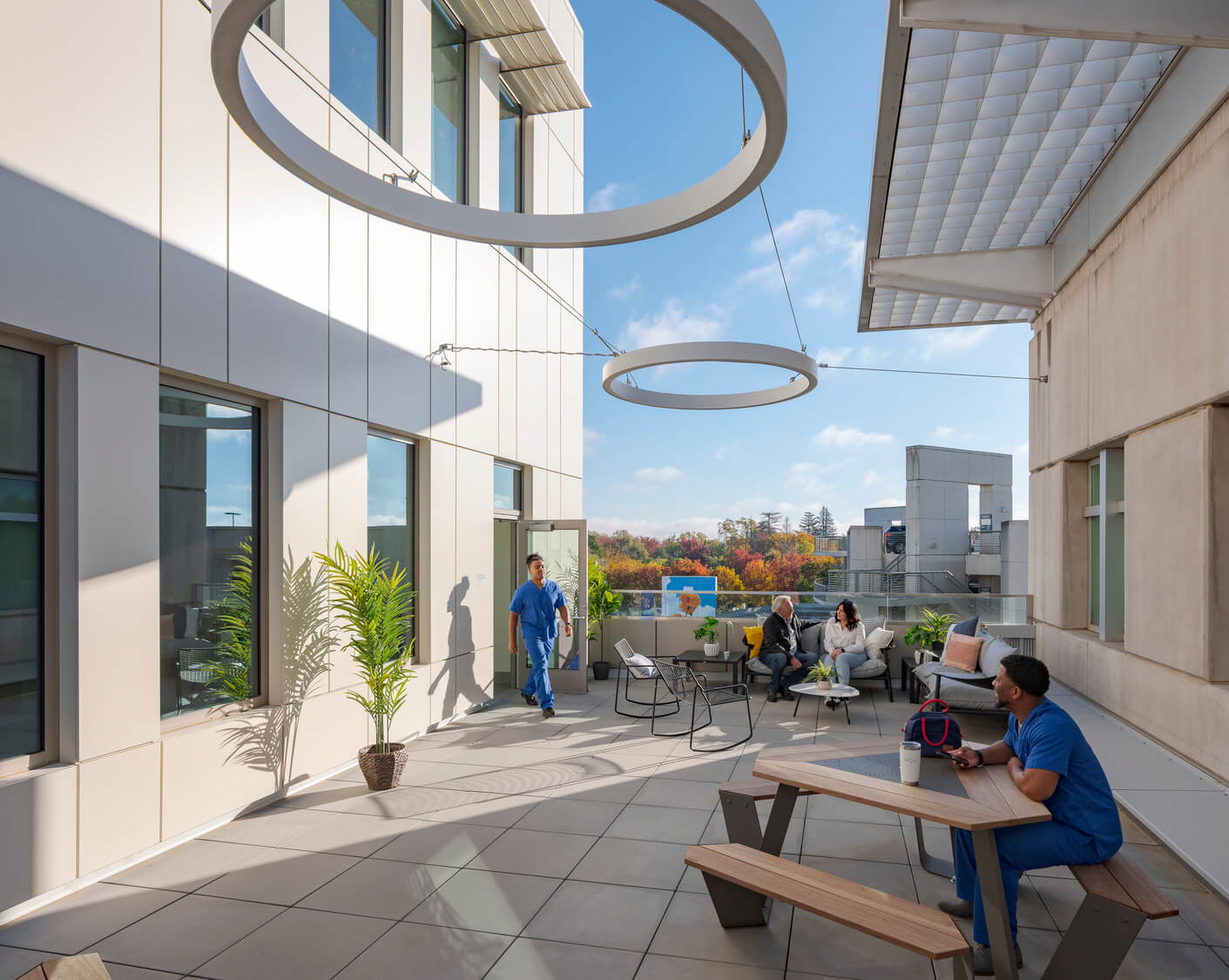
- Provide access to outdoors—windows if not complete physical access available
About the Author
 As an Evidence-based Design Researcher, Terri focuses on the intersection of user experience and human interaction within the built environment. Beginning her career as a registered nurse, she then obtained a PhD and master’s degree in interior design. Terri uses this unique insight and combines her first-hand experience of patient and caregiver needs with architectural concepts and layouts to develop exceptional spaces.