
Leveraging Inclusive Engagement for Healthcare Interiors that Celebrate Diverse Users
Imagine a healthcare interior environment that feels safe, welcoming, and connected to the community. Where each user’s physical and emotional needs are supported, and the sensory environment is engaging and comfortable. Where healing is enhanced, and work environments reduce stress.
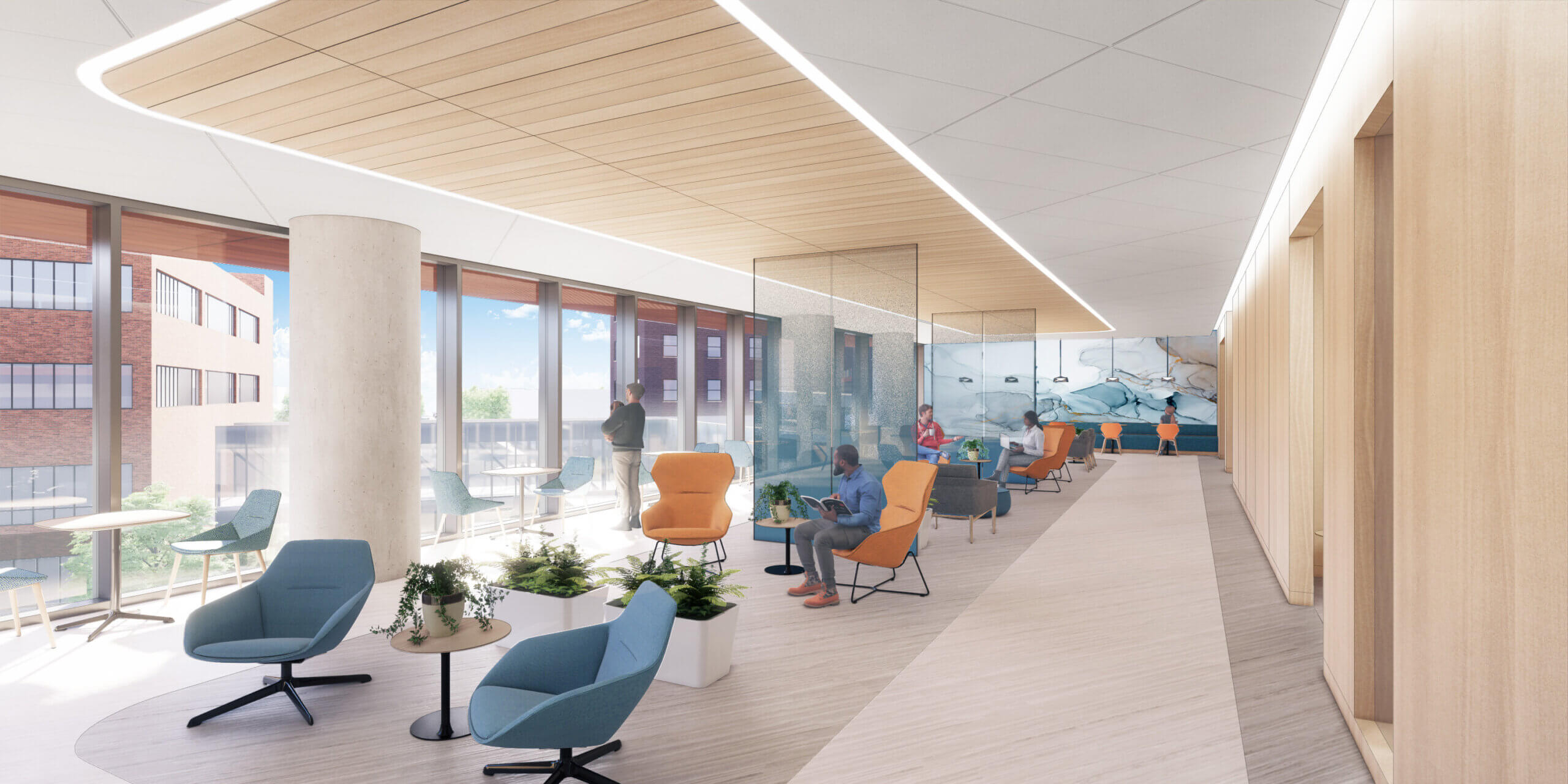

These are the potential outcomes of a collaborative healthcare interior design process that leverages stakeholder engagement and equity to create design that celebrates diverse users.
Let’s look more closely at this collaborative design process.
Inclusive Stakeholder Engagement
HGA’s healthcare interior design goes beyond the creation of beautiful, functional, sustainable spaces—those attributes are a given minimum requirement. But to truly make an environment sing for its users, it must first respond to their unique and diverse needs. Therefore, our design work begins with discovery through a user engagement process customized to each project, often in collaboration with HGA’s Design Insight Group.
To gather stakeholder perspectives, we use various methods, such as surveys, interviews, focus groups, physical mock-ups, and virtual reality visualizations. These efforts collect vital information and support meaningful connections between the design team and users of the space, creating a common understanding that will inform a human-centric design solution.
Through an Equity Lens
A design process that supports equity needs to address accessibility, inclusivity, diversity, transparency, and empowerment. HGA’s investment in equity initiatives includes the development of our Equitable Design Toolkit, which provides a series of prompts and exercises to guide designers and clients in creating inclusive and equitable spaces. Looking at each project through an equity lens, we ask ourselves at the outset who needs to be at the planning table? Who are the stakeholders whose voices often are not heard—but whose input is just as important as any others?
By taking a holistic approach to healthcare interior design that includes stakeholder engagement and equity, we can create environments that support the unique needs of every user. Consider these two healthcare projects in development.
A Beam of Hope at Abbott Northwestern Hospital
The planning of Allina Health Abbott Northwestern Hospital’s new Surgical and Critical Care Pavilion in Minneapolis launched amidst the pandemic and social discord of summer 2020. Located off East Lake Street near the center of the urban unrest, leadership wanted the hospital to be a beam of hope to create a positive impact as the city reassessed an equitable vision forward.
To achieve this, our research and design team conducted a series of focus groups, feedback sessions, and surveys with patients, staff, and community members to understand their needs. We then translated user and staff feedback into well-defined experiential spaces that aligned with Abbott Northwestern’s guiding principles, which include:
 Plan a welcoming, safe, and empowering environment that is culturally responsive and reflects regional identity
Foster physical, spiritual, and mental health for all people
Design for stewardship and environmental sustainability
Create a healing environment through biophilic design and connections to nature
Reduce carbon footprint and prioritize healthier materials
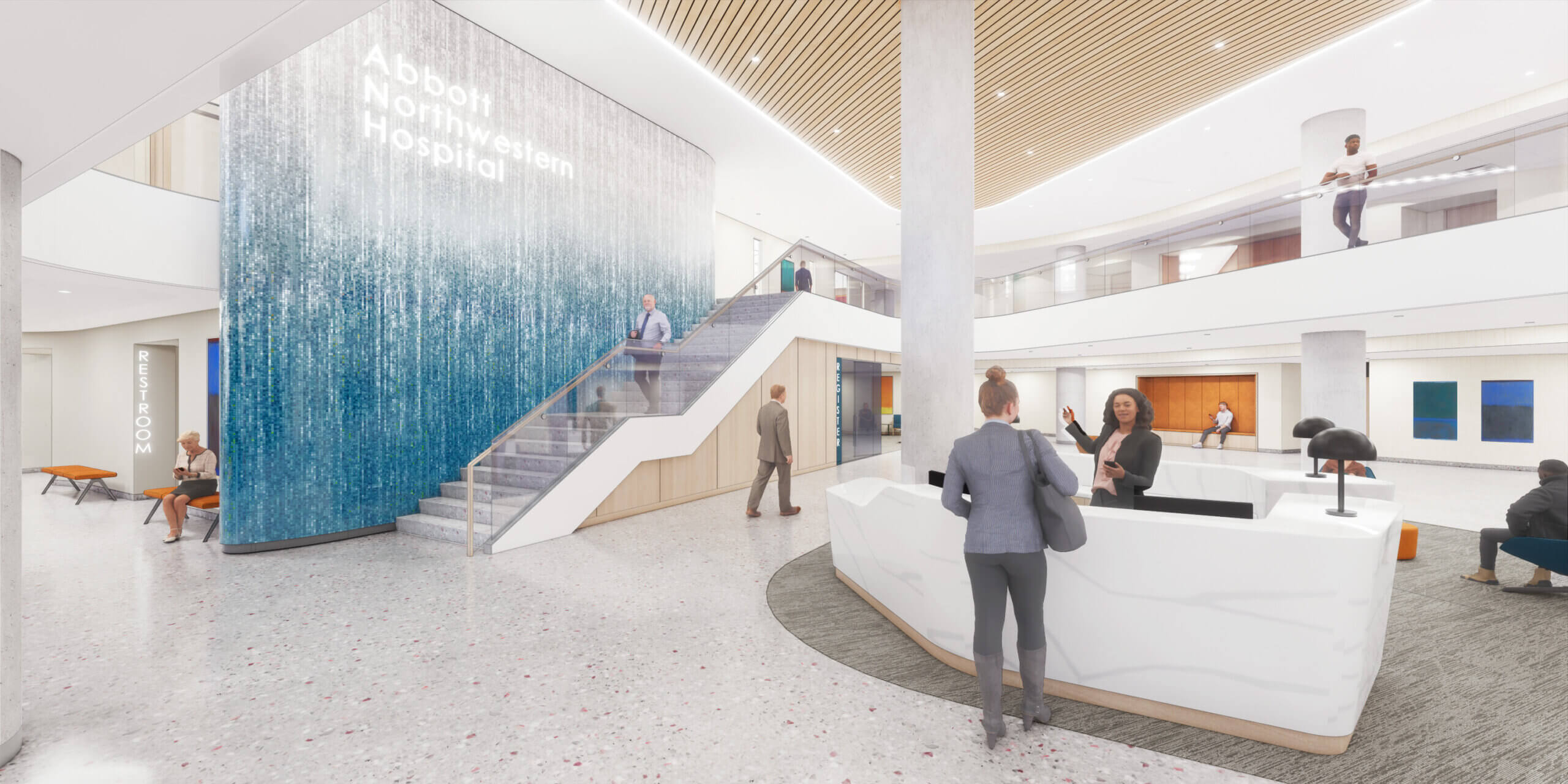
Although addressing a large program—500,000 SF that includes 192 new beds, 30 new operating rooms, 22 new interventional suites—the team conceived an intimate aesthetic aligned with the guiding principles.
The Care Pavilion celebrates the Allina brand and values through a holistic approach that balances human-centered design principles with a light-filled, nature-inspired space. With a priority on healthy materials, interior finishes embrace design stewardship and environmental sustainability. A warm and timeless palette creates a bright interior with patterns, textures, and pops of color strategically articulated throughout the design solution. Further inspired by nature’s timeless beauty of movement and flow, the interior architecture’s soft curvilinear lines connect people with open airy spaces, daylight, views to nature, and intuitive architectural elements that enhance the wayfinding strategies.
This peaceful yet interactive environment fosters physical, spiritual, and mental wellness and ultimately will transform the lives of the community—empowering people to flourish in their health.
Family Engagement at Gillette Children’s Hospital
Gillette Children’s Hospital and Clinics, which specializes in brain, bone and movement conditions, is expanding its St. Paul, Minnesota, campus. In approaching the expansion, HGA engaged families and caregivers regarding their concerns.
Our team worked with Gillette’s Family Advisory Council—parents of patients, adult patients, and staff—to answer survey questions and offer perspective on the current clinic, and to provide aspiration for the expanded space. Research participants also reviewed mock-ups and virtual reality walk-throughs of design concepts to provide further feedback by scanning a QR code, with design team members and caregivers on hand to answer specific questions.
From this process, the team identified features that gave patients control over their environment—and feelings of wellbeing supported by positive distraction that engaged all the senses through light, colors, sound, and images.
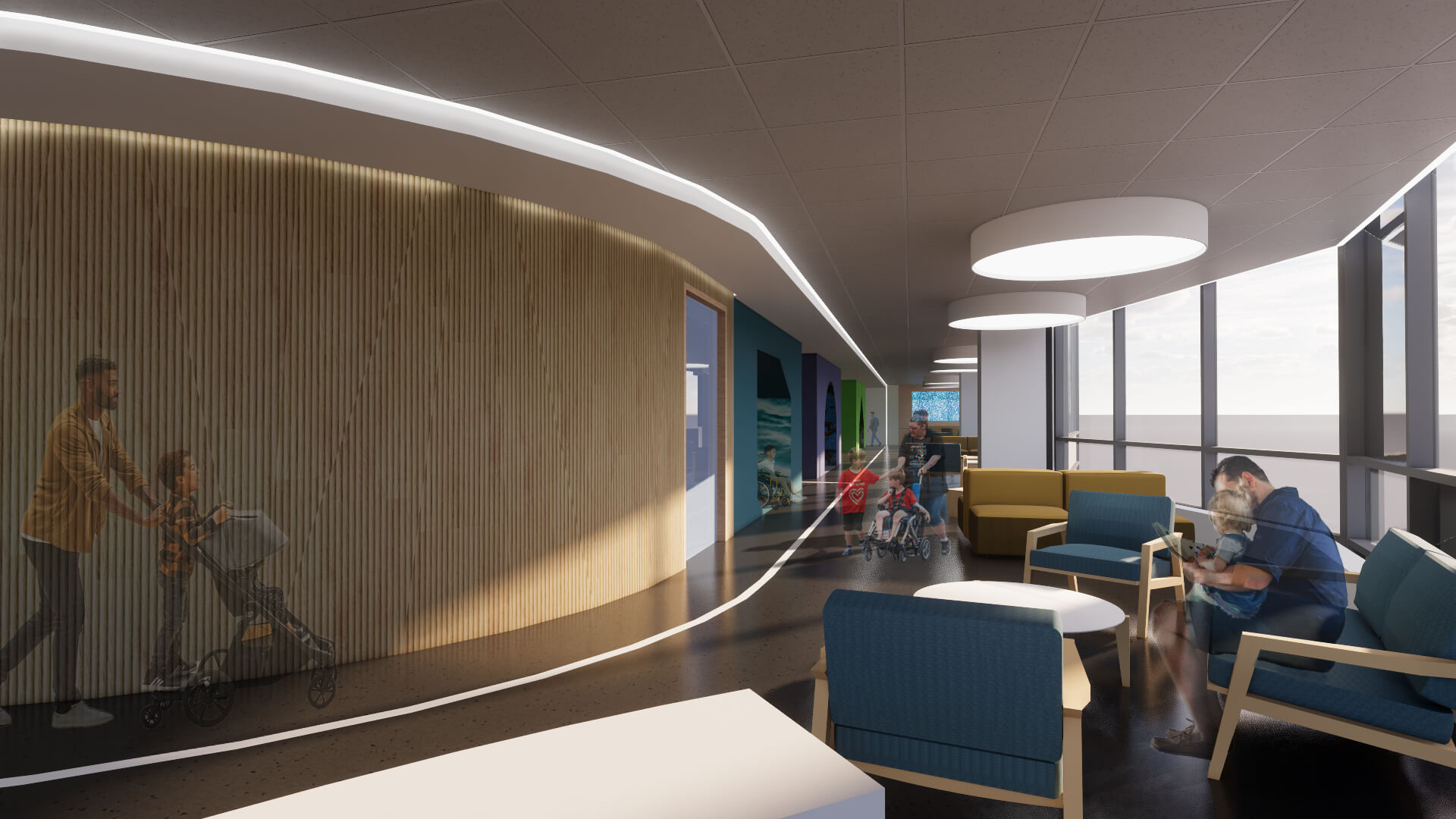
For instance, many patients are learning to steer wheelchairs or motorized chairs. The flooring was designed to provide contrast, with patterns inlayed to follow like a track. Cubbies that are popular in pediatric design often exclude children in wheelchairs. Yet here the playful alcove in the waiting room accommodates a wheelchair and the seating is intentional to allow families to sit and congregate with wheelchairs.
Additionally, textures throughout maintain acoustic control while adding visual and tactile interest. This includes tambour wood, wrapped three-dimensional acoustic panels, carved dimensional panels, and specialty lighting to highlight these features. And adding a very personal touch, artwork will be created by patients, giving them a point of pride and ownership in their environment.
Next Level Design
Healthcare interior environments can go beyond beauty and function to speak to users and communities in a more supportive and meaningful way. By engaging stakeholders in a collaborative and inclusive design process, we can create “next level” design solutions that equitably address the needs of diverse users.
Learn more about how we are elevating environments of health.
About the Authors

Stephanie Reem
Stephanie’s passion for design has been focused on creating outstanding healthcare interiors.

Melissa Dulisse
She brings extensive experience collaborating with large teams collaborating on healthcare, higher education, and workplace projects.

Christine Hester Devens
As Design Principal specializing in healthcare interiors, Christine Devens brings over 30 years of experience to the firm’s national offices.