
The patient and family experience comprises the total interactions that happen while receiving care. Some components of the experience, like provider interactions, are process driven or directly affected by an institution’s policies and culture. Other facets of the experience relate more directly to the built environment and can impact patients’ emotional and physiological wellbeing.
When we think about designing for pediatric care, whether inpatient or outpatient setting, we must understand that children are not just small adults. Even more than adult patients, families are fully integrated into their care. Designing for the needs of children and their unique perceptions of the care process—from infants to 18 years old or older at some institutions—requires special consideration. There are key spaces and unique design elements to consider in creating a positive experience as patients and their families move through their care journey.
Arrival Welcome
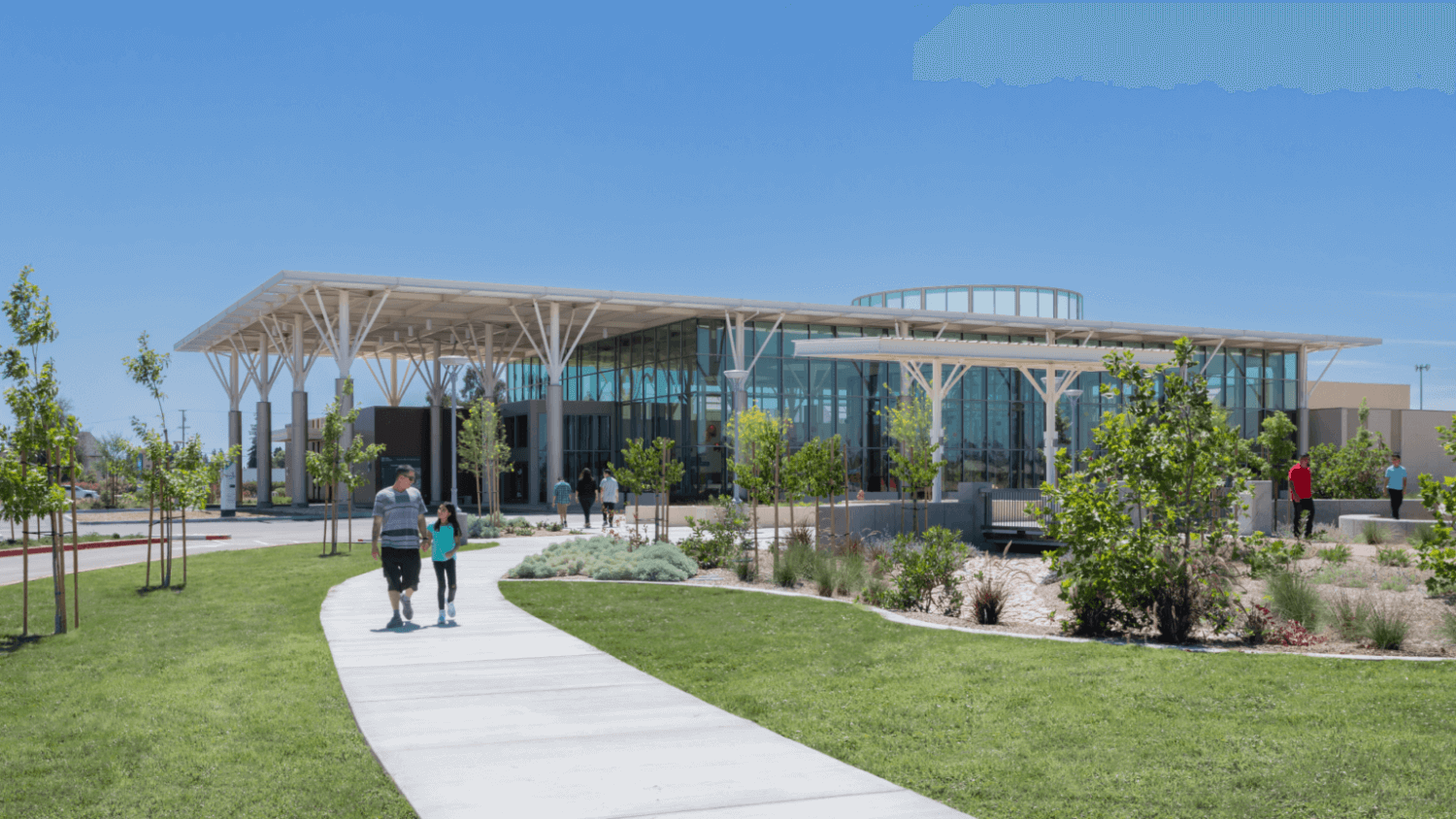
The first impression begins before entering a facility. Children arrive with their family and emotions and stress run high for all. To help reduce this stress on arrival, there are important considerations. If the children’s hospital or clinic is on a campus or complex with other buildings, it should be distinguishable and have its own identity and presence. The site should be easy to navigate, and finding parking should be intuitive. The route from parking to a family’s destination should be as short as possible with a clear distinction between the main entry and the emergency entry. Overall, wayfinding should be obvious and inspire confidence.
Public Spaces
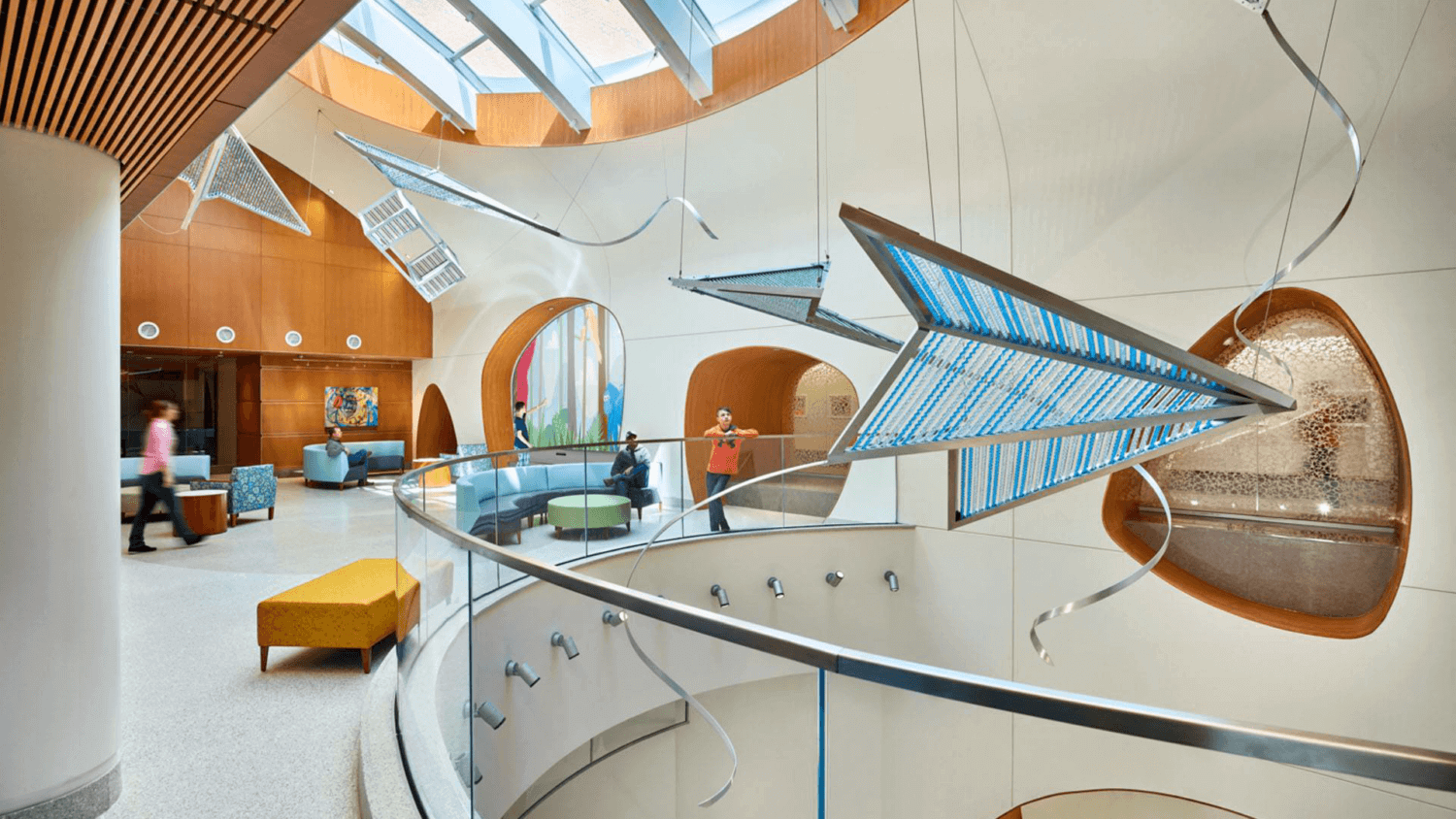
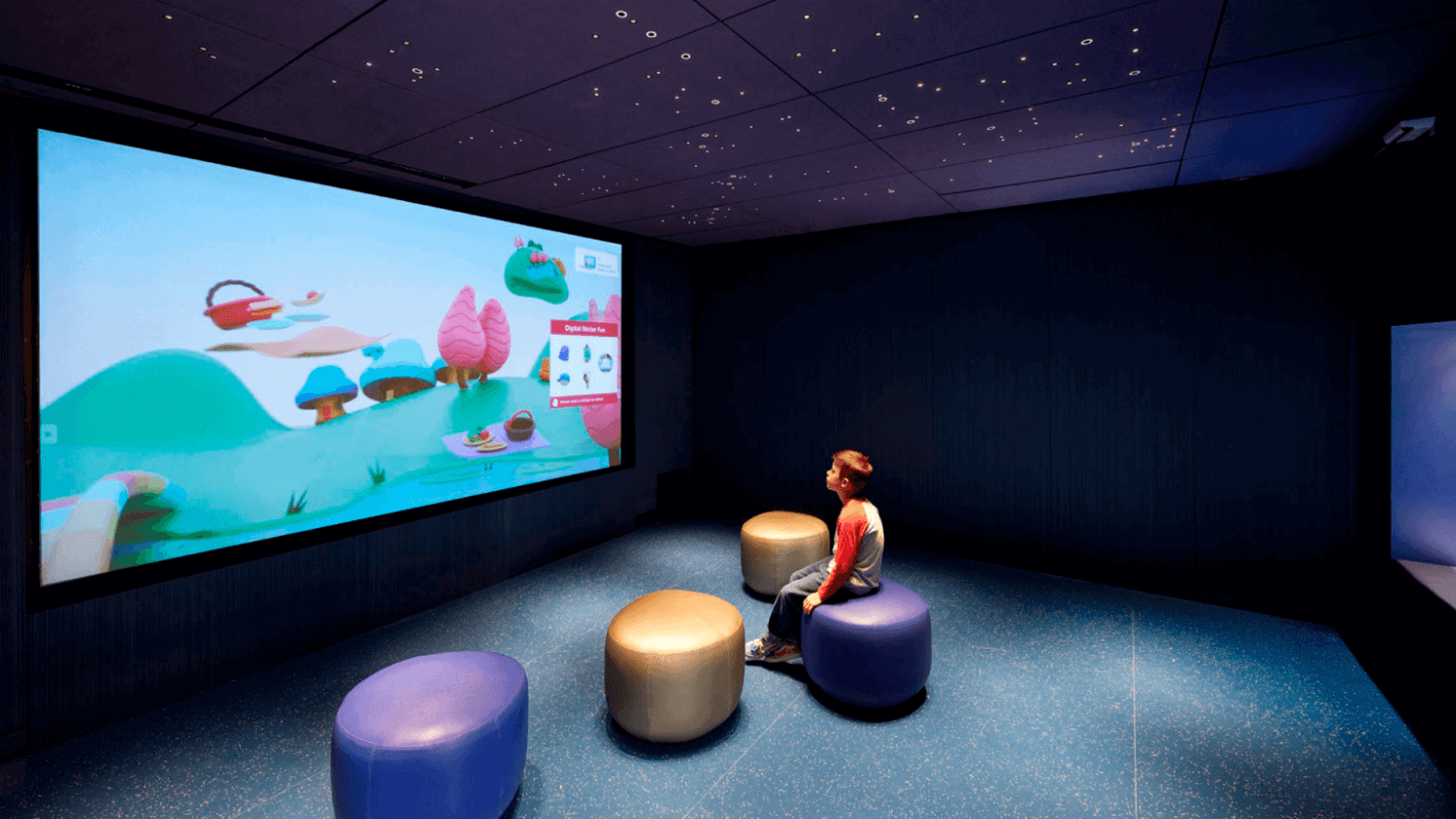
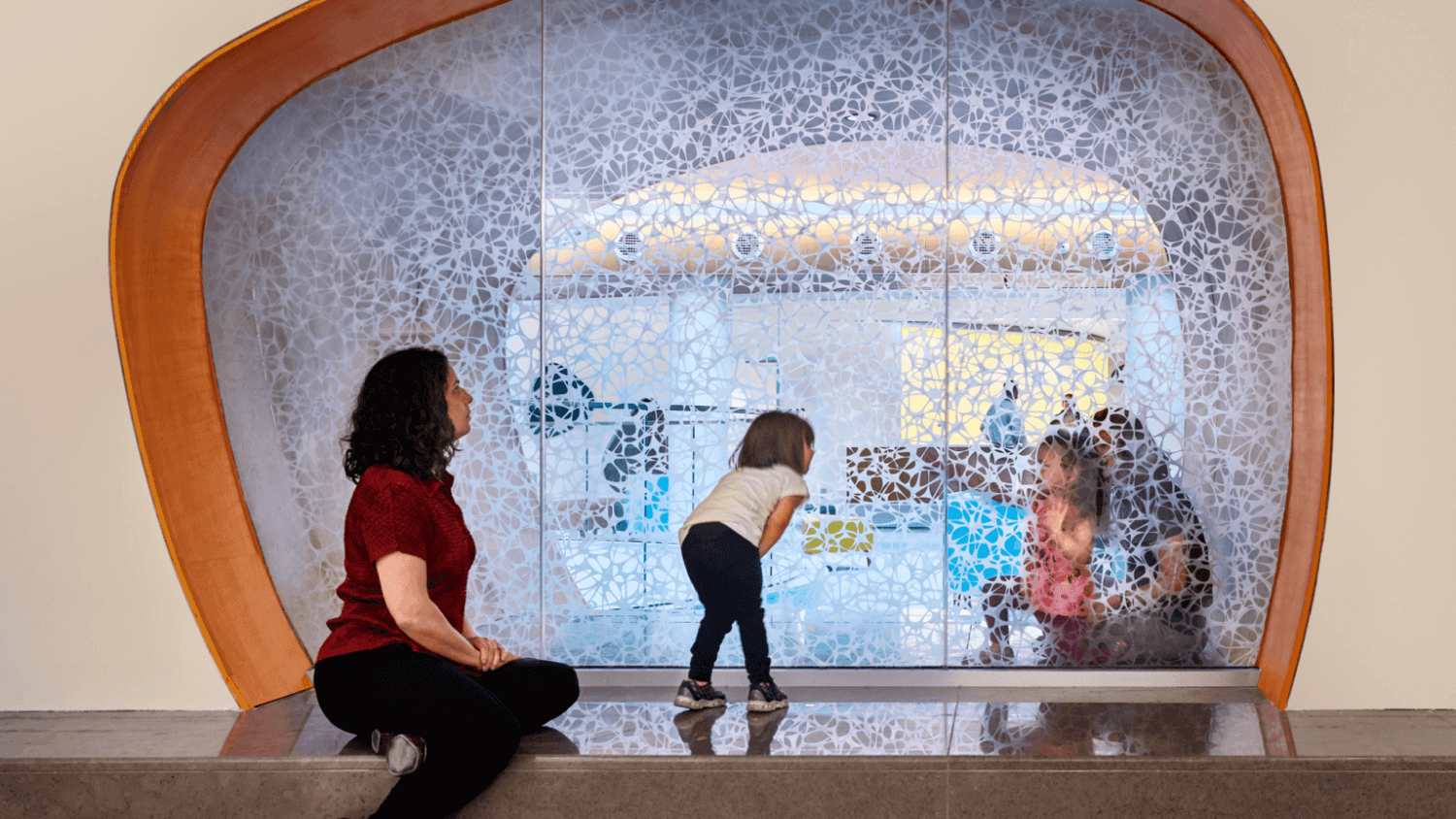
Make the experience an adventure. Imagine the space through the children’s eyes. Remember, kids are not all the same size and age. They have different perspectives and needs. Entering a large atrium can be intimidating for kids of a certain age. It is important to think of varied scales to create a comfortable and welcoming environment. Inviting seating cubbies, locally inspired art, graphically compelling wayfinding, and low-tech and high-tech interactive features such as video walls can engage children as they move through waiting and common spaces.

Patient Encounters: Patient Rooms to Procedure Rooms
Children enter the pediatric facility for different medical needs. Some are there for specific treatment, procedure or consultation and will stay only a few hours. Others are there for more extensive treatment and will have longer stays. Designing spaces appropriately, from patient rooms to exam and procedures rooms, can have a big impact on their wellbeing.

In an inpatient environment, the patient room is the main touchdown space. Because this is a child’s personal space away from home while receiving care, add elements that give children some level of control where they typically have little.
Key amenities can approximate a sense of home, such as Wi-Fi access, large interactive video screens with their favorite streaming apps, teleconferencing technology to connect with family or friends, ability to adjust lighting levels and color, options to personalize their space or choose artwork, comfortable furniture for family and visitors, a sofa that converts into a bed for a parent’s overnight stay, and plenty of natural light with view to the outdoors.
Consider designating the patient room as a safe space or no pain zone and having the patient move to a convenient on-unit treatment room if they require a minor procedure. This approach can go a long way to relieving anxiety for the child.
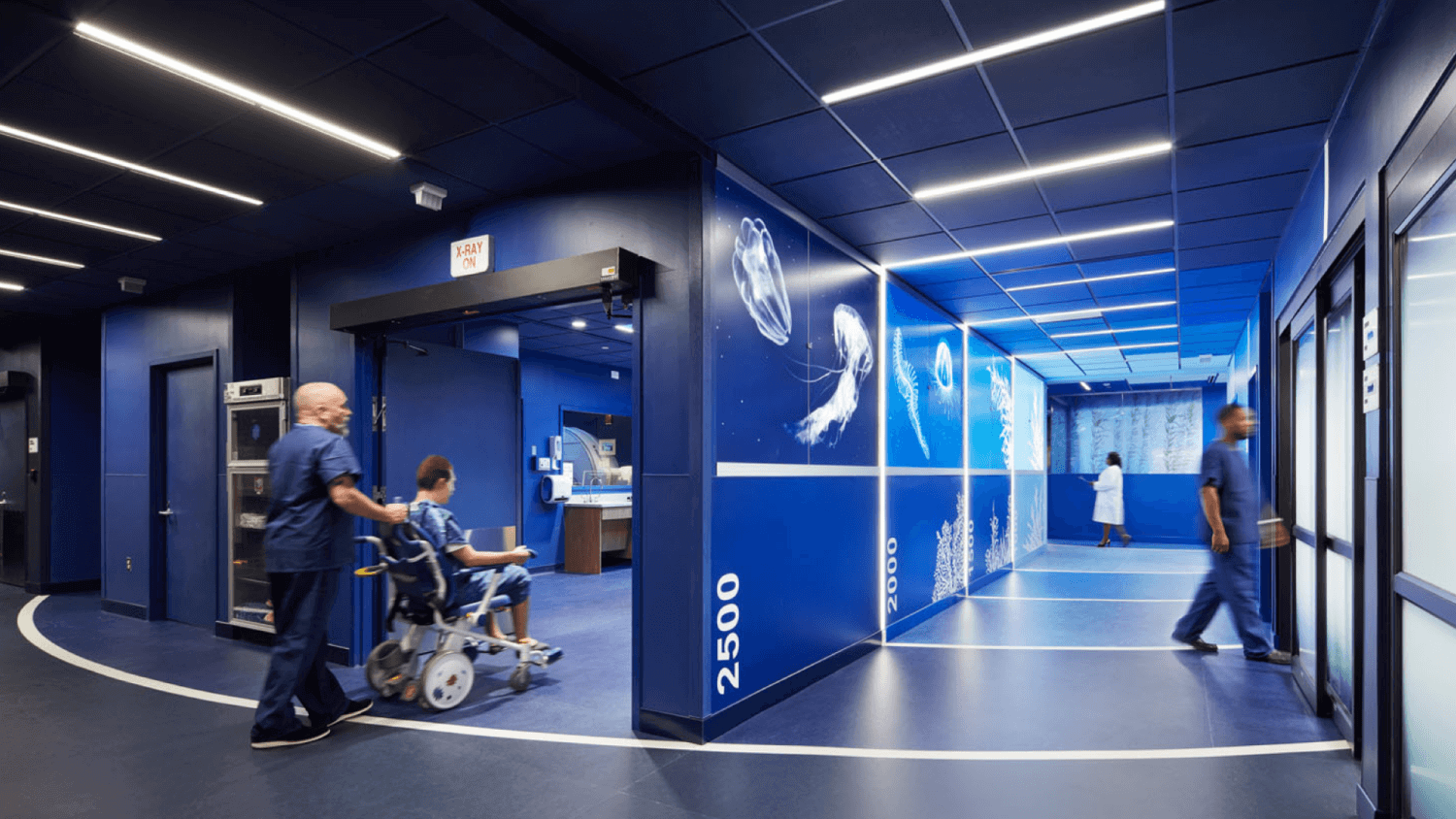
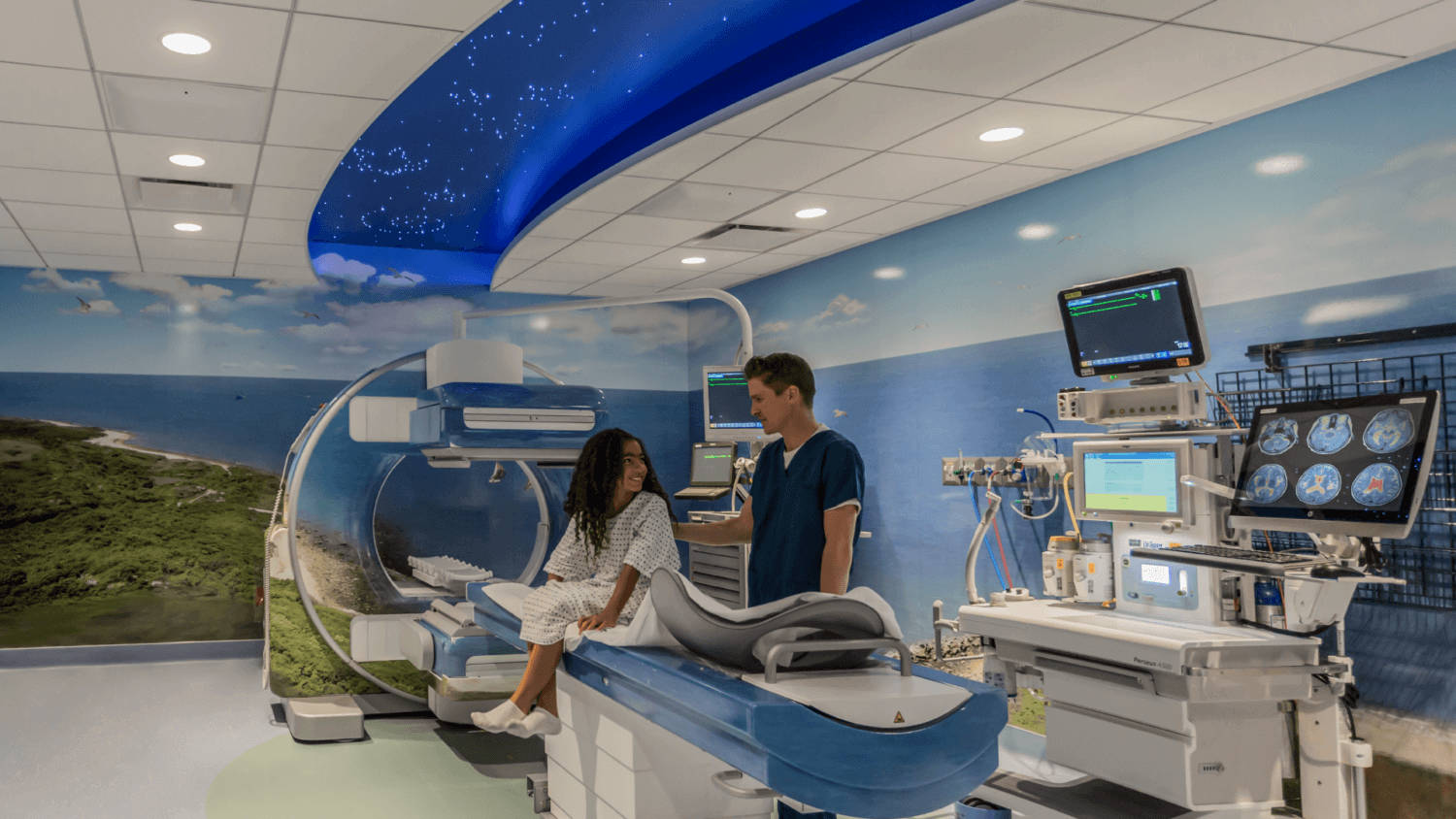
Diagnostic and procedure rooms are perhaps the scariest steps in the healthcare journey for children and are equally stressful for their parents. Medical technology, equipment, procedures, and cold aesthetics can be intimidating as children are totally in someone else’s hands. Deinstitutionalizing MRI or other diagnostic spaces further reduces stress during the procedure. Color, graphics, and more soothing lighting will mitigate negative emotions with positive distraction and opportunities for discovery. Some spaces go as far as creating a customizable ambient experience that can be chosen by the child. This positive impact on emotions can begin in the design of the spaces that children and parents traverse before arriving at the procedure or diagnostic rooms.
Family Spaces
Families are diverse and it is important to design so that all feel comfortable and welcome. Knowing your patient population and how to accommodate them is important. For example, a nondenominational contemplative space can accommodate multiple religions and faiths.
Parents, siblings, and extended family members all move through the system alongside the patient, with some staying a short period and others staying overnight. Families can differ in size and cultural norms in visitation. Consideration should be given to accommodating larger groups. Other considerations are access to daylight, the use of different seating types allowing parents and kids to sit together, furniture groupings for various levels of privacy or engagement, areas for siblings to play, and some heads-down work areas where adults can plug into computers can provide what families need when not at the bedside.
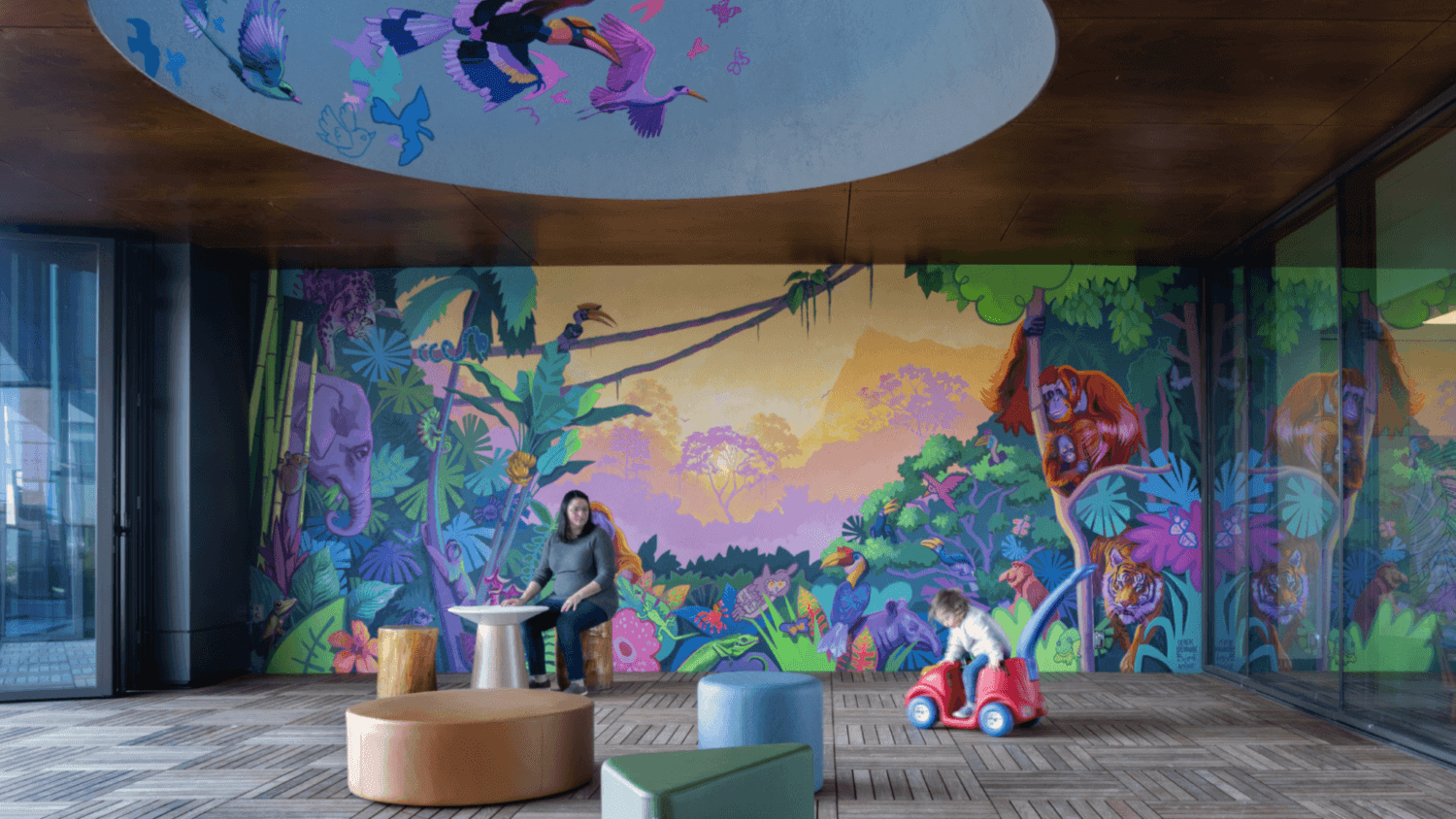
For families with longer lengths of stay, providing private showers and a kitchenette where parents can prepare their family’s favorite foods brings a sense of home and normalcy. Nutrition kitchens where food can be prepared from on-site community gardens can be a wonderful way to involve families in a fun and engaging manner. To accommodate varied religious practices and dietary laws, the design of these spaces might include kosher kitchens or pantries.
Indoor/Outdoor Connection
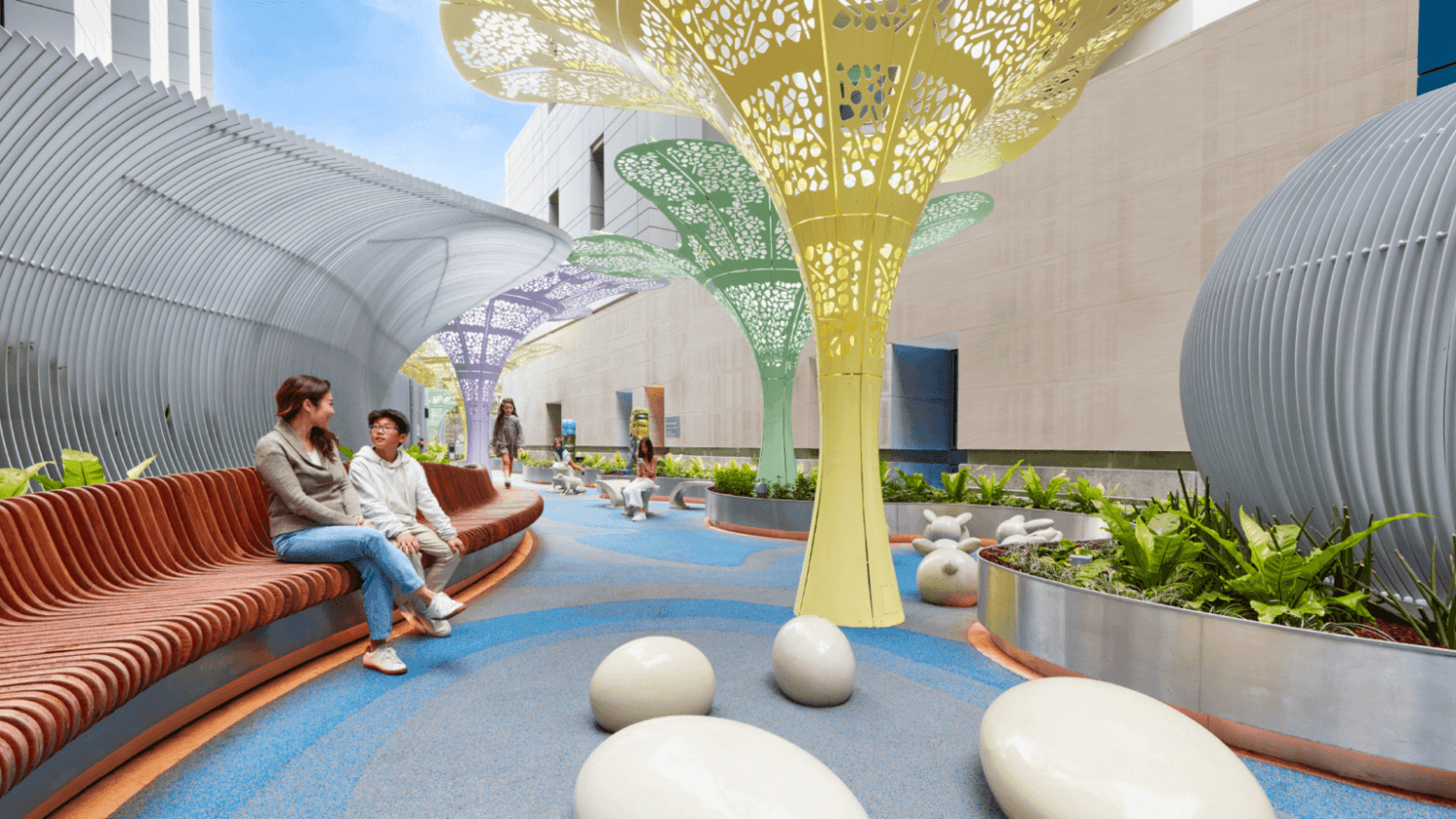
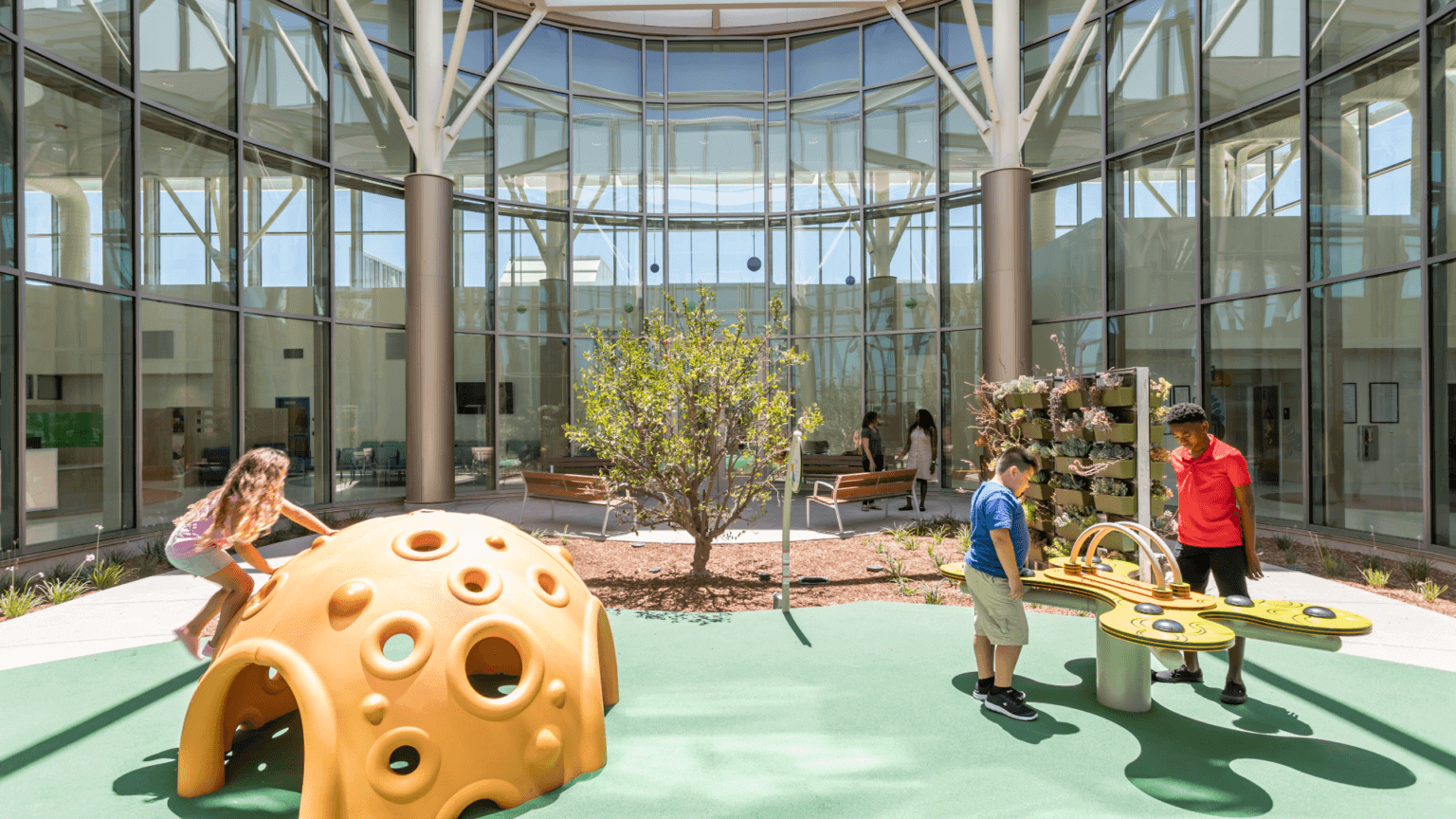
In the interior, the use of biophilic elements can provide a nice tie to the natural environment of the exterior. Creating spatial and visual connections that blur the lines between indoor and outdoor can improve comfort level for both children and adults. In addition to providing needed connection to nature, outdoor spaces can be leveraged for patient care programs, such as physical therapy, educational programming, community programming, or partnerships with local artists or horticulturalists. Design considerations should put safety first, such as protection from the elements and staff visibility. Place more active play zones away from less active zones.
Lasting Impression
The patient-provider encounter is not the end of the journey. How a patient and family depart from the facility can impact their perception of the entire experience. While clear provider and patient communication is a large part of this, the physical environment is as well. Check-out should be intuitive, and the patient and family should see a friendly face on the way out. The environment should provide a memorable experience on the way in that is easy to identify when exiting, providing a seamless mental roadmap. Depending on what type of care the patient receives, a separate or private exit may be desired. These final pieces of the patient and family journey work in concert to transition from hospital to home.
The Voice of the Customer
To create the ideal patient and family experience, it is important that the voice of the customer is represented and apparent in the design. What is important to architects and providers, and what we perceive as important to families, can differ from their lived experience. Designers and administrators must advocate for those voices to be heard. These voices can be collected in diverse ways depending on the phase of the project, including pre-design focus groups with family advisory or youth advisory councils. Design feedback can be gathered during open houses where participants experience the space, via physical mock-ups or virtual reality, and respond to surveys to establish how well the design responds to their needs. Armed with that valuable insight, the design team and steering committees are better equipped to weigh the inclusion of specific design features or amenities against cost and other project constraints.
Looking Forward
Designing a pediatric facility that best meets the needs of patients and families, as well as staff, providers, even researchers and learners is a complex process, but it is also an inspirational one. These facilities are where some of the most dedicated professionals deliver care for vulnerable children. We will continue to examine trends shaping pediatric care, develop planning and design strategies that elevate environments to the quality of care being delivered, research the impact of these design interventions, and share our learnings. Be Well.

Learn more about our work and the steps we are taking to create environments that foster healthy outcomes and overall wellbeing for patients, families, and staff.
About the Author

As a planning principal, Mezio Zangirolami leverages his expertise in children’s environments to further HGA’s national market strategy and ability to deliver innovative and beautiful projects for HGA’s current and future pediatric clients. Mezio specializes in the planning, programming, and design of pediatric healthcare facilities. Mezio holistically approaches design and planning – integrating exterior and interior to make a positive impact on the environment and the people who experience it.