
In Conversation: Rebecca Celis and Amin Mojtahedi discuss the challenges and opportunities impacting college campuses today—and why they feel optimistic.

Amid political pressures, funding deficits, and looming demographic shifts, colleges and universities have spent the year navigating uncertainty. The release of this year’s U.S. News & World Report Best National Liberal Arts Colleges rankings has us reflecting on how these institutions preserve their reputations, prove the value of a liberal arts education, and strategically evolve in turbulent times.
Rebecca Celis, AIA, LEED AP BD+C, HGA’s Higher Education Market Sector Leader, and Amin Mojtahedi, PhD, Associate AIA, Design Innovation Manager of the firm’s interdisciplinary Design Insight Group (DIG), have personal and professional experience working with many top liberal arts colleges across the country.
In this conversation, Rebecca and Amin share how their collaborative approach—bringing together market expertise and fresh design thinking—is driving innovative solutions that help these institutions thrive in the face of today’s challenges.
We are hearing a lot about pressures impacting higher education—especially small liberal arts colleges. What conversations are you having with administrators about what’s on their minds?
Amin Mojtahedi: When we sit down with campus leadership, we often talk about a set of big pressures. The financial problems may seem familiar when you read the nearly daily coverage in industry journals and media—but the solutions can still be elusive. There are tight budgets, financial aid uncertainty, and the challenge of modernizing without losing a school’s character. On the financial aid front especially, we have a system that can be glitchy and is affecting both current students and the incoming class. But the good news is that many statistics indicate enrollment is finally inching up. In fact, the total postsecondary enrollment was up 3.2 percent this past spring.
Rebecca Celis: Competition for attracting and retaining students continues to be top of mind for the administrators I talk to. A lot of colleges are looking at their peers to understand how they differentiate themselves—by identifying their campuses’ unique characteristics—to remain competitive. Students often look for specific amenities when choosing a college. They take a broad view of academic fit, campus culture, and community experience. Research shows that prospective students can make a first impression of a campus within their first hour of their visit, which can shape their interest in applying. What is the overall energy and campus vibe? Is it a place where they feel welcome? The landscape and architectural style can have a big impact on creating a sense of welcome and belonging, and we see colleges working to solidify the impression they project during these first few crucial moments.
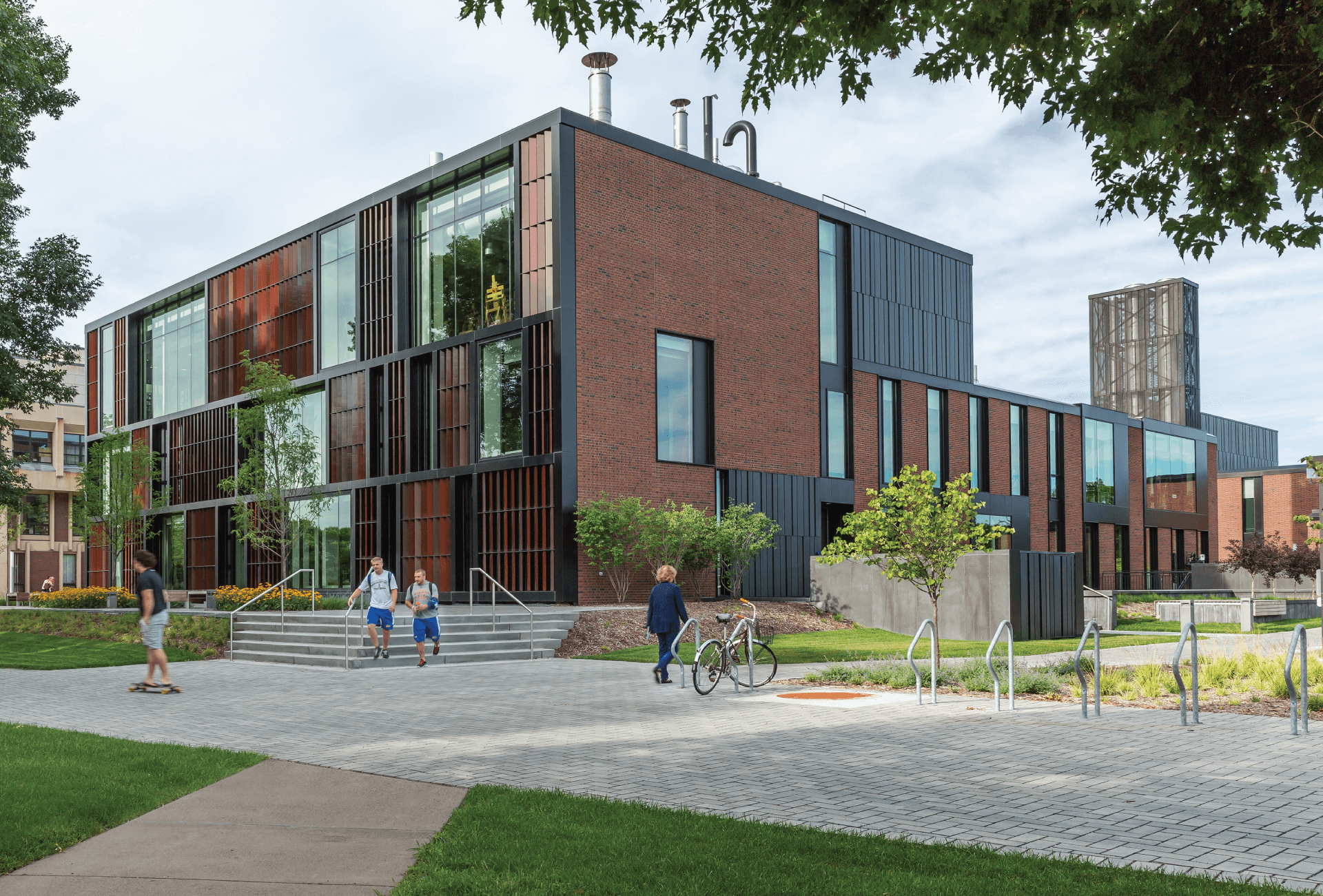

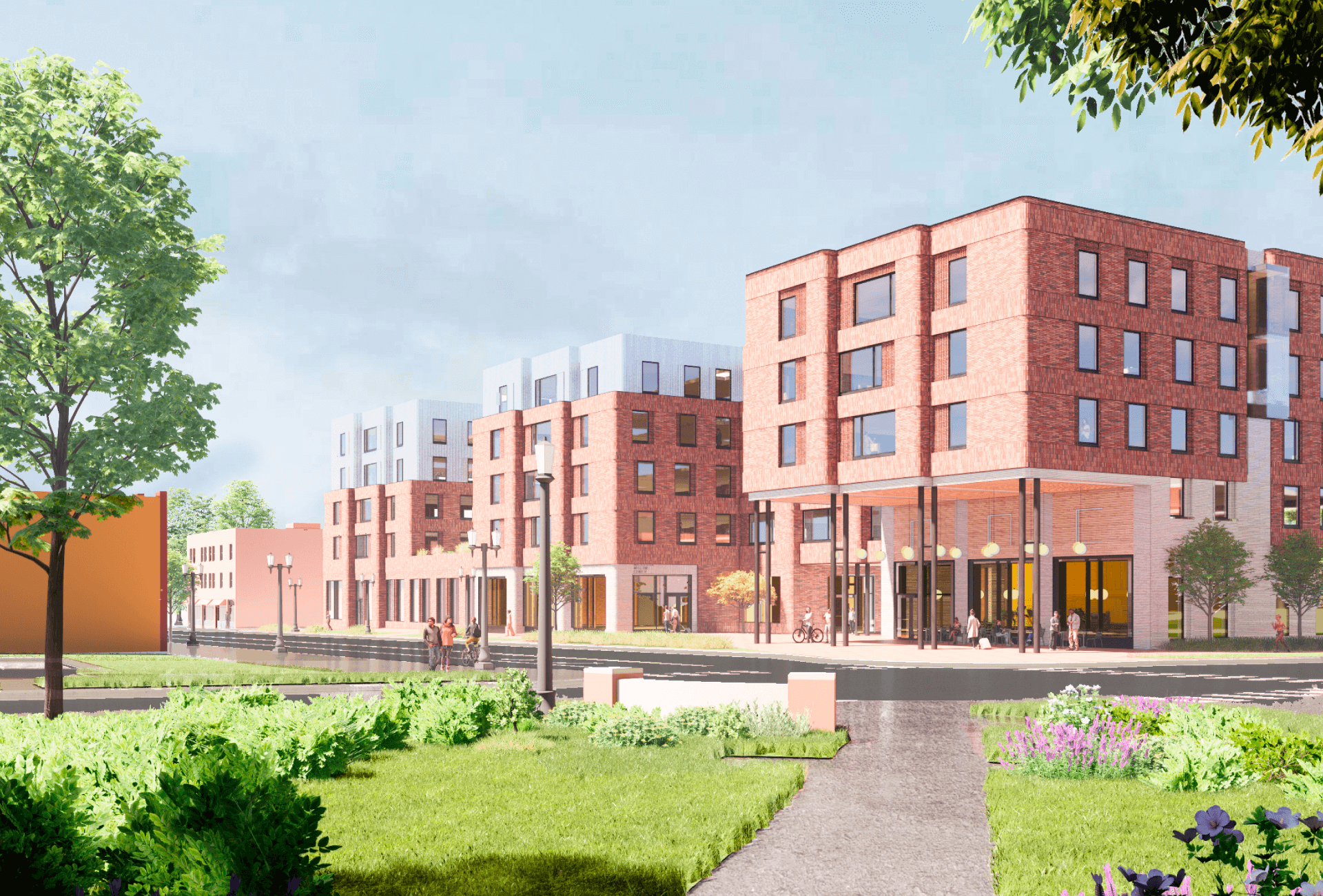
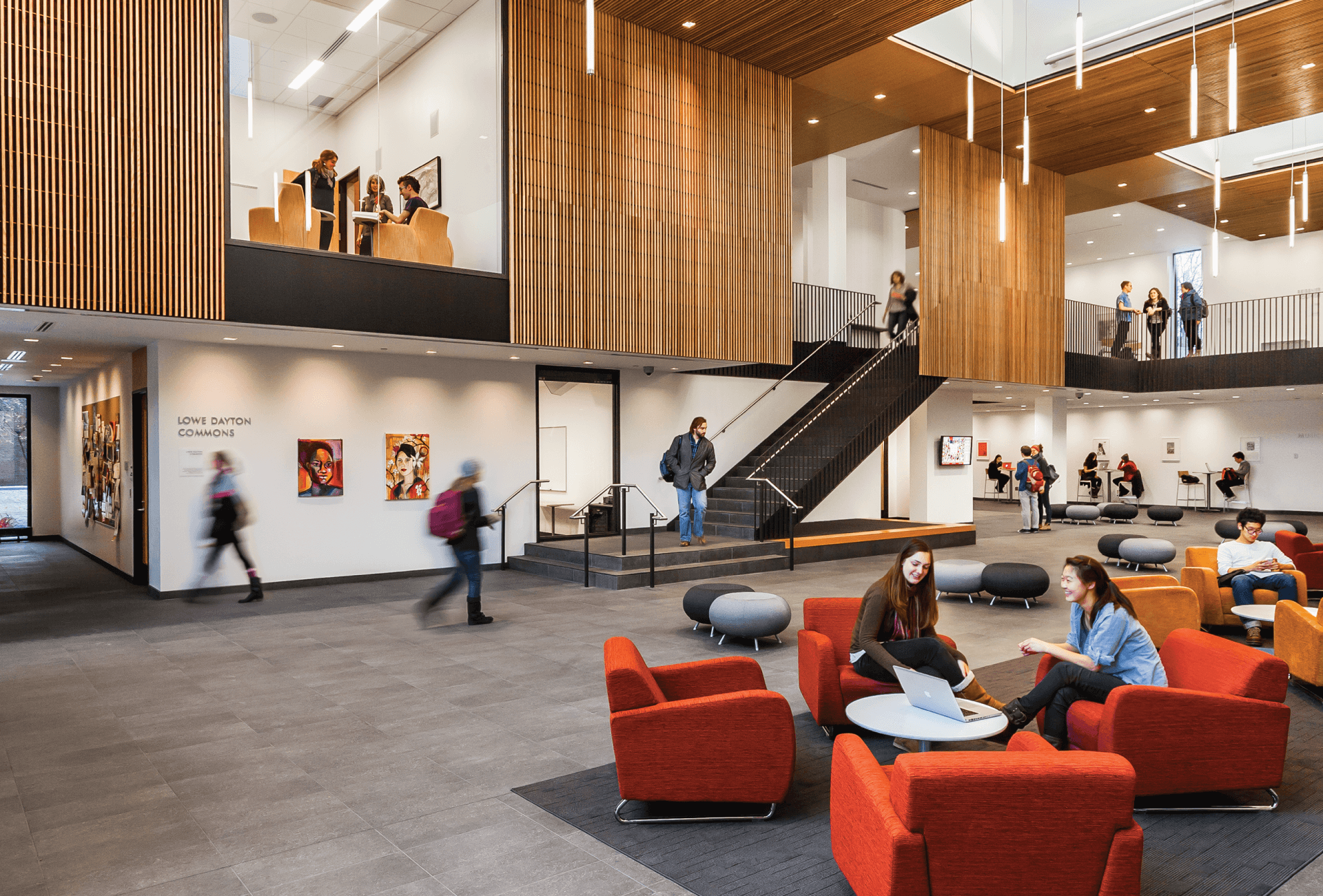

HGA’s work with Macalester College in St. Paul includes the revitalization of the Janet Wallace Fine Arts Center (left and right), completed over three phases. Current work includes a new Residence Hall and Welcome Center, currently under construction (center). It will serve as a new front door to campus as well as expansion of student resident rooms on campus.
What kinds of investments are colleges making to meet evolving student expectations?
Rebecca: Many are investing heavily in state-of-the-art academic spaces and interdisciplinary research facilities, social spaces, and athletic facilities. Colleges are also investing in residential life spaces that emphasize qualities that make a campus special. For example, I am working with Macalester College in St. Paul on a new residence hall and welcome center that highlights the importance of integrating the residential experience on an urban campus. It serves as a new front door for the campus, welcoming the surrounding community. And it reinvents the traditional residence hall through shared amenities like kitchens and community spaces to foster student connections and community—concepts that are important for attracting students.
Amin: I’ll add a quick note to Rebecca’s comment. In addition to the student life investment, we’re also seeing many campuses folding basic needs—such as financial aid, mental health counseling, and campus healthcare services—into a single one-stop hub accessible campuswide. As financial aid pressures grow and student anxiety rises, students need more help navigating these issues.
With funding scarcities and an enrollment cliff, how are colleges repositioning themselves to thrive? Is defining a distinct identity enough?
Amin: It is a sobering backdrop that 16 nonprofit institutions announced closure in 2024 alone. One thing I think colleges can do is pick a lane and own it, as opposed to being everything to everyone. When we clearly define a college’s unique characteristics and specialties, we can then be aggressive about defining opportunities to help them thrive. And this isn’t limited to majors or academic strengths; it also encompasses a school’s identity, brand, messaging, and the character it projects to students and the community.
Rebecca: I agree that colleges should lean into what they are good at. But it is also important to promote the values of a well-rounded, thoughtful, well-spoken student. Liberal arts colleges shine at developing critical thinking and the soft skills necessary to succeed amid the increasing pressure from AI and other technologies impacting the job market. These are places where someone can explore many subjects and use them to their advantage in new fields of study.
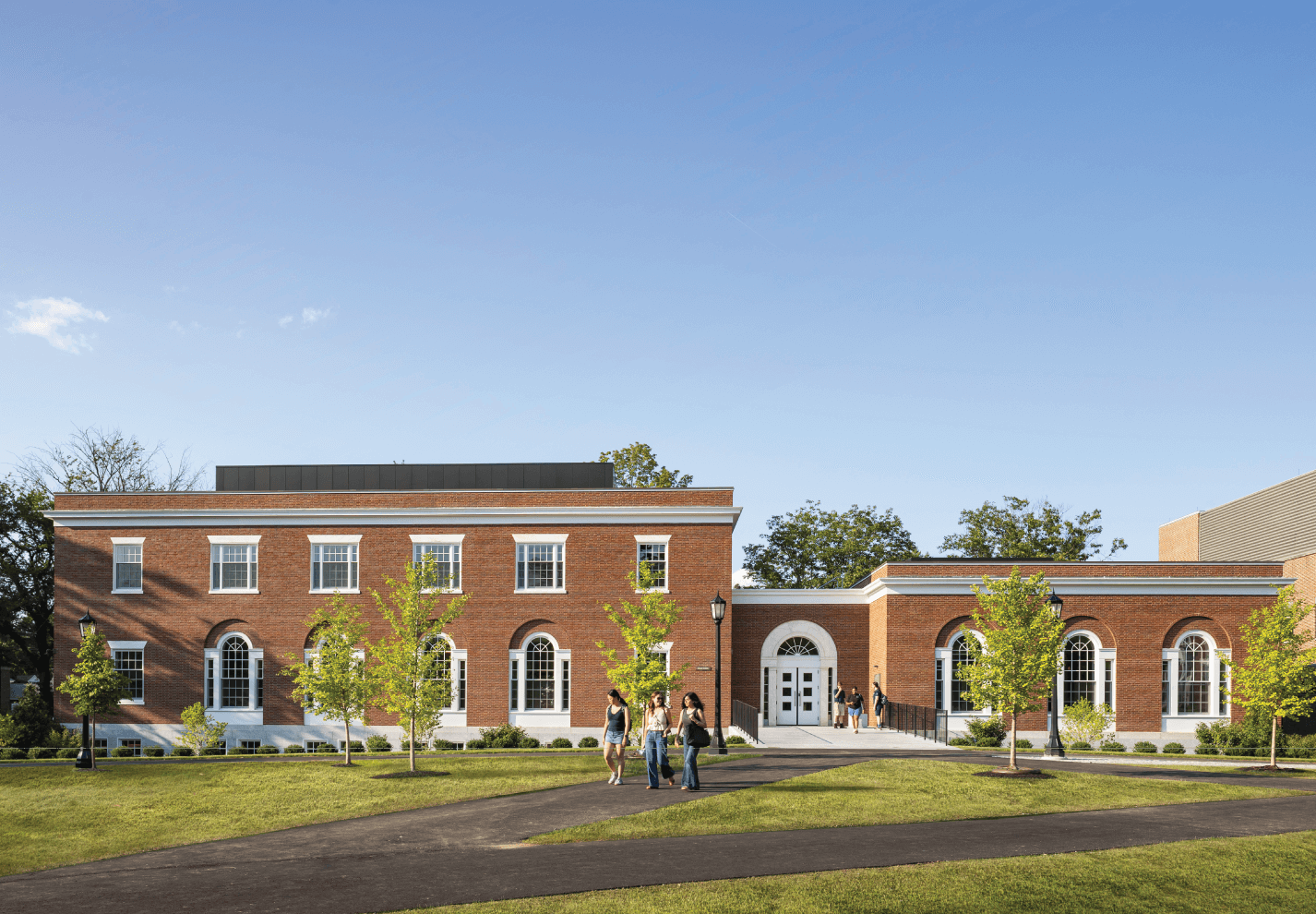
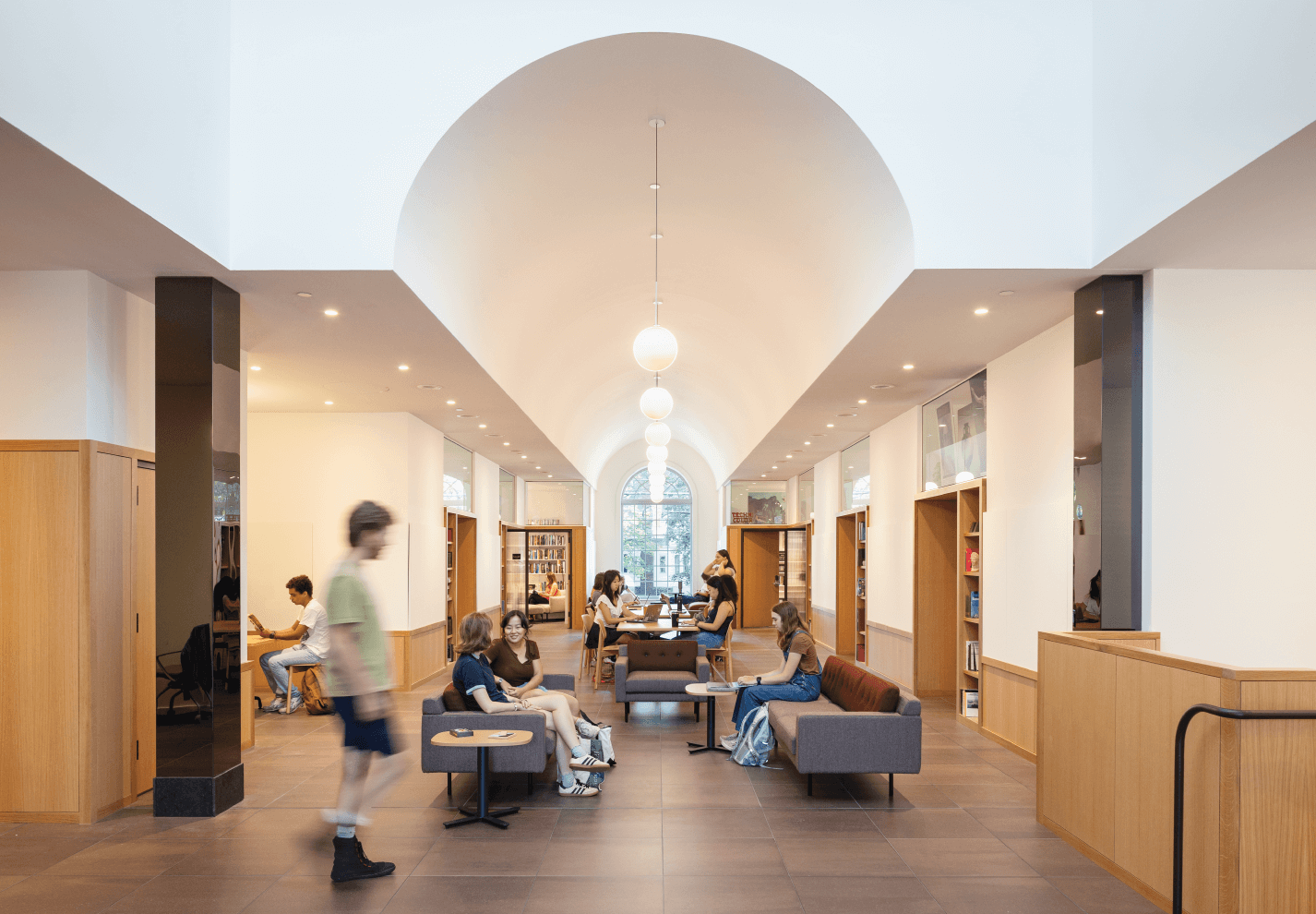
The renovation of Sills Hall at Bowdoin College celebrates the “intellectual gravitas” of the humanities—home to the Romance Languages and Literatures, Russian, German, and Classics departments. The design reflects the historic character of the existing building while reinventing the interior with modern, light-filled features, such as a study lounge adjacent to faculty offices to foster student-faculty conversations.
Diversity and inclusion are often top of mind on campuses. How do you approach creating the sense of belonging you see as essential?
Amin: That sense of belonging is different for each campus and means different things to different groups. When we approach a project, we explore what creates a sense of place through a deep and interactive engagement process that includes workshops, socio-spatial mapping, one-on-one interviews, and ethnographic studies to learn how students use and feel about spaces. Through these more nuanced studies, we often uncover unlikely places that matter deeply to students—spaces not always on leadership’s radar—and we get to co-create new sites of belonging with them.
Rebecca: It is so interesting because when you think about diversity and inclusion, we must define our terms. Of course, there is diversity in ethnic and racial background. But there is also socioeconomic, geographic, political, religious, and even age diversity. I see colleges wrestling with that spectrum every day—and searching for ways to bridge those gaps.
How is HGA helping institutions achieve their strategic vision for long-term growth?
Rebecca: Our approach is about translating a college’s strategic vision into physical space that aligns with their core values. As we approach campus planning or a new building, we ask what their vision means in terms of physical space, interdisciplinary research, sustainability, climate action, student recruitment and retention, and sense of belonging. Our first step is always an immersive deep dive into understanding who they are, what their goals are, and how we can create spaces that help them achieve those goals. And that’s the fun part.
Amin: That is where our team really geeks out and excels. We take an institution’s strategic vision—which is often expressed in aspirational words—and translate it through socio-spatial mapping tools. In practice, this means mapping concepts such as belonging, community, stewardship, and interdisciplinarity onto the actual physical spaces of the campus. We can visually see how the vision is being lived out by students, faculty, and staff, and how it unfolds across places, flows, demographics, and sentiment. This lens helps us identify what’s missing and needs cultivation, as well as what’s thriving and needs a boost. In doing so, we create alignment between a strategic plan that can feel cerebral and the tangible, spatial realities of campus life.
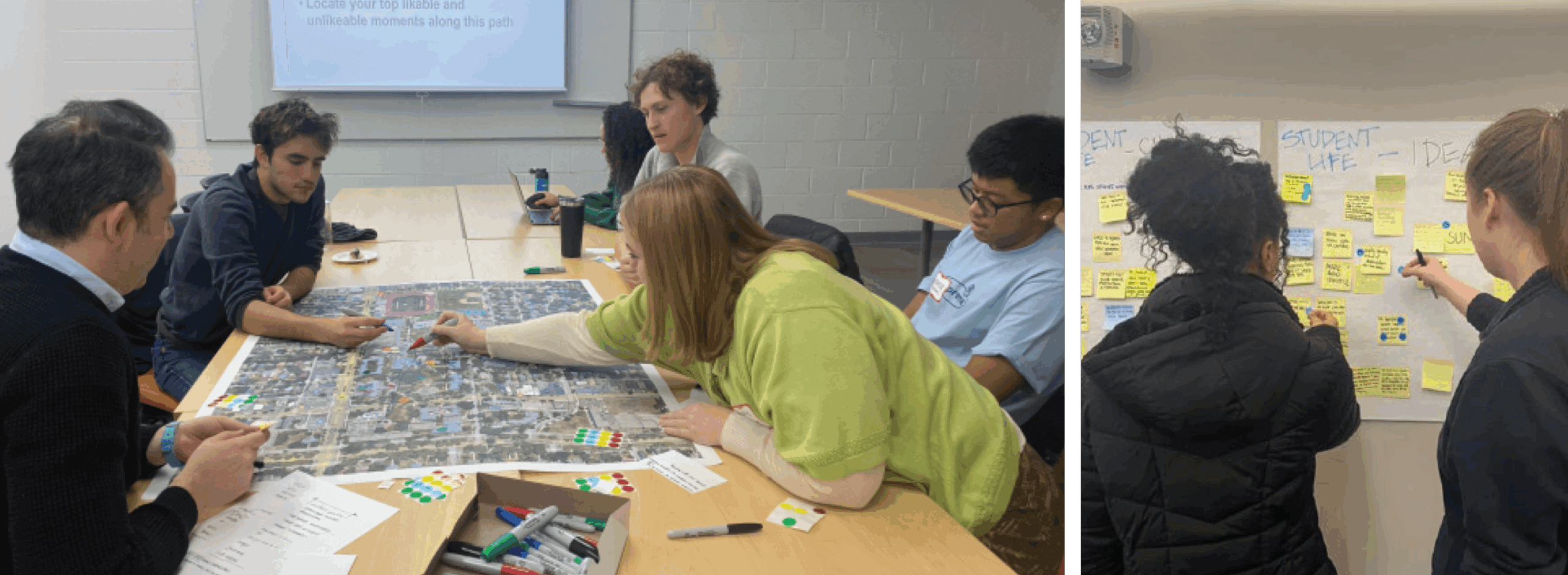
Our campus planning team has collaborated with several colleges on updating their comprehensive facilities plans, engaging students, faculty, staff, community members, and alumni to identify shared priorities across campus. Here, students from Macalester College (left) work with HGA on the development of the Comprehensive Campus Plan, while students at Carleton College (right) share feedback on draft priorities of the Campus Facilities Plan.
One of those aspirational words is sustainability. What innovations are you seeing with colleges?
Rebecca: Sustainability is a baseline that students expect. And colleges are responding. Because of our interdisciplinary team structure, we can facilitate conversations about what climate action planning and resilience mean, and how we can integrate alternative energy sources and new technology into the campus fabric and operations.
Amin: Agreed. Students hold sustainability as a core value. Beyond lowering carbon emissions, it’s also about the broader social dimensions that shape how communities thrive. When campuses build community around sustainability, students feel a strong pull to be part of it. That is one powerful way to create shared values across a diverse student body.
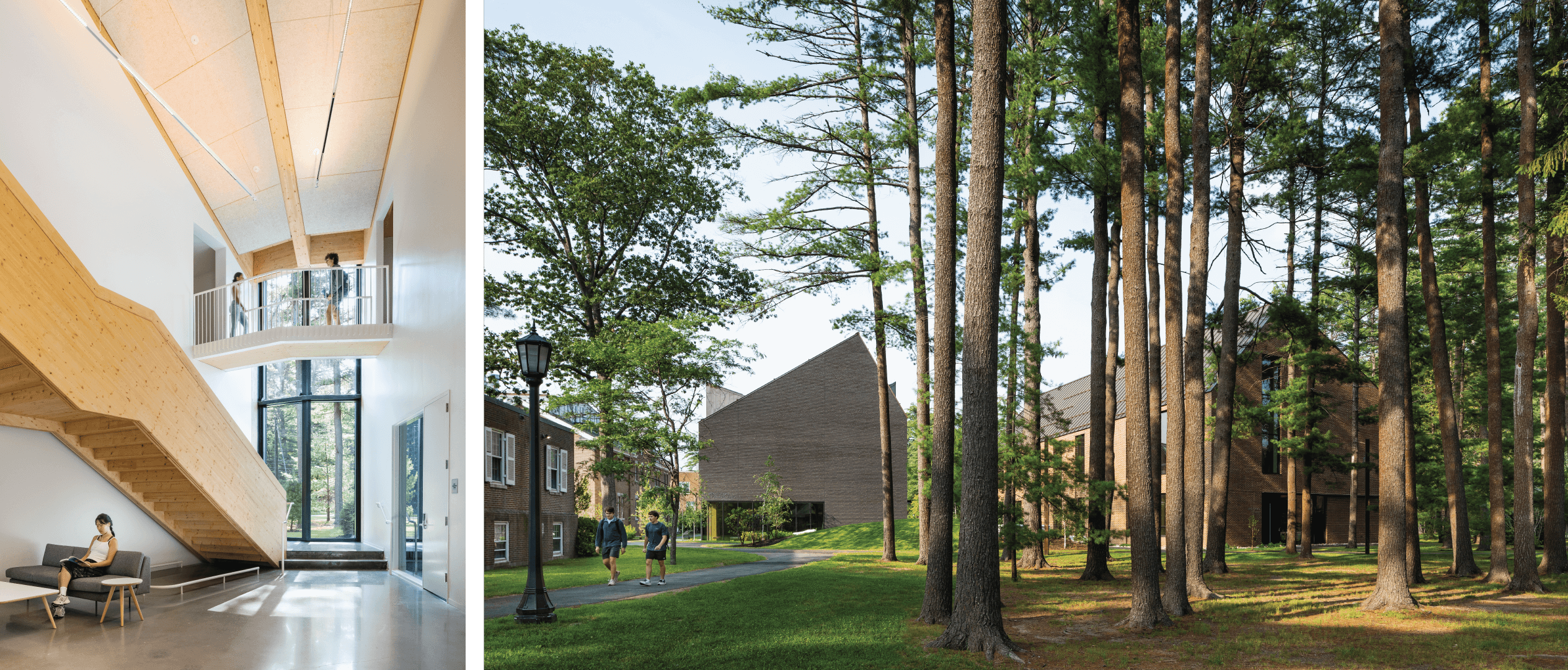
Bowdoin College’s commitment to sustainability comes to life at the new Gibbons Center for Arctic Studies and Mills Hall, the first commercially scaled mass timber project in Maine. Featuring an all-electric building system, the project advances Bowdoin’s goal of becoming a fossil-fuel-free campus by 2042. The pair of buildings is nestled within a grove of mature white pines, which were supplemented with more than 80 regional trees to replace those lost during construction.
Colleges are always about change and discovery. What are you optimistic about?
Amin: As I move further from my college years—first as a student, later as a teacher—I’ve shifted from constant optimism to scanning for sources of hope. What revives my optimism is theirs: an unabashed mix of conviction and excitement that change is possible. In divided times, campuses remain among the strongest engines of hope, where students wrestle with climate, democracy, human rights, technology, and inequality—not because they have the answers, but because they’re brave enough to ask better questions.
Rebecca: Just being willing to ask the big questions is exciting. Colleges continue to be places that value in-person connections, bring people together for meaningful conversations and foster intellectual debate. That gives me optimism about the relevance of a liberal arts education in a changing world. ∎
Learn more about how we are helping higher education institutions redefine their futures.