
As summer finally arrives, we set our sights to the great outdoors. Yet it’s easy to forget that we spend nearly 90 percent of our time in the great indoors—at home, at work, in schools, and during daily activities. This reality, combined with rising rates of chronic health conditions, increases the imperative for designers to create interior spaces that promote occupant wellbeing by reducing—and outright eliminating—materials that pose potential health risks.
Here, we highlight industry tools that enable designers and building owners to navigate materials selection—providing a framework that strikes a balance between environmental health and human health.

Tracking Chemical Composition of Materials
As signatories to the AIA Materials Pledge, HGA is committed to specifying materials that create a healthier and more sustainable built environment. The Pledge asks project teams to holistically assess materials and products, focusing on five categories known as the Common Materials Framework:
- Human Health
- Climate Health
- Ecosystem Health
- Circular Economy
- Social Health
To meet sustainable goals, it is important for designers and clients to understand the chemical makeup of building materials, as well as tools and databases that exist in the market to aid in material selection.
The Six Classes of Chemicals, developed by the Green Science Policy Institute, is a starting point to learn the basics of materials chemistry. Health Product Declarations (HPDs) are typically self-disclosed documents from manufacturers that outline the chemical composition of a specific building product, while an Environmental Product Declaration (EPD) evaluates a product’s life cycle impacts on our planet and its carbon footprint via Global Warming Potential (GWP) data.
Navigating material transparency can be challenging, but a growing number of tools are making the process more accessible. Resources like the Mindful Materials Portal provide a centralized, publicly available database where designers can search for products and manufacturers aligned with the Common Materials Framework—streamlining the selection of healthier, more sustainable materials.
Additional free databases, developed in partnership with designers and manufacturers, include:

The Mindful Materials Portal allows users to easily find building products that meet the Common Materials Framework as outlined in the AIA Materials Pledge.
These databases signal the direction the building industry is headed—but we’re not there yet. There are varying degrees of transparency from manufacturers and third-party verified documentation, all with different methods of data collection. Designers and building owners must continually sharpen their climate literacy as greenwashing—misleading marketing claims—remains prominent.
As a first step to specifying materials that align with the Common Materials Framework, HGA established a Healthier & Sustainable Interior Materials Selection Guide, which features our Baseline of Human Health & Climate Health. Balancing these two different—at times even opposing—aspects can vary from project to project, taking cues from building typology, clients’ values, and contextual factors.
Prioritizing Human Health at St. Paul Academy
This approach was put into practice during the renovation of the St. Paul Academy and Summit School – Lower School in St. Paul, Minnesota. For this K–5 learning environment, human health was prioritized, particularly in high-touch areas. The design team established a goal to use Red List Free materials from the Living Future database in these locations, primarily focusing on flooring —where students spend considerable time seated together. The client was engaged in this goal setting and material vetting process as it reflected the values of both school staff and parents.
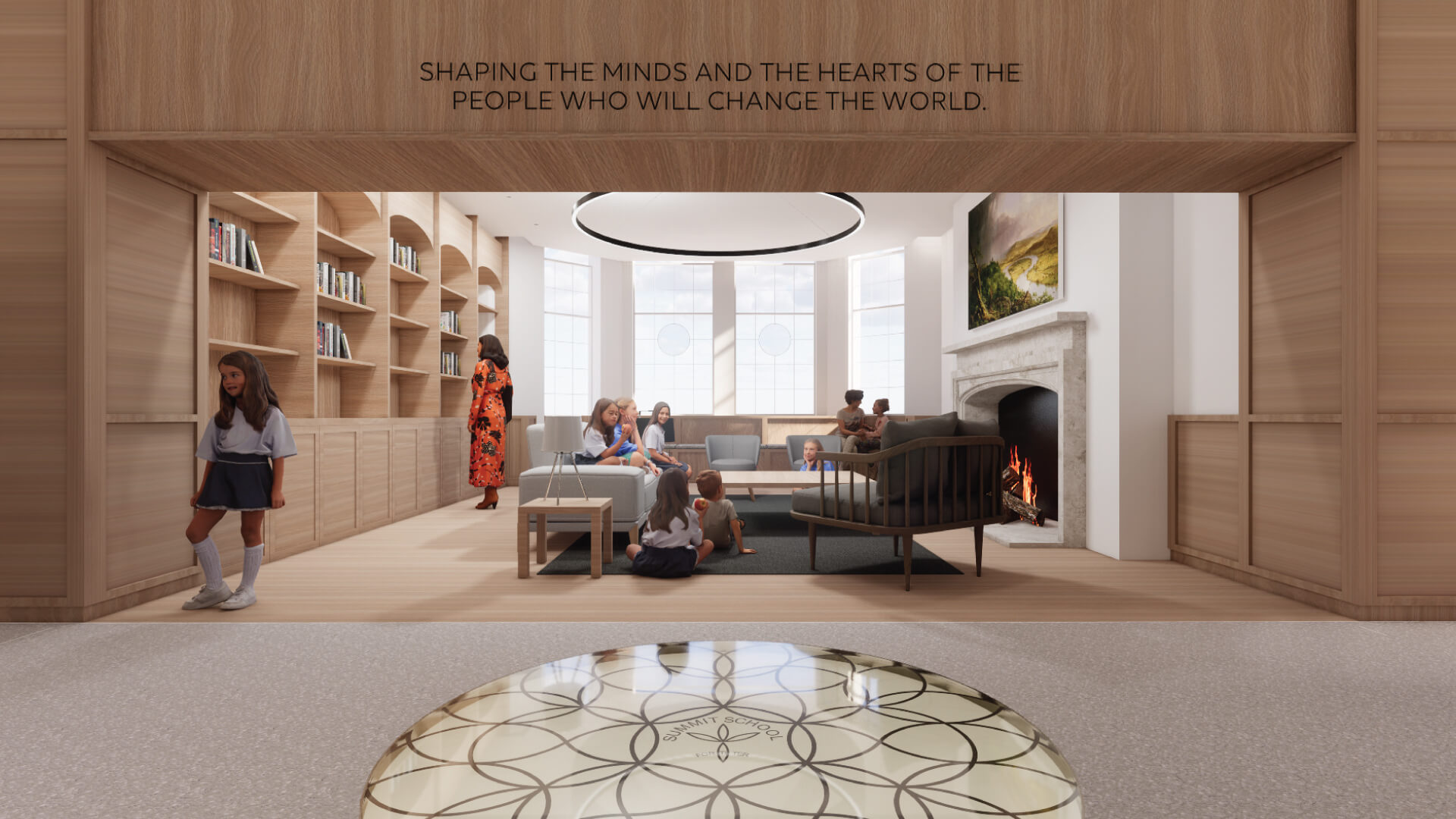

The team selected Forbo linoleum for the majority of classroom flooring, valuing its all-natural material composition and a projected 35-year lifespan that aligned with the project’s durability goals. For classroom entry areas, the team selected nylon-fiber carpet tiles from Bentley Mills. While petroleum-based, the nylon fibers still carry a Red List Free label with highly durable qualities. Bentley Mills also adheres to rigorous state-mandated green manufacturing standards, reinforcing the project’s commitment to healthier material choices.


The selection of both linoleum and carpet tile highlights the complex trade-offs designers often face when evaluating materials. While each product offers strong transparency documentation and is aligned with HGA’s healthy materials goals, both are manufactured far from the project site—Forbo in Europe and Bentley Mills in California—contributing to increased transportation emissions. Despite this tension, the design team’s material selection process remained guided by the project’s North Star: prioritizing human health.
St. Paul Academy is an example of strong stakeholder engagement that leads to lasting impacts—staff are now empowered with material knowledge that can inform future design decisions.
A Long View on Short-Term Tenant Improvements
In contrast to St. Paul Academy, a client planning a Tenant Improvement (TI) may only carry a five- to ten-year lease for their office space (far from the LEED-proposed 60-year minimum lifespan). In this context, designers and clients might focus on climate health initiatives to counteract the high output of upfront carbon associated with interior renovation projects.

Let’s look at carpet tile again—we still want to consider occupant health, but we might start our product search by focusing on low embodied carbon. Using the EC3 tool, a database (listed above) that allows designers to filter and compare material’s embodied carbon, we can specifically search for products with the lowest possible GWP. This could point us toward cutting-edge material technology like Interface’s Embodied Beauty collection, which features carpet tiles with carbon sequestering backing material, resulting in negative GWP.

Carpet Tile
Interface’s Embodied Beauty collection features carbon sequestering carpet tiles with a GWP of -0.37 Kg CO₂/M².

Hardwood
Hardwood and veneer can be specified (over wood-look laminates or vinyl) due to its carbon sequestering properties.

Cork Panel
Dimensional cork wall panels double as graphic interest and acoustic treatment; Spinneybeck’s Porto collection is comprised of 93% recycled cork, utilizing material that would otherwise be waste stream from wine cork manufacturing (cutting methane emissions).
A review of the manufacturer’s data for one of these carbon-sequestering carpet tiles reveals that, while it lacks a full Declare Red List Free label or Cradle to Cradle regenerative design certification, it does comply with VOC emissions limits, meeting the human health criteria of our baseline. Most importantly, it is free from polyvinyl chloride (PVC), added formaldehyde, and flame retardants that carry harmful polyfluoroalkyl substances.
Toward a Healthier Design Industry
HGA’s sustainability baseline (human health + climate health) is a critical first step for designers navigating the complex landscape of material documentation and product composition. The ideal future state will consistently encompass all five categories of the Common Materials Framework, with carbon reduction as a foundational aspect of that work. As designers working closely with our clients across markets, we are advocating for our extended network of partners to move toward a more sustainable and resilient building industry—for improved human health and climate health. ∎
More in the series . . .
“Balancing Material Goals: Human Health and Climate Health” is the third installment of a multi-part series addressing strategies to reduce the carbon impact of interior materials. For more information, read our first two articles:
About the Authors

Natalie Pullen
Natalie Pullen, NCIDQ, focuses on a client-centered process that tells each client’s unique story. From space planning to material selection, Natalie promotes human health and wellbeing by working from a foundation of empathetic and sustainable design practices.

Sophie Kjeldgaard
Sophie Kjeldgaard, CID, WELL AP, LEED Green Associate, has worked across market sectors, including healthcare, corporate and cultural with tasks ranging from design, product and finish research, construction documents, interior detailing and construction administration.

Lindsay Homer
Lindsay Homer, CID, LEED AP, is an Interior Designer who brings a thoughtful, inquisitive approach to creating impactful, sustainable environments that reflect client vision while advancing well-being and environmental stewardship.