
In 2024, HGA embarked on a research and engagement initiative to explore the residence hall of the future. In conversations with housing administrators and other higher-ed experts, we have delved deeply into some of the challenges and opportunities our clients are facing. Additional findings from our research can be found in the previous Insights post, Designing the Residence Hall of the Future.
Today’s residence halls are evolving. Once seen primarily as functional spaces with minimal amenities, such as study rooms, lounges, and the occasional computer lab, these buildings were often designed for flexibility above all, with many of these spaces doubling as overflow housing when needed.
But as colleges and universities place greater emphasis on the student experience, amenities are being reimagined. They’re no longer just utilitarian. They’re strategic tools for fostering connection, supporting well-being, and building a stronger sense of community.
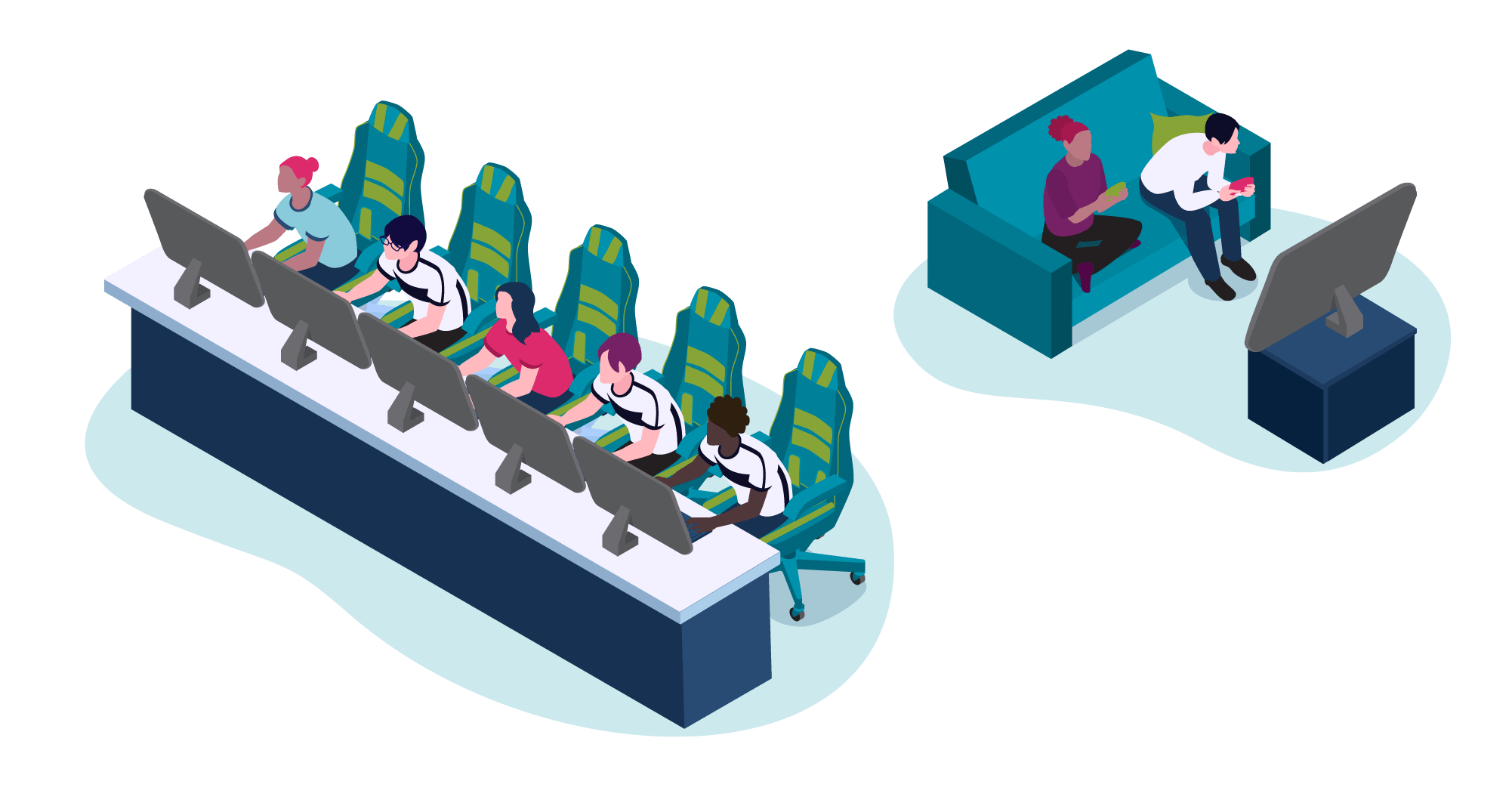
Enter the esports lounge. Far from a passing trend, this type of shared gaming space is a flexible, high-impact amenity that checks multiple boxes for student well-being, building performance, and operational efficiency.
Whether included in new construction or as part of a renovation, integrating esports into a residence hall can be an innovative way to solve common facility challenges.
Here’s what HGA’s ongoing research on the topic has shown:
 Community and Connection Improves
Video games are a common touchpoint for today’s students. According to Pew Research, 85% of U.S. teens play video games, and 41% say they play daily. These numbers continue into college, where games help students form connections across cultural and socioeconomic lines.
When designed as shared spaces—with desks, lounge furniture, gaming chairs, and screen setups— gaming lounges encourage interaction. Esports lounges provide students with a reason to come together, encouraging connections among individuals who might otherwise remain isolated. These spaces lower social barriers and support interaction. This sense of connection is directly linked to improved retention and engagement.
 Mental Health and Wellness Get a Boost
College life can be overwhelming, and stress management is a growing concern on campuses nationwide. For many students, gaming serves as a welcome distraction from stress and unregulated emotions. Esports lounges offer a space for students to unwind and recharge, helping them decompress after classes and improve their overall well-being.
 Energy Efficiency Increases
Gaming computers and consoles are powerful and power-hungry. A mid-sized gaming PC uses up to 500 watts per hour, much of which is released as heat. This can significantly impact the overall cooling load of a building and throw off the temperature balance from room to room.
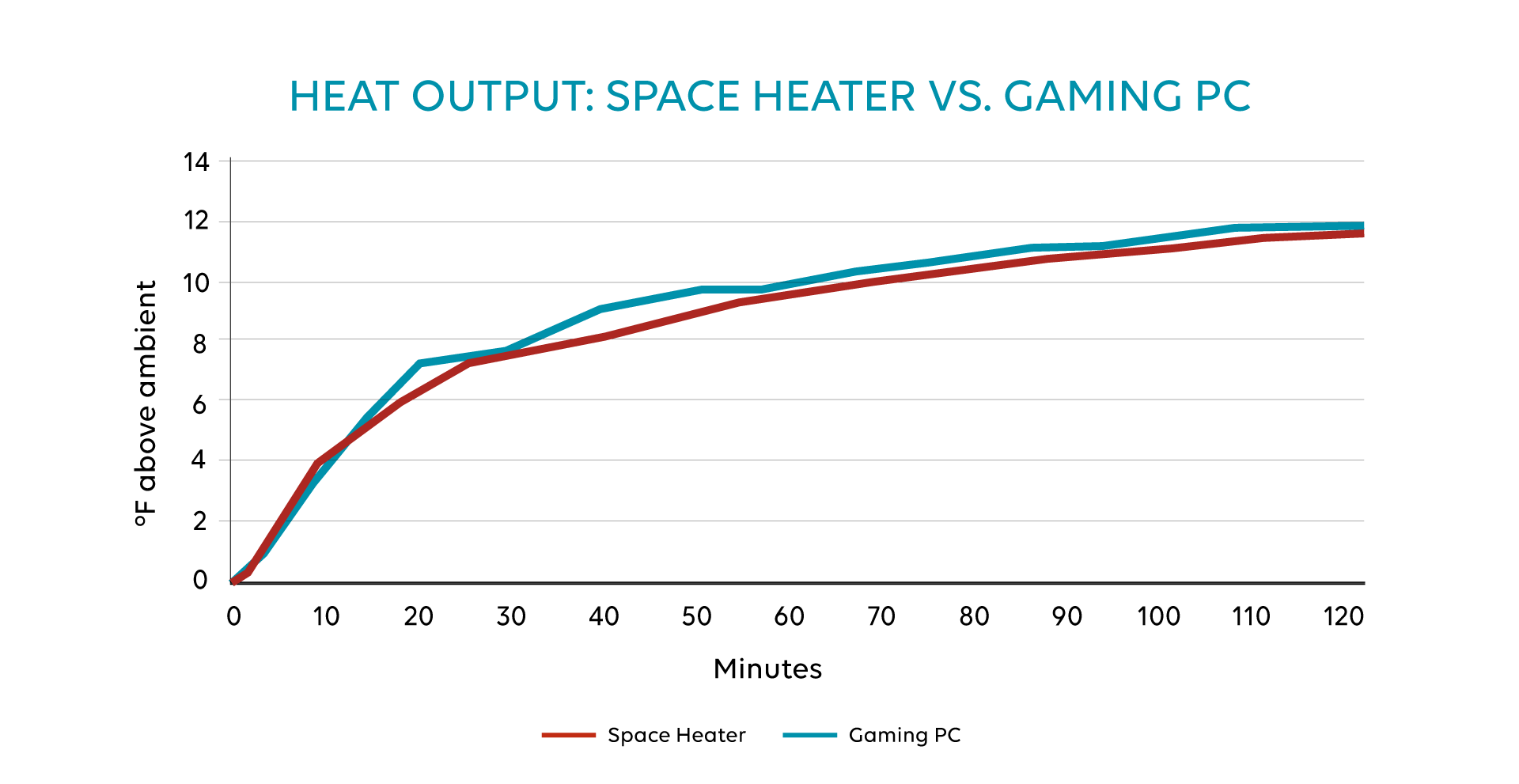


Source: Bach, M. (n.d.). Gaming PC vs. Space Heater Efficiency. Retrieved from Puget Systems
Centralizing gaming into an esports lounge allows facilities teams to manage thermal output more efficiently. Purpose-built spaces can incorporate better ventilation, zoned climate control, and energy-efficient systems. Instead of fighting to cool every individual room with a console or gaming rig, administrators can target one location, ultimately reducing strain on HVAC systems and lowering utility costs.
 Roommate Conflicts Drop
In our conversations with housing administrators, HGA has heard repeatedly that late-night gaming can be a source of tension among roommates. Noise, lighting, and prolonged gaming sessions can disrupt sleep and study schedules, leading to complaints and roommate reassignments.
Creating a designated gaming area enables students to engage in high-energy activities in spaces specifically designed for such purposes. Removing loud, heat-generating gaming equipment from sleeping quarters helps preserve and promote healthier roommate dynamics.

 Design Options Broaden
Esports lounges don’t require natural light, making them ideal for interior spaces that might otherwise be underutilized. Spaces like repurposed TV lounges, laundry rooms, or lower floors can be reimagined into vibrant gaming hubs. Adjustable lighting, university branding, and themed interiors can help turn these lounges into popular hangout spaces.
More than a Game Room
Esports lounges aren’t a trend. They’re a smart, strategic response to real challenges in residence life. From easing roommate conflicts to supporting mental health and reducing operational costs, they offer meaningful value to students and campuses alike.
The right amenities—rooted in research, backed by data, and driven by design—can power something much bigger than gameplay: a stronger, more connected campus community. ∎
Learn more about how we are creating inclusive and vibrant student life environments.

Corey Andrus
Corey is an architect and designer who brings a thoughtful blend of research, planning, and strategy to each project. He believes centering equity in design is a powerful way to create a sense of belonging. Empathy is the cornerstone of his design process, and he works closely with clients to bring their vision to life.

Kevin Allebach
Kevin is a Principal and Practice Group Leader for the Arts, Community, and Education Group in the HGA Milwaukee office. His expertise lies in elevating the experience of those who live, work, learn, and play in the spaces HGA designs.

Kim Workman
As a Project Architect, Kim’s passion for design is elevated by her technical acumen. She believes both beauty and functionality are necessary components in design that solves client problems and improves the human experience. Through close coordination with the client, Kim seeks to find out what’s most important to the success of the project.
Gaming, lotus, energy saving, trust, and friendship animated icons created by Freepik – Flaticon.