
Ten years ago, the Ordway Center for the Performing Arts in St. Paul embarked on construction of a project that would reshape Minnesota’s arts scene.
The Ordway’s leadership, in consultation with its three arts partners—the Minnesota Opera, the Schubert Club, and the Saint Paul Chamber Orchestra—had decided to shutter the 300-seat McKnight Theatre. Originally intended as an intimate complement to the venue’s larger 1,900-seat Music Theater, the McKnight was underutilized. It often remained dark while the arts partners jockeyed for space on the main-stage schedule.

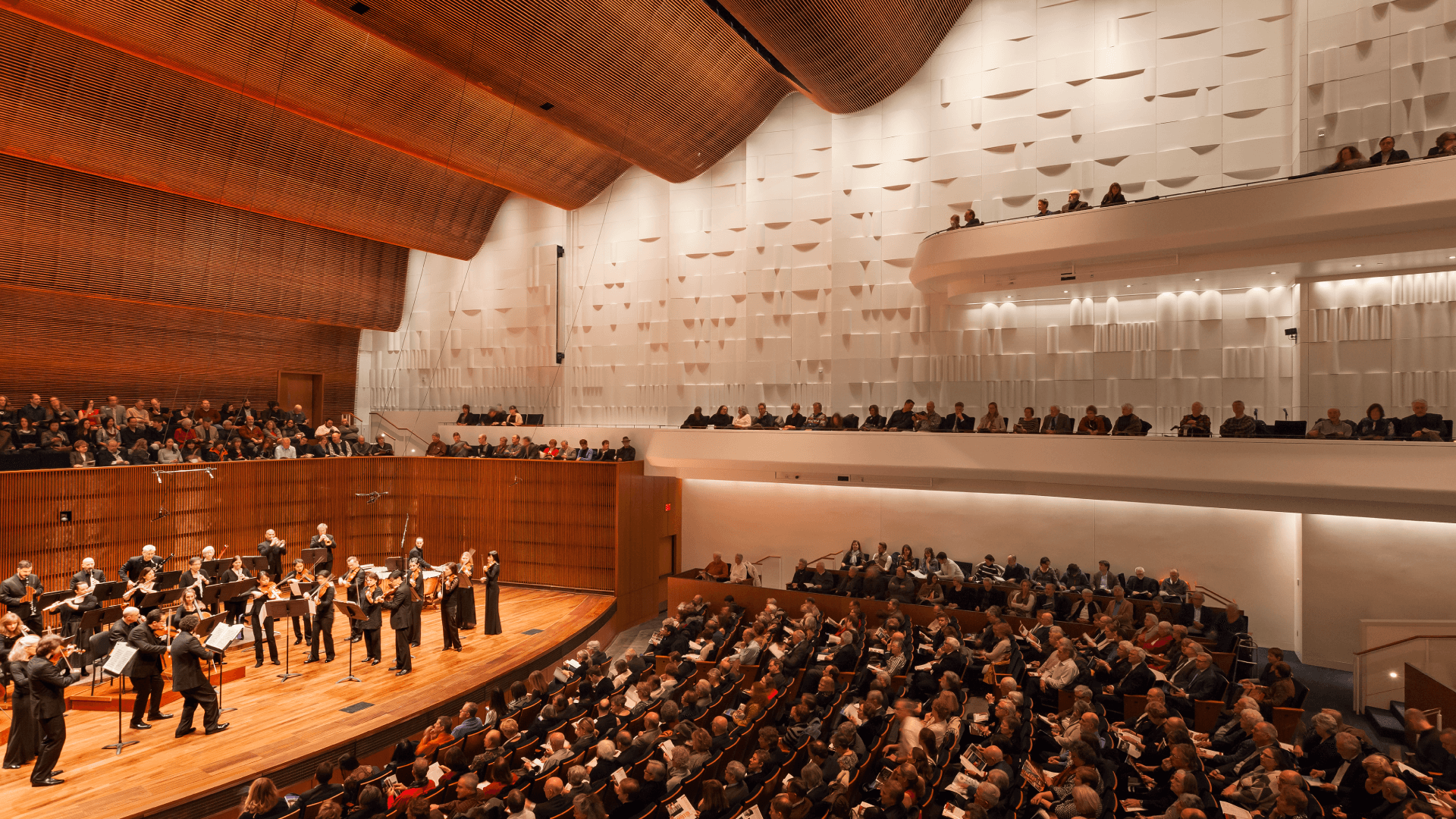
“It was a fragile, complicated ecosystem,” SPCO president Jon Limbacher says of the old space sharing agreements.
Adds Schubert Club president Barry Kempton: “The challenge was, there just wasn’t enough time in the calendar for the Music Theater. There were only 52 Friday nights and 52 Saturday nights a year—and that wasn’t enough to satisfy everyone.”
HGA was retained to help solve the problem, and in close collaboration with four arts partners, we arrived at something surprising: Why not build a concert hall addition on the very spot where the McKnight was located?
What then seemed like a radical idea now seems like a near-perfect solution. The hall’s opening in 2015 had almost immediate benefits for the organizations that share the facility. It pleased the ear, the eye, and the box office—and positioned the four arts partners for continued growth in the Ordway facility. Here’s what worked:
Engaging Performers, Patrons, and Others
HGA’s engagement process brought the arts partners together in unimagined ways. The four groups that were vying for performance dates were now working together to imagine a collective way forward. Deep, ongoing conversations with various stakeholders yielded several common priorities:
- Impressive acoustics
- Good sightlines
- Improved flow
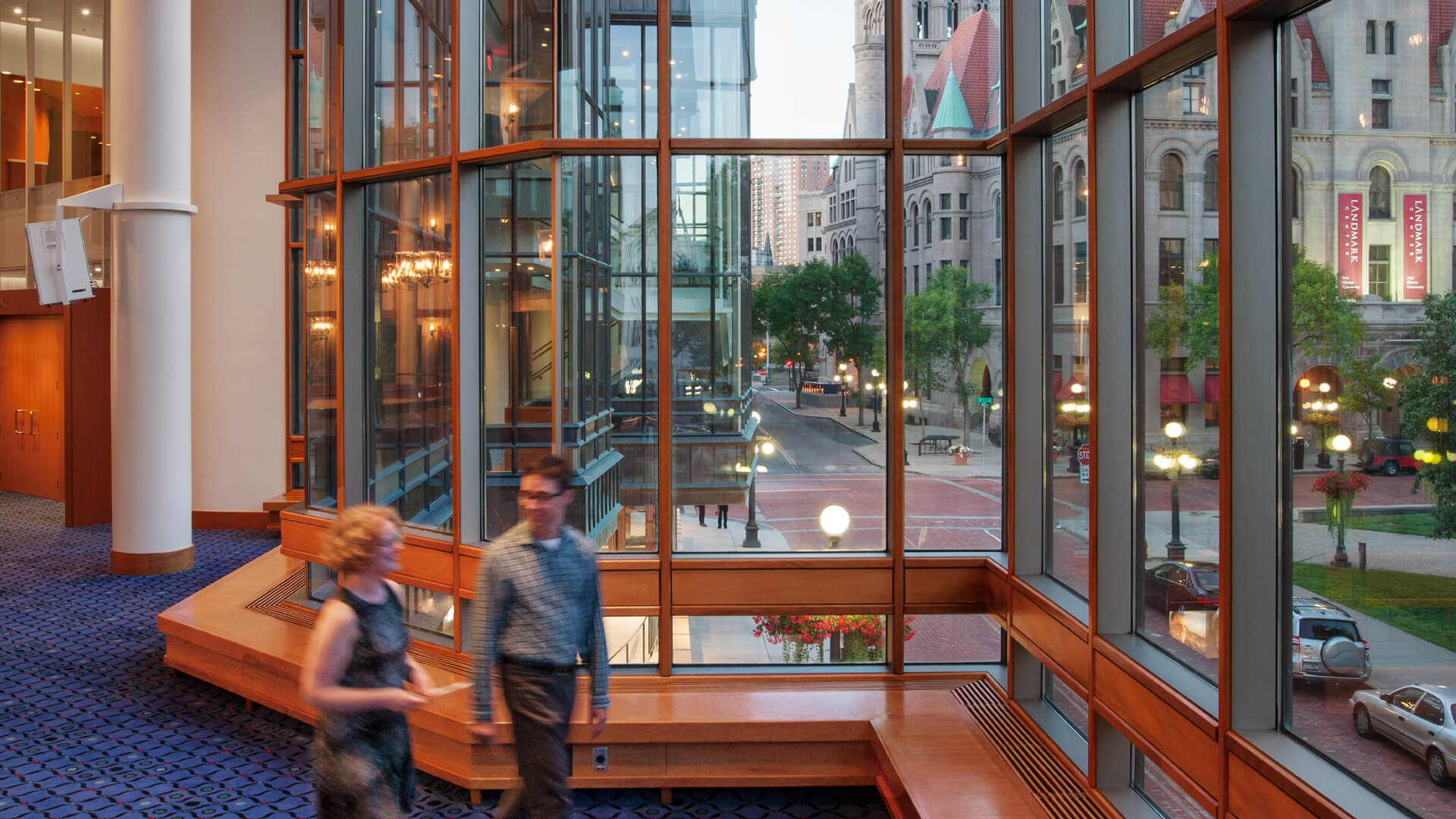
- Solid visual connections with Rice Park and downtown St. Paul
Right-Sizing for Box Office Success
One driving force behind the construction of the new concert hall was financial viability. The McKnight Theatre, while valuable, was not financially sustainable due to limited seating capacity. The new hall, with 1,100 seats, strikes the perfect balance. It’s large enough to generate sufficient ticket revenue while maintaining the intimate experience crucial for live music performances. Key to the success of the project was situating the right volume on the existing McKnight footprint. Design priorities included:
- The right roof height to accommodate sightlines and acoustics.
- Extending the original footprint to accommodate stage size and back of house.
- Expanding the existing lobby space to support the new concert hall.
Designing for Aesthetics and Acoustics
A key priority in the concert hall’s design was achieving superior acoustics. To meet this goal, the project enlisted the expertise of acoustician Paul Scarbrough of Akustiks, known for his work on other renowned concert halls. The result is a venue with exceptional sound clarity, warmth, and depth. Acoustic enhancements include:
- Sound reflectors concealed behind an undulating wood ceiling designed for sound to move through.
- Sculpted wall panels that fine-tune sound reflection and distribution.
- Adjustable banner curtains to modify acoustics for different types of performances.
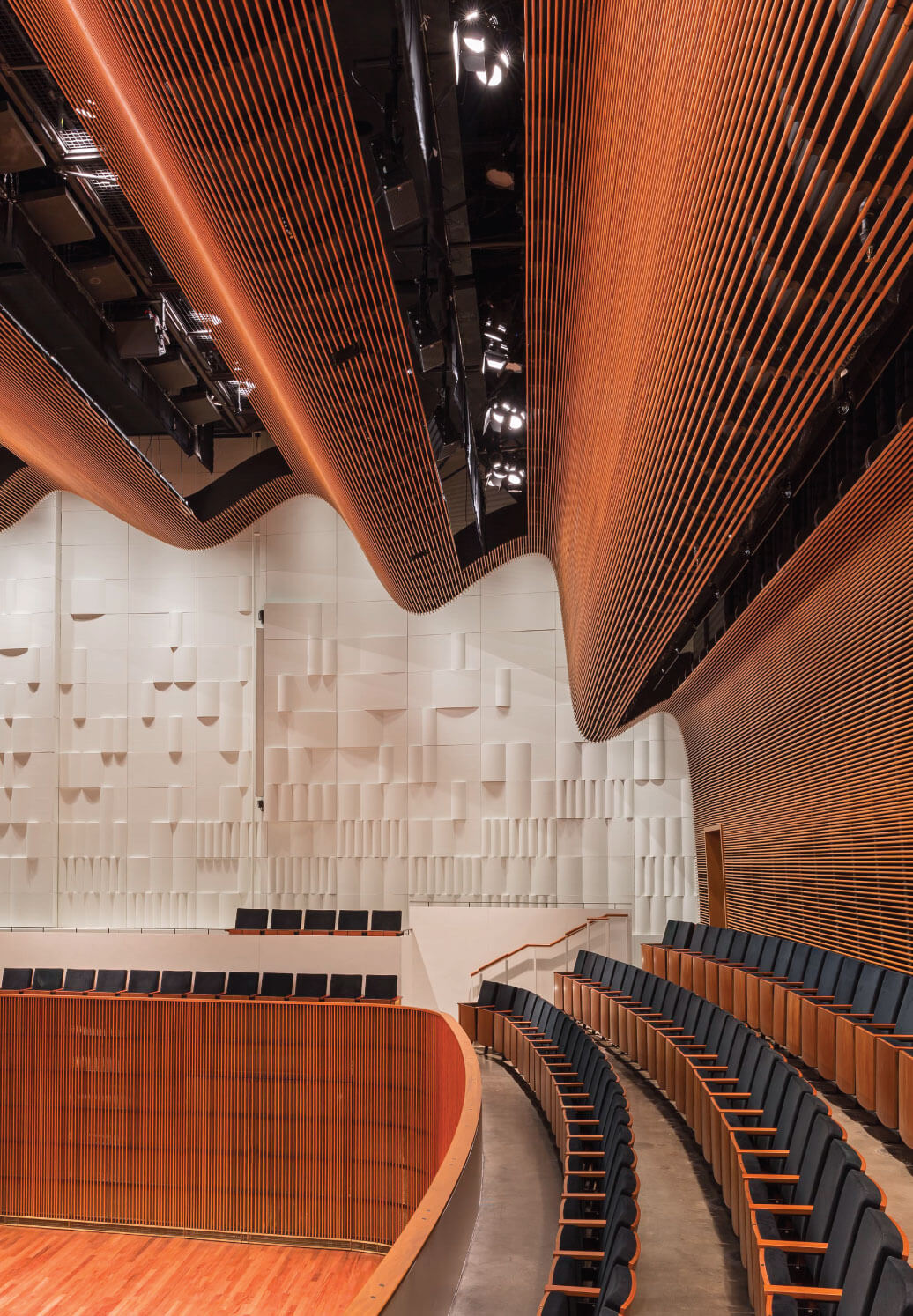
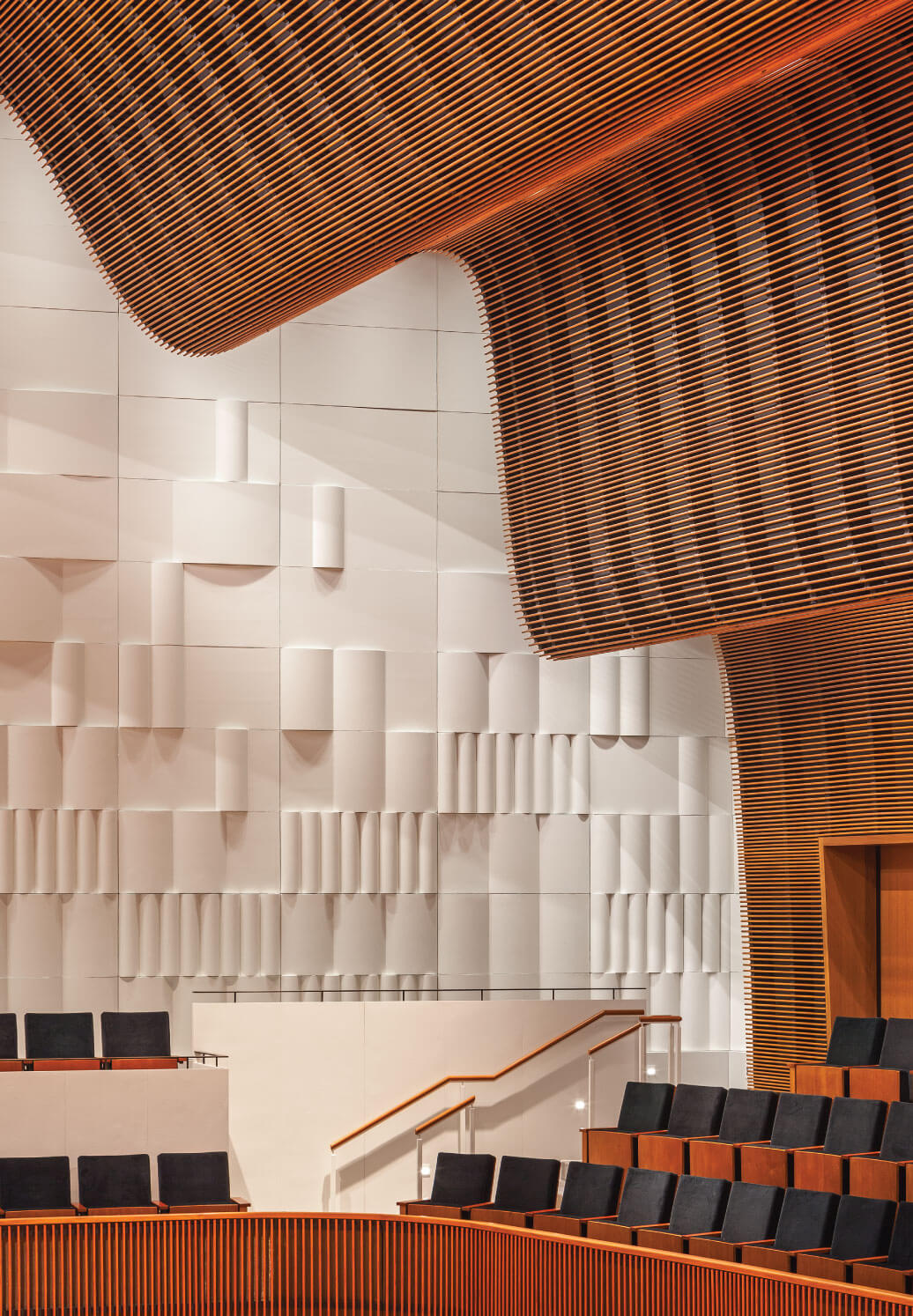
Countless musicians have praised the hall’s extraordinary ability to convey even the most subtle musical details. For audiences, it’s an ideal space for hearing both intimate chamber music and larger orchestral performances.
Architectural Grandeur and Aesthetic Harmony
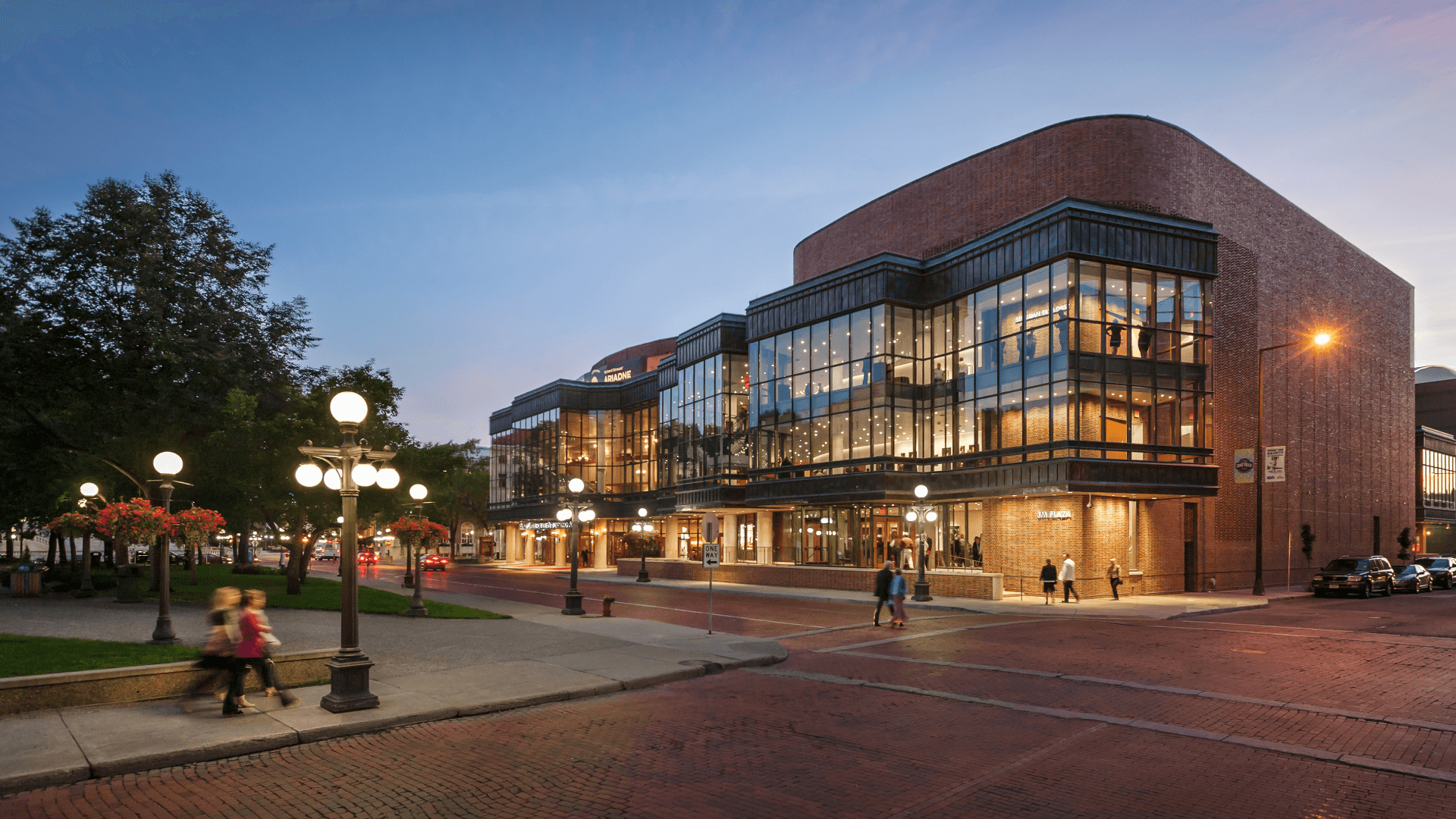
While the new concert hall employs contemporary design elements, it also seamlessly integrates with the existing architecture. The exterior of the hall, featuring a stunning glass-and-copper facade, mirrors the elegance of the original Ordway. Key features include:
- A three-story lobby shaped by both a warm mahogany entrance to the hall and views of Rice Park.
- An extension the beauty of the original lobby design by the architect Benjamin Thompson.
- A tiered-seating layout, including seating behind the stage.

Seamless Integration
Beyond acoustics and aesthetics, functionality played a crucial role in the design of the new concert hall. Rather than constructing a stand-alone venue, the architects strategically integrated the space within the existing Ordway infrastructure. This approach enabled the new concert hall to leverage existing amenities, including:
- The box office, lobby, and bathrooms.
- Backstage facilities and dressing rooms.
- Guest services, like ticket windows and bars.
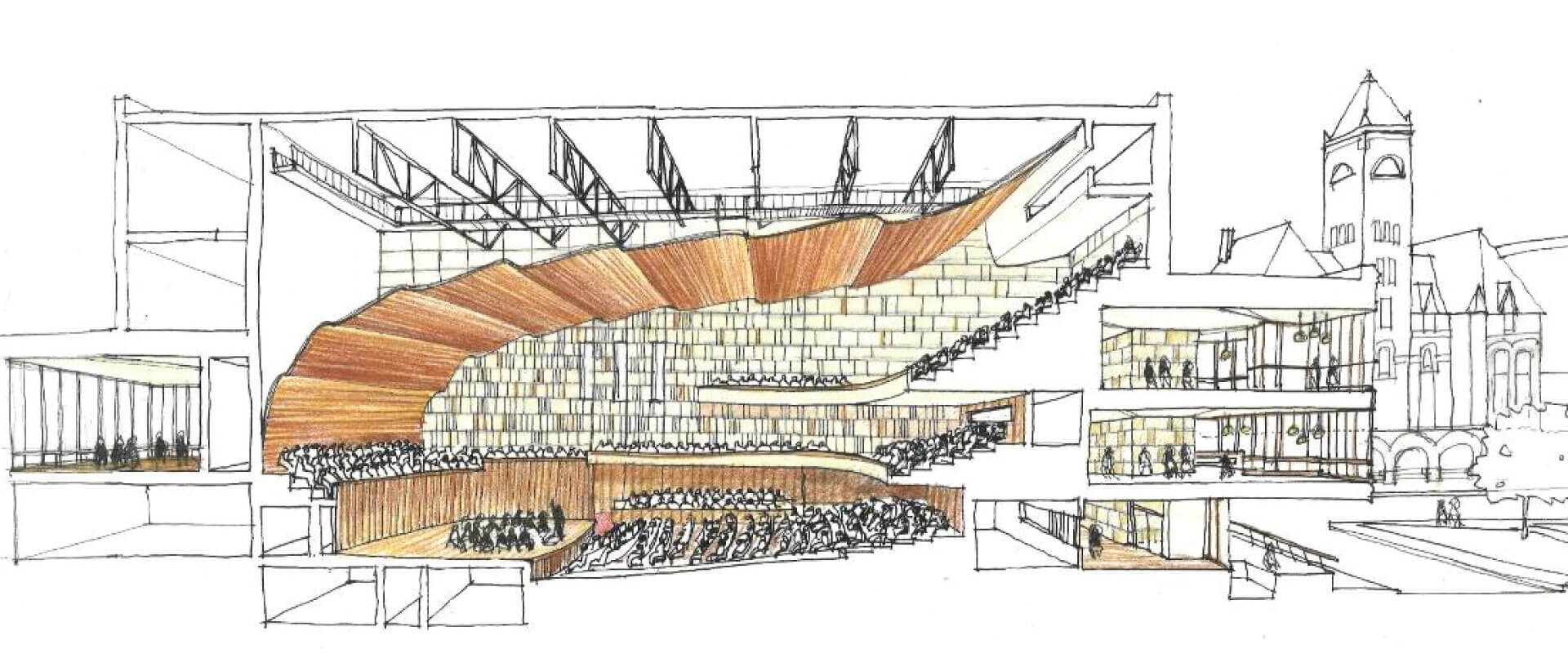

The design for the new concert hall had to fit into a tight site on the Ordway’s St. Paul campus.
Such shared resources streamline operations for Ordway staff moving back-of-house and enhance the audience experience throughout the complex.
A Game-Changer for the Arts Community
The new concert hall at the Ordway was more than just a physical expansion; it set in motion changes that immeasurably benefited musicians, audiences, and the broader arts community.
The Music Theater stage can accommodate more traveling shows and Minnesota Opera performances. The SPCO doesn’t have to put up a shell when it performs. The Schubert Club, according to Barry Kempton, has begun adding programs featuring harp, guitar, and mandolin—which would’ve been nearly impossible to program in the larger Music Theater.
But at the end of the day, it’s aesthetics and acoustics that make the concert hall a world class space to hear—and play—music, Kempton observes: “Musicians walk off the stage and say, ‘Wow, that’s a beautiful room to play in.’” ∎
For another look at how architectural renewal can transform a legacy venue, check out The ‘New’ Northrop Turns 10.
About the Authors

Tim Carl
Since joining HGA in 1998, Tim has built a reputation for authentic, award-winning architecture. Tim’s holistic approach to architecture artfully connects ideas about program, technology and environmental impact with a deep understanding of place. The strength of the relationships he builds fosters creative, transformative solutions that revitalize organizations and enrich communities.

Rebecca Krull Kraling
Rebecca Krull Kraling leverages her breadth of knowledge and 25 years of experience focused on projects for the visual and performing arts to help resolve design challenges thoughtfully and efficiently. She is adept at integrating the unique planning and technical criteria of arts spaces with the overall design to create functional and inspiring spaces.