
Brutalism, once a divisive architectural style in the 1980s, is making a strong comeback in popular culture. A quick scroll through architectural TikTok reveals explainers on iconic brutalist landmarks like the Geisel Library, tours of eco-brutalist celebrity homes, and breakdowns of The Brutalist — the sweeping architectural epic that recently took home three Oscars.
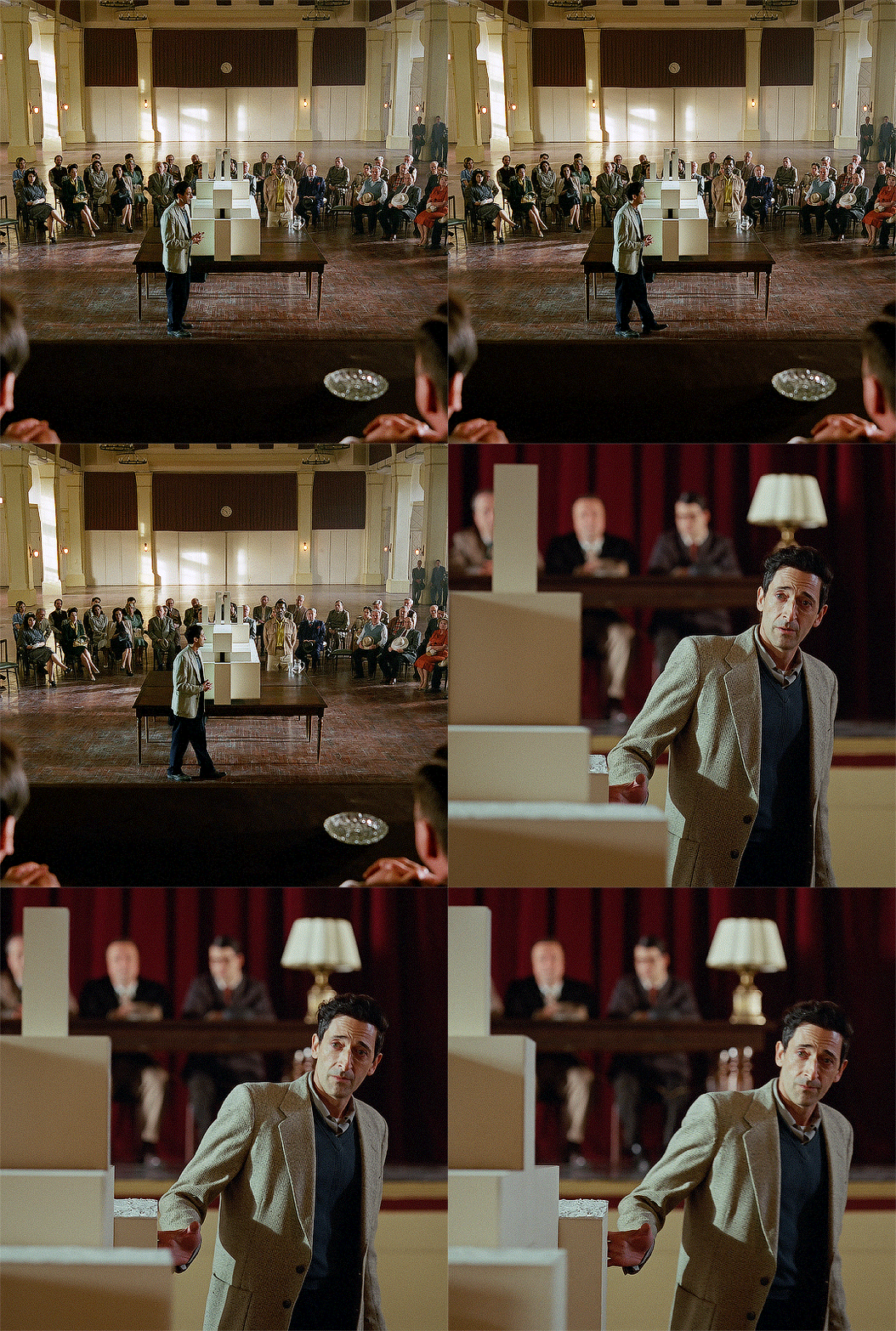

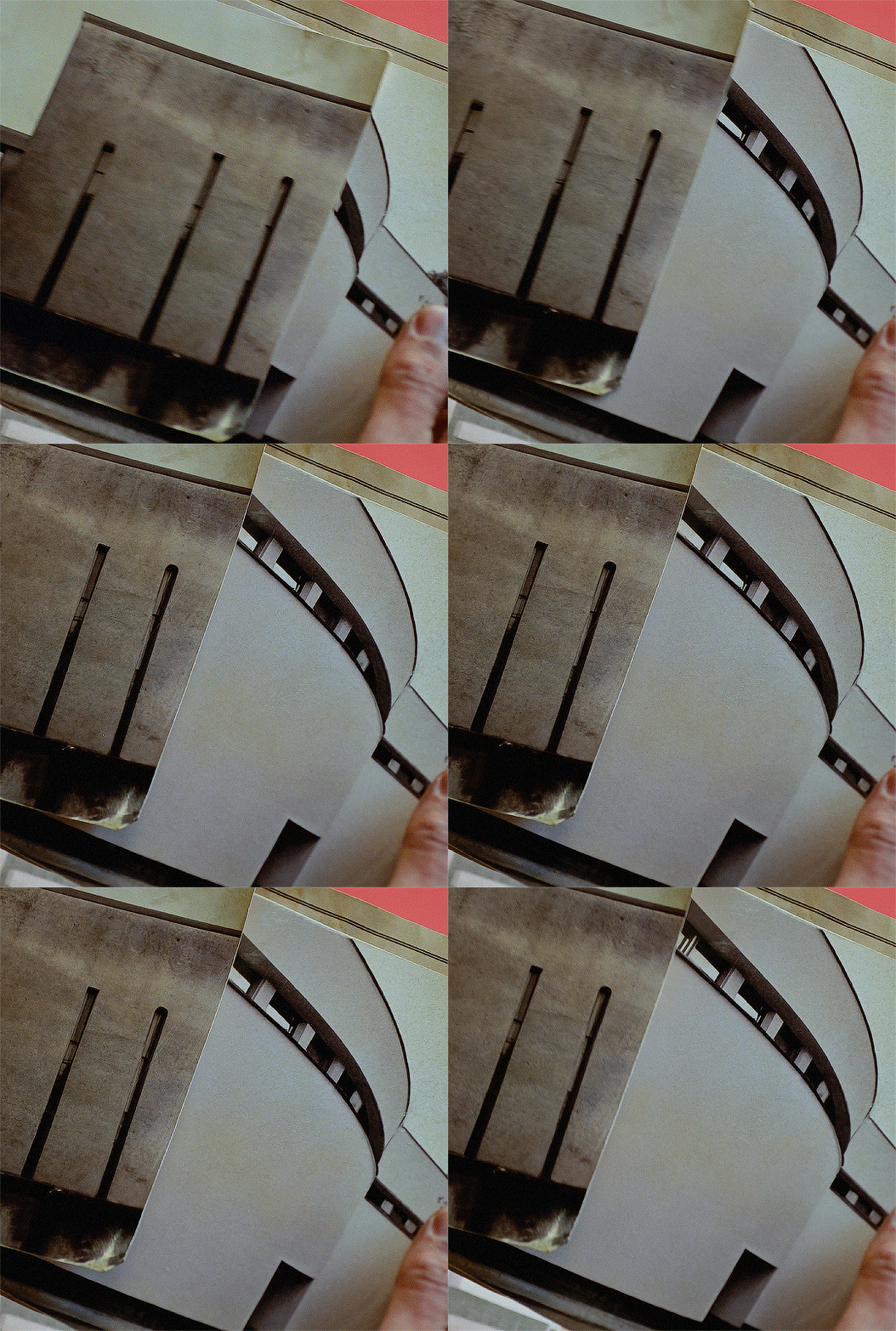
The Brutalist stars Adrien Brody as László Tóth, a Hungarian modernist architect who immigrates to the United States after surviving a Nazi concentration camp. Tóth’s designs in the film reference well-known brutalist works—but the real story of brutalism’s rise in the United States lies with pioneering firms like HGA. Founded by Richard Hammel, Bruce Abrahamson, and Curt Green in the 1950s, HGA embraced the stark, functional aesthetic of brutalism, creating some of the Midwest’s most iconic structures.
The Birth of HGA and Brutalism’s Influence
After World War II, a new generation of architects sought to break away from the nostalgic styles of the 1940s, embracing brutalism’s raw materials, exposed concrete, and utilitarian forms. Among these forward-thinking architects were Hammel, Abrahamson, and Green — three young visionaries who would go on to form HGA.
Hammel and Abrahamson studied under Walter Gropius1 at the Harvard Graduate School of Design, where Gropius had relocated after the Nazis condemned the Bauhaus as “degenerate art.” Meanwhile, Green studied at MIT under Finnish modernist Alvar Aalto2, whose sculptural approach to brutalism left a lasting impression. These early influences positioned HGA at the forefront of modernist design.
Abrahamson, Hammel, and Green
Founding principals Richard Hammel, Curt Green, and Bruce Abrahamson were committed to superb modern design and a collaborative, interdisciplinary approach. From their first office in Curt Green’s basement in 1953 to a national presence today, the firm has helped shape culture, business, and society by consistently creating forward-thinking design solutions.

Just one year after founding the firm, HGA had already developed a reputation as skilled modernists. Their early projects for the state of Minnesota and the University of Minnesota reflect a distinct brutalist style, decades ahead of its time in the conservative Midwest.
Defining Projects and a Brutalist Legacy
In 1958 — the same year Marcel Breuer3 began construction of the Saint John’s Abbey Church in Collegeville, Minnesota — HGA received their first major arts commission: the Benedicta Fine Arts Center at the College of St. Benedict. Located just six miles from Breuer’s church, the Benedicta Fine Arts Center echoed this brutalist sensibility. Its bold concrete forms and striking geometric lines earned national attention, landing HGA the cover story of Architectural Record and cementing their reputation as a leader in modernist design.
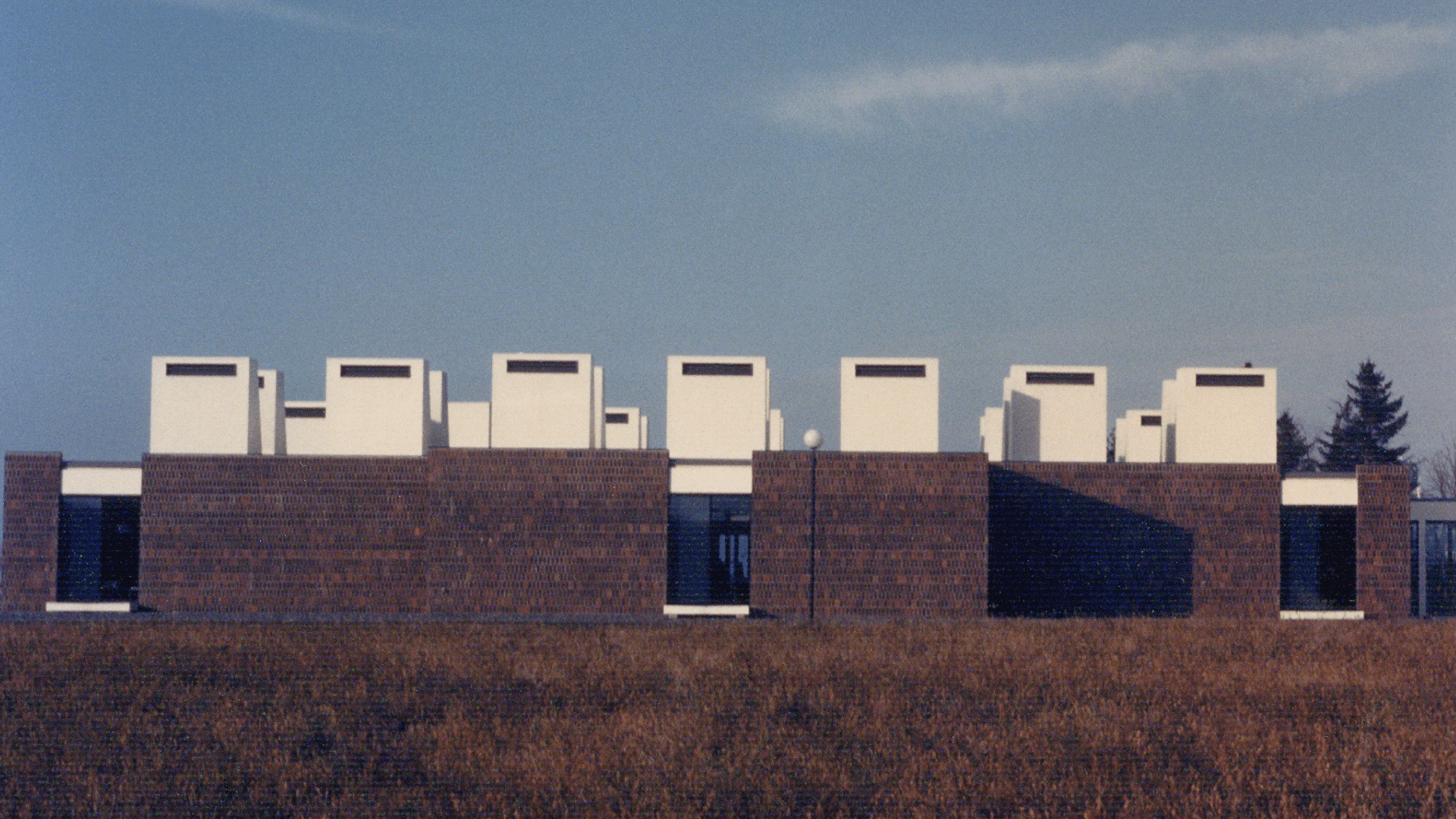
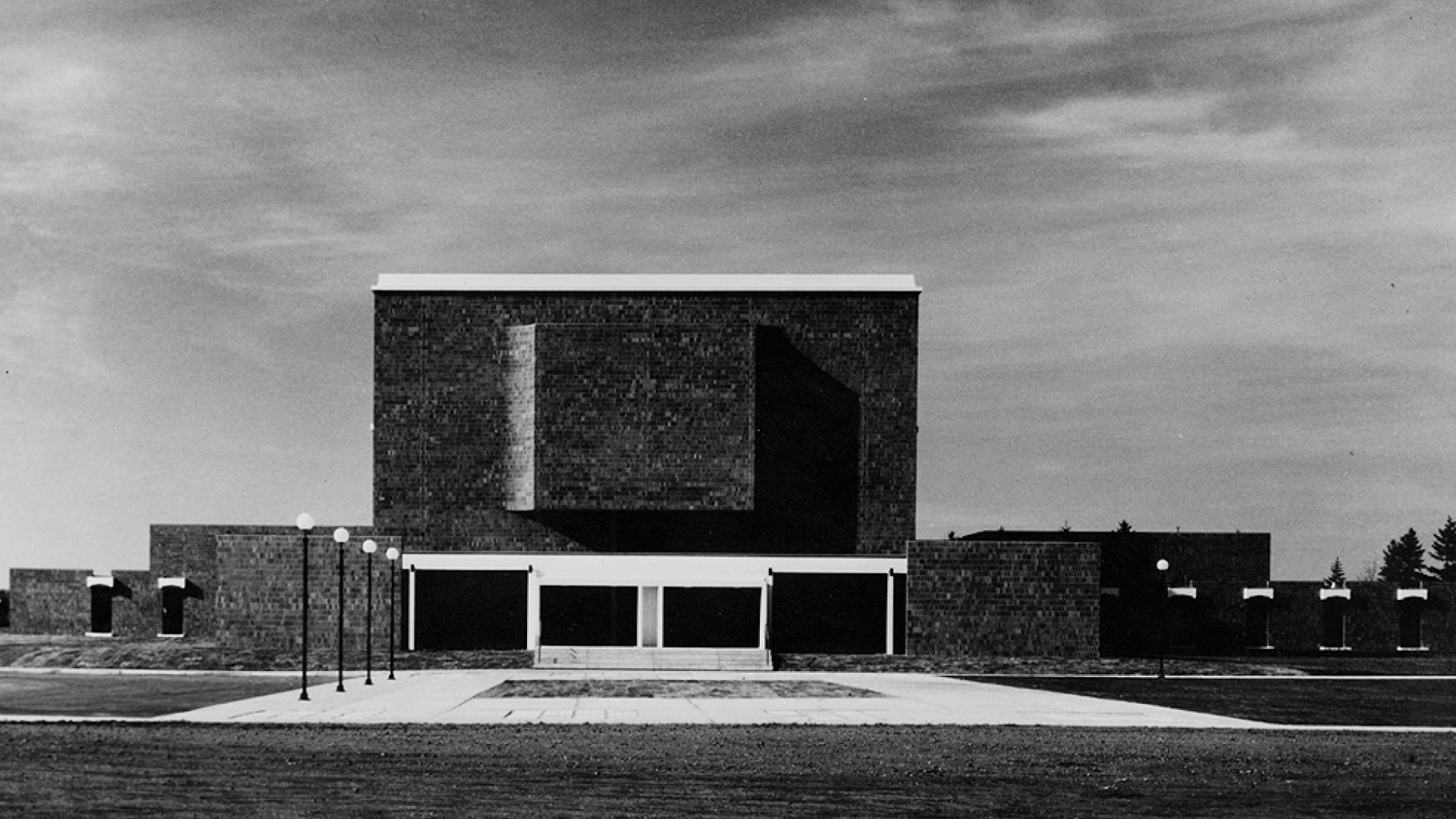
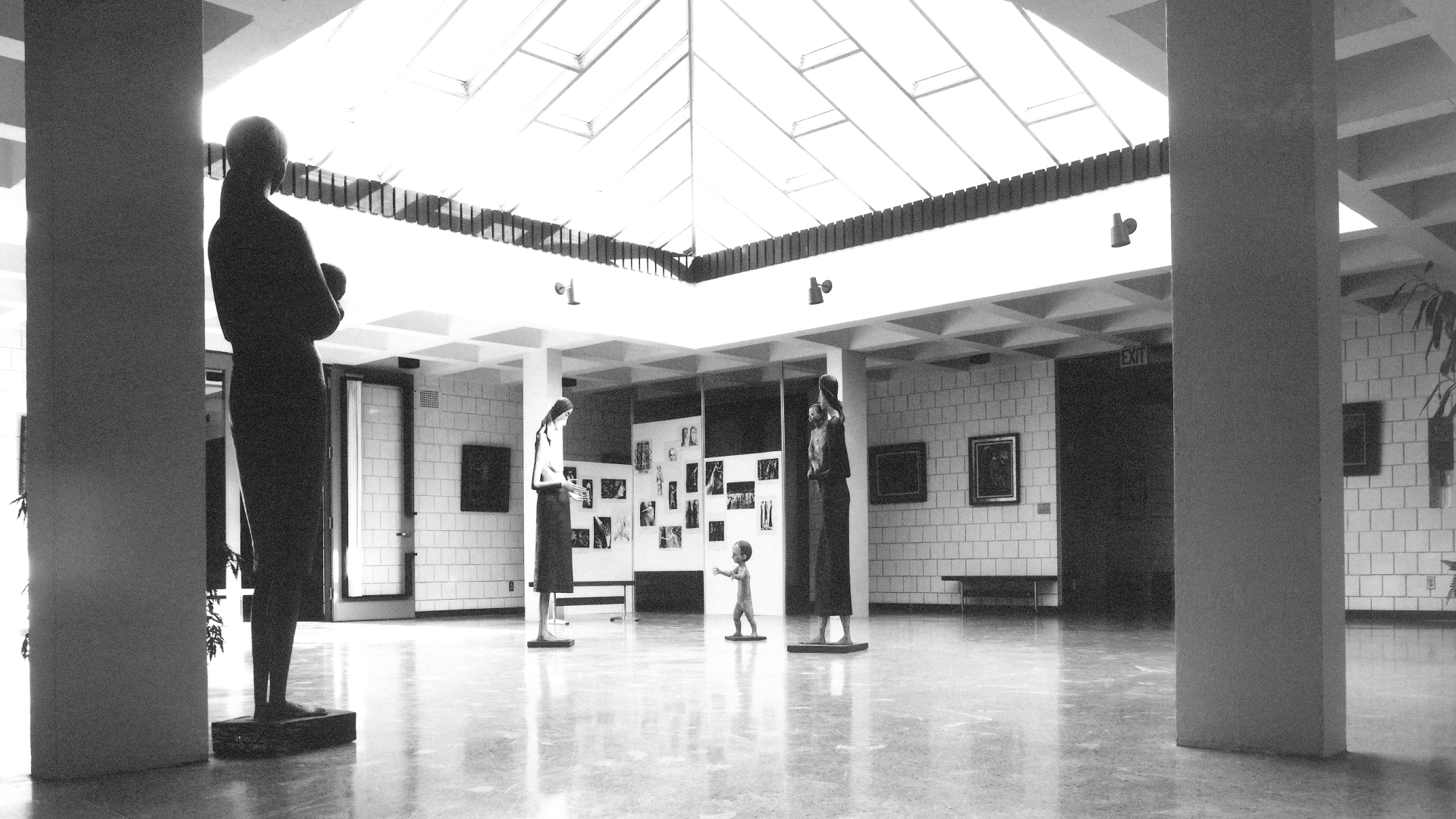
HGA’s collaboration with structural engineer Milan Johnston on the O’Shaughnessy Auditorium at St. Catherine’s University further showcased their brutalist expertise. Johnston, who had worked with Breuer on several projects, remarked, “O’Shaughnessy is done in a lot more delicate way than Breuer’s work.” The five-story concrete facade combined strength with refinement — a hallmark of HGA’s evolving style.
From the Malcolm Moos Health Sciences Tower at the University of Minnesota to Saint Bede’s Priory in Eau Claire, Wisconsin, HGA’s early work reflected brutalism’s emphasis on exposed concrete and functional design. These projects not only defined HGA’s architectural identity but also helped shape the broader brutalist movement in the United States.
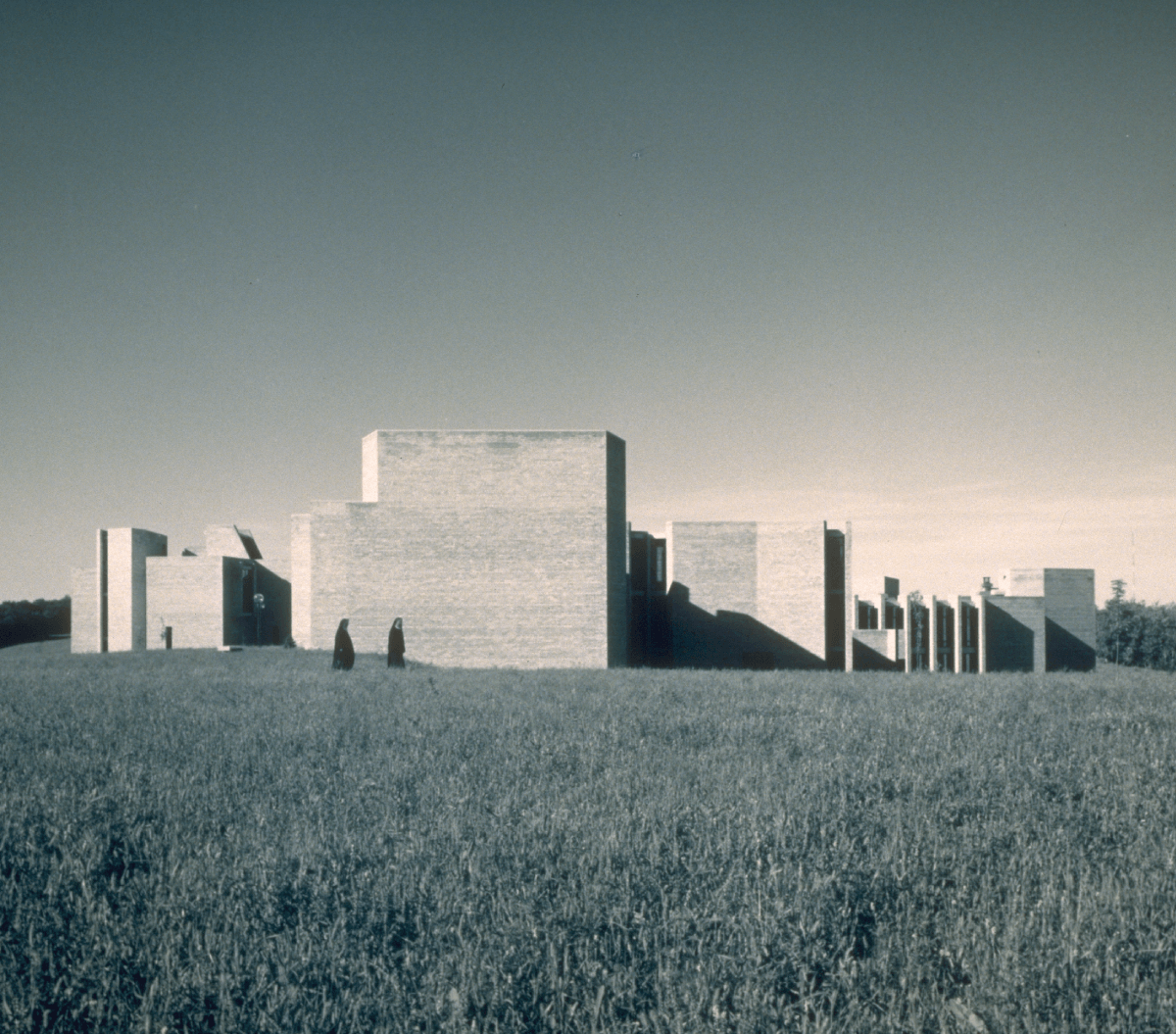

Saint Bede’s Priory | Eau Claire, WI
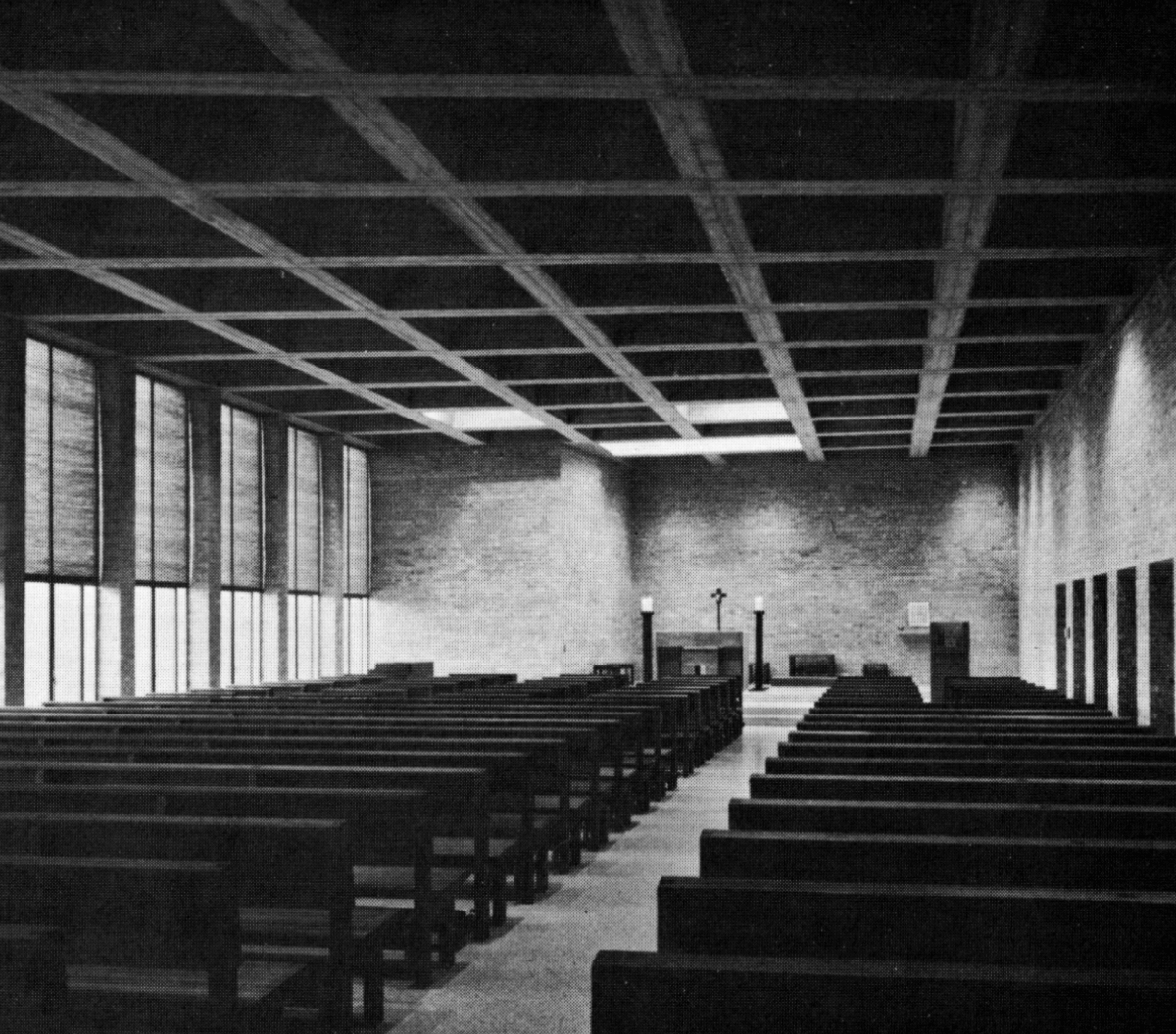
Saint Bede’s Priory | Eau Claire, WI

The O’Shaughnessy Auditorium at St. Catherine University | St. Paul, MN
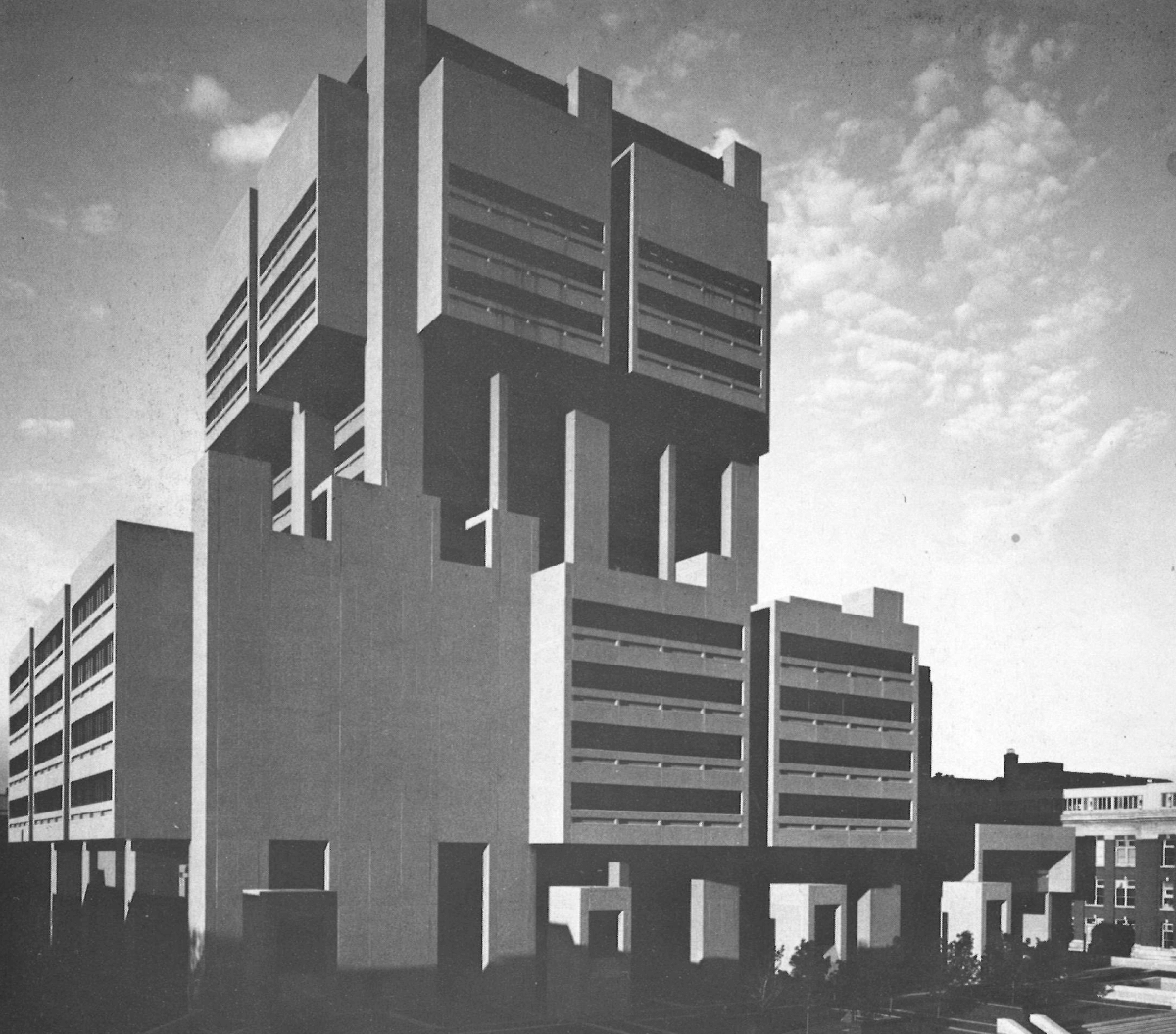
Moos Tower at the University of Minnesota | Minneapolis, MN
The Brutalist, László Tóth, and HGA
Director Brady Corbet’s The Brutalist, which follows the fictional Hungarian architect László Tóth, draws direct inspiration from real figures and events in the brutalist movement. Corbet cited Hilary Thimmesh’s Marcel Breuer and a Committee of Twelve Plan a Church — a memoir about Breuer’s work on the Saint John’s Abbey Church — as a key influence. Just like Tóth’s challenges designing the Van Buren Institute in the film, Breuer’s process was marked by creative conflict and artistic tension.
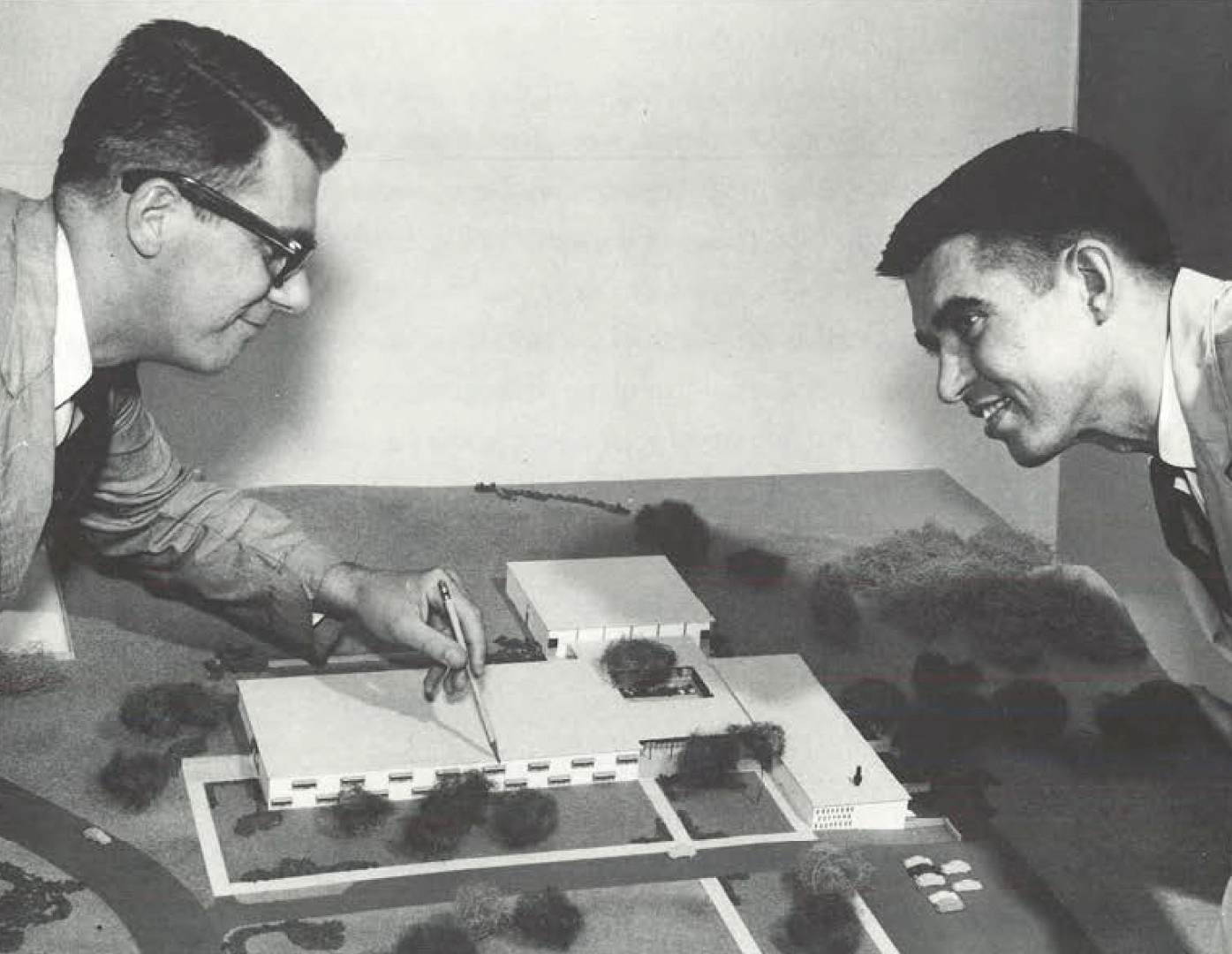
Richard Hammel and Curt Green discuss a new school design
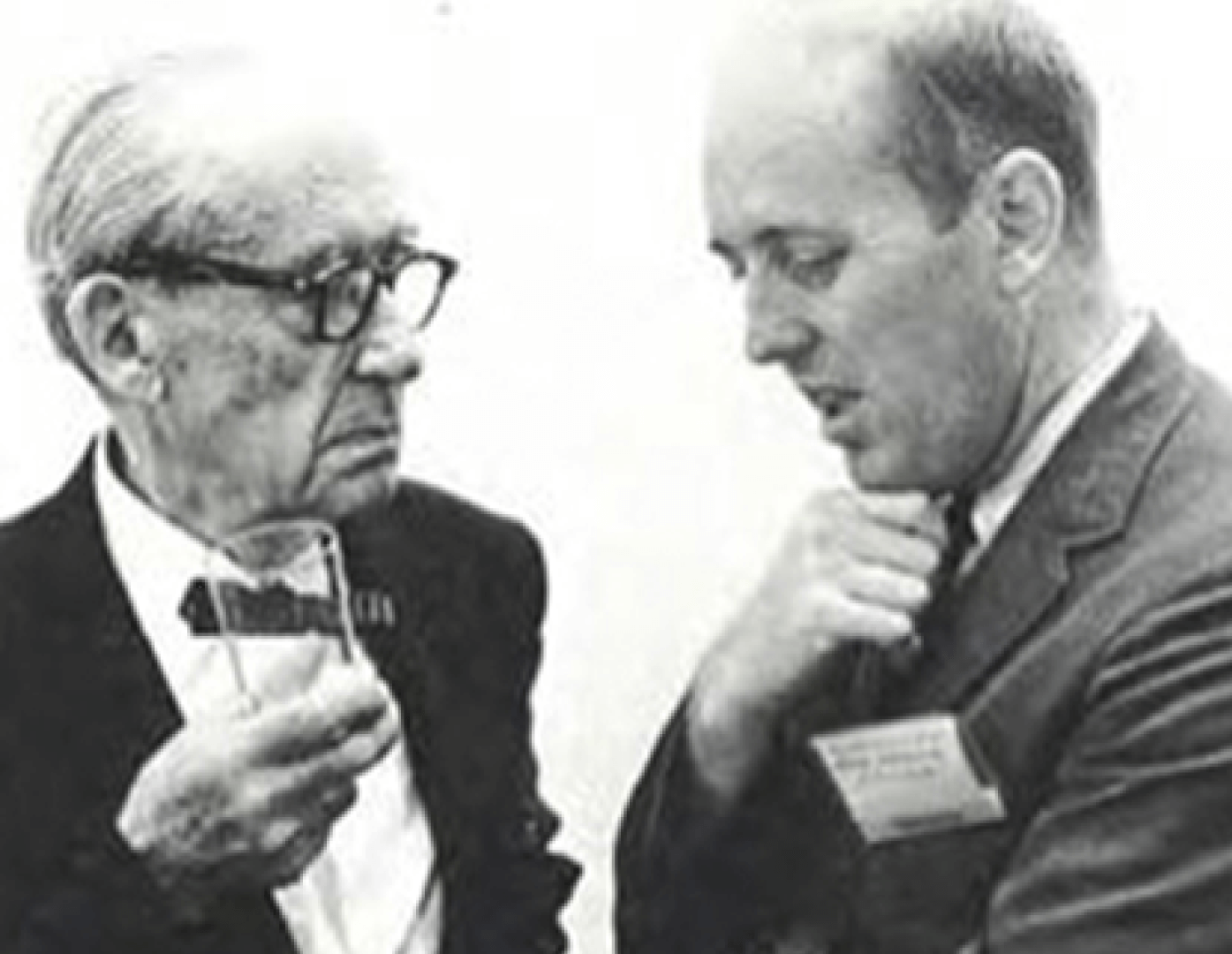
Walter Gropius and Bruce Abrahamson in conversation
Also like Breuer, László Tóth was trained at Bauhaus, a school founded by architect Walter Gropius—Hammel and Abrahamson’s teacher at Harvard —during the boom of artistic experimentation in Germany following World War I. Bauhaus was key to the rise of modernist architecture — and later brutalism — eschewing ornamentation for more functional design.

Had László Tóth been a real architect in the 1950s, he would likely have crossed paths with Hammel, Abrahamson, and Green. HGA’s founders, shaped by the same postwar architectural currents, were at the forefront of brutalism’s rise in the United States.
A Lasting Impact on Architecture
By the late 1950s, brutalism and the International Style were gaining prominence in the United States. Bold architects began to develop striking sculptural forms using reinforced concrete, and HGA was leading the charge in the Midwest. The firm’s early work — rooted in the legacy of modernists like Le Corbusier, Aalto, and Gropius — shaped the architectural landscape of the mid-20th century.
Brutalism, at its core, is an expression of resilience and strength — a style born from the aftermath of war and social upheaval. Through their early brutalist designs, Hammel, Abrahamson, and Green helped define not only HGA’s architectural identity but also a pivotal chapter in American architecture.
For more HGA pop culture insights check out The Soraya on Screen: TV Appearances from Hulu’s Paradise to HBO’s Westworld.
References
- Walter Gropius (1883–1969) was a German architect and founder of the Bauhaus school, which combined crafts and fine arts with modernist design principles. His work laid the foundation for modernist architecture and influenced the rise of brutalism.
- Alvar Aalto (1898–1976) was a Finnish architect known for his humanistic approach to modernism. His work blended organic forms with functionalism, using natural materials and sculptural concrete. Aalto’s designs, including the Finlandia Hall and the Paimio Sanatorium, are considered key influences on Scandinavian and brutalist architecture.
- Marcel Breuer (1902-1981), a Hungarian-born modernist, was one of the leading figures in the brutalist movement. After training at the Bauhaus under Walter Gropius, he became known for his mastery of raw concrete and geometric forms, with works like the UNESCO Headquarters in Paris and the Whitney Museum of American Art in New York cementing his reputation as a brutalist pioneer.
*The Brutalist gifs courtesy of Tv and Films.
.
 Back to top