
A neighborhood focused, mixed-use building offers a tenant-supportive environment with a contextually innovative design, health-forward amenities, and deep connections to pedestrian focused infrastructure.
The Santa Monica studio of HGA completed 1640 14th St, a ground-up, mixed-use commercial complex commissioned by Los Angeles-based developer Redcar Ltd. The 38,871-square-foot property—named for its address at 1640 14th Street in the heart of Santa Monica, California—was designed by HGA as a resilient and sustainable platform for a mix of commercial activities with a focus on long-term community well-being. Located in a historically industrial neighborhood, on the site of a former tow yard, this three-story urban infill project features three floors of creative office space and a ground-floor street-facing restaurant, organized around a central courtyard.
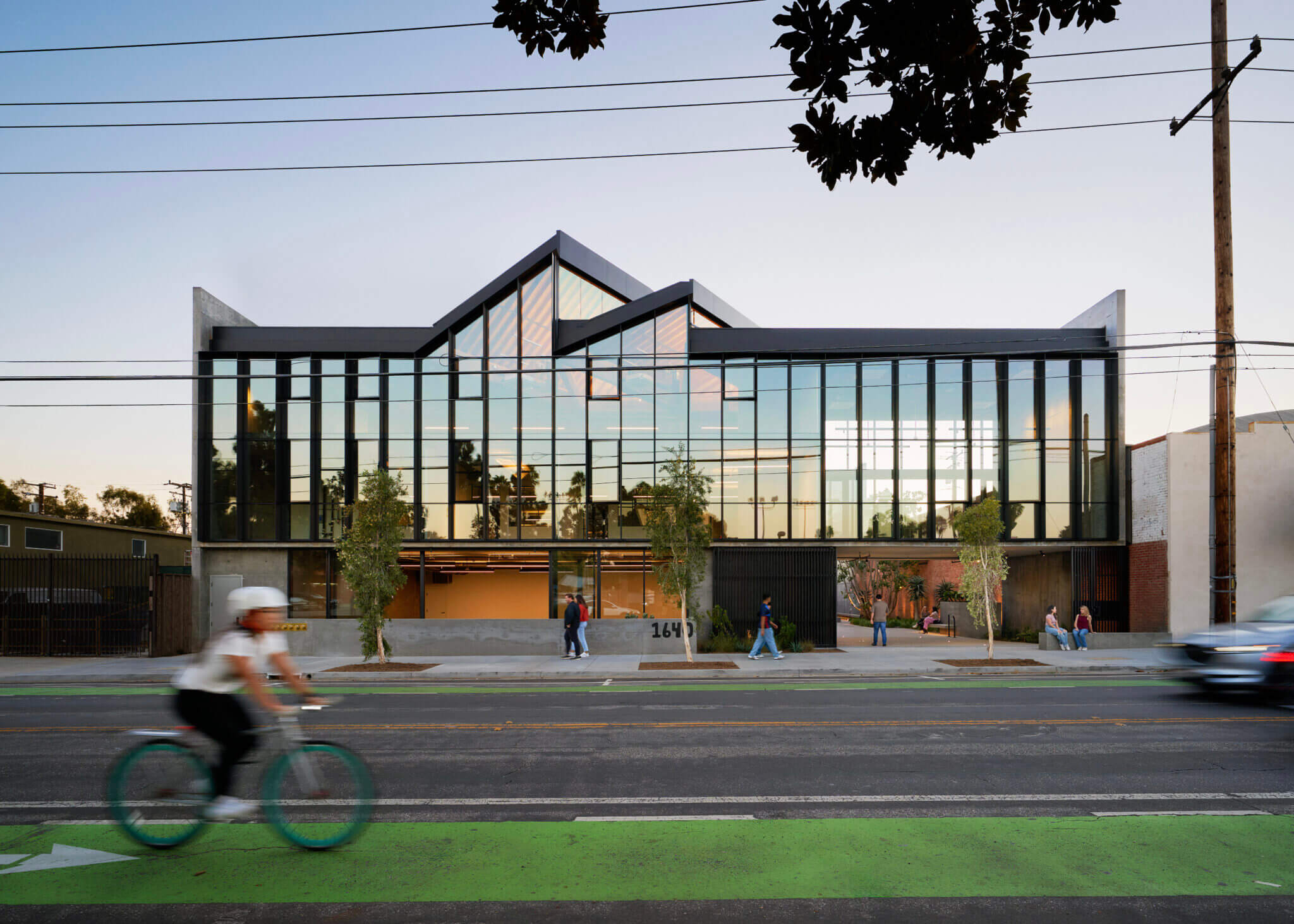
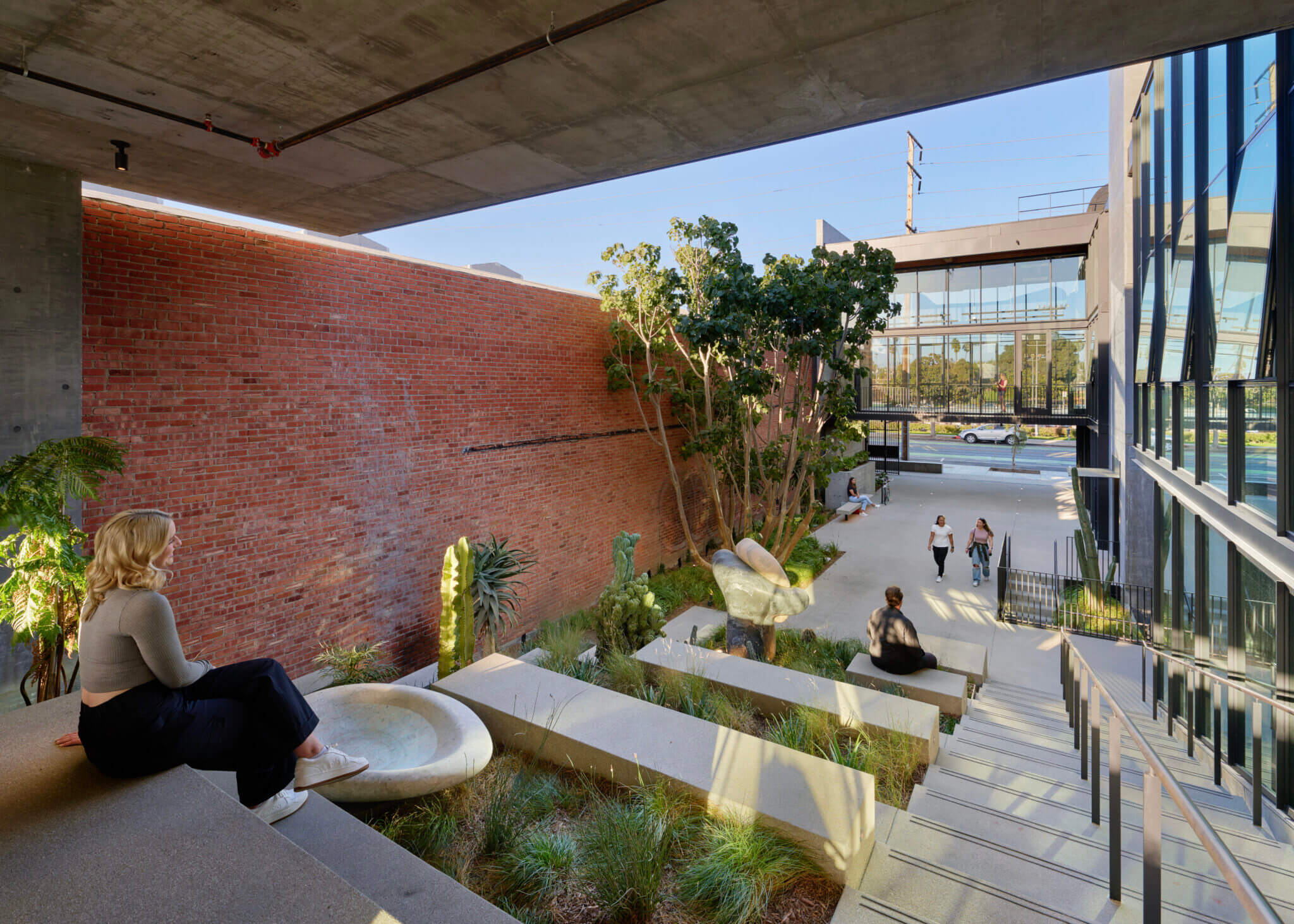
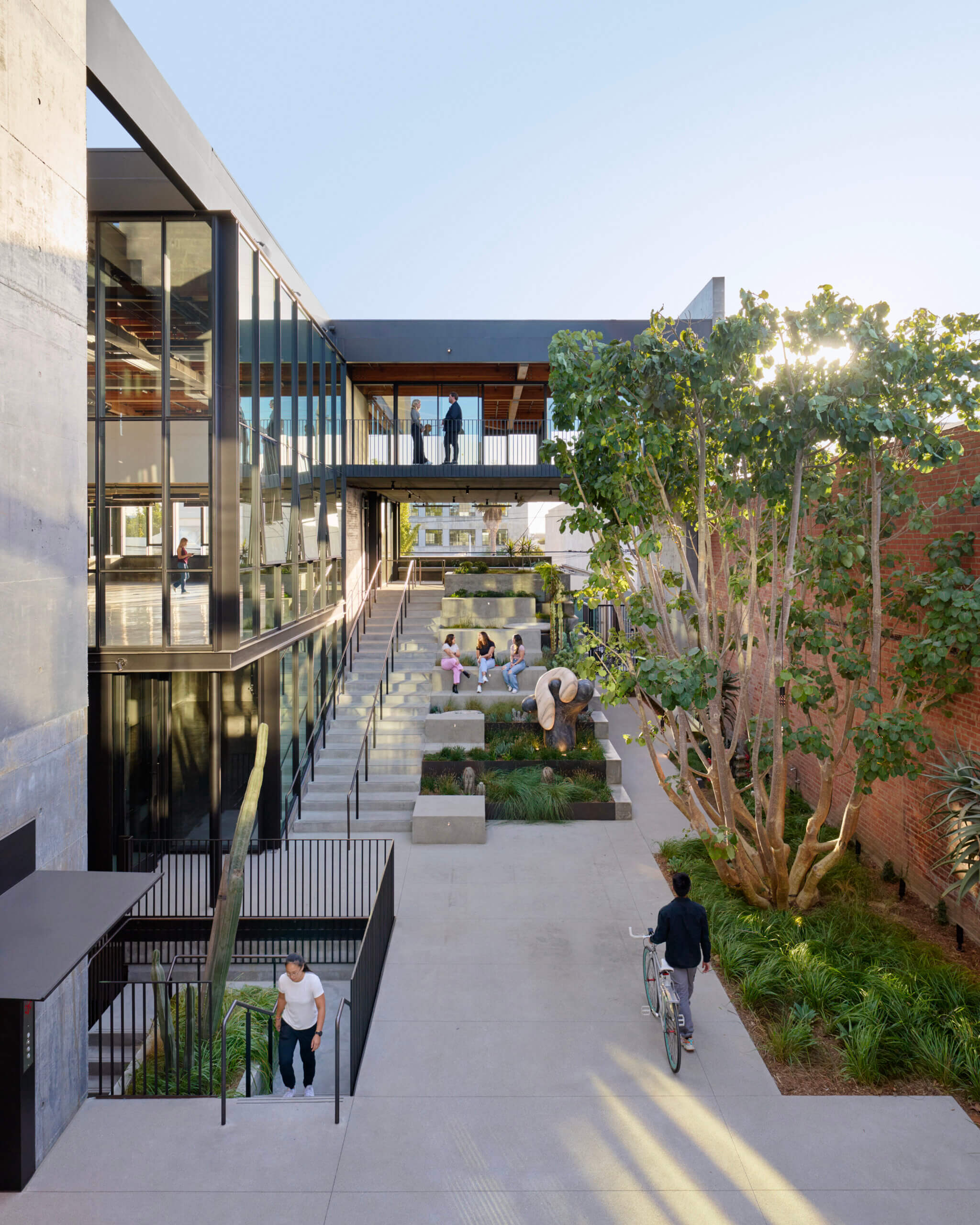
1640’s airy design gives expression to a series of objectives set by the client that address the health and productivity of its occupants and enhance the diversity of amenities available to the local community. Amplifying the City of Santa Monica’s urban planning objectives, the development increases the walkability of the surrounding area as a pedestrian focused link in an area split by the interstate that divides North and South Santa Monica. A garden paseo connects a park to the north, initiating a series of mid-block passageways in support of a larger civic master plan, designed to create more inclusive pedestrian networks in range of mass transportation and connected to the coast.
On the ground floor, the 2,500-square-foot restaurant space opens to the paseo and street, creating an inviting community amenity that revives the site for public use. The resulting shared commons—in conjunction with key design elements that seamlessly blend indoor and outdoor experiences encourage walking and spontaneous gathering. 36,000 square feet of creative office space occupies the building’s first, second and third floors in double-height environments daylit by north facing clerestories. Their curved shape is derived from the curved stick frame roofs of historic warehouses in the area, truncated, they give the façade its distinct profile along its main façade and animate and define the roofscape. Private outdoor terraces are integrated on all floors for tenant use.
“Redcar is well-known for being a civic-minded developer, and our team has enjoyed working with them over the last few years to help weave together their properties throughout Los Angeles, envisioning ways they can create larger urban narratives through their mixed-use environments for maximum community benefit,” said John Frane, design principal at HGA and the project’s lead. “1640 is a great example of a hybridized property strategically designed to bring together individuals and businesses in a thriving community hub, and we’re looking forward to seeing how the neighborhood will put it to its best use.”
A GREEN ADDITION TO SANTA MONICA
Resiliency and sustainability conceived through the lens of human well-being comprehensively inform the building’s design and operation and are highlighted through natural ventilation, daylighting, and the integration of landscape. A cornerstone element of the building’s sustainable design is the trellis-mounted solar photovoltaic system on the rooftop deck that exceeds Santa Monica’s current ZNE Reach Code requirements by more than double to reduce its resource footprint burden on municipal infrastructure.
Along with multiple passive strategies, the building utilizes natural, regional, and locally sourced materials to further limit its carbon footprint, such as locally fabricated custom steel windows and doors. Despite extensive glazing, increased cooling equipment capacity is not needed in the building and transparency is maintained through the use of high-performing, highly shaded glass that predominantly faces north. Additionally, operable windows in the building’s window wall system enable cross-ventilation.
Beyond energy efficiency, the overall sustainability of the building is best understood in terms of its capacity to foster the health and wellness of both its occupants and the larger physical and cultural setting in which it resides, as it returns private space to public use for community benefit. This can be seen in elements such as the building’s paseo, a central social feature of 1640, landscaped to provide opportunities to gather in various size groups. The paseo epitomizes the design’s emphasis on the importance of nature in contributing to a sense of well-being and its value in creating a setting for socializing and community building that links to all primary circulation pathways on the building’s exterior. The rooftop garden continues the close collaboration with the natural environment, where the solar trellises serve a dual purpose in providing shade for tenants to comfortably gather in another outdoor location surrounded by extensive native plantings.
To lower barriers for adoption, an overall design approach that prioritizes integrated technology was implemented for the benefit of tenants, including forward thinking easily adaptable access systems and components such as programmable Lutron lighting and EnergyStar appliances, space efficient staking parking, and expanded EV charging stations. The building also incorporates supportive resiliency features to sustain operations in the event of a power grid failure.




In addition to Frane, the HGA project team included Matt Austin, senior designer; Taylor Hsiao, project manager; Tori McKenna, project architect; Kylie Wong, construction administration; and Sang Yoon and Tessa Kennedy, design coordinators. Additional HGA project contributors include Kate Levine, and Faith Tan.
Project partners included Del Amo Construction, general contractor; Nous Engineering, structural engineering; AMA Consulting Services, MEP engineering; KPFF, civil engineering; McCullough Landscape Architecture, landscape architect; and Luminesce Design, lighting design.
About HGA
HGA is an acclaimed interdisciplinary design firm committed to making a positive, lasting impact for our clients and communities through research-based, holistic solutions. We believe that great design requires a sense of curiosity—forming deep insight into our clients, their contexts, and the human condition. We are a collective of over 1,000 architects, engineers, interior designers, planners, researchers, and strategists, with 12 offices. Our national practice spans multiple markets, including corporate, cultural, education, local and federal government, healthcare, and science and technology. Visit hga.com or follow us on Facebook, Twitter, LinkedIn, and Instagram.
HGA Media Contact
Rosa Muñiz, Public Relations Manager
rmuniz@hga.com