
Designers play a critical role in shaping healthcare environments that not only address clinical needs but also promote accessibility, dignity, and well-being. By prioritizing these elements, designers contribute to healthier, more inclusive communities and help advance health equity for all.
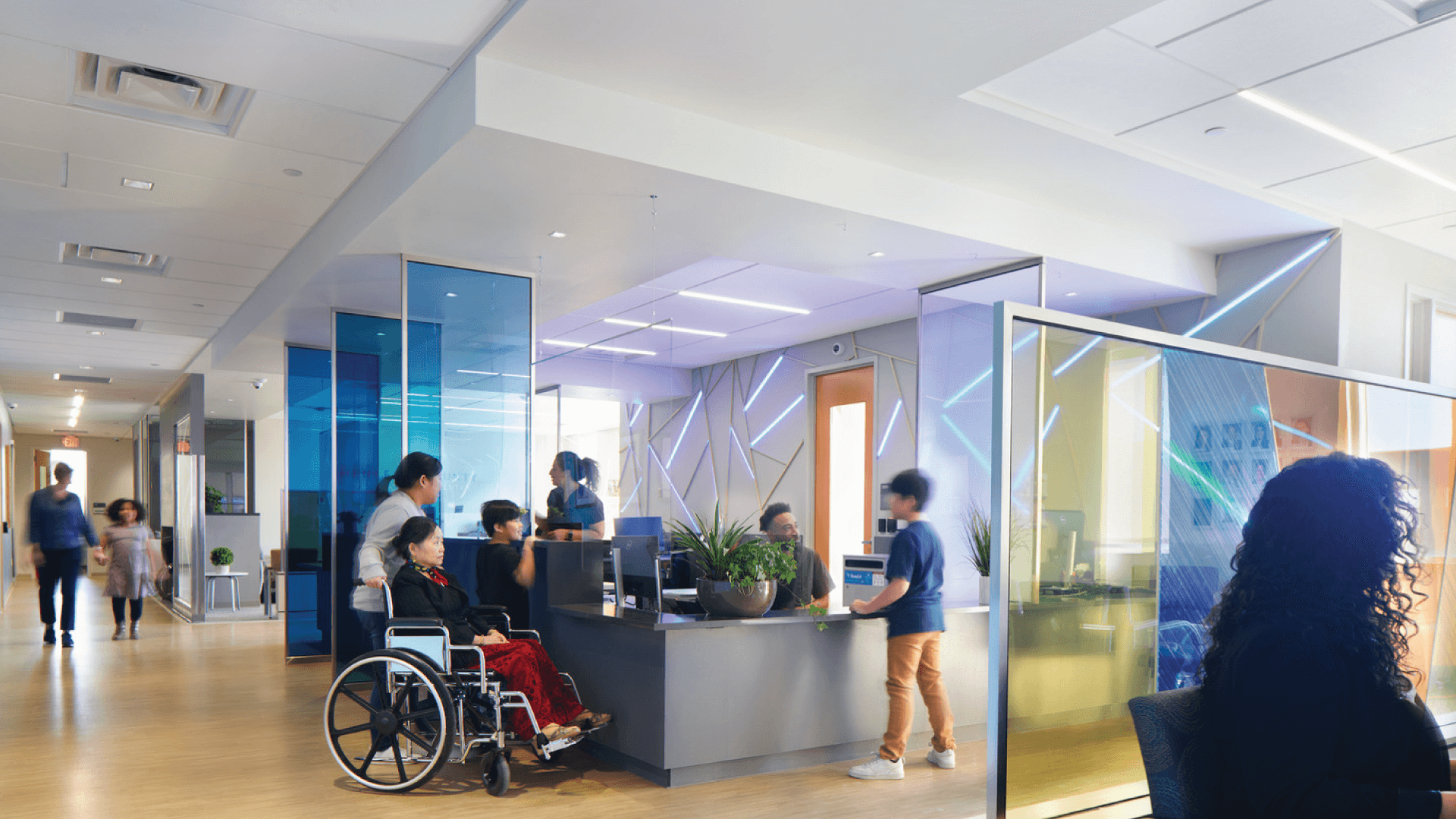
The concept of health equity aligns with the building industry’s growing awareness to support positive social change through design. As such, health equity stresses that everyone should have the opportunity to achieve their highest level of health, regardless of socioeconomic status, race, gender, ability, or geographic location. In healthcare design, this concept goes beyond providing access to care—it addresses disparities and creates a sense of belonging to meet the needs of all individuals.
Promoting Social Inclusion
Two key design factors impact community health outcomes.
Social Determinants of Health
The first is a set of conditions identified as the Social Determinants of Health (SDOH), which are commonly grouped into five areas:
 Economic Stability
Education Access and Quality
Healthcare Access and Quality
Social and Community Context
Neighborhood and Built Environment
The Minnesota Department of Health notes that SDOH has a major impact on people’s health and quality of life. The negative or positive impact of SDOH can accumulate over a lifetime, alter a person’s life course, and be passed down to future generations.
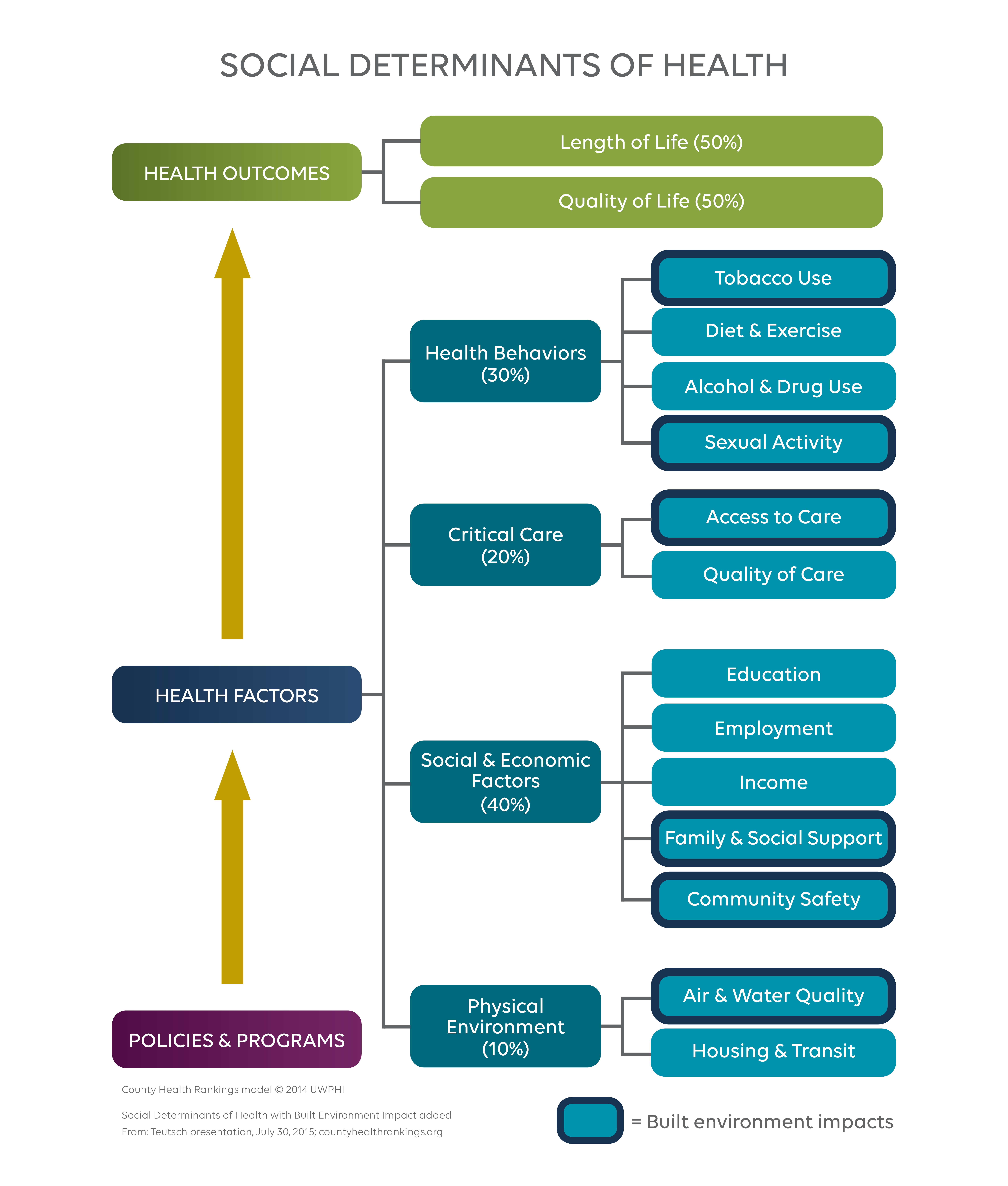
How do aspects of physical space interact with these conditions? The built environment may influence how patients navigate healthcare facilities (i.e. wayfinding) and how efficiently care is delivered (e.g. designing around workflow and function). Design affects the processes and experiences within built spaces, ensuring that everyone can receive the care they need without barriers. Physical and psychological accessibility is key. Equitable healthcare becomes unattainable when the built environment hinders care delivery or fails to meet the needs of diverse populations.
Network of Communities
Our work goes beyond an individual building, impacting the social fabric of entire communities. As planners and designers, we often live and work in the communities where we design buildings, and we have an obligation to our own neighbors—the network of communities. When we design with an understanding of the cultural, social, and historical significance of a place, we help preserve a sense of belonging and stability that keeps communities intact.
What Does this Mean for Design?
To meet the needs of diverse communities, we approach design from several perspectives, each with the goal of creating meaningful spaces that can improve the health of patients, family members, staff, and the entire community.
Trauma-Informed Design
According to the Substance Abuse and Mental Health Services Administration, “individual trauma results from an event, series of events, or a set of circumstances that an individual experiences as physically or emotionally harmful or life threatening and that may have lasting adverse effects on the individual’s functioning and mental, physical, social, emotional, or spiritual wellbeing.”
Trauma-informed design (TID) serves as a reference point to create spaces that support individuals affected by trauma, minimizing triggers, prioritizing safety, offering choices, empowering individuals, and considering sensory elements. By viewing design through the perspective of individuals with a history of trauma, healthcare organizations can foster a sense of safety and security.
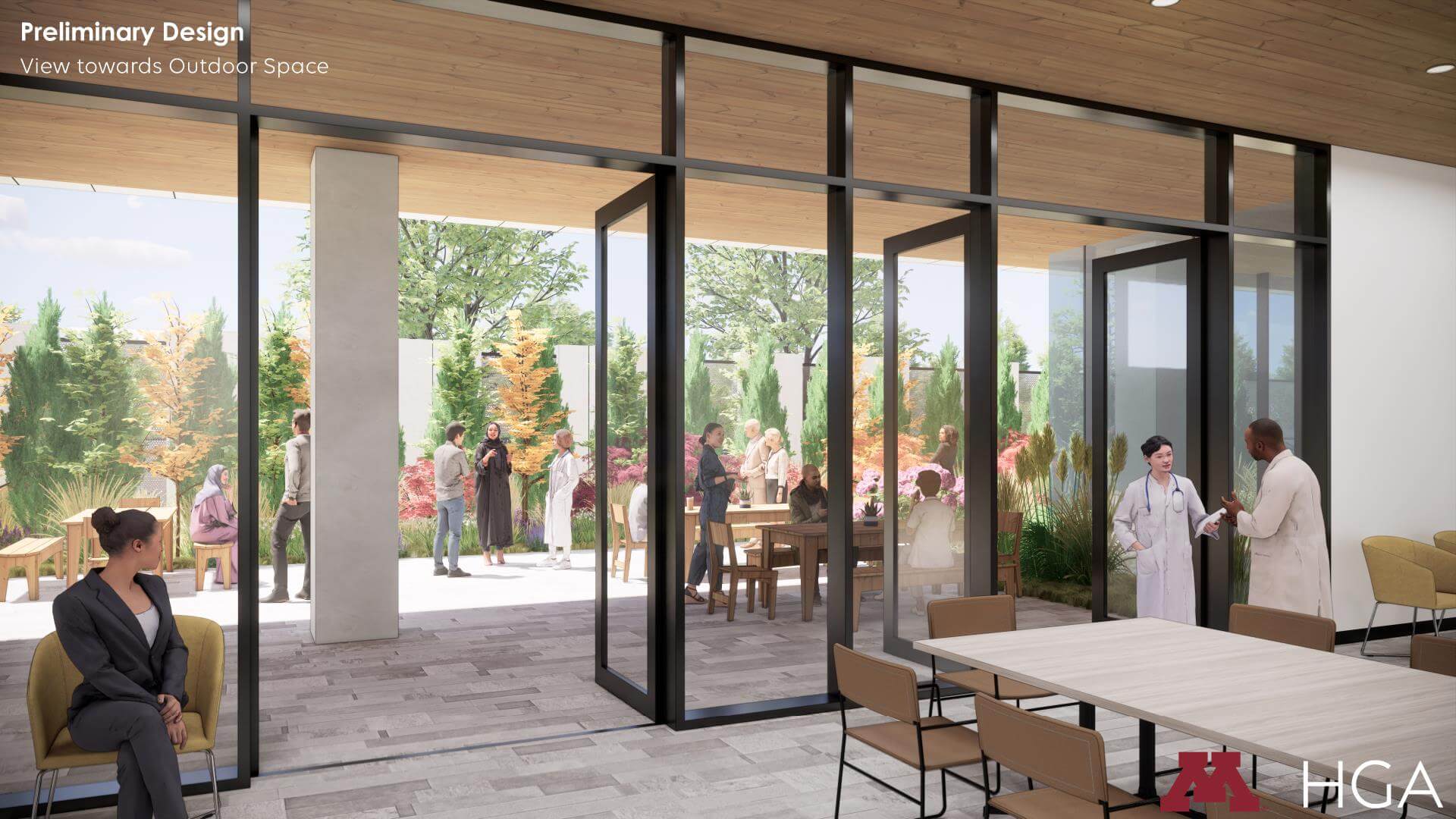
At the University of Minnesota Community-University Health Care Center, in development in Minneapolis, HGA utilized TID principles to create an interior that feels approachable—and can even spark moments of joy. For instance, biophilic materials and motifs promote patient and staff wellness while family spaces, a meditative prayer room, and other quiet touch-down spaces offer privacy and respite for the multicultural patient population.
Authentic Outreach and Engagement
An outreach plan is essential for engaging the community in the planning and design process. Effective outreach should consider these four principles:
Identify key stakeholders, such as community leaders, local businesses and organizations, and nonprofits, to establish meaningful relationships with diverse voices.
Engage with the community to gain an understanding of needs and interests through surveys, interviews, observations, focus group discussions, and town hall meetings. Provide translation services as needed.
Regularly update stakeholders through community events at key project stages to provide opportunities for direct interaction and feedback.
Monitor and evaluate the effectiveness of outreach strategies through surveys or feedback forms.
Equity Commissioning
Equity commissioning is an emerging process that ensures that design and operational decisions support fair outcomes for all building users, particularly in public and community-serving projects such as healthcare, education, or civic spaces. It integrates equity goals into the project lifecycle, from planning and design to construction and operations. The design team, working with a designated equity leader, establishes specific goals around accessibility, cultural inclusivity, affordability, and social and environmental justice.
The team should continuously review design and construction progress to ensure it aligns with goals established in pre-design. After completion, post-occupancy evaluations should assess how different user groups experience the space and how accessible it remains over time. This process can ensure successful outcomes as planned, while making future adjustments as needed.
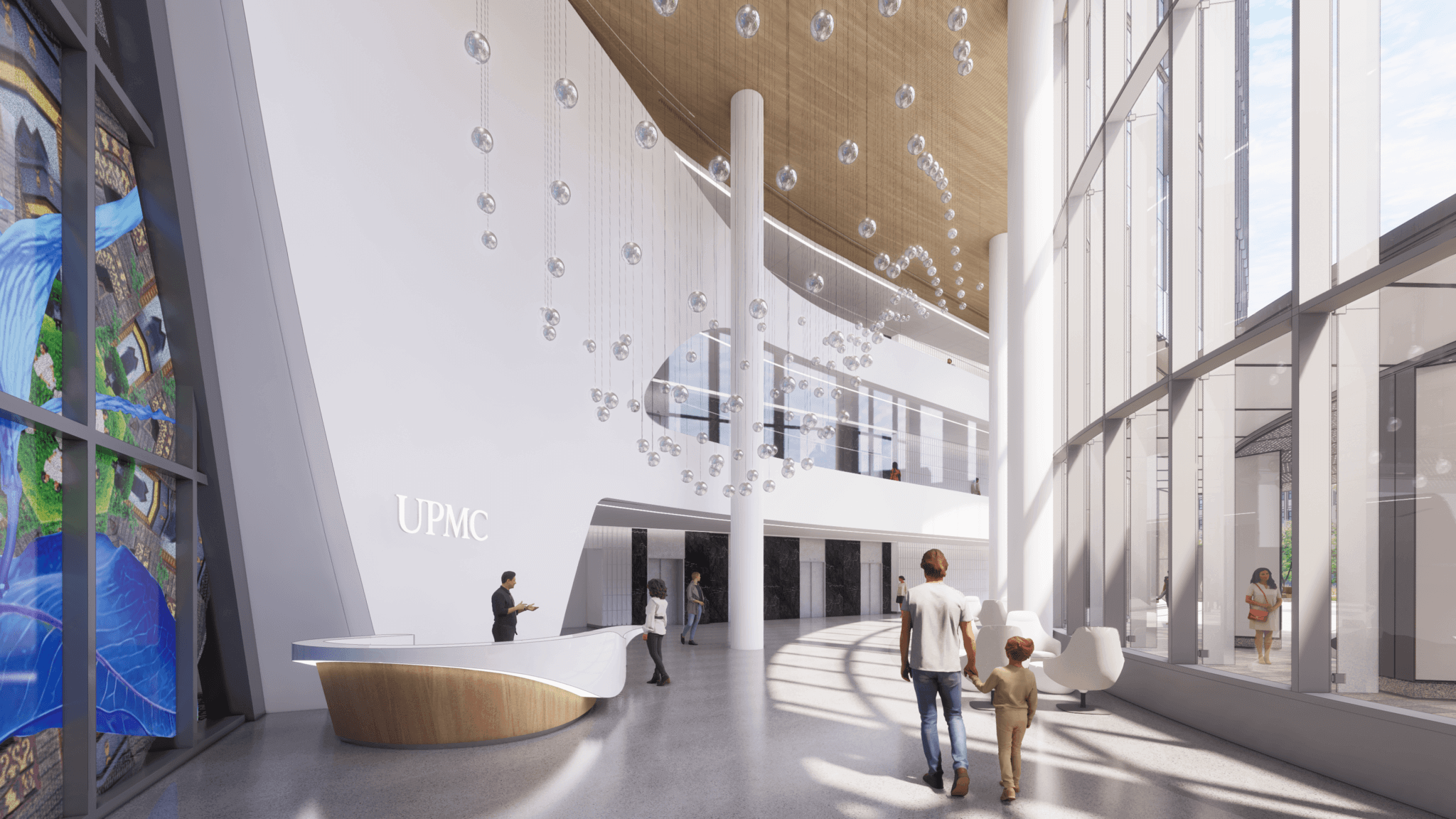
For UPMC Presbyterian Bed Tower and Lifestyle Village, in development in Pittsburgh, hospital leadership prioritized evidence-based design strategies to identify the experiences of care providers, patients, and community members. UPMC staff and designers participated in workshops to help inform design solutions. This resulted in planning more than 30,000 SF of public and family-centric space—known as the Lifestyle Village—as the community heart of the hospital. The Lifestyle Village includes wellness rooms, a retail market and gift shop, outdoor and indoor public spaces, garden terrace, education center, spiritual center, hospitality kitchen, and family lounge—all supporting the urban population.
Health Equity as a Continuous Process
Healthcare design, like much of the building industry, is becoming increasingly focused on integrating diverse voices into the design process. This approach aligns with the growing movement toward health equity, which emphasizes holistic, person-centered care and cultural inclusion.
Health equity is a continuous cycle of discovery—uncovering the unique values of individual community members, rethinking how healthcare systems deliver care, and designing spaces that ensure everyone has access to supportive care. The strategic processes outlined above serve as a foundation for this ongoing journey.
Explore how we integrate health equity within our healthcare practice.
About the Authors
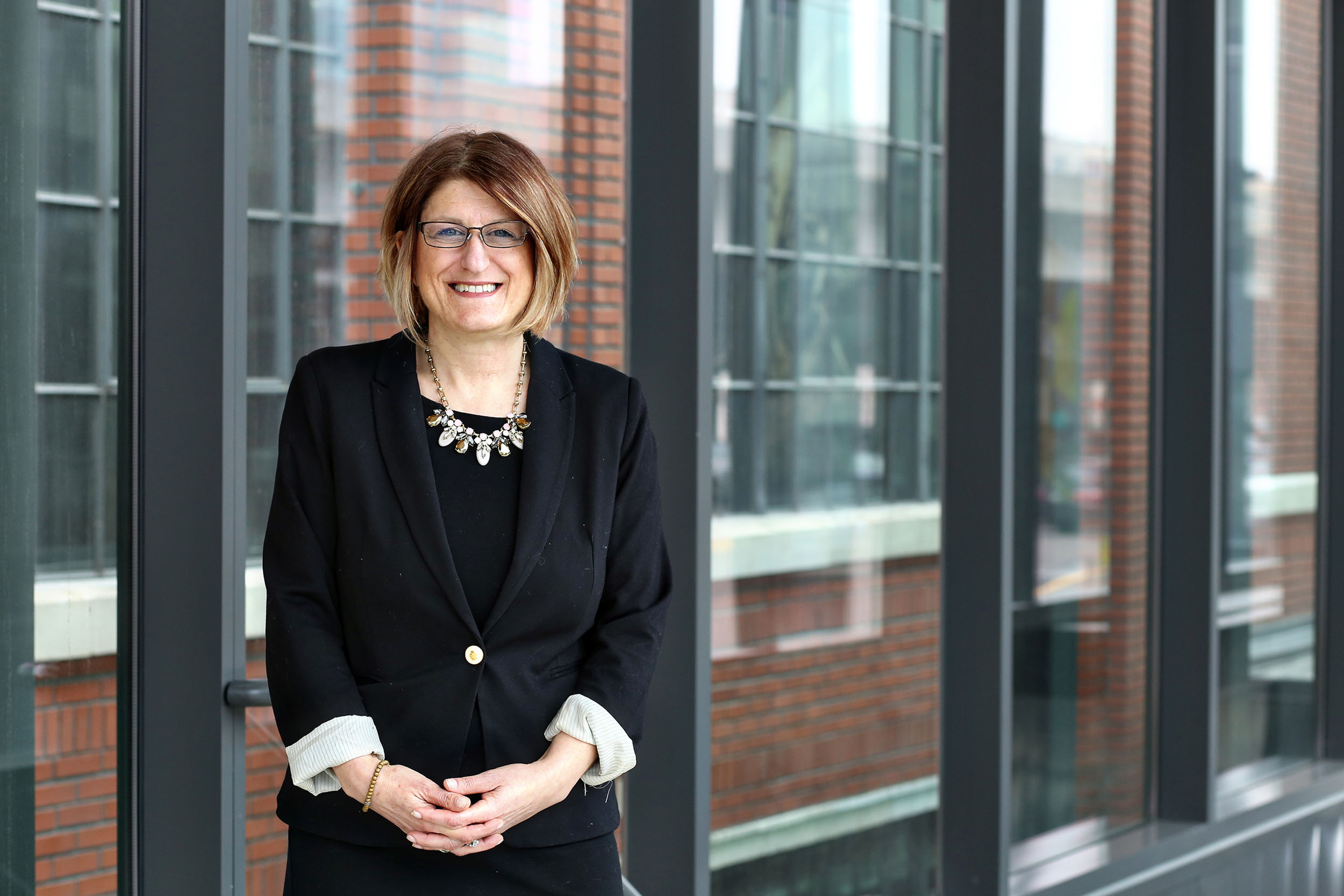
Terri Zborowsky
As an Evidence-based Design Researcher, Terri focuses on the intersection of user experience and human interaction within the built environment. Beginning her career as a registered nurse, she then obtained a PhD and master’s degree in interior design.

Terri Howard
Terri Howard is Vice President of Equity at HGA, where she directs equity initiatives, develops hands-on programming, and builds external partnerships that position HGA as an industry model in workplace equity, recruitment and retention, and client relations.