
The new facility, designed by HGA, replaces an aging campus warehouse with a cutting-edge, multi-functional artistic lab for the creation, advancement and display of art.
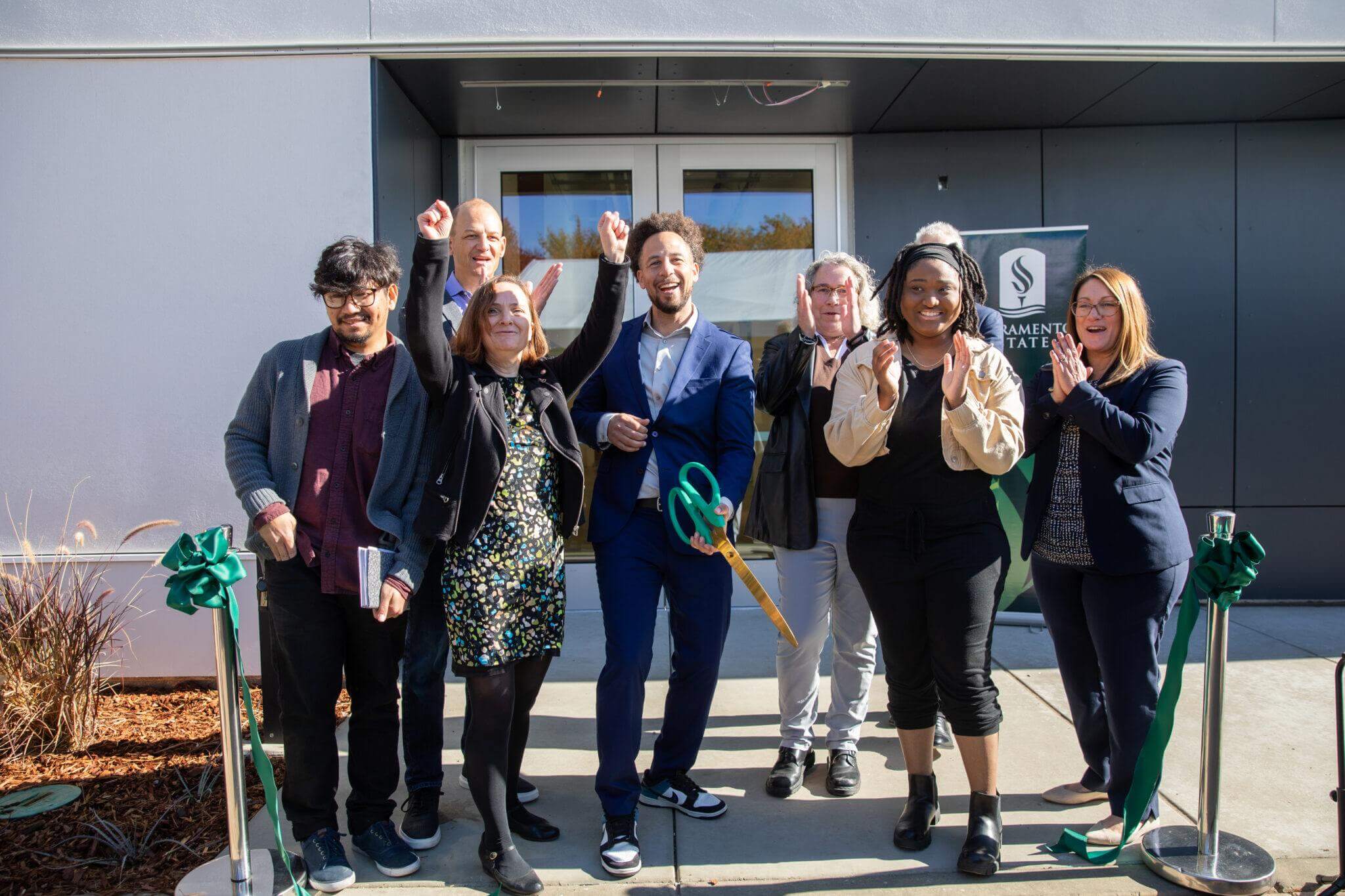
Sacramento State’s new Art Studio Lab (ASL) is now open for the University’s students and faculty, providing state-of-the-art learning environments and studios that support the delivery of an equitable arts education in the region. The project encompassed the replacement of a mid-century warehouse educational space, comprehensively reimagined by national interdisciplinary firm HGA into a 25,000-square-foot contemporary artistic lab equipped to span multiple art disciplines to prepare students for their lives as professional artists. The facility was officially unveiled to the campus and broader Sacramento community during a ribbon-cutting ceremony on Nov. 12, 2024.
The ASL offers modern instructional and graduate studio spaces – designed by HGA in close collaboration with faculty and other members of the Sacramento State Art department – to facilitate art instruction, discussion, debate, and critique within its learning environments. The lab features painting, drawing and sculpture studios, wood and metal shops, and individual studios for graduate students. A strategically located central hub hosts multiple points of entry and serves as exhibition space. The total project site also includes a highly visible, publicly accessible sculpture yard for installations and gatherings.
The project was catalyzed by Sacramento State’s 2016 discovery that the existing building, which had served as the University’s Art Sculpture Lab since the 1970s, needed substantial renovations to meet seismic, accessibility and other requirements. HGA was selected to design a new facility with upgraded amenities on an adjacent site. After carefully considering the existing site’s footprint and the project’s requirements, the new ASL was crafted to take advantage of the linear site, with an optimized building orientation, a spacious, secure yard for production and staging with multiple entry points, and a covered production area for ceramics kilns and other large equipment, enhanced with environmental technology for added safety.
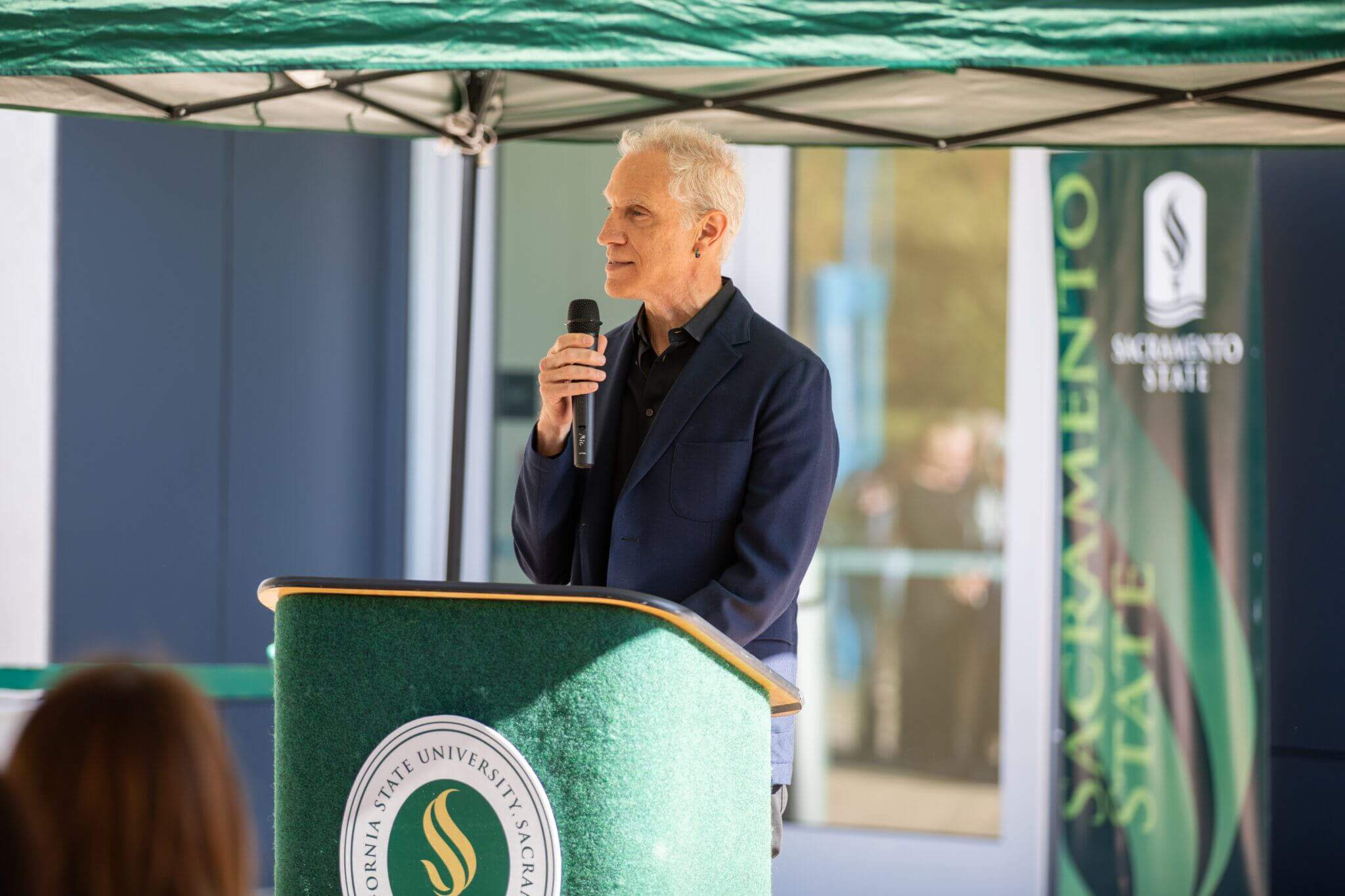
“Thank you to architects, HGA, for designing this beautiful building, and for working closely with art faculty during the planning stages. The collaborative process throughout ensured that the new ASL incorporates what we liked about the old building, while vastly improving on everything that didn’t work,” said Art Department Chair, Rachel Clarke. “Every space is thoughtfully designed, and the overall layout of studios, workshops, grad spaces, and outdoor areas provides an inclusive environment where community will be welcome, and faculty and students can thrive in their creative endeavors.”
In direct response to the linear site, the ASL was designed to maximize multifunctional spaces with minimal interior circulation, taking full advantage of the Central Valley climate. Additionally, the new facility activates the south end of the campus with communal and social spaces while making the Art Studio Lab more visible than the former building. All exterior openings are thoughtfully placed and coordinated to enhance wayfinding, flow and movement of art. Expansive overhead doors are introduced to allow a direct connection between the interior and exterior working spaces, while enhancing the connection to the outdoors. A long projecting overhang provides essential shaded areas for circulation and protection from the elements for students, their projects, and the process equipment. Large overhead clerestories help balance ambient natural light while leaving wall space for pin-ups and the display of art. The north facing clerestories provide a direct connection to a linear grove of conifers. The north face of the building features a deep saturated color to bring accent to where the making occurs while the remaining building has a high albedo finish to minimize solar heat gain and provide a more neutral backdrop for the display of art.
The building is defined by a simple shed roof that facilitates optimum daylight across the length of the building and allows generous height proportions in the studios. The painting and drawing studios are shifted to achieve better light quality while making the building more visible approaching from main campus. The exterior and interior were designed with flexibility to hang art both inside and outside, on the building’s exterior.
The design of the interior space is intentionally minimal, revealing the necessary technology needed to provide an inspiring, safe environment for teaching, conceiving, and making art. The building is a literal backdrop for art, enabling student imprints that will change over time.
The site is welcoming and designed to allow the public to discover Sacramento State’s art programs, as well as student and faculty art. The project offers places for public gathering and display of art to enliven the south end of campus. The building is fully accessible, providing inspiring, comfortable, and safe spaces for all. It was designed with a heavily insulated envelope, while leveraging highly efficient, flexible, and durable mechanical systems that will use energy recovery technology such as integral exhaust fans, as well as systems that support energy and water conservation. The building will be fully electric, with the exception of the process loads serving the gas fired kiln. The project uses low-flow plumbing fixtures and drought-resistant native plants in the landscape and is designed to achieve LEED Silver equivalency. The ASL will consume 30% less energy than what is required by California’s energy code.
“Perhaps more important than any other aspect of the design, this building is conceived as a great canvas, a place that will be conceived and re-conceived by the students and faculty, enhanced by the art they create.” said Marc L’Italien, FAIA, DBIA, design principal and the project’s lead.
The new Art Studio Lab affirms Sacramento State Art Department’s reputation as the preeminent institution to study art in Northern California, with professional studio degree programs that offer outstanding preparation for careers in the arts. The high level of instruction, provided by faculty that are both dedicated artists and teachers, along with the excellent new facilities, will give students all the tools they need to succeed, fulfilling the Art department’s mission to educate the next generation of artists, educators, and scholars in a diverse and inclusive context. The Art Studio Lab will enliven Sacramento State as a cultural center and will advance the department’s position as creative hub in the Sacramento region and beyond.
Ongoing fundraising efforts to support the establishment of an endowment include a commemorative book celebrating the ASL community, which is available to donors, custom engraved bricks and bench plaques, and naming opportunities for the studios, the workshops, and the building itself.
In addition to leading design of the ASL, HGA provided structural engineering, mechanical and plumbing engineering services, and cost estimating during the early design phases. The project was completed in collaboration with Otto Construction, general contractor; Siegfried Engineering, landscape and civil engineering; TEE, electrical engineering; and Jensen Hughes, code consultant.
The HGA project team included: Marc L’Italien, design principal; Ida Brown, project manager; May Lin Chang, senior project architect; Andres Basas, project architect; Mike Lindner, project designer; Jesse Quezada, senior project coordinator; Ashley Hiers, senior interior designer; Mark McDonald, director of cost management services; Kevin Logsdon, structural engineer, Leighton Deer, senior mechanical engineer; Rebecca Krull Kraling, arts specialist; Courtney McLeod-Golden, principal (now employed with CSUS); and Amber Brodie, project architect (no longer with HGA).
Professional photography available in Spring 2025.
About HGA
HGA is a national interdisciplinary design firm committed to making a positive, lasting impact for our clients and communities through research-based, holistic solutions. We believe that great design requires a sense of curiosity—forming deep insight into our clients, their contexts, and the human condition. We are a collective of more than 1,000 architects, engineers, interior designers, planners, researchers, and strategists. Our practice spans multiple markets, including arts, science and technology, corporate, cultural, education, local and federal government, and healthcare. Visit hga.com or follow us on LinkedIn and Instagram.
HGA Media Contact
Rosa Muñiz, Public Relations Manager
rmuniz@hga.com