
Design has the power to connect communities and revitalize cities, creating a more resilient and social environment that enhances quality of life. By centering community needs and values, design can foster a sense of belonging and shape spaces that are not just functional but truly meaningful.
At HGA we believe that the best community design is rooted in the culture and personality of those who it serves. For more than seven decades, we are honored to have been entrusted to work on some of the most important landmarks in our clients’ communities—revitalizing, restoring, expanding, and designing memorable spaces that have become beloved icons.
Whether it’s a public park, library, community center, or convention center, these gathering spaces serve as the connective tissue of the community, offering new places for social interaction, cultural exchange, and shared experiences. These structures reinforce the sense of place and connection integral to any thriving and vibrant community.
Built Environments that Build Communities
 Community Centers: A Place for Everyone
Community Centers have long been hubs for connection, offering diverse programming that caters to all ages and interests. These spaces are designed to be inclusive, serving as a “place for everyone” where people can come together, engage in activities, and build relationships.
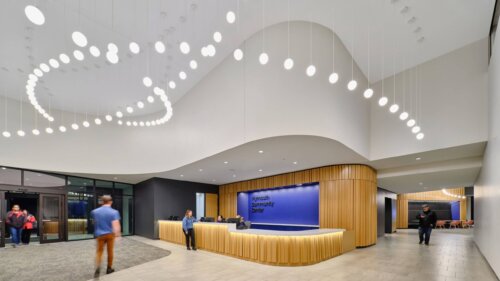
HGA partnered with the city of Plymouth (MN) to renovate the Plymouth Community Center (PCC), a beloved but aging facility unable to meet the growing demand for new types of programming. Completed in 2022, the new PCC strengthens community life by offering flexible spaces for diverse activities, providing dedicated youth areas while supporting adult programs like theater and bridge. Serving over 300,000 visitors annually, the PCC is a public amenity and key hub for social, emotional, and physical enrichment in the community.
Libraries: Hubs of Community Life
Libraries have evolved from mere book repositories into vibrant service centers. They are now dynamic environments where people of all backgrounds converge to learn, collaborate, and access vital resources. Modern libraries are more than just physical structures; they are the “living rooms” of their communities, where diverse knowledge and perspectives converge. These spaces, designed with flexibility and accessibility in mind, cater to different learning styles and needs, ensuring that everyone feels welcomed and supported.

Working with the DC Public Library (DCPL), HGA and Consigli Construction led a collaborative design-build project to create a new space to replace an existing library in Northeast Washington, DC. Extensive public engagement led to a design that reflects the DCPL’s goals to create a place that is welcoming, a place of learning and technology, and a place of community and history. The resulting Lamond-Riggs Neighborhood Library is a two-story structure responsive to its site and fully adaptable to evolve along with the neighborhood it serves. In another gesture anchoring the library’s location, the street-facing perforated aluminum screen is inspired by the patterns, rhythms, and opens spaces of the surrounding neighborhood.
Convention Centers: More Than Meeting Spaces
Similarly, convention centers, often seen as venues for large-scale events, also serve the local community, hosting high school graduations, local band performances, and sports tournaments. The most successful urban convention centers are designed to be much more than just meeting spaces—they are catalysts for economic development and community revitalization. By integrating these spaces into the neighborhoods they inhabit, we ensure that they serve both visitors and locals alike, creating vibrant districts that contribute to the everyday life of the community.
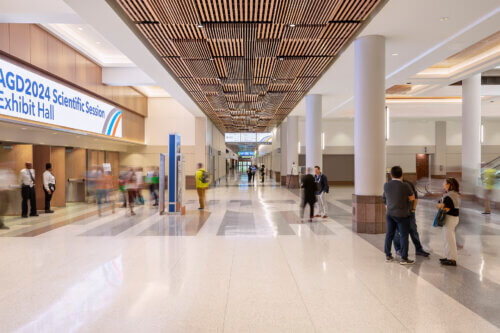
The Minneapolis Convention Center (MCC), building on its longstanding relationship with HGA, has embarked on an extensive refresh. Creating a brighter, more inviting atmosphere, this project is part of MCC’s effort to remain competitive in the convention market with upgrades that not only attract future vendors but also stand the test of time. Sustainability is central to the renovation, guiding product selection, the diversion of demolition materials from landfills, and the use of energy-efficient lighting. Real wood finishes and advanced lighting controls help balance a modern aesthetic with eco-conscious design principles.
Parks and Public Spaces: The Third Places
The interplay between indoor and outdoor space is another crucial aspect of design’s catalytic power. Parks, plazas, and public spaces offer vital “third places”—neither home nor work—where social interaction and community building naturally occur. These spaces become the backdrop for shared experiences, reflecting the stories, culture, and history of a city. Thoughtful design here can foster community wellness by creating environments that encourage connection and support local values.

HGA partnered with Harley-Davidson and Heatherwick Studio to turn an underused Milwaukee parking lot into Davidson Park, a community space shaped by input from residents and the Forest County Potawatomi Community. Opened in June, the park features “The Hub,” a 272-foot-wide, sunken amphitheater with tiered seating and a circular design that promotes gathering. The park offers views of Harley-Davidson’s historic buildings and includes 120 native plant species, many sacred to the Potawatomi tribe, who played a key role in guiding the project.
Partnerships that Empower
Participatory design takes this a step further by involving the community in the design process itself. When people have a voice in shaping their surroundings, they develop a greater sense of ownership, pride, and agency. This approach not only results in spaces that better meet community needs but also strengthens the social fabric. A well-designed public space can transform a neighborhood, offering a connection that resonates with its inhabitants.
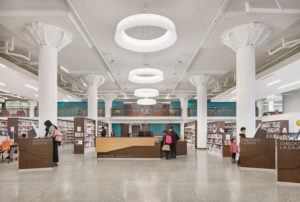
In partnership with city officials, the former Hills Department Store (built in 1919) was transformed into the Mitchell Street Library. Public input shaped features like a Teen Zone with cutting-edge technology and a community kitchen. Part of a mixed-use development, this 21st-century library serves as an educational anchor with market-rate apartments above.
The Interplay of Architecture, History, Culture, and Stories
Architecture, history, culture, and stories are the cornerstones that shape the identity and soul of a place.
Architecture serves as the physical expression of a community’s history and culture, with buildings, monuments, and public spaces symbolizing shared values and experiences. History forms the foundation, while culture brings architecture to life, giving it relevance and meaning. Stories, passed down through generations, capture the essence of a community’s journey, reflecting its challenges and successes.
Together, these elements intertwine to create character in the community that is deeply rooted in the collective memory, spirit and history.

Formerly a vacant, distressed industrial parcel in downtown Minneapolis, the Water Works Park Pavilion is one of the initial projects of the RiverFirst Initiative, started in 2010 with a vision for transforming an 11-mile stretch of land nestled along both sides of the Mississippi Riverfront. HGA’s approach to the design of the 9,000 square-foot pavilion connects the past with the present: the use of brick as the building’s primary cladding recalls the long history of masonry, the first level’s arched glass entryway features original mill walls, and an outdoor stone patio is lined with vertical railroad ties echoing the site’s history of river and rail transportation.
The Power of Design in Community Building
Design, when approached thoughtfully and inclusively, is a powerful catalyst for community building. It creates spaces that connect people, celebrate culture, and honor history, shaping environments where a sense of place and belonging can flourish. Through the integration of work, living, and play, and by fostering partnerships that empower, design can revitalize cities and neighborhoods, creating a more resilient and connected urban fabric. In every project—whether it’s a community center, library, park or convention center—design has the potential to inspire, uplift, and build stronger, more vibrant communities for everyone.
For more insight on how we are connecting communities through design, visit Learning from the Past as We Revitalize Downtown.
About the Author

Samantha Turnock Mendiola
Samantha’s architectural design portfolio includes education, museums, academic and public libraries, corporate and customer experience environments, and experiential design.