
Michelle Miller is an architect and project manager specializing in cultural and educational projects. Calling Boston her home, she has lived and worked nationally and internationally, bringing an expansive perspective to her design approach.
She recently completed the Society of College and University Planning (SCUP) Emerging Leaders program, a year-long experience geared toward mid-career professionals specializing in campus and higher education planning. The program emphasizes SCUP’s vision that integrated planning is a sustainable approach to planning that builds relationships, aligns organizations, and emphasizes preparedness for change.
Here, Michelle shares takeaways from the Emerging Leaders program and relevance to her ongoing work.

Michelle Miller
Project Manager
Congratulations completing the program. Tell us about your experience?
This was a great opportunity to meet colleagues from around the country. The program accepted 15 individuals representing campus administrators, design professionals, and leaders from SCUP. Each month we met for a facilitated virtual session on a different aspect of integrated campus planning, leading to an in-person meet-up at the annual SCUP conference in Philadelphia this summer. In my day-to-day work, I’m often working with one or two campuses at a time—this program was very valuable to gain a broader perspective across many campuses and individuals working in different roles.
What were the big takeaways?
Well, there were many takeaways, but two particularly. First, I came to appreciate that integrated planning is as much about creating a collaborative and participatory process as it is about the physical or administrative aspects of an institution. Many of the programs and discussions were about how to engage stakeholders and decision makers, or how to foster more inclusive pathways to change.
And the second takeaway?
Second, while all higher education institutions face several challenges, each campus feels those impacts differently and has a unique culture that shapes their responses. For example, the coming enrollment cliff from lower national birthrates between 2007 and 2008 anticipates fewer 18-year–olds entering college in 2025. At the same time, many existing students are not coming back in the same in-person modality as before the pandemic. Some campuses have excess space they are trying to consolidate, while others are planning for substantial growth.
Does SCUP’s focus on integrated planning offer fresh insight into these challenges?
A more traditional campus masterplan might only address physical aspects—the buildings and landscape elements and how they relate to each other. Integrated planning incorporates much more: How many voices need to be engaged in the decision-making process, from student groups to administrators, to members of the surrounding community? How are physical planning efforts working towards larger pedagogical, student wellness, or equity and inclusion goals? Additionally, sustainability and resilience, aging physical assets, and AI are all part of the interconnected conversation today.


The Hotchkiss School, Edsel Ford Library Revitalization – Entry Area

Bowdoin College, Sills Hall Renovation – Athenaeum
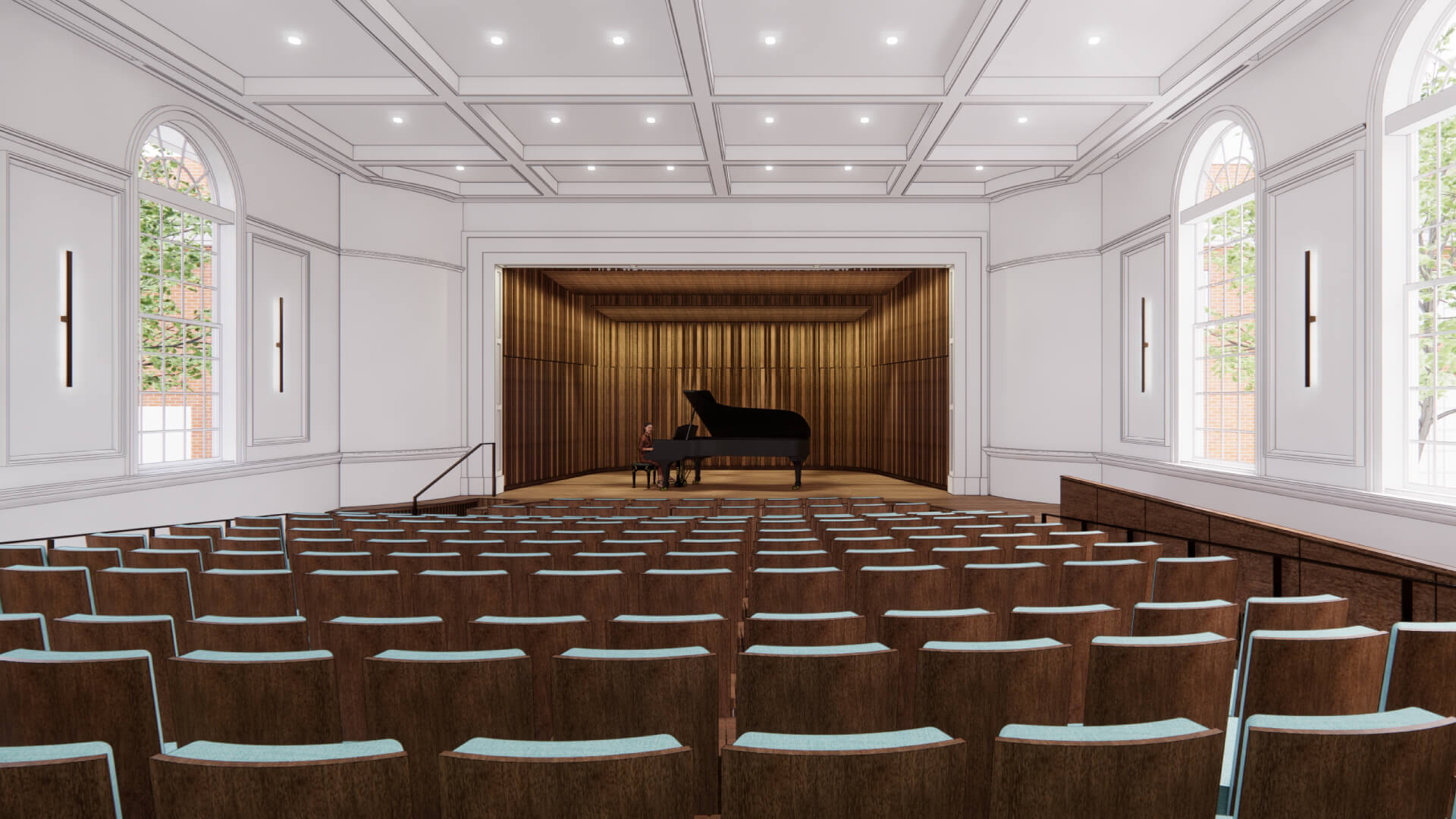
University of Mary Washington, Fine Arts Center – Recital Hall
How do you balance these varied conversations?
The way we work at HGA is evolving to meet these needs and plays a part in how we support institutions, whether working on comprehensive planning or individual transformative projects. Integrated planning is about breaking down silos to work towards a common vision unique to each campus. Many of the big issues may be similar across campuses, but the solutions will vary. Our framework of holistic design and ability to do innovative research to inform that design sets us apart.
Has this experience informed your design perspective moving forward?
Big picture, having a broader perspective on integrated planning allows me to ask better questions and bring in more ideas to our clients. For example, I attended a session on creating a sense of belonging in libraries and spoke with a library director who was rethinking how to plan more inclusive spaces for diverse student needs and identities. These and other examples help inform my design perspective—and ultimately think about how to envision a more meaningful student experience and sense of belonging. ∎
Discover more about HGA’s approach to academic campus planning.