

University of Kentucky Healthcare - NICU Children's Hospital
Transforming Infant Care Experience with Single-Family Room Model
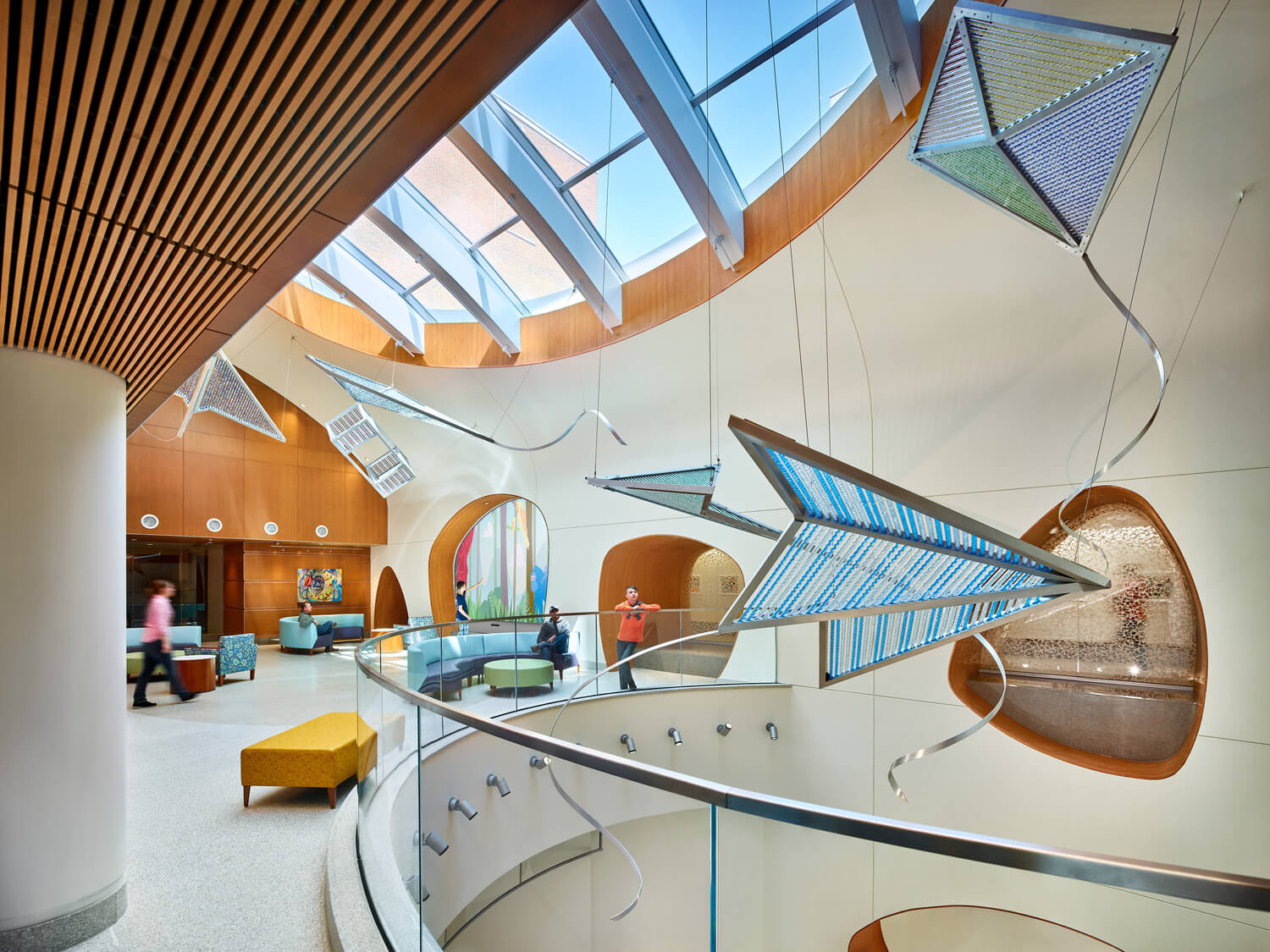
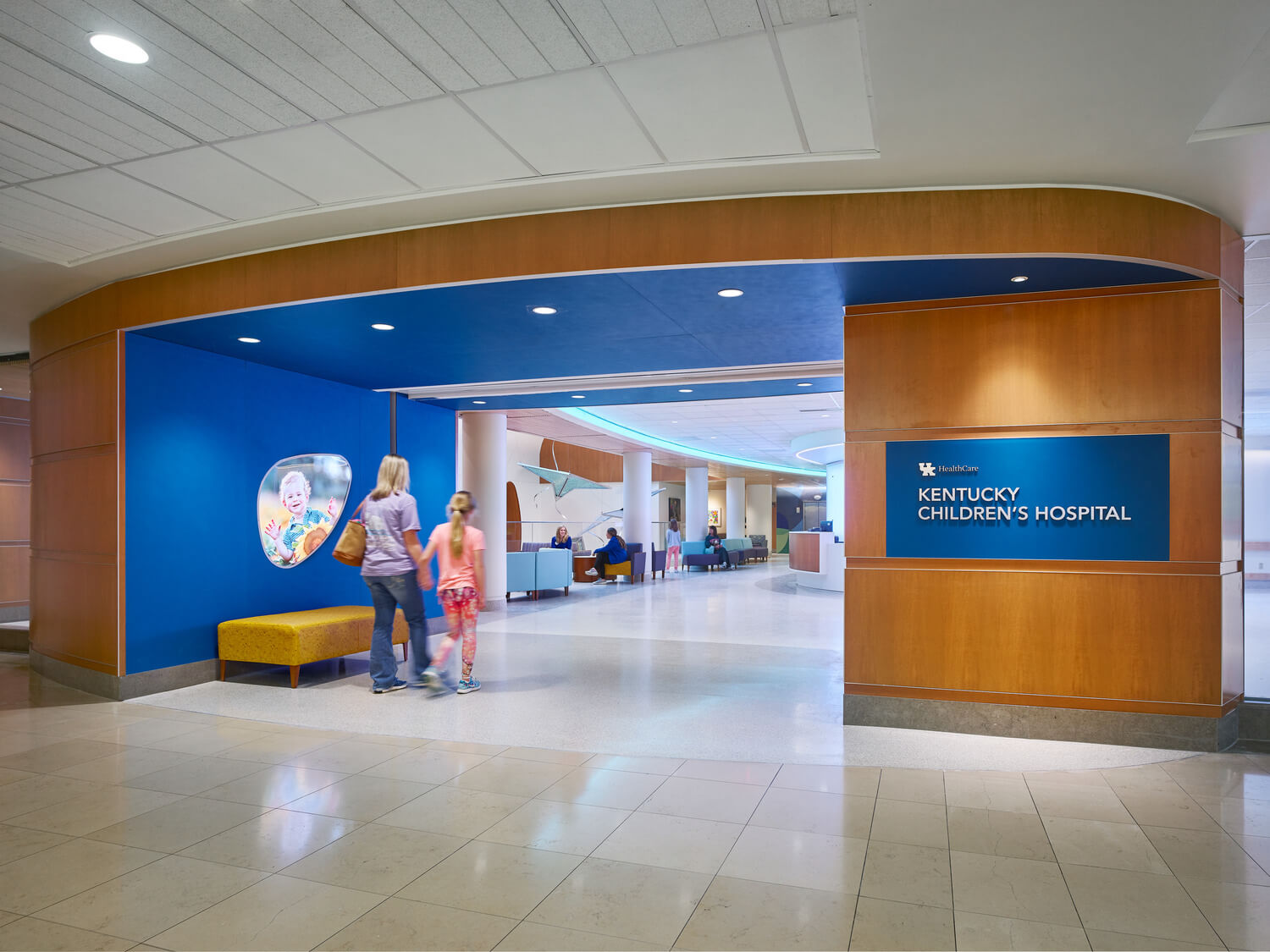
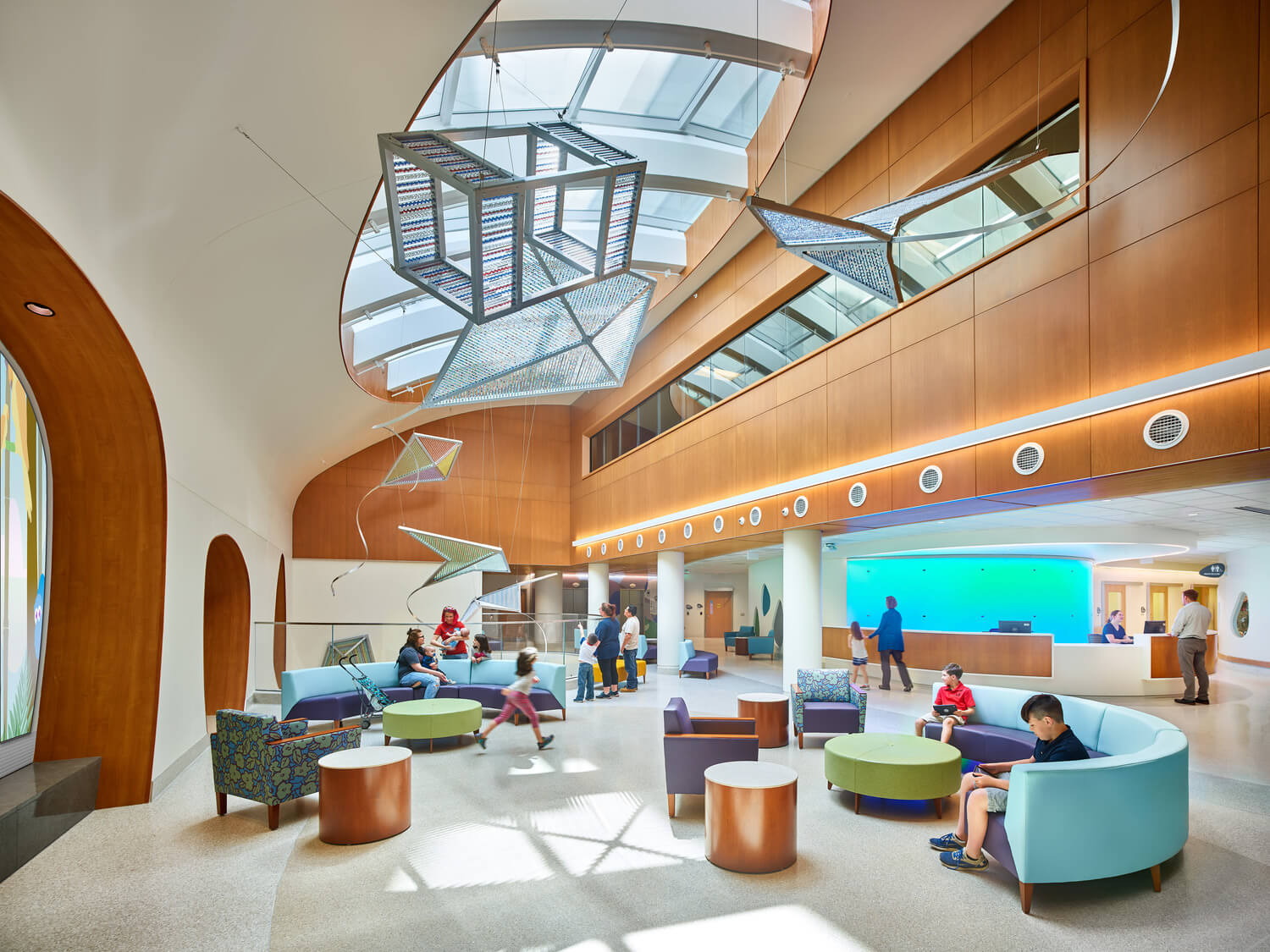
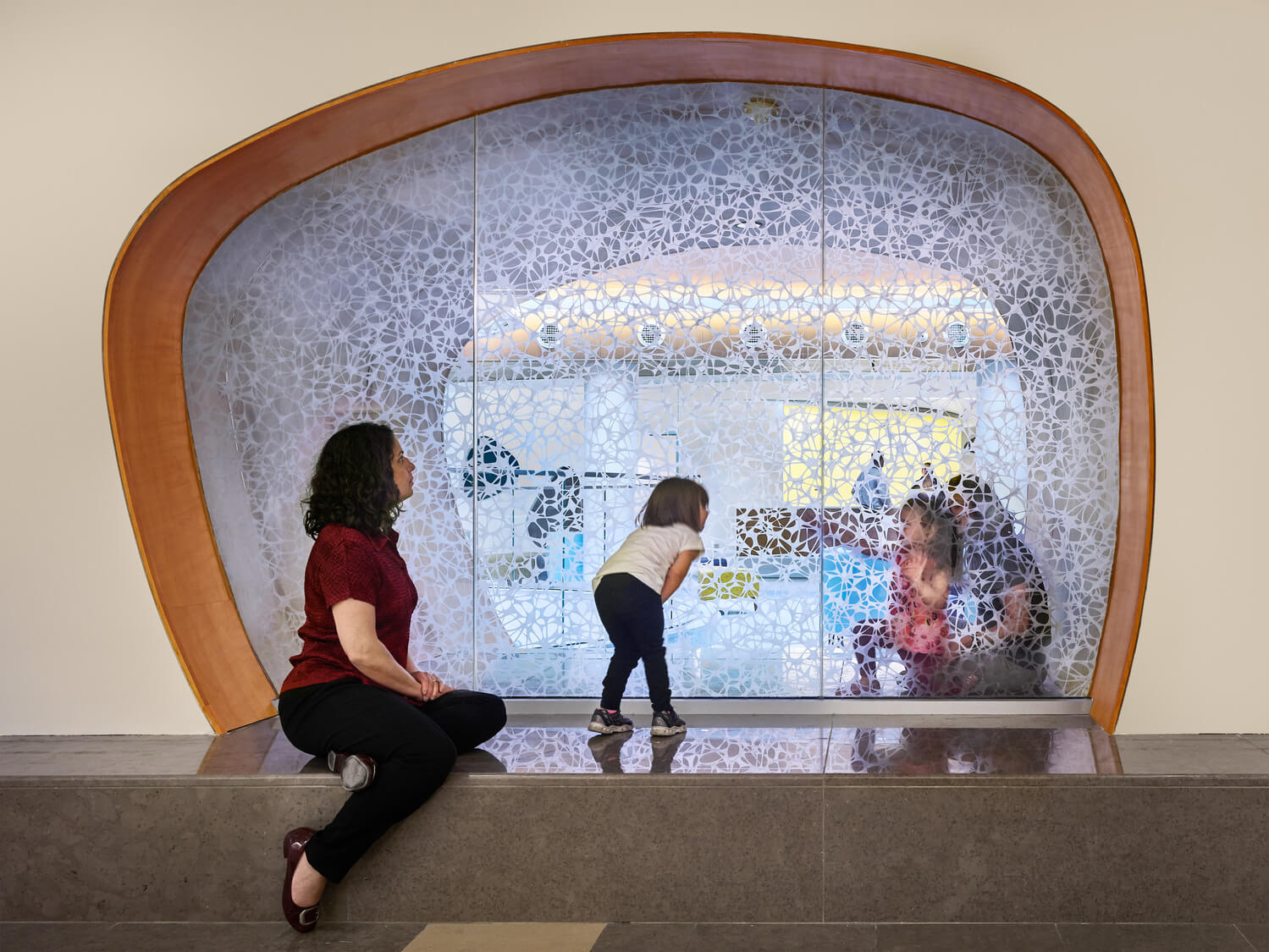
The University of Kentucky Children’s Hospital (UKHC) is a hospital within a hospital. As part of the NICU project, we incorporated environmental graphics into designing ground floor and first floor spaces to match their larger institution.
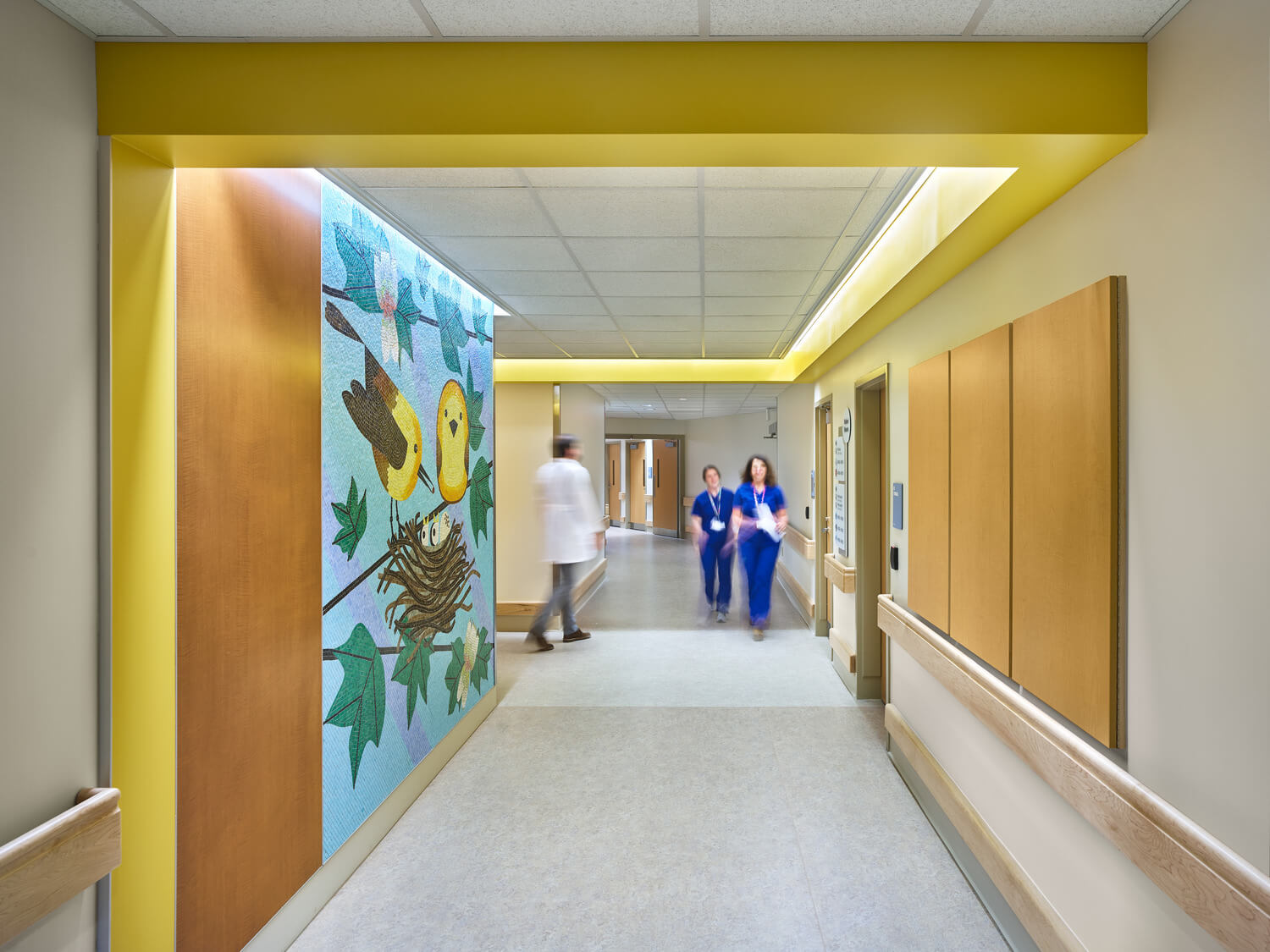
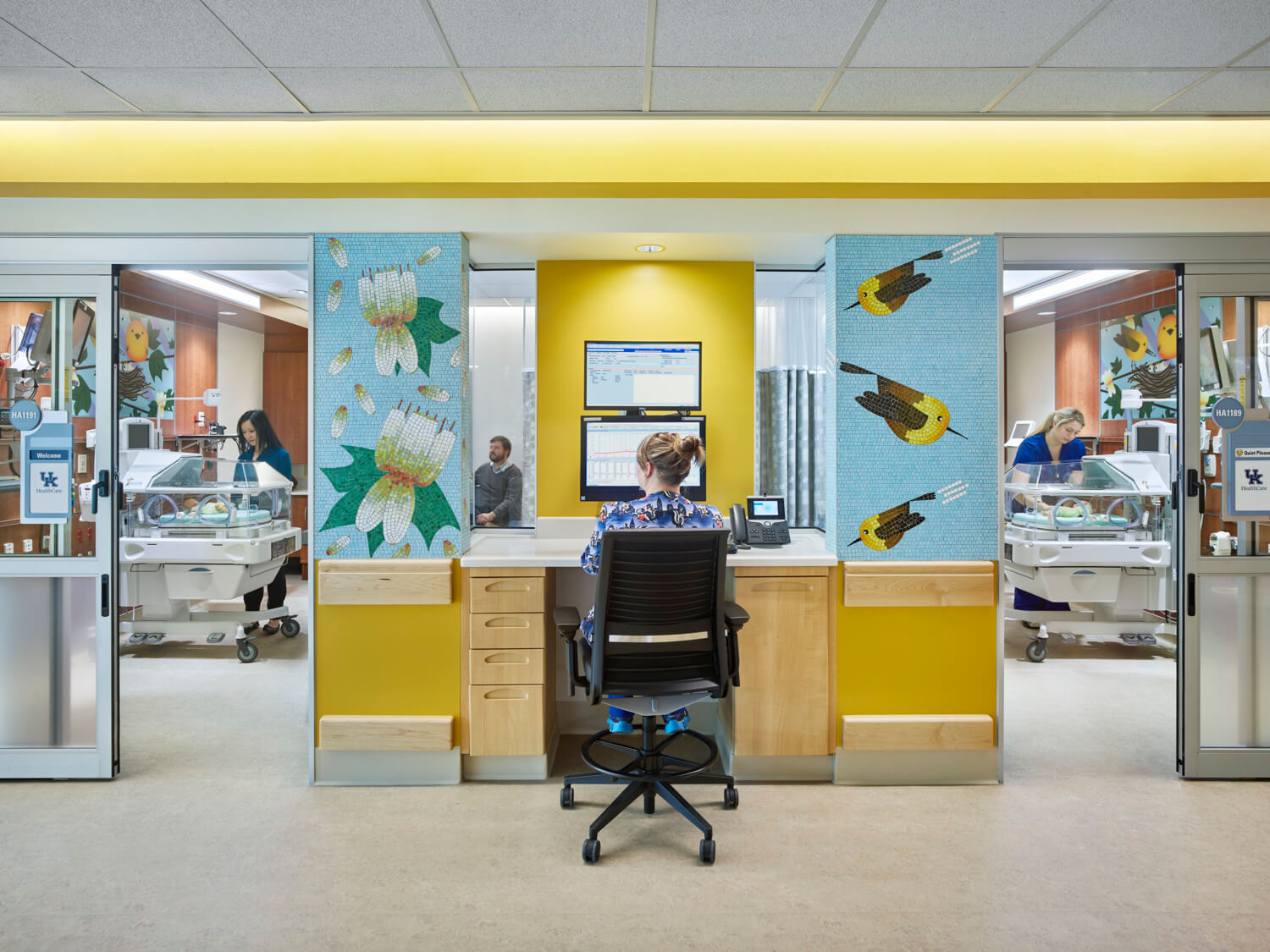
The existing Kentucky Children’s Hospital had a traditional ward model of six infants to a room. This allowed the nursing staff to have good visibility of both infants and colleagues, but not for the families or the infants themselves. The space was noisy, crowded, and it lacked privacy. To improve the overarching quality of care, UKHC decided to shift to a single-family room (SFR) care model. The design of the 70-bed NICU breaks down into 6 neighborhoods of approximately 12 single family rooms, each to provide a more personal scale and increase visibility. Private respite spaces for staff encourage huddles, support, and learning for the academic institution. Movement through the space is open to enable serendipitous connections between staff and families. Unique mosaics depicting various species native to Kentucky create a sense of place in the neighborhoods and flow throughout the many spaces to support wayfinding and brand identity. The SFR model improves infant development, allowing for more engagement with family for skin-to-skin contact, privacy, and circadian rhythm lighting systems.
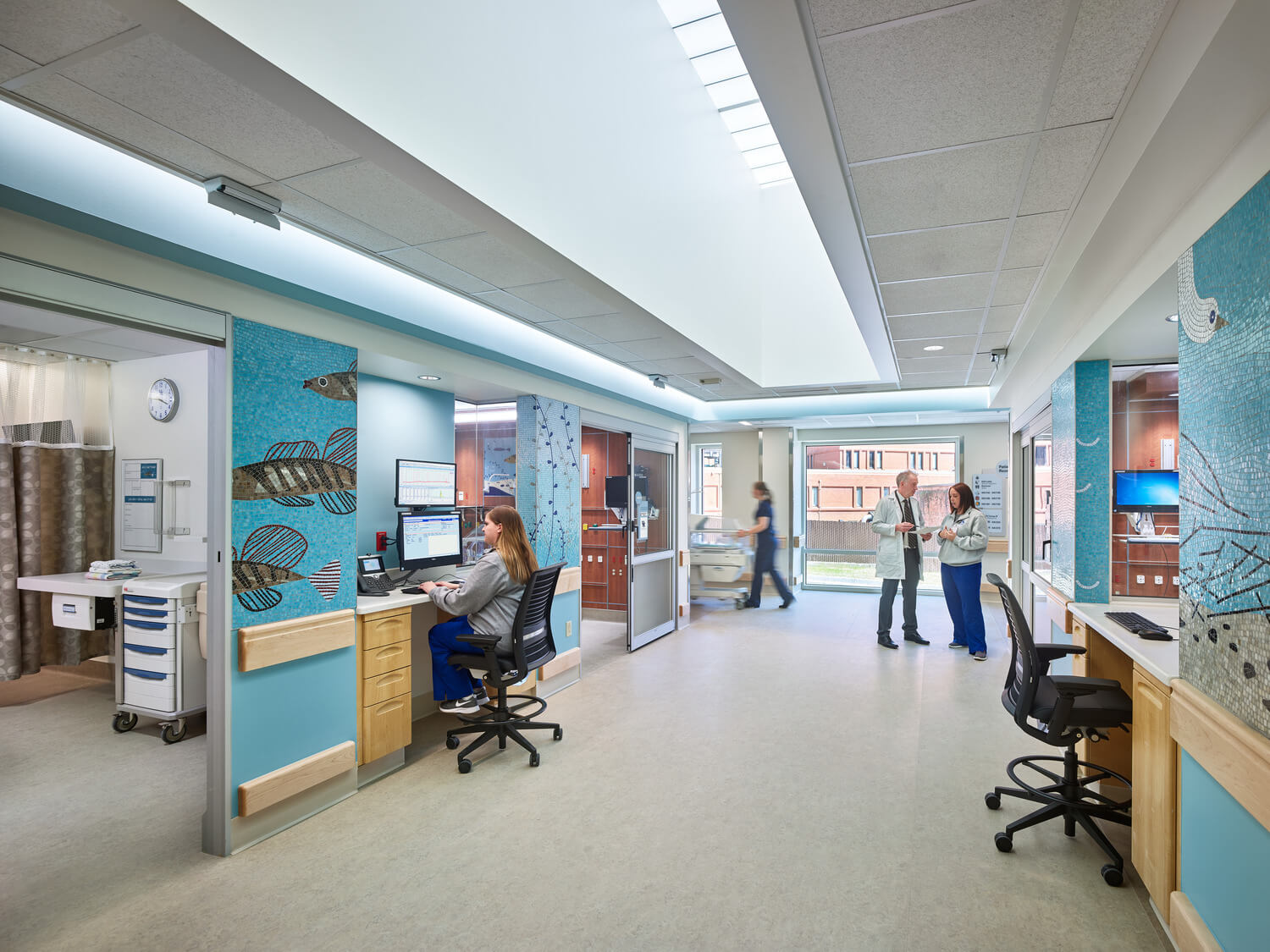
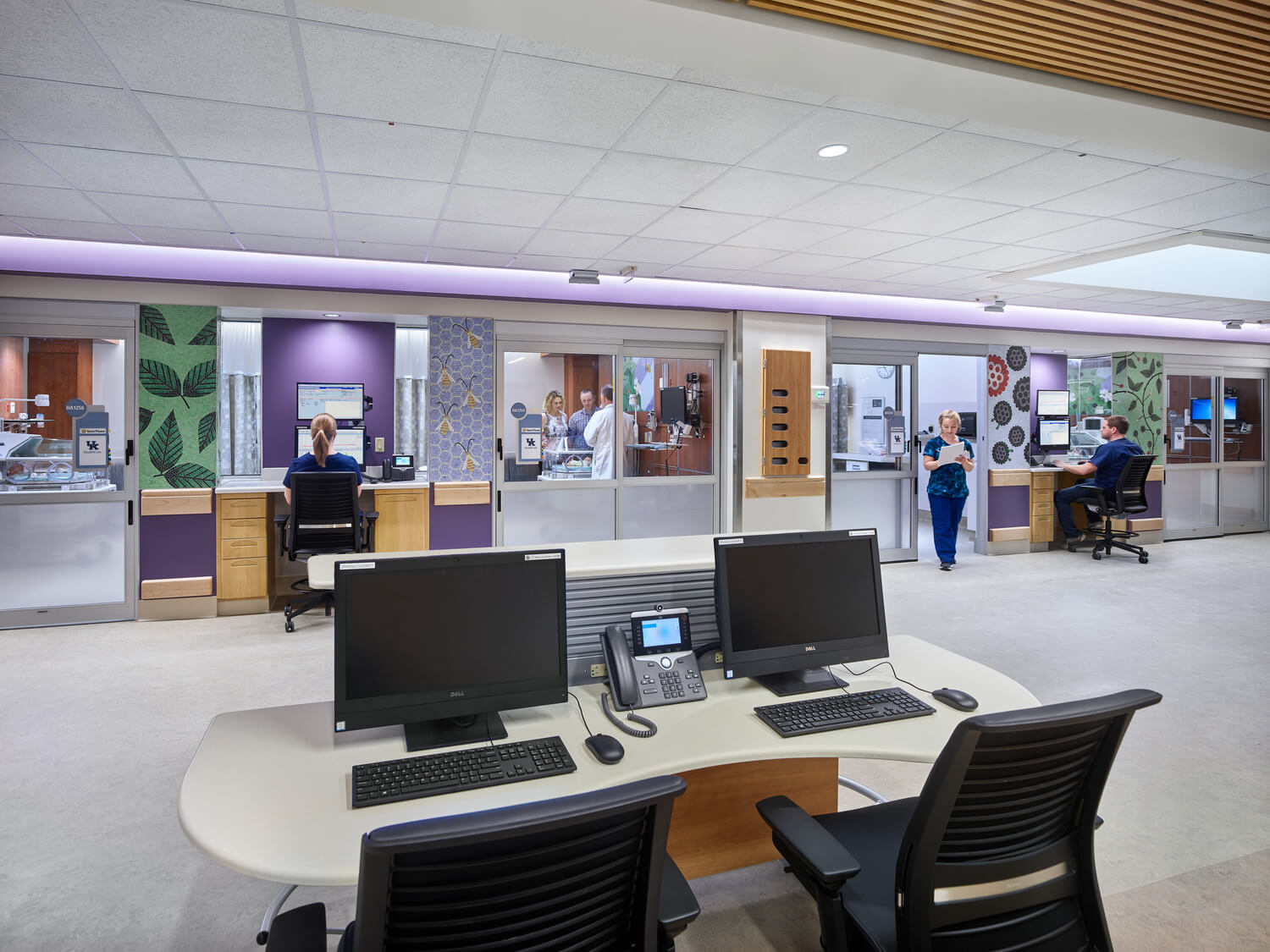
The design team provided extensive mock-up reviews to ensure it would meet everyone’s needs, as well as staff education on industry research illustrating the benefits of lighting and acoustics on patient outcomes. To address the challenge for staff accustomed to caring for multiple babies in a single room with clear visual connections, the design team created decentralized charting stations, each with direct views into multiple rooms and wider than average corridors to allow staff to have team support when needed. The new design also incorporated an off-stage lounge connected to an outdoor terrace to provide the staff respite from a stressful environment.
Expanded twelve-foot wide corridors provide increased visibility and space for staff to collaborate. Skylights and large-scale windows infuse the interior with light. Additionally, corridor lighting corresponds to the SFR circadian rhythm lighting systems. Centralized staff huddle spaces provide a collaborative hub with visibility to the entire neighborhood. As an academic medical center, these spaces provide opportunities for teaching and learning.
Portfolio