
The race to create content has produced a need to create space. Many entertainment and media companies find that office conversions are a great solution, but there are ten things to consider when making the conversion from office space to post-production space.

At first glance, office buildings seem to offer the perfect configuration for post-production suites. Room sizes translate well, common areas already exist, and floors or pods can be designated for specific shows or content streams.
However, many office buildings that are candidates for conversion were built well before current standards for technology, security, and infrastructure. As part of the design process, we recommend a thorough evaluation of your space to determine necessary upgrades.
1. Electrical
Depending on the number of post-production rooms you are adding, the power load required may be up to four times higher than a typical office building. Adequate low-voltage power may not exist and security will almost certainly need to be addressed.
2. HVAC
Rack server rooms need cooling and ventilation, as do edit bays, color suites, and similar tech-heavy rooms in use 12-16 hours per day. The remodeling process presents an opportunity to update HVAC to meet organizational goals for sustainability, or for retro-commissioning to improve operational costs, air quality, and occupant comfort.
3. Security
Threats can come from anywhere. From cybersecurity to building entrance security to complex within-building secure zones, planning must be done early. A comprehensive approach to security planning also includes evaluation of fire and life safety systems, safeguarding of intellectual property, and protection of high-profile talent confidentiality.

4. Room Sizes & Clear Heights
Conversion of existing buildings may include structural transformation to create larger spaces. Screening rooms, edit bays, and sound studios require high ceilings with unobstructed sightlines.
5. Structural Load
Server rooms, computer bays, and mechanical equipment are heavy. Structural engineers will ensure that your building can support the architecture and infrastructure.
6. Lighting
Editors and colorists work long hours in darkened rooms. But lighting design for post-production goes far beyond a dimmer switch. We are experienced in creating optimal lighting for each type of post-production room, controlling natural light, and reducing glare. Our team was able to help one client eliminate “hallway headaches” by identifying and correcting a sub-optimal flicker produced by ceiling lights reflecting on the carpeting.

7. Interior Design and Branding
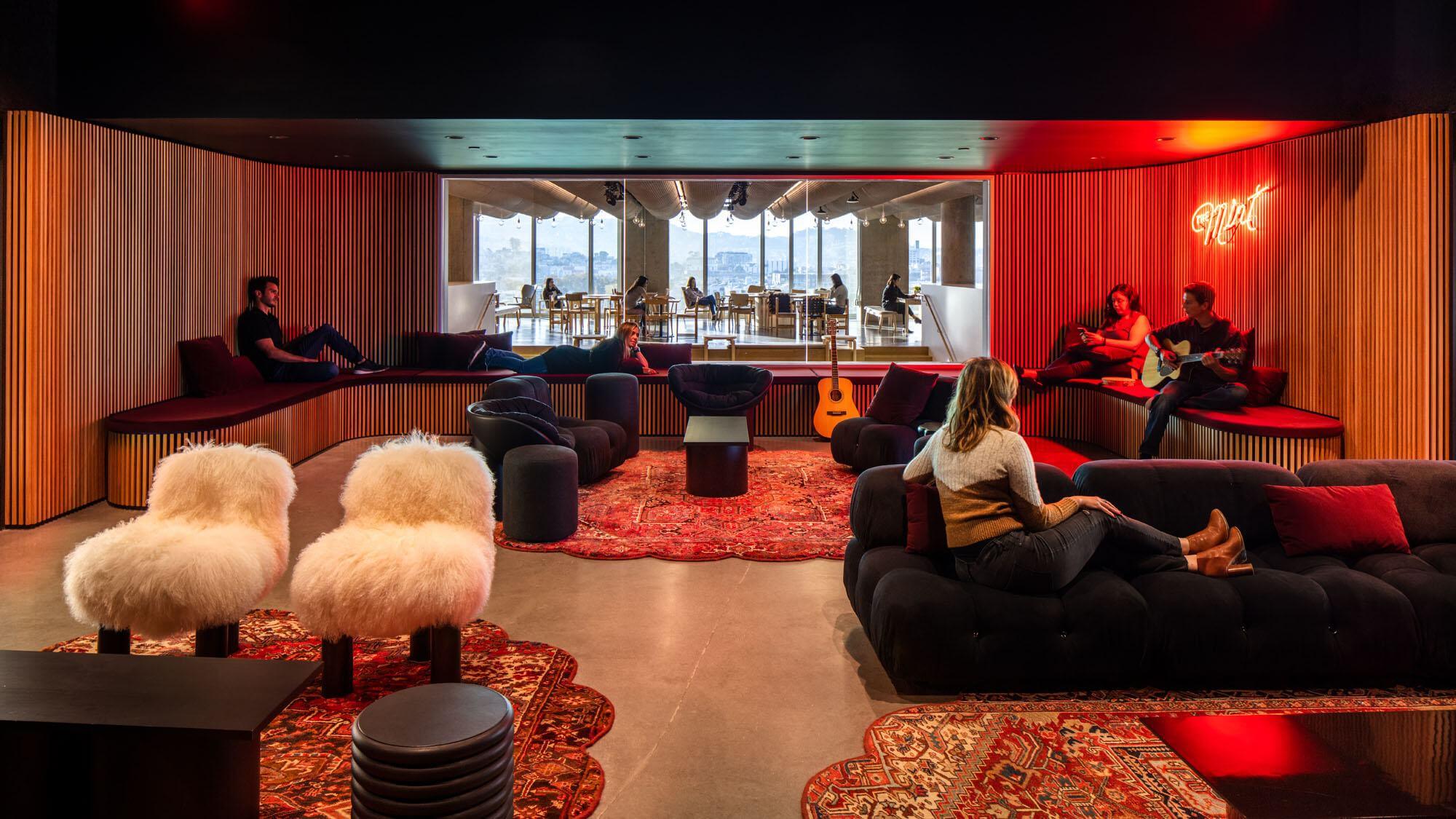
Innovative technology and entertainment businesses need workplace environments that are at the leading edge of design, are exciting and dynamic, and reflect brand identity and internal culture. From individual post suites to common areas to exterior branding, solutions include materials, color, furnishings, and environmental graphics.
8. wellbeing
People feel better and are more productive in spaces where health and wellness are key components of the design. Considerations that provide an antidote to dark rooms include natural light, access to nature and green space, attention to air quality, acoustic comfort, and creative perks.
9. Acoustics
Imagine a server room with buzzing equipment right next to a studio, disrupting a recording session that had a limited window to capture content and the frustration and impact to the business that would cause. Thoughtful planning can avoid post-construction audio problems. From blocking the hum of machinery and HVAC systems to containing confidential sound and music work, acoustic design is an integral part of any office conversion plan or site selection.
10. Resiliency
Identifying and planning for risks related to security breaches, climate hazards, natural disasters, and infrastructure failure is critical. Redundancy ensures that you won’t lose your servers if the power fails.
Although the conversion of office space to post-production space is a desirable consideration, the process can be complex. HGA’s interdisciplinary structure creates an advantage, as teams of in-house experts across specialties can address your project holistically, efficiently, and securely.
For more information, contact our post-production team or learn more about HGA’s production and post-production expertise.