
Rethinking learning methodologies in a hybrid world, professors and students are finding opportunities for growth and innovation in arts education.
Throughout the challenges of the past 18 months, colleges and universities have had to reimagine nearly every element of their work. Arts educators faced significant challenges rethinking their methodology in a hybrid world.
In HGA’s conversations with clients, partners, and staff during this tumultuous time, we have been impressed with the way many institutions have found silver linings along the way. How might arts education emerge even stronger from the challenges of the pandemic, and what experiences may forever change how, what, and where we teach? We are inspired and hopeful by the following unexpected outcomes from the pandemic.
Programming

Many of our clients spoke about the opportunity to develop innovative new programming during the pandemic. The need to reimagine programs created the chance for out-of-the-box thinking. For some faculty, it wasn’t a time to mourn what was lost—but to reinvent what they could do.
We heard from one theatre chair who launched a virtual play-reading series and engaged their college president to participate in the inaugural session. The series grew to be very popular, with weekly attendance reaching as high as 65 people—many of whom had never participated in theatre programming. The series was so successful the theatre chair decided to continue it long-term.
Some fine arts programs moved student performances and productions to outside venues, hillsides, or courtyards. Others took full-length plays and broke them into episodes, producing them virtually with small casts and posting them weekly like a serial, giving students the chance to experiment with new technology and production techniques.
Many of these programs emphasized the need for flexibility, collaboration, and resiliency—qualities that are highly desired among arts students. Productions were often double or triple cast, with students sharing the roles of choreographer, director, or stage manager to ensure back-ups were always at the ready. This highlighted the value of collaboration and gave students the chance to try new roles they might never have been exposed to.
In some cases, the lack of in-person instruction provided the opportunity to return to fundamentals. One professor, a distinguished print-maker, used potatoes and pasta makers to teach fundamental printmaking techniques via his virtual class—a strategy he would not have likely employed in a well-equipped studio, but a memorable and valid one nonetheless.
De-emphasizing the Final Performance
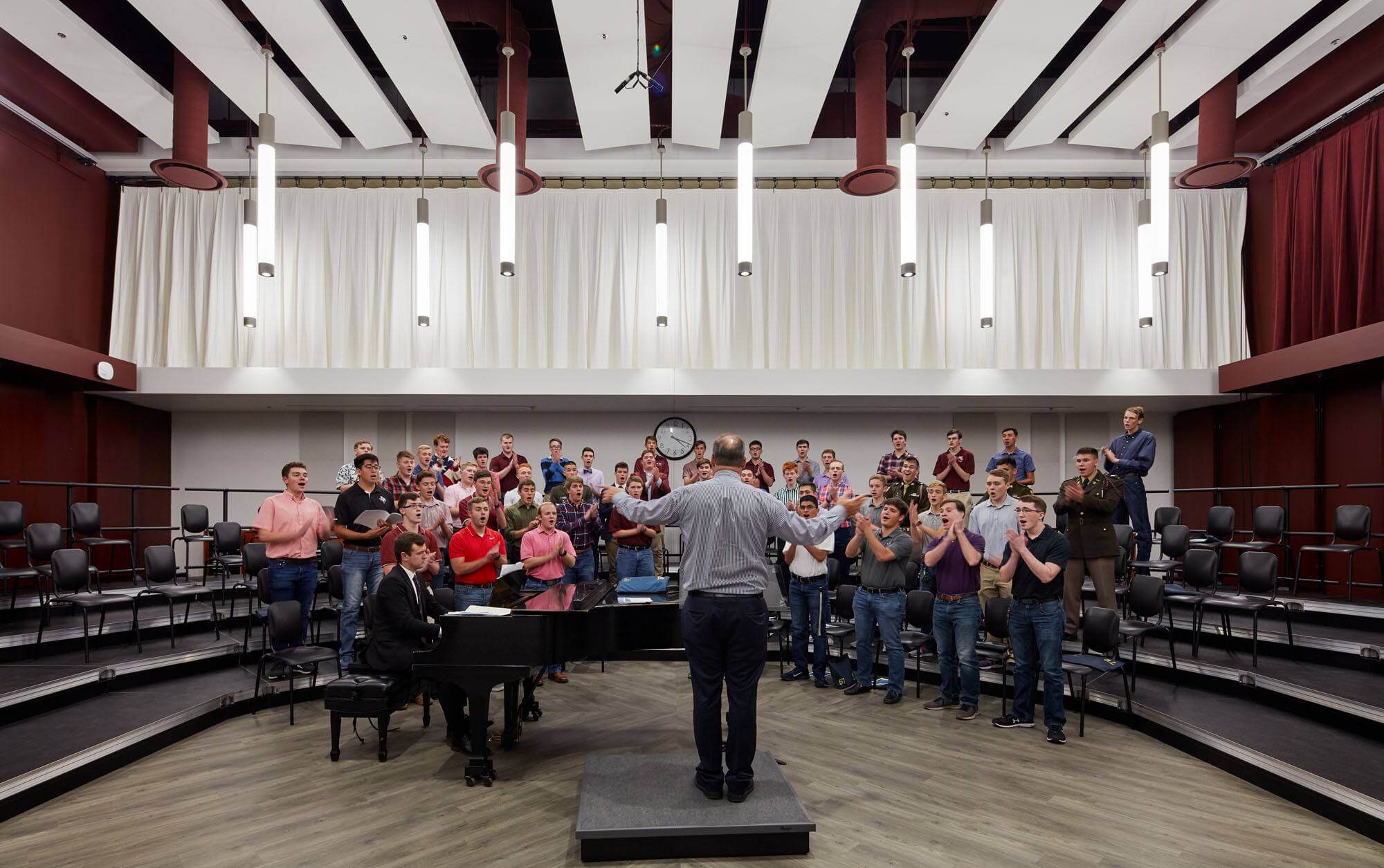
Large ensembles and season productions are often the tail that wags the dog within performing arts departments. But when large ensembles and performances can’t happen, it clears a path to explore work that previously hadn’t been given the same emphasis. Many of our clients noted that in the absence of large-scale rehearsals and performances, they were driven to explore material that hadn’t always been considered, such as chamber music, or music by lesser known Black composers. Many were left wondering why such great repertoire had never been fully explored before and noted that some pieces would find a permanent place within their academic curricula.
Cancellations also helped some performing arts faculty re-examine their thinking about the pedagogical focus on large performances, and how these resource-heavy and time-intensive undertakings needn’t be each semester’s primary goal. Smaller group performances can demand a more thorough command of material, and more independent rehearsal, from students.
One theatre faculty member noted that the most interesting thing to happen in a campus performing arts center shouldn’t necessarily be on the final performance—instead, the focus should be on the process, the training, the rehearsal, the collaboration. For her, the pandemic forced higher education arts faculty to strip away what she saw as an over-emphasis on product and reinvest in the value of the learning process.
Increased Student Autonomy—and Responsibility
Higher education faculty and staff knew the 2020-21 academic year wasn’t going to look like anything they had seen before, and that the level of control typically held by fine arts faculty members would be reduced. But in the act of granting students more autonomy and raising expectations for independent or small group work outside of the classroom, some faculty saw a similarity to their own early, formative arts experiences: the freedom to simply create music, theatre, or art with their peers—with few rules and no adults around.
The pandemic showed arts educators what can happen when faculty give more autonomy to students. When they do, the students might not always create an amazing work of art, but they will be discovering their own voices and developing meaningful modes of personal expression.
Technology
Unsurprisingly, the biggest pandemic-related shift in higher education can be seen in the harnessing of technology to deliver instruction, create content, broadcast performances, and more. Throughout the pandemic, technology allowed higher ed institutions to reach entirely different, and in some cases, larger audiences. It also opened new opportunities for developing content and allowed students’ unique interests and talents to be shared among their peers—creating new ways to connect.
Our clients reported, and research showed, unprecedented growth in technology-driven, hybrid modes of creation and performance. Learning new ways of creating content will forever change how students work in the future, as professional artists, designers, musicians, or actors.
The reliance on technology to deliver instruction also highlighted troubling inequities among students, as many were forced back into homes and off-campus accommodations. The disparities between rural and urban areas for some students was a stark reminder of how race and socio-economic status impacts student learning. For some rural students, access to broadband internet access was non-existent. Yet, others found technology to be a welcome asset to creating a more inclusive and accessible learning experience, allowing content to be tailored to students with unique learning styles and needs.
Onward
Through HGA’s network of college and university clients, consultants, and thought leaders in arts education, we saw firsthand how higher education responded to the unprecedented challenges of the pandemic with courage, innovation, and collaboration. Although the pandemic has been filled with challenges, here’s hoping we can continue to harness the adaptability and resilience of our educators as we continue to shape the spaces and places for arts education in the future.