


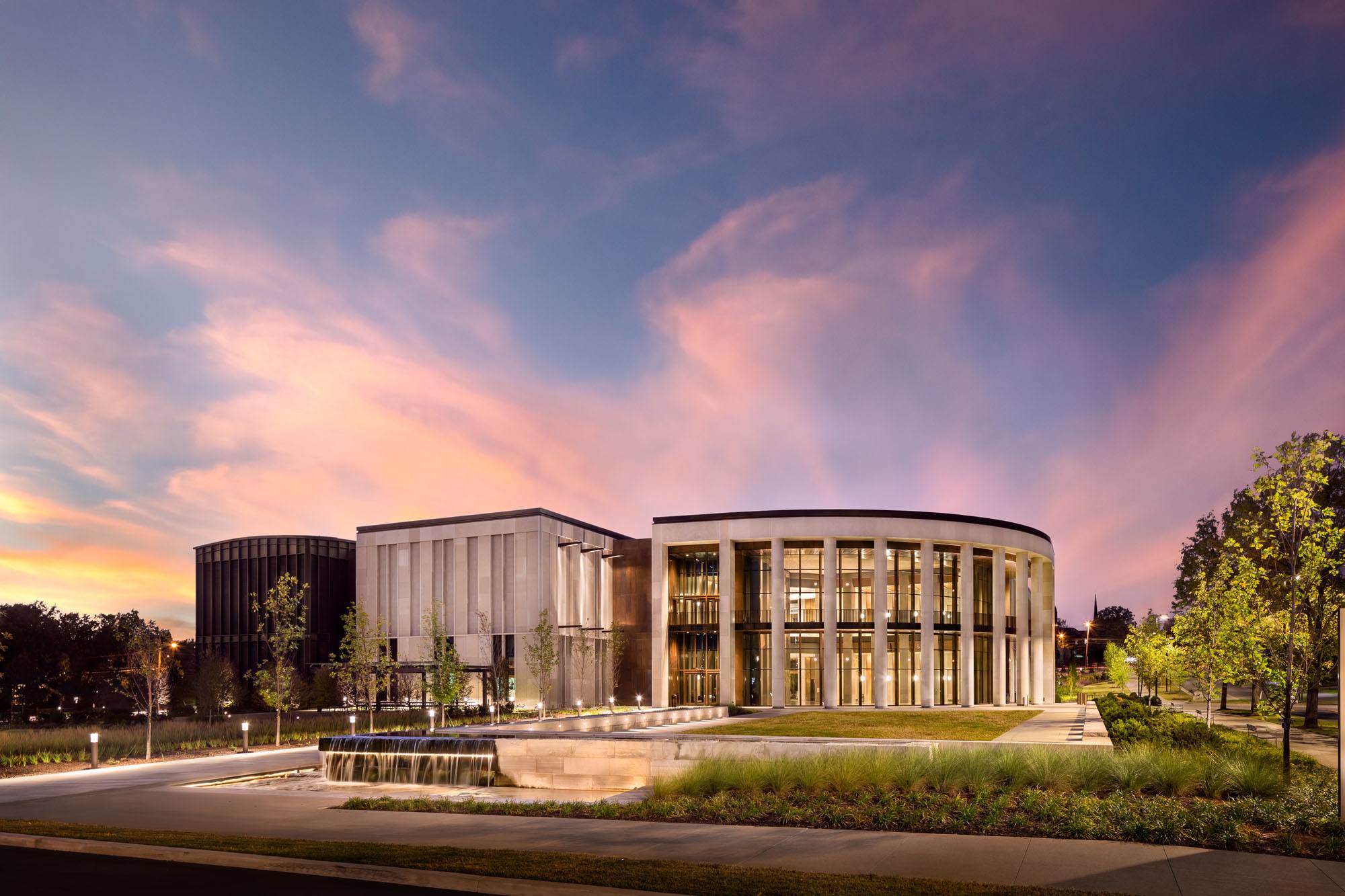

Tennessee State Museum
Illuminating Tennessee's History and Future
The Tennessee State Museum illuminates the rich and diverse history of the citizens of Tennessee and enlivens Nashville’s Bicentennial Mall with an inspirational and distinctive cultural facility. Opened in October 2018, this state-of-the-art history museum significantly increases the visibility of the institution and the understanding of the rich history of the state.
Designed by HGA, the two-story museum is located on the northwest corner of the Bicentennial Capitol Mall, with expansive views of the historic State Capitol and Nashville skyline. The design engages the public in the history and significance of the State of Tennessee through collections, displays in flexible exhibit spaces, programs in interactive learning spaces, with strict adherence to the highest quality standards for museum facilities that allow the institution to borrow and display a range of works from other international institutions.
Resilience Project Story
Within the first two years after opening, the museum was faced with two major hazardous events. On March 3, 2020, a severe tornado hit the city of Nashville—the 6th costliest in U.S. history—and one week later, COVID-19 caused shutdowns in Nashville and across the country. However, as a result of a planning and design process that addressed future resilience, the museum was able to withstand and quickly recover in the face of these challenges.
Early in the process, a hazard assessment was performed by the Department of Homeland Security that addressed safety, security, and natural disaster risks, including tornadoes and flooding. This assessment was incorporated into hazard mitigation and adaptation plans, including a highly resilient design for the building. After protecting the staff and public, protecting the artifacts of the state’s history was a primary goal. All artifacts were placed on the second floor, above prior flood plains, to avoid possible water damage. Exterior material selection was informed by high-velocity wind and water testing, resulting in a triple-glazing system for the museum’s glass curtain walls. Steel structural beams, single and double-width cement block, and a thick stone veneer formed an almost indestructible exterior. Redundant systems were used, including a dual generator, to ensure that life safety and mechanical systems supporting the galleries would continue to run during a power outage.
The museum also went through the re-accreditation process with the American Association of Museums in the midst of opening, during which disaster preparedness, first response, and crisis communications plans were reviewed. Due to the administration’s conscientious planning for resilience within the organization, its operations, and its facility, the museum was able to open its doors to the public just two days after the tornado. In addition to galleries being open, the museum became a much-needed shelter and gathering space for the community, providing access to bathrooms, water, snacks, Wifi, and phone chargers.
One week later, when the COVID-19 pandemic forced the museum to close again, museum administration quickly responded using a mission-focused lens to develop and revise plans and bring in the tools and skills needed to move forward. Not even four months later, the building reopened with modified operations.
PortfolioLocation
Nashville, TN
Building Type
Museum - Art/Science/History/Children's
Size
137,000 SF